
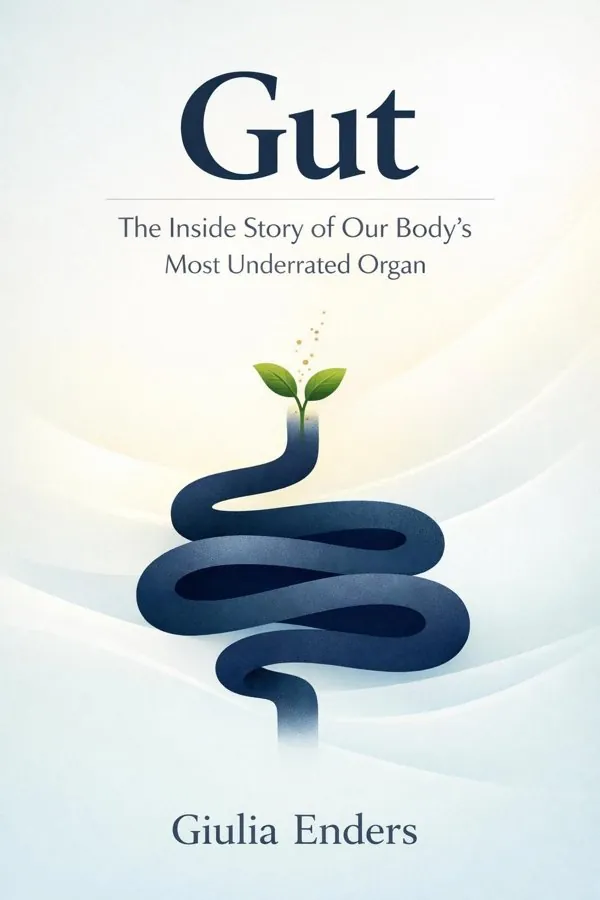
Gut: The Inside Story of Our Body’s Most Underrated Organ: Summary & Key Insights
 10 min9 chaptersAudio available
What Is Gut: The Inside Story of Our Body’s Most Underrated Organ About?
Gut: The Inside Story of Our Body’s Most Underrated Organ by Giulia Enders is a popular_sci book spanning 9 pages. Gut: The Inside Story of Our Body’s Most Underrated Organ is a popular science book that explores the human digestive system in an engaging and accessible way. Giulia Enders explains how the gut communicates with the brain, the importance of gut flora, and how diet and lifestyle affect health. Combining medical insight with humor and relatable examples, the book demystifies digestion and encourages readers to appreciate this vital organ.
This FizzRead summary covers all 9 key chapters of Gut: The Inside Story of Our Body’s Most Underrated Organ in approximately 10 minutes, distilling the most important ideas, arguments, and takeaways from Giulia Enders's work. Also available as an audio summary and Key Quotes Podcast.
Gut: The Inside Story of Our Body’s Most Underrated Organ
Gut: The Inside Story of Our Body’s Most Underrated Organ is a popular science book that explores the human digestive system in an engaging and accessible way. Giulia Enders explains how the gut communicates with the brain, the importance of gut flora, and how diet and lifestyle affect health. Combining medical insight with humor and relatable examples, the book demystifies digestion and encourages readers to appreciate this vital organ.
Who Should Read Gut: The Inside Story of Our Body’s Most Underrated Organ?
This book is perfect for anyone interested in popular_sci and looking to gain actionable insights in a short read. Whether you're a student, professional, or lifelong learner, the key ideas from Gut: The Inside Story of Our Body’s Most Underrated Organ by Giulia Enders will help you think differently.
- ✓Readers who enjoy popular_sci and want practical takeaways
- ✓Professionals looking to apply new ideas to their work and life
- ✓Anyone who wants the core insights of Gut: The Inside Story of Our Body’s Most Underrated Organ in just 10 minutes
Want the full summary?
Get instant access to this book summary and 100K+ more with Fizz Moment.
Get Free SummaryAvailable on App Store • Free to download
Key Chapters
Digestion, in truth, begins long before food ever reaches your stomach. The moment you smell something delicious—freshly baked bread, perhaps—your gut is already preparing. Your salivary glands activate, producing enzymes like amylase that begin breaking down carbohydrates. Chewing isn’t just about mashing food; it’s a complex process of mechanical and chemical collaboration. Each bite you take sets the tempo for the entire digestive symphony.
When you swallow, your throat and esophagus perform a finely choreographed dance. Contrary to our casual awareness, swallowing involves more neural coordination than walking. The esophagus works with waves of muscular contractions—peristalsis—to gently but persistently move food downward. Gravity helps, but it’s not essential; you could swallow while upside down, and your esophagus would still deliver the meal safely into your stomach. This alone should tell us how well-designed and precise our digestive tract is.
What fascinates me as a physician is that this part of digestion is almost invisible to us, yet problems here—like reflux or swallowing disorders—can cause tremendous discomfort. Understanding the mechanics of the esophagus helps us appreciate that when acid reflux occurs, it’s not just ‘heartburn’ but a failure in this intricate system, often worsened by lifestyle, posture, and diet choices.
When food arrives in the stomach, we enter one of the most dramatic chambers of digestion. The stomach is both a cauldron and a guardian, attacking invaders while protecting the rest of our body. Its inner lining produces hydrochloric acid strong enough to dissolve metal, and yet our stomach itself remains remarkably unharmed. The secret lies in mucus, bicarbonate, and an exceptional turnover of cells that renew every few days to form an ever-reliable barrier.
But the stomach isn’t only about destruction. It’s also a master of patience, slowly churning food into chyme—a nutrient-rich paste—and releasing it methodically into the small intestine. Proteins begin to unravel in the acidic environment, while special cells release intrinsic factor, vital for vitamin B12 absorption later on. Each movement is rhythmic and purposeful, guided by the nerves and hormones that connect digestion with emotion. That nervous flutter before an exam, the clenching when you’re anxious—these sensations are manifestations of the gut-brain dialogue in real time.
We often think of the stomach as the center of digestion, but it’s really only the opening act. Its work sets the stage for the delicate, highly intelligent processes that follow in the small intestines, where true absorption begins.
+ 7 more chapters — available in the FizzRead app
All Chapters in Gut: The Inside Story of Our Body’s Most Underrated Organ
About the Author
Giulia Enders is a German scientist and medical doctor born in 1990 in Mannheim. She studied medicine at the University of Frankfurt and became widely known for her entertaining and informative talks on the gut. Her book Gut became an international bestseller and has been translated into numerous languages.
Get This Summary in Your Preferred Format
Read or listen to the Gut: The Inside Story of Our Body’s Most Underrated Organ summary by Giulia Enders anytime, anywhere. FizzRead offers multiple formats so you can learn on your terms — all free.
Available formats: App · Audio · PDF · EPUB — All included free with FizzRead
Download Gut: The Inside Story of Our Body’s Most Underrated Organ PDF and EPUB Summary
Key Quotes from Gut: The Inside Story of Our Body’s Most Underrated Organ
“Digestion, in truth, begins long before food ever reaches your stomach.”
“When food arrives in the stomach, we enter one of the most dramatic chambers of digestion.”
Frequently Asked Questions about Gut: The Inside Story of Our Body’s Most Underrated Organ
Gut: The Inside Story of Our Body’s Most Underrated Organ by Giulia Enders is a popular_sci book that explores key ideas across 9 chapters. Gut: The Inside Story of Our Body’s Most Underrated Organ is a popular science book that explores the human digestive system in an engaging and accessible way. Giulia Enders explains how the gut communicates with the brain, the importance of gut flora, and how diet and lifestyle affect health. Combining medical insight with humor and relatable examples, the book demystifies digestion and encourages readers to appreciate this vital organ.
You Might Also Like

Structures: Or Why Things Don"t Fall Down
J.E. Gordon
10 min
The Road to Wigan Pier
George Orwell
10 min
Bonk: The Curious Coupling of Science and Sex
Mary Roach
10 min
First Bite: How We Learn to Eat
Bee Wilson
10 min
In Pursuit Of The Unknown: 17 Equations That Changed The World
Ian Stewart
10 min
Napoleon's Buttons: 17 Molecules That Changed History
Penny Le Couteur and Jay Burreson
10 minBrowse by Category
Ready to read Gut: The Inside Story of Our Body’s Most Underrated Organ?
Get the full summary and 100K+ more books with Fizz Moment.