
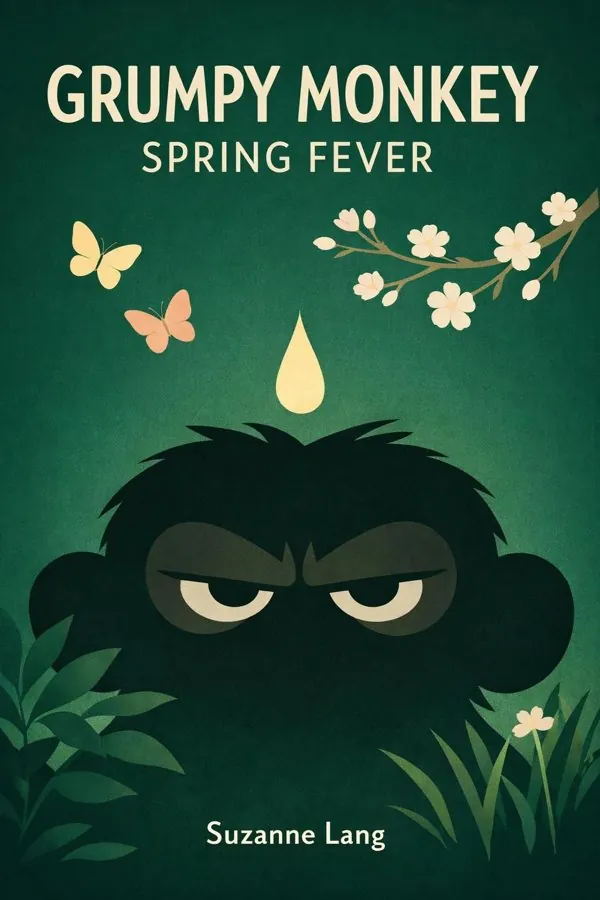
Grumpy Monkey Spring Fever: Summary & Key Insights
by Suzanne Lang
 10 min9 chaptersAudio available
Key Takeaways from Grumpy Monkey Spring Fever
A change in the weather can change what is happening inside us just as much as what is happening outside us.
One of the most reassuring truths in Grumpy Monkey Spring Fever is that you do not always know why you feel the way you feel.
Not every cheerful season produces cheerful feelings.
Children learn difficult truths more readily when they are allowed to laugh.
Sometimes the people around us can see our emotional shifts before we can name them ourselves.
What Is Grumpy Monkey Spring Fever About?
Grumpy Monkey Spring Fever by Suzanne Lang is a bestsellers book. Grumpy Monkey Spring Fever by Suzanne Lang is a playful, emotionally smart picture book that follows Jim Panzee as he experiences the wild, restless energy of spring. Everyone around him seems delighted by the change in season, but Jim feels odd, unsettled, and more than a little out of sync. What begins as a funny animal story becomes a relatable exploration of mood, self-awareness, and the way emotions can shift with changes in the world around us. The book matters because it gives young readers language for feelings that are hard to explain. Instead of forcing a cheerful lesson, it acknowledges that emotions can be confusing, physical, and temporary. Suzanne Lang, known for the bestselling Grumpy Monkey series, has built a strong reputation for writing stories that respect children’s emotional lives while keeping humor front and center. Paired with lively storytelling and expressive character moments, this installment helps readers understand that not every burst of energy or irritability means something is wrong. Sometimes, it simply means you are adjusting. That makes this book both entertaining and quietly reassuring for children, parents, and educators alike.
This FizzRead summary covers all 9 key chapters of Grumpy Monkey Spring Fever in approximately 10 minutes, distilling the most important ideas, arguments, and takeaways from Suzanne Lang's work. Also available as an audio summary and Key Quotes Podcast.
Grumpy Monkey Spring Fever
Grumpy Monkey Spring Fever by Suzanne Lang is a playful, emotionally smart picture book that follows Jim Panzee as he experiences the wild, restless energy of spring. Everyone around him seems delighted by the change in season, but Jim feels odd, unsettled, and more than a little out of sync. What begins as a funny animal story becomes a relatable exploration of mood, self-awareness, and the way emotions can shift with changes in the world around us. The book matters because it gives young readers language for feelings that are hard to explain. Instead of forcing a cheerful lesson, it acknowledges that emotions can be confusing, physical, and temporary. Suzanne Lang, known for the bestselling Grumpy Monkey series, has built a strong reputation for writing stories that respect children’s emotional lives while keeping humor front and center. Paired with lively storytelling and expressive character moments, this installment helps readers understand that not every burst of energy or irritability means something is wrong. Sometimes, it simply means you are adjusting. That makes this book both entertaining and quietly reassuring for children, parents, and educators alike.
Who Should Read Grumpy Monkey Spring Fever?
This book is perfect for anyone interested in bestsellers and looking to gain actionable insights in a short read. Whether you're a student, professional, or lifelong learner, the key ideas from Grumpy Monkey Spring Fever by Suzanne Lang will help you think differently.
- ✓Readers who enjoy bestsellers and want practical takeaways
- ✓Professionals looking to apply new ideas to their work and life
- ✓Anyone who wants the core insights of Grumpy Monkey Spring Fever in just 10 minutes
Want the full summary?
Get instant access to this book summary and 100K+ more with Fizz Moment.
Get Free SummaryAvailable on App Store • Free to download
Key Chapters
A change in the weather can change what is happening inside us just as much as what is happening outside us. In Grumpy Monkey Spring Fever, Jim Panzee is affected by the arrival of spring in ways he does not fully understand. The world becomes brighter, busier, and more energetic, yet instead of simply joining the excitement, Jim feels strange and unsettled. This is one of the book’s smartest ideas: emotional discomfort does not always come from a clear conflict. Sometimes it comes from transition itself.
Children often experience this in real life. A new season can alter routines, sleep patterns, outdoor time, and social expectations. Adults notice this too. People can become restless in spring, sluggish in winter, or irritable during periods of change. Lang presents this experience in a child-friendly way, showing that moods are not always logical and do not always need immediate fixing. Jim’s response reminds readers that emotional shifts can have environmental triggers, even when we cannot name them right away.
This idea is especially useful for parents and teachers. When a child seems unusually energetic, moody, or distracted during a seasonal transition, the answer may not be defiance or bad behavior. It may simply be adaptation. A practical application is to talk openly about how seasons affect energy, sleep, and feelings. Families can say, “Sometimes spring makes people feel jumpy or extra excited,” giving children a normalizing framework.
The takeaway is simple: when moods shift during times of change, start with curiosity rather than judgment.
One of the most reassuring truths in Grumpy Monkey Spring Fever is that you do not always know why you feel the way you feel. Jim Panzee senses that something is off, but he cannot neatly explain it. That uncertainty is important because many children, and many adults, are asked to account for their emotions too quickly. We often expect a reason before we allow a feeling to be valid.
Lang pushes against that pressure. Jim’s confusion becomes part of the emotional lesson. The story suggests that self-awareness is a process, not a performance. Feeling out of sorts without a ready-made explanation does not make someone difficult or unreasonable. It makes them human. For young readers, this is powerful because it relieves the burden of emotional perfection. A child may know only that their body feels buzzy, their patience is short, or their mind is crowded. That is enough to begin.
In practical settings, this idea can transform conversations. Instead of asking, “Why are you acting like this?” adults can ask, “Do you know what your body is feeling right now?” or “Do you feel wiggly, tired, frustrated, or excited?” These questions help children notice internal states without forcing a diagnosis. Teachers can use emotion charts, movement breaks, or brief reflection time to support this skill.
The book’s deeper contribution is showing that emotional literacy begins with noticing, not explaining. The actionable takeaway: when you or a child cannot identify the cause of a mood, name the experience first and let understanding come later.
Not every cheerful season produces cheerful feelings. In fact, one of the most insightful ideas in Grumpy Monkey Spring Fever is that excitement can look a lot like agitation. Spring is often associated with happiness, growth, and renewal, but Jim’s experience complicates that simple picture. The same energy that makes others feel thrilled leaves him overstimulated and on edge.
This matters because children are often taught to divide emotions into clean categories. Happy is good, grumpy is bad, excited is positive, irritated is negative. But real emotional life is messier. A child going on vacation may also melt down from anticipation. A student excited for the school year’s final events may become more reactive or distracted. A change that looks positive from the outside can still feel overwhelming from the inside.
The book offers a valuable framework for recognizing mixed emotions. Jim is not merely “grumpy” in the simple sense. He is activated. His system is responding to a surge of sensory and emotional input. That distinction matters in everyday life. Parents and educators can prepare for emotionally loaded events by assuming that excitement may require regulation. Before a party, a field trip, or a seasonal celebration, children may need calm routines, clear expectations, and physical outlets.
A practical application is to say, “Sometimes when we are excited, our bodies get extra jumpy and our tempers get short.” This helps children understand that irritation does not cancel joy. It can be part of it. The actionable takeaway: treat high energy as something to guide, not something to shame, especially when it arrives wrapped in grumpiness.
Children learn difficult truths more readily when they are allowed to laugh. Suzanne Lang’s Grumpy Monkey series succeeds because it never turns emotional growth into a dry lesson. In Spring Fever, Jim’s discomfort is funny, exaggerated, and recognizable all at once. That tone matters. Humor creates safety. It tells readers that confusing feelings are not only manageable but shareable.
Many social-emotional books become overly instructive, spelling out the lesson too directly. Lang takes a better route. By letting Jim be dramatic, puzzled, and imperfect, she gives children room to engage without feeling lectured. Laughter lowers defensiveness. A child who resists direct emotional coaching may still absorb the message when it comes through a silly monkey dealing with springtime chaos.
This has practical value for adults. Humor is often an effective bridge during emotional moments. A light, gentle comment can reduce tension and help a child reconnect with a sense of control. For example, if a child becomes unusually fidgety on a warm spring day, a parent might say, “Looks like spring put extra bounce in your feet today.” That approach names the experience without criticism. Of course, humor should never mock or dismiss genuine distress, but it can soften the path toward reflection.
The book also models how stories themselves can function as emotional tools. Reading aloud after a difficult day gives children a way to see themselves in a character, laugh, and then discuss what feels familiar. The actionable takeaway: use warmth and humor to open emotional conversations, especially when direct instruction feels too heavy.
Sometimes the people around us can see our emotional shifts before we can name them ourselves. In Grumpy Monkey Spring Fever, Jim’s friends are part of the story’s emotional landscape. Their excitement about spring contrasts with his unsettled mood, making his difference more visible. This dynamic shows how relationships can act like mirrors. Others may notice that we are extra edgy, hyper, withdrawn, or distracted before we fully understand it.
For children, this can be both comforting and challenging. On one hand, attentive friends and adults can offer support. On the other, being noticed can feel irritating when you are already uncomfortable. Lang’s story hints at this tension in a way children can understand. Social environments do not just reflect emotions; they also intensify them. When everyone else seems tuned into one mood, feeling different can become even more frustrating.
This idea has useful real-world applications. Parents, teachers, and caregivers can pay attention to patterns rather than isolated incidents. If a child is consistently more reactive during transitions, weather changes, or exciting school events, noticing that pattern can guide better support. Friends and siblings can also be taught to respond kindly rather than teasing or escalating. Helpful language might include, “You seem a little off today. Want some space or some help?”
The book suggests that emotional regulation is not purely individual. It is also relational. We understand ourselves partly through how others respond to us. The actionable takeaway: build relationships where changes in mood are noticed with compassion, not criticism, so support becomes easier to accept.
Before children can explain a feeling, they often live it physically. Grumpy Monkey Spring Fever captures this beautifully through Jim’s restless, uncomfortable response to spring. The story points toward an important truth: emotions are not just thoughts in the mind. They show up in movement, tension, energy, impatience, and bodily discomfort. Children frequently express emotion through behavior because the body registers change before language catches up.
This is one of the book’s most practical insights. A child who seems moody may actually be overstimulated. A child who cannot sit still may be feeling an internal surge they do not know how to manage. Even adults recognize this experience: we pace when anxious, sigh when stressed, and snap when overextended. Jim’s state reminds readers that emotional regulation often starts with physical awareness.
A useful application is helping children connect body signals with emotional language. Adults can ask questions like, “Is your tummy tight?” “Do your arms feel wiggly?” or “Does your body want to move?” From there, regulation strategies become easier to introduce. Movement breaks, deep breaths, outdoor walks, stretching, dancing, or quiet rest can all help shift a dysregulated state. Instead of treating behavior as a disciplinary issue first, the book invites us to ask what the body might need.
This lesson is especially valuable during high-energy times like spring, holidays, or schedule disruptions. When the body is activated, words may come later. The actionable takeaway: look for physical clues to emotional states and respond with support that helps the body settle before demanding explanation.
One of the most refreshing qualities of Grumpy Monkey Spring Fever is its resistance to fake positivity. The world around Jim celebrates spring as if there is only one acceptable reaction: delight. Yet Jim cannot simply talk himself into matching everyone else’s enthusiasm. The story does not punish him for that. Instead, it makes space for the reality that not every person experiences the same moment in the same way.
This message matters deeply for children. They are often encouraged to be cheerful, cooperative, and visibly appreciative, especially during exciting or festive times. But emotional honesty is healthier than performance. Forcing a child to appear happy can teach them to ignore real internal signals. Lang’s story implies something wiser: feelings are not moral tests. Being out of step with the group does not mean you are wrong.
In everyday life, this can shape how adults respond to children during birthdays, vacations, school celebrations, and seasonal events. Instead of saying, “But this is supposed to be fun,” adults can say, “It looks like this is a lot right now.” That response validates the child’s experience without framing it as a failure. It also helps preserve trust. Children learn that they can bring their real feelings into relationships.
The book does not argue against joy. It argues against emotional coercion. Allowing a feeling to exist often makes it easier to move through it naturally. The actionable takeaway: stop demanding cheerful reactions and start making room for honest ones, especially when outwardly happy moments feel unexpectedly hard.
A feeling can be intense without being permanent. Grumpy Monkey Spring Fever quietly teaches this through Jim’s temporary struggle with springtime restlessness. His discomfort feels real and immediate, but the story’s broader emotional arc reassures readers that strange moods do not last forever. This is an essential lesson for children, who often experience emotions as total and endless when they are in the middle of them.
Lang’s approach is helpful because it neither minimizes the feeling nor dramatizes it into something alarming. Instead, the book suggests that some emotional states are passing weather systems. They move through us. That metaphor is particularly fitting in a book about seasons. Just as spring changes the environment, it can also bring internal fluctuations that settle with time, understanding, and a bit of support.
This idea has strong practical value. Adults can help children build emotional endurance by reminding them that feelings change. Useful phrases include, “This feels big right now, but it will not feel this strong forever,” or “Let’s help your body through this moment.” Such language teaches regulation without denial. It is also useful to pair reassurance with action: a snack, a walk, quiet time, or a favorite routine can help a child ride out a mood shift.
The key lesson is not that emotions should be ignored, but that they should be respected without being treated as permanent identities. Jim is not trapped in his state. He is moving through it. The actionable takeaway: when a difficult mood arrives, respond with calm confidence that feelings are real, manageable, and temporary.
Stories often teach children what direct instruction cannot. Grumpy Monkey Spring Fever is more than an entertaining seasonal tale; it is a tool for emotional literacy. By watching Jim struggle with a hard-to-name feeling, children practice recognizing emotional complexity from a safe distance. They can identify patterns in his behavior, compare them to their own experiences, and build language around states that may otherwise stay vague.
This is one reason the Grumpy Monkey series remains so effective. Rather than presenting idealized children who always make good choices, the books offer a character who reacts imperfectly and then learns something. That mirrors real emotional development. Children do not need flawless role models as much as they need relatable ones. Jim’s confusion, irritability, and eventual understanding create a path readers can follow.
In practical terms, the book can be used in homes and classrooms as a conversation starter. After reading, adults can ask, “Have you ever felt weird for no clear reason?” “What does spring make your body feel like?” or “What helps when you feel too jumpy?” These questions turn story time into self-reflection without pressure. The book can also support units on seasons, feelings, self-regulation, and social-emotional learning.
The deeper value of the story is that it normalizes internal complexity while expanding vocabulary and empathy. Readers come away not just entertained, but better able to understand themselves and others. The actionable takeaway: use character-driven stories like this one to help children practice naming, discussing, and managing emotions in everyday life.
All Chapters in Grumpy Monkey Spring Fever
About the Author
Suzanne Lang is an American children’s author best known for the popular Grumpy Monkey series. Her books have earned a wide readership for their lively humor, memorable characters, and emotionally honest approach to childhood feelings. Rather than offering overly tidy lessons, Lang writes stories that respect the complexity of children’s inner lives, making her work especially appealing to parents, teachers, and librarians. Through Jim Panzee and his animal friends, she explores moods, frustration, embarrassment, energy, and self-expression in ways that feel both funny and deeply relatable. Her storytelling is accessible to young readers but layered enough to spark meaningful conversations. Lang has become a notable voice in contemporary picture books by blending entertainment with social-emotional insight, helping children feel seen while giving adults useful language for discussing emotions.
Get This Summary in Your Preferred Format
Read or listen to the Grumpy Monkey Spring Fever summary by Suzanne Lang anytime, anywhere. FizzRead offers multiple formats so you can learn on your terms — all free.
Available formats: App · Audio · PDF · EPUB — All included free with FizzRead
Download Grumpy Monkey Spring Fever PDF and EPUB Summary
Key Quotes from Grumpy Monkey Spring Fever
“A change in the weather can change what is happening inside us just as much as what is happening outside us.”
“One of the most reassuring truths in Grumpy Monkey Spring Fever is that you do not always know why you feel the way you feel.”
“Not every cheerful season produces cheerful feelings.”
“Children learn difficult truths more readily when they are allowed to laugh.”
“Sometimes the people around us can see our emotional shifts before we can name them ourselves.”
Frequently Asked Questions about Grumpy Monkey Spring Fever
Grumpy Monkey Spring Fever by Suzanne Lang is a bestsellers book that explores key ideas across 9 chapters. Grumpy Monkey Spring Fever by Suzanne Lang is a playful, emotionally smart picture book that follows Jim Panzee as he experiences the wild, restless energy of spring. Everyone around him seems delighted by the change in season, but Jim feels odd, unsettled, and more than a little out of sync. What begins as a funny animal story becomes a relatable exploration of mood, self-awareness, and the way emotions can shift with changes in the world around us. The book matters because it gives young readers language for feelings that are hard to explain. Instead of forcing a cheerful lesson, it acknowledges that emotions can be confusing, physical, and temporary. Suzanne Lang, known for the bestselling Grumpy Monkey series, has built a strong reputation for writing stories that respect children’s emotional lives while keeping humor front and center. Paired with lively storytelling and expressive character moments, this installment helps readers understand that not every burst of energy or irritability means something is wrong. Sometimes, it simply means you are adjusting. That makes this book both entertaining and quietly reassuring for children, parents, and educators alike.
More by Suzanne Lang

You Might Also Like

The Godfather
Mario Puzo
10 min
The Handmaid's Tale
Margaret Atwood
10 min
The Hunger Games
Suzanne Collins
10 min
The Nightingale
Kristin Hannah
10 min
The Seven Husbands of Evelyn Hugo
Taylor Jenkins Reid
10 min
Backwater Justice
Fern Michaels
10 minBrowse by Category
Ready to read Grumpy Monkey Spring Fever?
Get the full summary and 100K+ more books with Fizz Moment.