
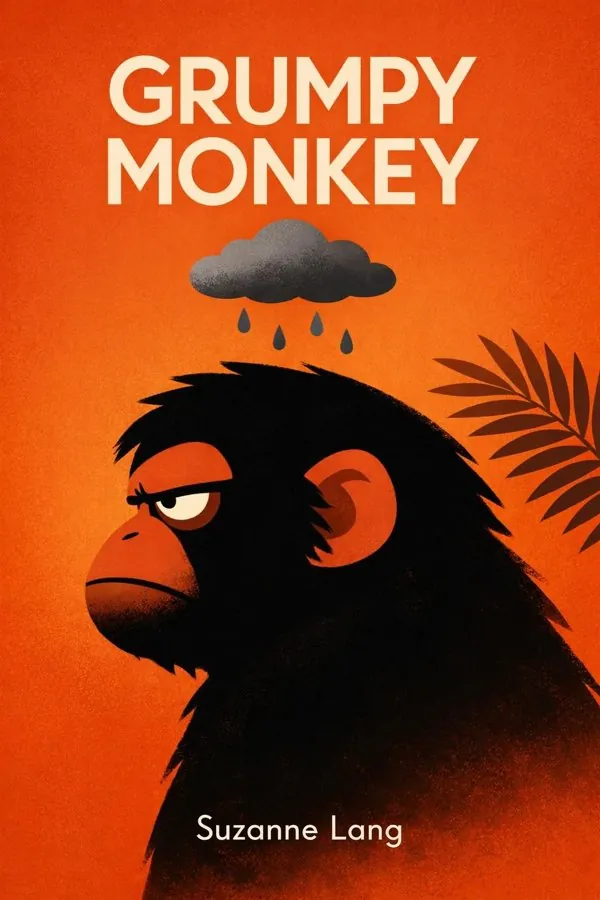
Grumpy Monkey: Summary & Key Insights
by Suzanne Lang
 10 min8 chaptersAudio available
Key Takeaways from Grumpy Monkey
One of the most powerful ideas in Grumpy Monkey is that feelings do not need to be justified in order to be real.
A central tension in Grumpy Monkey comes from the way Jim’s friends respond to his grumpiness.
Grumpy Monkey suggests that resilience is not the same as constant cheerfulness.
At its heart, Grumpy Monkey shows that people often want understanding before intervention.
A subtle but valuable lesson in Grumpy Monkey is that emotions are often temporary when they are not resisted too aggressively.
What Is Grumpy Monkey About?
Grumpy Monkey by Suzanne Lang is a bestsellers book. Grumpy Monkey by Suzanne Lang is a witty, warm, and surprisingly insightful picture book about something everyone experiences but often struggles to explain: being in a bad mood for no obvious reason. The story follows Jim Panzee, a chimpanzee who wakes up feeling grumpy. As he moves through his day, the other animals insist that he should smile, cheer up, or look on the bright side. But Jim’s mood does not magically disappear just because others are uncomfortable with it. Through playful language, expressive illustrations, and gentle humor, the book delivers an important emotional lesson: sometimes feelings need to be acknowledged, not fixed. This message makes the book especially meaningful for children learning emotional awareness, as well as for adults trying to support them with empathy rather than pressure. Suzanne Lang, a celebrated children’s author known for blending humor with emotional intelligence, creates a story that is simple enough for young readers yet resonant for families, teachers, and caregivers. Grumpy Monkey matters because it helps normalize honest feelings and reminds readers that it is okay not to be okay all the time.
This FizzRead summary covers all 8 key chapters of Grumpy Monkey in approximately 10 minutes, distilling the most important ideas, arguments, and takeaways from Suzanne Lang's work. Also available as an audio summary and Key Quotes Podcast.
Grumpy Monkey
Grumpy Monkey by Suzanne Lang is a witty, warm, and surprisingly insightful picture book about something everyone experiences but often struggles to explain: being in a bad mood for no obvious reason. The story follows Jim Panzee, a chimpanzee who wakes up feeling grumpy. As he moves through his day, the other animals insist that he should smile, cheer up, or look on the bright side. But Jim’s mood does not magically disappear just because others are uncomfortable with it. Through playful language, expressive illustrations, and gentle humor, the book delivers an important emotional lesson: sometimes feelings need to be acknowledged, not fixed. This message makes the book especially meaningful for children learning emotional awareness, as well as for adults trying to support them with empathy rather than pressure. Suzanne Lang, a celebrated children’s author known for blending humor with emotional intelligence, creates a story that is simple enough for young readers yet resonant for families, teachers, and caregivers. Grumpy Monkey matters because it helps normalize honest feelings and reminds readers that it is okay not to be okay all the time.
Who Should Read Grumpy Monkey?
This book is perfect for anyone interested in bestsellers and looking to gain actionable insights in a short read. Whether you're a student, professional, or lifelong learner, the key ideas from Grumpy Monkey by Suzanne Lang will help you think differently.
- ✓Readers who enjoy bestsellers and want practical takeaways
- ✓Professionals looking to apply new ideas to their work and life
- ✓Anyone who wants the core insights of Grumpy Monkey in just 10 minutes
Want the full summary?
Get instant access to this book summary and 100K+ more with Fizz Moment.
Get Free SummaryAvailable on App Store • Free to download
Key Chapters
One of the most powerful ideas in Grumpy Monkey is that feelings do not need to be justified in order to be real. Jim Panzee wakes up grumpy, and when the other animals ask why, he does not have a neat explanation. That detail matters. Many children and adults are taught, directly or indirectly, that emotions are only acceptable when they can be explained logically. If there is no obvious reason, people may be told to stop overreacting, calm down, or simply choose happiness. The book challenges that idea in a gentle, accessible way.
Jim’s mood exists before any event causes it. He just feels off. That experience is deeply familiar. Sometimes tiredness, stress, overstimulation, hunger, or a buildup of little frustrations can shape our mood without one clear trigger. For children, who are still learning how to identify internal states, this can be even more confusing. The story shows that unexplained feelings are still valid feelings.
In practical terms, this idea can help parents and teachers respond differently. Instead of asking, “What’s wrong?” over and over, they might say, “It seems like you’re having a hard day,” or “You look like you feel grumpy today.” That small shift removes pressure and creates room for honesty. For adults, the same principle applies. You may not need to defend your mood before taking care of yourself.
The takeaway is simple: when a bad mood shows up, start by accepting that it is real, even if you cannot explain it.
A central tension in Grumpy Monkey comes from the way Jim’s friends respond to his grumpiness. They suggest smiling, stretching, dancing, and reframing his mood, all with good intentions. But the more they insist that he should not feel grumpy, the more irritated he becomes. The book captures an important truth: positivity offered at the wrong moment can feel dismissive rather than helpful.
This does not mean optimism is bad. It means timing and empathy matter. When someone is upset, anxious, or grumpy, immediately trying to fix the feeling can communicate that the emotion is unwelcome. Children especially notice this. If every sad or angry moment is met with “Be happy” or “Look on the bright side,” they may learn to hide emotions rather than understand them.
The book gives adults a useful mirror. Many caregivers want to reduce discomfort quickly, both for the child and for themselves. But emotional support is not always about solving. Sometimes it begins with witnessing. For example, a child who loses a game may not need a lecture about sportsmanship first. They may need someone to say, “You’re really disappointed.” Likewise, a friend having a rough day may not want a list of reasons to be grateful right away.
In everyday life, this idea encourages more thoughtful responses. Before offering advice, pause. Before cheering someone up, listen. Sometimes the fastest route through a feeling is not resistance but recognition.
The actionable takeaway: replace instant positivity with validating language, and ask whether the person wants comfort, space, or solutions.
Grumpy Monkey suggests that resilience is not the same as constant cheerfulness. Jim does not become stronger by pretending to feel better. Instead, the story honors emotional honesty as part of healthy development. This is an important distinction, because many people confuse resilience with suppression. They assume being strong means ignoring difficult feelings, staying pleasant, or pushing through without complaint. The book quietly argues otherwise.
Jim’s honesty about his mood creates a truthful starting point. He is not performing happiness for others. He is not denying what he feels. That honesty ultimately allows the emotional moment to move naturally rather than becoming more tangled. Children need this lesson early. When they learn that feelings can be named and tolerated, they become better equipped to manage them over time. Emotional literacy is a foundation for self-regulation.
In practical settings, adults can help by modeling accurate language. A parent might say, “I’m feeling frustrated, so I need a minute,” showing that feelings can be expressed without causing harm. Teachers can normalize emotional check-ins at the start of the day, giving students ways to identify whether they feel calm, excited, nervous, or upset. These habits teach children that emotions are information, not failures.
For adults, the same insight remains relevant. Resilience grows when we can recognize our internal state, respond appropriately, and recover without shame. Ignoring feelings may look efficient in the short term, but it often leads to buildup, burnout, or misplaced reactions later.
Actionable takeaway: practice naming emotions honestly, because resilience starts with awareness, not denial.
At its heart, Grumpy Monkey shows that people often want understanding before intervention. Jim’s frustration intensifies because the animals around him keep trying to change him instead of truly seeing him. This reflects a basic human need: we want our inner experience to be recognized. Validation does not mean agreeing with every reaction or leaving someone stuck. It means communicating, “I get that this is how you feel right now.”
For children, being seen can transform a difficult moment. A child who is melting down may calm faster when an adult says, “That was really overwhelming,” rather than, “Stop crying.” The first response joins the child emotionally. The second creates distance. The same applies in friendships, partnerships, and workplaces. Employees, students, and family members often respond better when their experience is acknowledged before advice is given.
The book also reveals why failed comfort can feel so aggravating. When others skip understanding and go straight to correction, it can feel as if they are reacting to our emotion rather than to us. Jim does not need a performance plan. He needs room to feel grumpy without being judged for it.
A practical application is to use reflective listening. If someone says they are upset, mirror back what you hear before proposing next steps. For example: “It sounds like today has been a lot,” or “You’re not in the mood to joke right now.” This approach lowers defensiveness and increases trust.
The takeaway: make understanding your first response. People often settle more easily when they feel genuinely seen.
A subtle but valuable lesson in Grumpy Monkey is that emotions are often temporary when they are not resisted too aggressively. Jim’s mood is uncomfortable, but the story does not treat it as permanent or catastrophic. Instead, it shows that a grumpy feeling can be part of a day, not the definition of a person. This distinction is especially useful for young readers, who may experience emotions as total and overwhelming.
When adults panic over a child’s mood, the child may learn that the feeling is dangerous or unacceptable. But when the mood is treated as manageable, the child learns that emotions can come and go. Grumpiness becomes weather, not identity. You can have a cloudy morning without being a gloomy person.
In practice, this means resisting the urge to dramatize every emotional shift. If a child says, “I’m mad,” a calm response such as, “Okay, you’re mad right now,” communicates that the emotion is real but not out of control. Adults can use this principle for themselves too. Rather than saying, “I am a mess,” it can help to say, “I’m having a rough moment.” That language creates movement.
The book’s humor also supports this idea. By making Jim’s mood relatable and a little funny, the story reduces fear around negative emotion. It becomes something to notice, not something to panic about.
Actionable takeaway: talk about difficult emotions as temporary states, and remind yourself or others that feelings change when they are given space to move.
Grumpy Monkey succeeds not just because it tells a funny story, but because it gives children a framework for understanding their emotional world. Jim’s grumpiness becomes a safe, externalized way for young readers to recognize feelings they may not yet know how to describe. Many children experience irritability, sadness, embarrassment, or overstimulation long before they have the vocabulary to explain those states. Books like this help bridge that gap.
When children can identify emotions, they are less likely to act them out blindly. A child who can say, “I’m frustrated,” has a better chance of being helped than a child who only knows how to shout or withdraw. Emotional language supports self-awareness, communication, and problem-solving. It also helps adults interpret behavior more accurately. What looks like defiance may actually be fatigue or disappointment.
Parents and educators can build on the book by using emotion words in daily conversation. During story time, they can ask, “How do you think Jim feels here?” or “Have you ever felt grumpy for no reason?” At home, families might create simple rituals such as naming one feeling at dinner or checking in with emotion charts. The goal is not to overanalyze every moment, but to make emotional vocabulary normal.
This lesson is useful beyond childhood. Adults also benefit from expanding their emotional language. There is a meaningful difference between stressed, lonely, discouraged, annoyed, and overwhelmed. Clearer naming often leads to clearer coping.
The takeaway: use stories and everyday conversations to help children and adults build a richer vocabulary for what they feel.
Another major insight from Grumpy Monkey is that relationships deepen when we respond with empathy instead of trying to control someone’s emotional state. Jim’s friends mean well, but their efforts are focused on changing his mood rather than understanding his experience. That pattern is common in real life. People often try to manage others’ feelings because discomfort makes them uneasy. Yet control usually creates resistance, while empathy invites connection.
Empathy does not require solving the problem or even agreeing with every reaction. It simply requires entering the other person’s perspective long enough to acknowledge it. In families, this can reduce conflict dramatically. A parent who says, “You really didn’t want to leave the playground,” is more likely to de-escalate a struggle than one who says, “There’s nothing to be upset about.” In classrooms, students tend to respond better to teachers who recognize frustration rather than dismiss it. In adult relationships, empathy can turn arguments into conversations.
The book also reminds us that emotional control has limits. No matter how many cheerful instructions Jim receives, he cannot instantly become un-grumpy. This is realistic and reassuring. Feelings are not switches. They are experiences that unfold.
A practical application is to ask curious questions instead of giving commands. “Do you want company or space?” “Would it help to talk?” “What feels hard right now?” These questions communicate respect and reduce pressure.
Actionable takeaway: when someone is upset, shift from managing their emotion to understanding it. Empathy often creates the conditions in which calm can return naturally.
Perhaps the deepest message of Grumpy Monkey is also the simplest: being human includes having messy, inconvenient, imperfect feelings. Jim’s grumpiness is not presented as a moral failure. He is not bad because he feels bad. That is an essential lesson for children, who can easily absorb the belief that pleasant emotions are good and unpleasant emotions are wrong. The book gently rejects that binary.
By allowing Jim to be grumpy without turning him into a problem to be corrected, the story normalizes emotional complexity. This matters because shame often attaches to negative moods. Children may think, “If I am angry, I am mean,” or “If I am sad, I am weak.” Adults may think something similar. But emotions are part of being alive. They do not define character on their own. What matters is how we understand and express them.
This idea can help families create healthier emotional cultures. Instead of rewarding only calmness and smiles, adults can praise honesty, recovery, and respectful expression. For example, saying, “Thank you for telling me you were upset,” reinforces communication over performance. In workplaces and friendships, this same mindset encourages authenticity. People function better when they do not have to pretend all the time.
The book’s enduring appeal comes from this permission. Readers of all ages recognize themselves in Jim. Everyone has days when the sky feels too bright and every cheerful suggestion feels annoying.
The takeaway: remember that all emotions belong to a full life. Make room for them without turning them into a source of shame.
All Chapters in Grumpy Monkey
About the Author
Suzanne Lang is a bestselling American children’s author known for writing funny, emotionally perceptive books that connect with both kids and adults. She is best recognized for creating Grumpy Monkey, a widely loved picture book that explores mood, honesty, and emotional validation through humor and heart. Lang has a talent for taking everyday feelings and turning them into memorable stories that are easy for children to understand while still offering meaningful insight for parents and educators. Her writing often focuses on social-emotional themes, helping young readers build empathy and self-awareness. Through the success of the Grumpy Monkey series and her other works, Suzanne Lang has become an important voice in contemporary children’s literature, celebrated for making emotional learning engaging, accessible, and genuinely enjoyable.
Get This Summary in Your Preferred Format
Read or listen to the Grumpy Monkey summary by Suzanne Lang anytime, anywhere. FizzRead offers multiple formats so you can learn on your terms — all free.
Available formats: App · Audio · PDF · EPUB — All included free with FizzRead
Download Grumpy Monkey PDF and EPUB Summary
Key Quotes from Grumpy Monkey
“One of the most powerful ideas in Grumpy Monkey is that feelings do not need to be justified in order to be real.”
“A central tension in Grumpy Monkey comes from the way Jim’s friends respond to his grumpiness.”
“Grumpy Monkey suggests that resilience is not the same as constant cheerfulness.”
“At its heart, Grumpy Monkey shows that people often want understanding before intervention.”
“A subtle but valuable lesson in Grumpy Monkey is that emotions are often temporary when they are not resisted too aggressively.”
Frequently Asked Questions about Grumpy Monkey
Grumpy Monkey by Suzanne Lang is a bestsellers book that explores key ideas across 8 chapters. Grumpy Monkey by Suzanne Lang is a witty, warm, and surprisingly insightful picture book about something everyone experiences but often struggles to explain: being in a bad mood for no obvious reason. The story follows Jim Panzee, a chimpanzee who wakes up feeling grumpy. As he moves through his day, the other animals insist that he should smile, cheer up, or look on the bright side. But Jim’s mood does not magically disappear just because others are uncomfortable with it. Through playful language, expressive illustrations, and gentle humor, the book delivers an important emotional lesson: sometimes feelings need to be acknowledged, not fixed. This message makes the book especially meaningful for children learning emotional awareness, as well as for adults trying to support them with empathy rather than pressure. Suzanne Lang, a celebrated children’s author known for blending humor with emotional intelligence, creates a story that is simple enough for young readers yet resonant for families, teachers, and caregivers. Grumpy Monkey matters because it helps normalize honest feelings and reminds readers that it is okay not to be okay all the time.
More by Suzanne Lang

You Might Also Like

The Godfather
Mario Puzo
10 min
The Handmaid's Tale
Margaret Atwood
10 min
The Hunger Games
Suzanne Collins
10 min
The Nightingale
Kristin Hannah
10 min
The Seven Husbands of Evelyn Hugo
Taylor Jenkins Reid
10 min
Backwater Justice
Fern Michaels
10 minBrowse by Category
Ready to read Grumpy Monkey?
Get the full summary and 100K+ more books with Fizz Moment.