
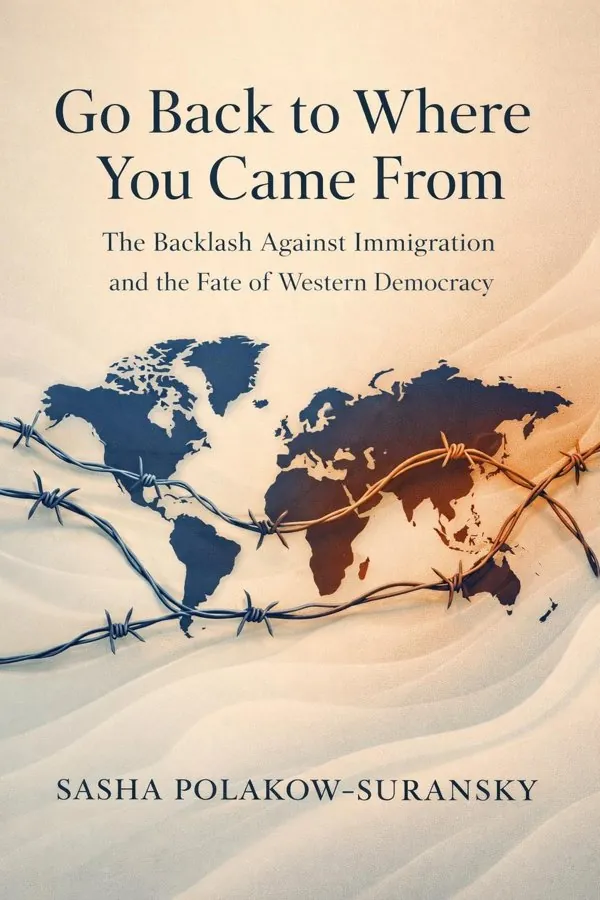
Go Back to Where You Came From: The Backlash Against Immigration and the Fate of Western Democracy: Summary & Key Insights
 10 min6 chaptersAudio available
What Is Go Back to Where You Came From: The Backlash Against Immigration and the Fate of Western Democracy About?
Go Back to Where You Came From: The Backlash Against Immigration and the Fate of Western Democracy by Sasha Polakow-Suransky is a politics book spanning 6 pages. This book examines the rise of anti-immigrant sentiment and right-wing populism across Western democracies. Drawing on extensive reporting and interviews, Polakow-Suransky explores how fear of immigration and cultural change has reshaped politics in Europe and the United States, threatening liberal democratic values.
This FizzRead summary covers all 6 key chapters of Go Back to Where You Came From: The Backlash Against Immigration and the Fate of Western Democracy in approximately 10 minutes, distilling the most important ideas, arguments, and takeaways from Sasha Polakow-Suransky's work. Also available as an audio summary and Key Quotes Podcast.
Go Back to Where You Came From: The Backlash Against Immigration and the Fate of Western Democracy
This book examines the rise of anti-immigrant sentiment and right-wing populism across Western democracies. Drawing on extensive reporting and interviews, Polakow-Suransky explores how fear of immigration and cultural change has reshaped politics in Europe and the United States, threatening liberal democratic values.
Who Should Read Go Back to Where You Came From: The Backlash Against Immigration and the Fate of Western Democracy?
This book is perfect for anyone interested in politics and looking to gain actionable insights in a short read. Whether you're a student, professional, or lifelong learner, the key ideas from Go Back to Where You Came From: The Backlash Against Immigration and the Fate of Western Democracy by Sasha Polakow-Suransky will help you think differently.
- ✓Readers who enjoy politics and want practical takeaways
- ✓Professionals looking to apply new ideas to their work and life
- ✓Anyone who wants the core insights of Go Back to Where You Came From: The Backlash Against Immigration and the Fate of Western Democracy in just 10 minutes
Want the full summary?
Get instant access to this book summary and 100K+ more with Fizz Moment.
Get Free SummaryAvailable on App Store • Free to download
Key Chapters
After the trauma of World War II, Western Europe saw mass reconstruction, labor shortages, and a moral commitment to never repeat the catastrophes of nationalism and genocide. Countries like Britain, France, and Germany opened their doors—first to colonial subjects, then to guest workers from Southern Europe, Turkey, and North Africa. The United States, after decades of restrictive immigration policy, passed landmark civil rights–era legislation in 1965 that diversified its intake.
Initially, postwar immigration was framed as an economic necessity, not a social transformation. Governments welcomed workers but rarely prepared for their eventual settlement. By the 1970s and 1980s, what had been seen as temporary flows became permanent communities. The ideals of multiculturalism emerged, particularly in Britain and Canada, promising coexistence without forced assimilation. But that ideal became a cultural flashpoint. To many citizens, the growing diversity raised questions about identity and belonging.
Liberal democracies faced a paradox: the same openness that defined their postwar order also challenged old notions of nationhood. While elites congratulated themselves on tolerance, working-class voters felt neglected, convinced that the benefits of globalization and migration accrued upward. This divergence, latent for decades, would become explosive in the twenty-first century. The groundwork for today’s populist backlash was laid not in the refugee crisis of 2015 or the 2016 U.S. election, but long before—in unacknowledged cultural unease and unfulfilled economic promises.
Populism draws its energy from grievance. In the 1990s, with the end of the Cold War, many believed that liberal democracy had triumphed. Yet beneath the surface, deindustrialization hollowed out communities, automation replaced manual labor, and neoliberal policies eroded welfare safety nets. As globalization accelerated, those left behind ceased to trust traditional parties—especially center-left ones that had embraced market logic.
From Marine Le Pen’s rebranding of France’s far right to Nigel Farage’s anti-Brexit crusade, populists learned to fuse economic discontent with cultural alarm. Immigrants and refugees became convenient symbols of everything that was supposedly going wrong: job insecurity, rising inequality, even crime and terrorism. In their hands, immigration wasn’t a policy issue—it was a moral drama of insiders versus outsiders, patriots versus elites.
Journalists and politicians alike often underestimate how emotional identity politics drives these movements. I saw firsthand how nostalgia—imagining a purer past—became a political weapon. Populists promise to restore control and meaning in a chaotic world. The split between rural heartlands and cosmopolitan cities widened, and truth itself became contested terrain. Populism thus cannot be explained by economics alone; it arises from a craving for recognition and moral certainty that liberal societies have failed to satisfy.
+ 4 more chapters — available in the FizzRead app
All Chapters in Go Back to Where You Came From: The Backlash Against Immigration and the Fate of Western Democracy
About the Author
Sasha Polakow-Suransky is an American journalist and author. He has served as an editor at Foreign Policy and The New York Times, and his work focuses on international politics, nationalism, and democracy.
Get This Summary in Your Preferred Format
Read or listen to the Go Back to Where You Came From: The Backlash Against Immigration and the Fate of Western Democracy summary by Sasha Polakow-Suransky anytime, anywhere. FizzRead offers multiple formats so you can learn on your terms — all free.
Available formats: App · Audio · PDF · EPUB — All included free with FizzRead
Download Go Back to Where You Came From: The Backlash Against Immigration and the Fate of Western Democracy PDF and EPUB Summary
Key Quotes from Go Back to Where You Came From: The Backlash Against Immigration and the Fate of Western Democracy
“After the trauma of World War II, Western Europe saw mass reconstruction, labor shortages, and a moral commitment to never repeat the catastrophes of nationalism and genocide.”
“Populism draws its energy from grievance.”
Frequently Asked Questions about Go Back to Where You Came From: The Backlash Against Immigration and the Fate of Western Democracy
Go Back to Where You Came From: The Backlash Against Immigration and the Fate of Western Democracy by Sasha Polakow-Suransky is a politics book that explores key ideas across 6 chapters. This book examines the rise of anti-immigrant sentiment and right-wing populism across Western democracies. Drawing on extensive reporting and interviews, Polakow-Suransky explores how fear of immigration and cultural change has reshaped politics in Europe and the United States, threatening liberal democratic values.
You Might Also Like

Antifa: The Anti-Fascist Handbook
Mark Bray
10 min
Attack from Within: How Disinformation Is Sabotaging America
Barbara McQuade
10 min
Coercion, Capital, and European States, AD 990–1992
Charles Tilly
10 min
Digital Democracy: Concepts, Methodologies, Tools, and Applications
Various Authors
10 min
Fascism
Stanley G. Payne
10 min
Fire And Fury: Inside The Trump White House
Michael Wolff
10 minBrowse by Category
Ready to read Go Back to Where You Came From: The Backlash Against Immigration and the Fate of Western Democracy?
Get the full summary and 100K+ more books with Fizz Moment.