
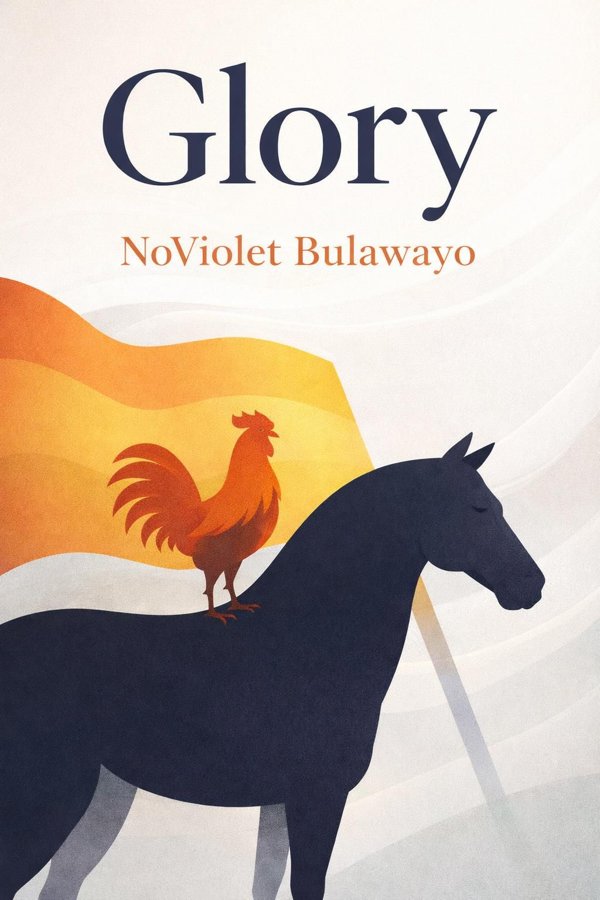
Glory: Summary & Key Insights
 10 min9 chaptersAudio available
Key Takeaways from Glory
Fear is most powerful when it becomes ordinary.
The fall of a dictator can look like liberation, but Bulawayo warns that a dramatic ending does not automatically produce a new beginning.
Hope becomes most dangerous when it is desperate, because desperate hope can be easily manipulated.
History is often told through rulers, but Bulawayo insists that the truest record lives in the voices pushed to the edges.
A nation that forgets its wounds becomes vulnerable to repeating them.
What Is Glory About?
Glory by NoViolet Bulawayo is a bestsellers book spanning 5 pages. Set in the fictional nation of Jidada and populated by talking animals, Glory is NoViolet Bulawayo’s bold, inventive satire of dictatorship, revolution, and political betrayal. The novel draws unmistakable inspiration from Zimbabwe’s recent history, especially the dramatic fall of longtime ruler Robert Mugabe, yet its reach is much wider. Bulawayo uses allegory to show how authoritarian systems outlive individual leaders, how hope can be manipulated, and how ordinary people continue resisting even when change seems impossible. What makes Glory so striking is its tonal range: it is funny, absurd, heartbreaking, lyrical, and deeply political all at once. Beneath the fable-like surface lies a serious meditation on trauma, memory, propaganda, exile, and the unfinished work of national renewal. Bulawayo, already celebrated for We Need New Names and for her sharp portrayal of Zimbabwean life at home and abroad, brings both literary skill and moral urgency to this story. Glory matters because it refuses easy triumph. It asks what happens after the dictator falls—and whether a wounded nation can imagine real freedom rather than a recycled version of oppression.
This FizzRead summary covers all 9 key chapters of Glory in approximately 10 minutes, distilling the most important ideas, arguments, and takeaways from NoViolet Bulawayo's work. Also available as an audio summary and Key Quotes Podcast.
Glory
Set in the fictional nation of Jidada and populated by talking animals, Glory is NoViolet Bulawayo’s bold, inventive satire of dictatorship, revolution, and political betrayal. The novel draws unmistakable inspiration from Zimbabwe’s recent history, especially the dramatic fall of longtime ruler Robert Mugabe, yet its reach is much wider. Bulawayo uses allegory to show how authoritarian systems outlive individual leaders, how hope can be manipulated, and how ordinary people continue resisting even when change seems impossible. What makes Glory so striking is its tonal range: it is funny, absurd, heartbreaking, lyrical, and deeply political all at once. Beneath the fable-like surface lies a serious meditation on trauma, memory, propaganda, exile, and the unfinished work of national renewal. Bulawayo, already celebrated for We Need New Names and for her sharp portrayal of Zimbabwean life at home and abroad, brings both literary skill and moral urgency to this story. Glory matters because it refuses easy triumph. It asks what happens after the dictator falls—and whether a wounded nation can imagine real freedom rather than a recycled version of oppression.
Who Should Read Glory?
This book is perfect for anyone interested in bestsellers and looking to gain actionable insights in a short read. Whether you're a student, professional, or lifelong learner, the key ideas from Glory by NoViolet Bulawayo will help you think differently.
- ✓Readers who enjoy bestsellers and want practical takeaways
- ✓Professionals looking to apply new ideas to their work and life
- ✓Anyone who wants the core insights of Glory in just 10 minutes
Want the full summary?
Get instant access to this book summary and 100K+ more with Fizz Moment.
Get Free SummaryAvailable on App Store • Free to download
Key Chapters
Fear is most powerful when it becomes ordinary. That is the condition Bulawayo captures in Jidada under Old Horse, the aging ruler whose authority stretches into every corner of public and private life. Citizens perform loyalty not simply because they believe in him, but because survival depends on it. The regime feeds on spectacle, propaganda, slogans, and rituals of obedience, creating a world in which truth is dangerous and silence becomes a daily habit. Old Horse is more than one man; he represents a political order that turns the state into a machine for preserving itself.
Bulawayo’s satire works because it reveals how authoritarianism operates at the level of emotion and routine. The people of Jidada learn to censor themselves, mistrust their neighbors, and adapt to absurdity. Corruption is normalized. Violence is justified as patriotism. National history is rewritten to glorify the leader and erase dissent. Even those who see through the lies must calculate how much honesty they can afford.
This idea extends beyond Jidada. In any workplace, institution, or country, unhealthy power survives when people are pressured to repeat falsehoods, flatter leaders, and treat injustice as normal. The novel helps readers recognize these warning signs: personality cults, attacks on critics, fear-based loyalty, and the collapse of independent voices.
A practical way to apply this insight is to pay attention to what cannot be said openly in a system. Ask: Who is protected? Who is punished for telling the truth? What stories are repeated until they feel inevitable? Bulawayo reminds us that oppression often begins not with dramatic events, but with small daily compromises. Actionable takeaway: notice where fear has been normalized, and begin by naming the truth in whatever space you can safely influence.
The fall of a dictator can look like liberation, but Bulawayo warns that a dramatic ending does not automatically produce a new beginning. In Glory, Old Horse’s downfall unfolds through shifting alliances, elite panic, and the crumbling of a carefully maintained myth of invincibility. The same figures who once praised him begin distancing themselves, not because they have discovered principle, but because they sense political weather changing. His wife Marvellous fights to preserve their dynasty, exposing how authoritarian power often becomes familial, theatrical, and delusional.
This section of the novel captures a crucial political truth: regimes often weaken from internal fractures before they collapse in public view. Opportunists rebrand themselves. Former loyalists become self-declared reformers. Citizens celebrate, but beneath the jubilation lies uncertainty. Has the system truly changed, or have only the faces changed?
Bulawayo’s insight is highly practical. In politics, organizations, and even personal leadership transitions, the removal of a dominant figure can create a misleading sense of renewal. People may assume the hardest work is over, when in fact the deeper challenge has just begun: rebuilding institutions, restoring trust, and preventing old habits from reassembling under new management.
Readers can apply this lesson by resisting symbolic victories that are not matched by structural change. After any transition, ask concrete questions: Are abusive rules gone? Are independent institutions stronger? Are those who suffered being heard? Are power and resources distributed differently? Celebration matters, but scrutiny matters more. Bulawayo refuses the fantasy that history naturally bends toward justice once a ruler falls. Actionable takeaway: whenever a powerful figure exits, look past the spectacle and evaluate whether the system beneath them has truly been transformed.
Hope becomes most dangerous when it is desperate, because desperate hope can be easily manipulated. In Glory, the figure of Destiny emerges as a focal point for national longing after Old Horse’s fall. She represents possibility, renewal, and the emotional hunger of a people who need to believe their suffering has not been meaningless. Yet Bulawayo treats hope with complexity. It is necessary for survival, but it can also be exploited by politicians, movements, and narratives that promise salvation without substance.
Destiny’s return to Jidada also raises questions about exile, belonging, and responsibility. Those who leave a broken country often carry guilt, distance, and idealism all at once. They may see possibilities that those inside can no longer imagine, but they may also underestimate the depth of institutional decay. Through Destiny, Bulawayo explores what it means to come back to a wounded homeland not as a savior, but as a participant in collective struggle.
This idea applies widely. In moments of social transition, communities often attach their hopes to charismatic individuals. But real change requires more than symbolic leaders. It requires civic engagement, accountability, and sustained work. Hope must mature from emotion into practice.
A useful way to apply this lesson is to distinguish inspirational language from actionable commitments. When someone promises change, ask what structures, policies, or habits will make that change real. In personal life, too, hope works best when paired with disciplined effort rather than wishful thinking. Bulawayo does not dismiss hope; she insists on rescuing it from fantasy. Actionable takeaway: let hope move you, but anchor it in concrete action, shared responsibility, and a clear-eyed understanding of what renewal actually demands.
History is often told through rulers, but Bulawayo insists that the truest record lives in the voices pushed to the edges. Glory gives attention to the wounded, the poor, the disappeared, the women who bear violence, the citizens who whisper what official speeches deny. These marginalized voices are not decorative additions to the national story; they are the moral center of it. Their testimony exposes what propaganda hides and what triumphalist politics tries to erase.
One of the novel’s major achievements is showing resistance not only as dramatic protest, but as endurance, witness, speech, memory, and mutual care. Some characters resist by documenting abuses. Others resist by refusing to forget the dead. Others still resist simply by surviving systems designed to crush them. Bulawayo broadens our understanding of political agency. Power is not challenged only in parliaments or coups; it is also challenged in kitchens, in grieving rituals, in stories told across generations, and in communities that protect one another.
This insight has practical significance. In any society or organization, the people most affected by injustice often understand it most clearly, yet they are least likely to control the official narrative. Listening to them is not charity; it is a method of seeing reality accurately. Whether one is leading a team, engaging in activism, or trying to understand a conflict, meaningful change begins by centering those who pay the highest price.
Bulawayo teaches readers to ask whose voices are absent from public conversations and why. Whose pain is inconvenient? Whose testimony is dismissed as anger, weakness, or exaggeration? Actionable takeaway: if you want to understand any system honestly, begin by listening to those it has harmed, and treat their stories as essential evidence rather than background noise.
A nation that forgets its wounds becomes vulnerable to repeating them. In Glory, memory is not passive recollection; it is a political act. Bulawayo shows how regimes manipulate memory by rewriting history, glorifying violence, and suppressing uncomfortable truths. Against this machinery of forgetting, citizens preserve stories of loss, betrayal, courage, and survival. These personal and communal memories become forms of resistance, because they interrupt official lies with lived reality.
The novel suggests that storytelling is one of the few tools capable of holding grief and truth together. Memory honors the disappeared, names the violated, and refuses the convenient fiction that a leadership change automatically cleanses the past. It also helps explain why national healing is so difficult. Unprocessed trauma lingers in families, institutions, and public life. People may speak of moving forward, but without acknowledging what happened, they are really carrying the past in silence.
This lesson applies to families, workplaces, and societies. Groups often try to preserve unity by avoiding painful history, yet avoidance usually deepens distrust. Honest remembrance can be uncomfortable, but it creates the conditions for accountability and repair. Commemorations, truth-telling, documentation, and open conversation are not merely symbolic acts. They help communities build a shared reality.
Readers can put this idea into practice by taking memory seriously wherever they are. Record stories. Preserve testimony. Resist sanitized versions of events that erase harm. In personal life, this may mean confronting difficult family histories; in public life, it may mean supporting archives, journalism, and truth commissions. Bulawayo makes clear that renewal depends on remembrance. Actionable takeaway: protect memory from erasure, because truthful storytelling is one of the first foundations of justice.
Sometimes absurdity is the only honest language for political life. By filling Jidada with talking animals, Bulawayo does not soften reality; she sharpens it. Satire allows her to expose vanity, cruelty, greed, and delusion with unusual force. The animal allegory creates enough distance for readers to see dictatorship not as a set of dry facts, but as a grotesque performance sustained by fear, flattery, and fantasy. The ridiculousness of the rulers makes their violence more chilling, not less.
This stylistic choice also connects Glory to a long literary tradition in which fable and allegory become vehicles for dangerous truths. By refusing straightforward realism, Bulawayo captures how authoritarian systems often feel surreal from the inside. Citizens are asked to believe contradictions, praise failure as genius, and treat staged mythology as national destiny. Satire mirrors that distortion. It reveals that the irrationality of power is itself a political fact.
For readers, this offers a practical lesson in interpretation. Serious issues are not always best understood through solemn language alone. Humor, irony, and exaggeration can uncover structures of domination that conventional analysis misses. In everyday life, satire can help us question public spectacles, empty rhetoric, and performative leadership. It trains us to notice when power relies on nonsense being treated as normal.
Bulawayo’s method encourages us to read beyond the literal and ask what comic surfaces are hiding. Which rituals are designed to command obedience? Which narratives are so exaggerated they become revealing? Actionable takeaway: do not dismiss the absurd; study it closely, because political systems often expose their deepest truths in the very moments they appear most ridiculous.
Removing one corrupt ruler is easier than dismantling the culture that made him possible. One of Glory’s bleakest and most valuable insights is that corruption is not merely personal misconduct; it is a system of habits, incentives, fears, and loyalties. Old Horse may fall, but the networks around him—military actors, political opportunists, propagandists, beneficiaries of patronage—do not disappear overnight. They adapt. They rename themselves. They present continuity as reform.
Bulawayo captures the painful realization that many post-authoritarian societies face: the old order does not vanish with a single event. The language of change may spread quickly, but institutions shaped by coercion and self-interest continue to reproduce inequality. Citizens who expected transformation encounter recycled slogans, selective justice, and cosmetic reform. Disappointment becomes one more burden the people must carry.
This insight travels easily into nonpolitical settings. A company can replace a toxic executive while preserving the same culture of silence and favoritism. A school can change its leadership while keeping harmful norms intact. Structural problems survive personnel changes unless incentives, rules, and accountability mechanisms change too.
Readers can apply this by learning to diagnose systems, not just personalities. Ask what practices reward dishonesty, who benefits from confusion, and how power circulates when no one is watching. Sustainable reform requires transparency, independent oversight, consequences for abuse, and a culture that values truth over loyalty.
Bulawayo refuses to romanticize transitions because she understands how deeply corruption embeds itself in daily life. Actionable takeaway: when evaluating change, focus less on new faces and more on whether the underlying rules, institutions, and patterns of reward have actually been rebuilt.
Distance does not end belonging; it complicates it. Glory explores exile as both wound and vantage point. Those who leave Jidada carry the country within them through memory, grief, anger, nostalgia, and unfinished responsibility. Exile can provide safety and perspective, allowing people to see a nation’s distortions more clearly. But it also produces fracture. Return is never simple, because the homeland exists both as reality and as a version preserved in memory.
Bulawayo, who has herself written compellingly about migration and displacement, portrays the diaspora not as detached observers but as emotionally entangled participants in national life. Exiles send money, track politics, argue online, dream of return, and wrestle with guilt over those left behind. Yet their relationship to change is complicated. They may become symbols of hope or targets of resentment. They may imagine repair without fully grasping how much those on the ground have endured.
This theme resonates beyond national exile. Many people experience distance from communities, institutions, or families that shaped them. Time away can deepen insight while weakening practical connection. Loving something from afar often means balancing idealism with humility.
The practical lesson is to approach return—literal or metaphorical—with listening rather than self-importance. If you reenter a community after a long absence, do not assume your clarity automatically grants authority. Learn what has changed. Respect those who stayed. Offer what you can without claiming to rescue others.
Bulawayo treats exile as a condition of divided loyalty and enduring attachment. It is painful, but it can also become a resource for witness and solidarity. Actionable takeaway: if distance has shaped your perspective, use that perspective in service of listening, supporting, and reconnecting rather than dominating the story.
Political joy is real, but without long-term work it evaporates into disillusionment. Glory ends up asking one of the most difficult questions in public life: what does genuine renewal require after years of fear, corruption, and violence? Bulawayo’s answer is unsentimental. A wounded society cannot be repaired by ceremony, slogans, or the symbolic removal of a tyrant alone. Renewal demands truth, institutional reform, civic courage, and the patient rebuilding of trust.
The novel highlights a tension common to moments of transition. Citizens need hope, symbols, and collective release. They need to believe history can change. But they also need structures that outlast emotion: courts that function, media that can speak freely, leaders who can be challenged, and communities willing to confront rather than conceal harm. Without these, public optimism becomes another broken promise.
This lesson is broadly applicable. Any broken system—whether a nation, organization, or family—may experience a brief period of relief after crisis. Yet repair requires sustained practices: honest communication, shared accountability, protection for the vulnerable, and clear consequences when old patterns return. Renewal is not a mood. It is a discipline.
Readers can use this idea by translating broad desires into specific commitments. If you want justice, what process will support it? If you want reconciliation, what truth must be spoken first? If you want a healthier culture, what behaviors must stop, and who will enforce that change?
Bulawayo leaves readers with a form of hope that is harder but more durable than celebration. It is hope built through work, memory, and collective courage. Actionable takeaway: whenever a crisis passes, resist the urge to declare victory too soon, and commit instead to the slow practices that make renewal real.
All Chapters in Glory
About the Author
NoViolet Bulawayo is a Zimbabwean author celebrated for her inventive language, political insight, and emotionally resonant storytelling. Born in Zimbabwe, she later moved to the United States, and her work often reflects the tensions between home and exile, memory and reinvention. She rose to international prominence with her debut novel, We Need New Names, which was shortlisted for the Booker Prize and praised for its vivid portrayal of childhood, migration, and national crisis. Her second novel, Glory, confirmed her reputation as one of the most important contemporary African writers, using satire and allegory to explore dictatorship, resistance, and postcolonial power. Bulawayo is known for blending literary experimentation with urgent social themes, creating fiction that is both artistically ambitious and deeply engaged with the political realities shaping modern life.
Get This Summary in Your Preferred Format
Read or listen to the Glory summary by NoViolet Bulawayo anytime, anywhere. FizzRead offers multiple formats so you can learn on your terms — all free.
Available formats: App · Audio · PDF · EPUB — All included free with FizzRead
Download Glory PDF and EPUB Summary
Key Quotes from Glory
“Fear is most powerful when it becomes ordinary.”
“The fall of a dictator can look like liberation, but Bulawayo warns that a dramatic ending does not automatically produce a new beginning.”
“Hope becomes most dangerous when it is desperate, because desperate hope can be easily manipulated.”
“History is often told through rulers, but Bulawayo insists that the truest record lives in the voices pushed to the edges.”
“A nation that forgets its wounds becomes vulnerable to repeating them.”
Frequently Asked Questions about Glory
Glory by NoViolet Bulawayo is a bestsellers book that explores key ideas across 9 chapters. Set in the fictional nation of Jidada and populated by talking animals, Glory is NoViolet Bulawayo’s bold, inventive satire of dictatorship, revolution, and political betrayal. The novel draws unmistakable inspiration from Zimbabwe’s recent history, especially the dramatic fall of longtime ruler Robert Mugabe, yet its reach is much wider. Bulawayo uses allegory to show how authoritarian systems outlive individual leaders, how hope can be manipulated, and how ordinary people continue resisting even when change seems impossible. What makes Glory so striking is its tonal range: it is funny, absurd, heartbreaking, lyrical, and deeply political all at once. Beneath the fable-like surface lies a serious meditation on trauma, memory, propaganda, exile, and the unfinished work of national renewal. Bulawayo, already celebrated for We Need New Names and for her sharp portrayal of Zimbabwean life at home and abroad, brings both literary skill and moral urgency to this story. Glory matters because it refuses easy triumph. It asks what happens after the dictator falls—and whether a wounded nation can imagine real freedom rather than a recycled version of oppression.
More by NoViolet Bulawayo
You Might Also Like

The Godfather
Mario Puzo
10 min
The Handmaid's Tale
Margaret Atwood
10 min
The Hunger Games
Suzanne Collins
10 min
The Nightingale
Kristin Hannah
10 min
The Seven Husbands of Evelyn Hugo
Taylor Jenkins Reid
10 min
Backwater Justice
Fern Michaels
10 minBrowse by Category
Ready to read Glory?
Get the full summary and 100K+ more books with Fizz Moment.