
Game Changer: Summary & Key Insights
 10 min8 chaptersAudio available
Key Takeaways from Game Changer
We often think life changes gradually, but sometimes everything shifts in an instant.
The most powerful advantages are often the ones people never have to notice.
People rarely change because they are told to care; they change when their assumptions stop making sense.
Some of the most dangerous social scripts are the ones boys are taught to admire.
Fairness is often described as a principle, but in practice it can determine who feels safe walking through the world.
What Is Game Changer About?
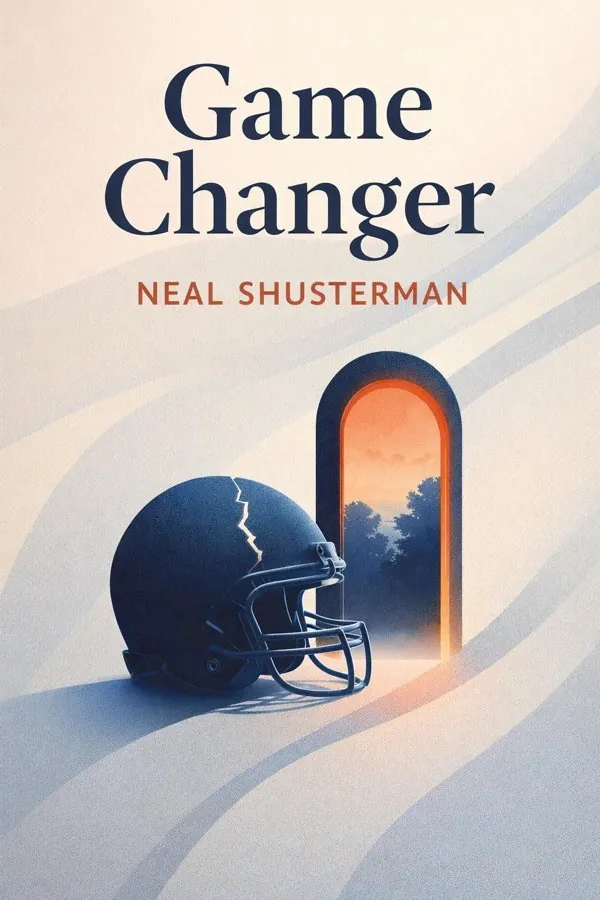
Game Changer by Neal Shusterman is a bestsellers book. What if one hit could change not only your future, but the very structure of your world? In Game Changer, Neal Shusterman takes a familiar American setting, high school football, and turns it into a sharp, unsettling exploration of identity, privilege, social bias, and the fragile assumptions people live by every day. The novel follows Ash, a talented teenage athlete whose life begins to shift after a brutal injury on the field. But this is not simply a sports story or a recovery narrative. With every strange change in Ash’s reality, Shusterman pushes readers to confront how race, gender, class, sexuality, and violence shape the lives people are allowed to live. The book matters because it transforms abstract social issues into deeply personal experiences. Rather than lecturing, it places both Ash and the reader inside alternate versions of everyday life, revealing how easily comfort depends on invisible advantages. Neal Shusterman, a bestselling and award-winning author known for thought-provoking young adult fiction such as Scythe and Challenger Deep, brings urgency, imagination, and emotional intelligence to this story. Game Changer is a timely novel that challenges readers to see the world, and themselves, with far greater honesty.
This FizzRead summary covers all 8 key chapters of Game Changer in approximately 10 minutes, distilling the most important ideas, arguments, and takeaways from Neal Shusterman's work. Also available as an audio summary and Key Quotes Podcast.
Game Changer
What if one hit could change not only your future, but the very structure of your world? In Game Changer, Neal Shusterman takes a familiar American setting, high school football, and turns it into a sharp, unsettling exploration of identity, privilege, social bias, and the fragile assumptions people live by every day. The novel follows Ash, a talented teenage athlete whose life begins to shift after a brutal injury on the field. But this is not simply a sports story or a recovery narrative. With every strange change in Ash’s reality, Shusterman pushes readers to confront how race, gender, class, sexuality, and violence shape the lives people are allowed to live.
The book matters because it transforms abstract social issues into deeply personal experiences. Rather than lecturing, it places both Ash and the reader inside alternate versions of everyday life, revealing how easily comfort depends on invisible advantages. Neal Shusterman, a bestselling and award-winning author known for thought-provoking young adult fiction such as Scythe and Challenger Deep, brings urgency, imagination, and emotional intelligence to this story. Game Changer is a timely novel that challenges readers to see the world, and themselves, with far greater honesty.
Who Should Read Game Changer?
This book is perfect for anyone interested in bestsellers and looking to gain actionable insights in a short read. Whether you're a student, professional, or lifelong learner, the key ideas from Game Changer by Neal Shusterman will help you think differently.
- ✓Readers who enjoy bestsellers and want practical takeaways
- ✓Professionals looking to apply new ideas to their work and life
- ✓Anyone who wants the core insights of Game Changer in just 10 minutes
Want the full summary?
Get instant access to this book summary and 100K+ more with Fizz Moment.
Get Free SummaryAvailable on App Store • Free to download
Key Chapters
We often think life changes gradually, but sometimes everything shifts in an instant. That idea sits at the heart of Game Changer. Ash, a high school football player, suffers a violent hit during a game, and afterward his world begins to change in ways that feel both subtle and shocking. Familiar people act differently, relationships transform, and whole social dynamics are rearranged. What makes this premise powerful is that Shusterman uses a seemingly impossible event to highlight a deeply real truth: the life we take for granted is built on conditions we rarely examine until they disappear.
Ash’s altered realities force him to realize that identity is not just about who he thinks he is. It is also shaped by how society responds to him, what assumptions others make, and what risks he does or does not face. One version of life may feel normal only because it benefits him. Another may expose hidden unfairness. By making Ash move between realities, the novel dramatizes how quickly certainty can collapse.
This concept has practical relevance beyond fiction. People often understand social systems only from the place they occupy within them. A student who feels safe at school may not notice the fear another student experiences. A teenager who is trusted by authority figures may never realize how differently others are treated. The book encourages readers to ask: if one variable in my life changed, race, gender, class, reputation, ability, would the world still meet me the same way?
The actionable takeaway is simple: challenge the idea that your current experience is universal. Regularly ask what assumptions make your reality feel stable, and what others might be living through that you have never had to see.
The most powerful advantages are often the ones people never have to notice. In Game Changer, Ash begins as someone who moves through the world with the confidence of a well-liked athlete. He is not cruel or intentionally blind, but he is comfortable, and comfort can hide truth. As his reality keeps changing, he starts to see that what once felt ordinary was actually a protected position shaped by privilege.
Shusterman handles this idea with nuance. He does not present Ash as a villain who must be condemned. Instead, he presents him as a recognizable teenager who has inherited assumptions from his environment. That makes the lesson more compelling. Privilege is not always obvious arrogance. Often it is the luxury of not having to think about danger, bias, or exclusion at all. When Ash experiences versions of life in which those protections are removed, he begins to understand how uneven the rules really are.
The book shows that privilege can operate through race, gender expectations, economic security, popularity, and social acceptance. Someone may be judged as harmless in one reality and threatening in another. A person may be heard in one context and ignored in the next. These shifts expose how unfairness survives not only through open hostility but also through ordinary systems and habits.
In real life, this means paying attention to what feels effortless for you. Are you used to being believed, welcomed, or given second chances? Do institutions seem fair because they have worked in your favor? One practical way to apply this insight is to listen without defensiveness when others describe barriers you do not face.
The actionable takeaway: identify one area of your life where things seem easy or automatic, and ask whether that ease comes from talent alone or from advantages others may not receive.
People rarely change because they are told to care; they change when their assumptions stop making sense. One of the novel’s smartest moves is showing that empathy does not emerge from abstract ideals alone. Ash is forced toward empathy because the world no longer behaves according to his expectations. Each reality shift unsettles his confidence and pushes him to experience other people’s lives from a more vulnerable position.
This matters because Game Changer does not treat empathy as simple kindness. It presents empathy as an active, difficult process of re-seeing the world. Ash must confront the fact that his previous understanding was incomplete. He cannot just feel sorry for others. He must recognize that systems of inequality are real, pervasive, and often normalized. His growth comes from discomfort, confusion, and repeated confrontation with realities he would have otherwise ignored.
That insight applies directly to everyday life. Many people believe they are empathetic because they mean well, yet they rarely examine how their worldview limits what they can perceive. Real empathy asks harder questions. What have I not had to experience? What voices have I dismissed because their reality felt unfamiliar? What patterns have I mistaken for isolated incidents? In schools, workplaces, and families, empathy grows when people are willing to let someone else’s experience challenge their own narrative.
Practical examples include reading outside your own identity group, listening to marginalized perspectives without immediately debating them, and noticing when discomfort makes you want to retreat. The point is not guilt for its own sake. The point is expanded perception.
The actionable takeaway is to practice empathy as investigation, not sentiment. This week, seek out one perspective that unsettles your assumptions and spend time understanding it before responding.
Some of the most dangerous social scripts are the ones boys are taught to admire. In Game Changer, football is more than a sport. It is a symbol of aggression, hierarchy, status, and the pressure to perform a certain kind of masculinity. Ash’s injury becomes a doorway into examining how male identity is shaped by competition, emotional suppression, and the constant need to appear strong.
Shusterman does not argue that sports are inherently harmful. Instead, he shows how a culture around sports can reward recklessness, excuse cruelty, and define worth through dominance. Ash’s identity as an athlete has given him belonging and recognition, but it has also protected him from questioning the values embedded in that role. As his realities change, he sees how ideas about toughness and masculinity affect not just him, but everyone around him, including those excluded or harmed by those norms.
This theme is especially relevant for teenagers who are still building their sense of self. Boys are often told to win, endure pain, and avoid vulnerability. Those expectations can make it harder to recognize harm, apologize sincerely, or imagine alternatives to power. The novel invites readers to ask whether strength should really mean invulnerability, or whether maturity requires honesty, accountability, and care.
A practical application is to examine the language used in teams, friend groups, or classrooms. Are people mocked for sensitivity? Is violence glorified as proof of character? Are dominance and respect treated as the same thing? Changing those patterns starts with naming them.
The actionable takeaway: question one belief you have absorbed about what it means to be strong, and replace it with a definition that includes self-awareness, compassion, and responsibility.
Fairness is often described as a principle, but in practice it can determine who feels safe walking through the world. One of Game Changer’s strongest contributions is showing that bias is not merely about hurt feelings or isolated prejudice. It affects risk, trust, freedom, and access. As Ash’s reality shifts, he sees that the same person can be treated completely differently depending on how others perceive identity markers such as race, class, gender, or sexuality.
This makes the novel especially effective as social commentary. Rather than offering statistics or slogans, it personalizes the consequences of bias. A routine interaction can become threatening. A joke can become exposure. A school environment that once felt welcoming can suddenly feel dangerous. Shusterman reveals that discrimination often operates through a chain of assumptions: who belongs, who is suspicious, who is protected, who is disposable.
The practical lesson is that bias should be measured not just by intention but by outcome. Someone may insist they meant no harm, yet still contribute to a system in which others bear disproportionate risk. In schools, for example, dress codes, discipline policies, and expectations about behavior may seem neutral while affecting students unequally. In everyday relationships, people may extend patience to some and scrutiny to others without realizing it.
Readers can apply this insight by paying attention to patterns rather than isolated moments. Who gets interrupted? Who gets the benefit of the doubt? Who is watched more closely? Who feels the need to constantly prove they belong? Recognizing these patterns is the first step toward changing them.
The actionable takeaway: start noticing where safety and opportunity are distributed unevenly in your environment, and intervene in one small but concrete way, whether by speaking up, changing a practice, or supporting someone more vulnerable.
We like to imagine identity as something private and self-contained, but much of who we are depends on the world reflecting us back in certain ways. Game Changer explores this with unusual clarity. Ash does not simply remain the same person in different settings. Each new reality changes how others perceive him, how institutions treat him, and how he understands himself. The novel suggests that identity is built in dialogue with social structures, family expectations, peer dynamics, and cultural narratives.
This idea helps explain why social change can feel so destabilizing. If a person has always been affirmed, centered, or excused, then any challenge to that arrangement may feel like a threat to their identity rather than a correction of imbalance. Ash’s disorientation captures that emotional truth. He is not only observing external changes. He is grappling with the unsettling realization that his old self-image was incomplete.
That insight has broad application. Many conflicts around race, gender, and social power are intensified because people think acknowledging systemic advantage somehow erases personal effort or moral worth. But Game Changer points toward a more mature understanding. You can be sincere, hardworking, and still shaped by structures bigger than you. Recognizing that does not destroy identity. It makes it more honest.
In practical terms, this means asking not just Who am I? but also How have my surroundings helped define that answer? What messages about belonging, desirability, intelligence, or danger have I absorbed? Which of those messages should I keep, and which should I challenge?
The actionable takeaway is to map your identity relationally. List three ways your environment has shaped how you see yourself, then decide which influences deserve to keep guiding you.
Sometimes the most realistic books are the ones that bend reality. Game Changer uses speculative elements, shifting realities, altered timelines, and destabilized identity, not to escape the real world, but to reveal it more clearly. By moving Ash through different versions of his life, Shusterman creates a narrative experiment: what hidden truths become obvious when familiar conditions are rearranged?
This is one reason the novel works so well, especially for younger readers. Social issues such as privilege, racism, gender norms, and structural bias can feel abstract when discussed in purely conceptual language. But fiction allows readers to feel those pressures from the inside. The speculative frame lowers defenses while deepening emotional engagement. Readers are drawn by mystery and momentum, then confronted with uncomfortable recognitions about their own world.
The book demonstrates a broader value of literature: stories can expand moral imagination. They can help people rehearse complexity before they encounter it in life. In classrooms, Game Changer can open discussions that might otherwise feel accusatory or simplified. In personal reading, it offers a way to reflect on difficult topics without reducing them to slogans.
The practical application is to take fiction seriously as a tool for ethical development. Instead of asking only whether a story is entertaining, ask what perception it sharpens. What assumptions does it expose? What emotional realities does it make newly visible? The best speculative fiction leaves readers more attentive to the ordinary world, not less.
The actionable takeaway: after finishing a novel, write down one real-world issue the story helped you understand differently. Treat fiction not just as escape, but as training for seeing more clearly.
All Chapters in Game Changer
About the Author
Neal Shusterman is an acclaimed American author celebrated for writing imaginative, emotionally resonant fiction for young adult and middle grade readers. He is best known for books that combine high-concept premises with serious ethical and psychological questions. His notable works include the Arc of a Scythe series, Unwind, Dry, and Challenger Deep, which won the National Book Award for Young People’s Literature. Shusterman’s storytelling often explores identity, morality, social systems, and the consequences of human choices, making his novels popular with both teen and adult audiences. He has earned a reputation for creating thought-provoking stories that remain fast-paced and accessible. In Game Changer, he brings his signature blend of speculative imagination and social insight to a powerful examination of privilege, empathy, masculinity, and the hidden structures that shape everyday life.
Get This Summary in Your Preferred Format
Read or listen to the Game Changer summary by Neal Shusterman anytime, anywhere. FizzRead offers multiple formats so you can learn on your terms — all free.
Available formats: App · Audio · PDF · EPUB — All included free with FizzRead
Download Game Changer PDF and EPUB Summary
Key Quotes from Game Changer
“We often think life changes gradually, but sometimes everything shifts in an instant.”
“The most powerful advantages are often the ones people never have to notice.”
“People rarely change because they are told to care; they change when their assumptions stop making sense.”
“Some of the most dangerous social scripts are the ones boys are taught to admire.”
“Fairness is often described as a principle, but in practice it can determine who feels safe walking through the world.”
Frequently Asked Questions about Game Changer
Game Changer by Neal Shusterman is a bestsellers book that explores key ideas across 8 chapters. What if one hit could change not only your future, but the very structure of your world? In Game Changer, Neal Shusterman takes a familiar American setting, high school football, and turns it into a sharp, unsettling exploration of identity, privilege, social bias, and the fragile assumptions people live by every day. The novel follows Ash, a talented teenage athlete whose life begins to shift after a brutal injury on the field. But this is not simply a sports story or a recovery narrative. With every strange change in Ash’s reality, Shusterman pushes readers to confront how race, gender, class, sexuality, and violence shape the lives people are allowed to live. The book matters because it transforms abstract social issues into deeply personal experiences. Rather than lecturing, it places both Ash and the reader inside alternate versions of everyday life, revealing how easily comfort depends on invisible advantages. Neal Shusterman, a bestselling and award-winning author known for thought-provoking young adult fiction such as Scythe and Challenger Deep, brings urgency, imagination, and emotional intelligence to this story. Game Changer is a timely novel that challenges readers to see the world, and themselves, with far greater honesty.
More by Neal Shusterman

You Might Also Like

The Godfather
Mario Puzo
10 min
The Handmaid's Tale
Margaret Atwood
10 min
The Hunger Games
Suzanne Collins
10 min
The Nightingale
Kristin Hannah
10 min
The Seven Husbands of Evelyn Hugo
Taylor Jenkins Reid
10 min
Backwater Justice
Fern Michaels
10 minBrowse by Category
Ready to read Game Changer?
Get the full summary and 100K+ more books with Fizz Moment.