
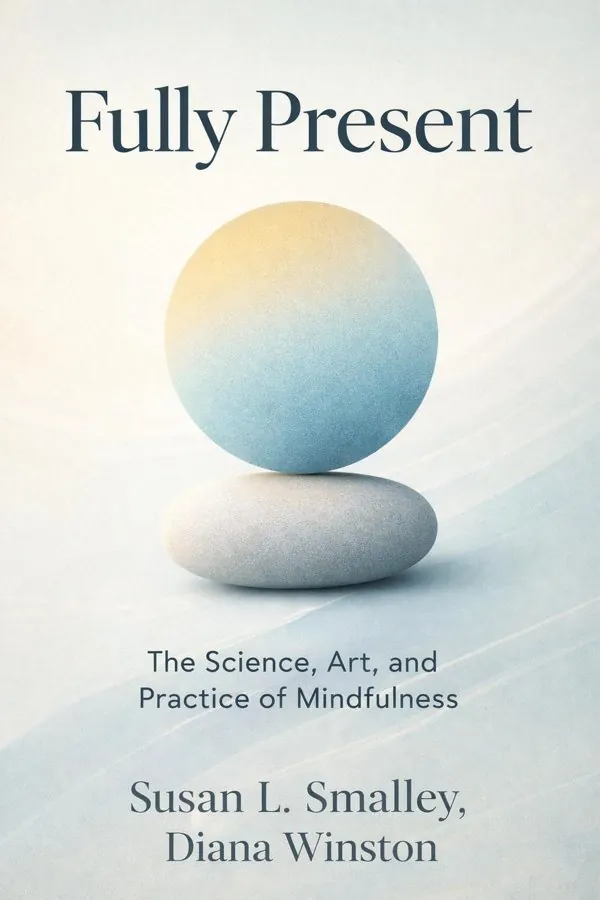
Fully Present: The Science, Art, and Practice of Mindfulness: Summary & Key Insights
by Susan L. Smalley, Diana Winston
 10 min14 chaptersAudio available
What Is Fully Present: The Science, Art, and Practice of Mindfulness About?
Fully Present: The Science, Art, and Practice of Mindfulness by Susan L. Smalley, Diana Winston is a mindset book spanning 14 pages. Fully Present es una guía práctica y científica sobre la atención plena (mindfulness), escrita por la neurocientífica Susan L. Smalley y la instructora de meditación Diana Winston. El libro explora cómo la práctica de la atención plena puede mejorar la salud mental, la concentración y el bienestar general, combinando investigaciones científicas con ejercicios y técnicas accesibles para la vida cotidiana.
This FizzRead summary covers all 14 key chapters of Fully Present: The Science, Art, and Practice of Mindfulness in approximately 10 minutes, distilling the most important ideas, arguments, and takeaways from Susan L. Smalley, Diana Winston's work. Also available as an audio summary and Key Quotes Podcast.
Fully Present: The Science, Art, and Practice of Mindfulness
Fully Present es una guía práctica y científica sobre la atención plena (mindfulness), escrita por la neurocientífica Susan L. Smalley y la instructora de meditación Diana Winston. El libro explora cómo la práctica de la atención plena puede mejorar la salud mental, la concentración y el bienestar general, combinando investigaciones científicas con ejercicios y técnicas accesibles para la vida cotidiana.
Who Should Read Fully Present: The Science, Art, and Practice of Mindfulness?
This book is perfect for anyone interested in mindset and looking to gain actionable insights in a short read. Whether you're a student, professional, or lifelong learner, the key ideas from Fully Present: The Science, Art, and Practice of Mindfulness by Susan L. Smalley, Diana Winston will help you think differently.
- ✓Readers who enjoy mindset and want practical takeaways
- ✓Professionals looking to apply new ideas to their work and life
- ✓Anyone who wants the core insights of Fully Present: The Science, Art, and Practice of Mindfulness in just 10 minutes
Want the full summary?
Get instant access to this book summary and 100K+ more with Fizz Moment.
Get Free SummaryAvailable on App Store • Free to download
Key Chapters
Mindfulness is deceptively simple. It means paying full attention to what is happening right now. But as we soon realize, life rarely grants us simplicity. Our attention is scattered, fragmented by technology, deadlines, and competing demands. What mindfulness offers is a way to reclaim presence. When you settle into awareness, even for a few breaths, you contact a steady ground beneath the chaos. You become both participant and observer in your own experience.
In the book, we emphasize that mindfulness is not about forcing calm or erasing thought, nor is it attached to any particular religion. It stems from ancient Buddhist training, yet today it is a secular, practical art supported by research. It is about familiarity with the workings of your own mind. The practice gently trains your attention to return, again and again, to the immediacy of experience. Over time, this awareness becomes a refuge—a quality of mind that can accompany you through every task, every emotion, and every challenge. In modern life, this skill is revolutionary. When you practice mindfulness, even amidst digital noise and constant multitasking, you restore your capacity to attend, to feel, and to connect genuinely. To be mindful is to be alive before life rushes past unnoticed.
Mindfulness has its roots in contemplative traditions, especially within Buddhism, where it was described as *sati*—the quality of full awareness and remembrance of the present. For centuries, it was cultivated by monks and meditators to deepen insight and compassion. In our book, we trace this lineage not to glorify ritual, but to show how these timeless insights intersect beautifully with the modern science of mind.
Neuroscience now confirms what meditators have long experienced: that sustained attention and open awareness change the brain. Through imaging studies, we see increases in activity within regions linked to concentration, empathy, and emotional regulation. Repeated practice thickens the prefrontal cortex, dampens stress-reactive circuits in the amygdala, and enhances connectivity between areas responsible for balanced mood and response flexibility. Mindfulness doesn’t only soothe momentary stress; it shifts the architecture of awareness itself.
Historically and scientifically, we observe that mindfulness operates on three levels. It begins with the act of focusing the mind, develops into insight, and culminates in compassionate understanding. These same stages now appear in cognitive research—where attention training correlates with improved working memory, immune response, and a capacity for what psychologists call emotional resilience. When ancient tradition meets empirical validation, mindfulness emerges not as mysticism, but as a robust method for cultivating human flourishing.
+ 12 more chapters — available in the FizzRead app
All Chapters in Fully Present: The Science, Art, and Practice of Mindfulness
About the Authors
Susan L. Smalley es profesora de psiquiatría en la Universidad de California, Los Ángeles (UCLA), especializada en genética del comportamiento y neurociencia. Diana Winston es directora de programas de atención plena en el Mindful Awareness Research Center de UCLA y reconocida instructora de meditación con amplia experiencia en la enseñanza de mindfulness.
Get This Summary in Your Preferred Format
Read or listen to the Fully Present: The Science, Art, and Practice of Mindfulness summary by Susan L. Smalley, Diana Winston anytime, anywhere. FizzRead offers multiple formats so you can learn on your terms — all free.
Available formats: App · Audio · PDF · EPUB — All included free with FizzRead
Download Fully Present: The Science, Art, and Practice of Mindfulness PDF and EPUB Summary
Key Quotes from Fully Present: The Science, Art, and Practice of Mindfulness
“It means paying full attention to what is happening right now.”
“Mindfulness has its roots in contemplative traditions, especially within Buddhism, where it was described as *sati*—the quality of full awareness and remembrance of the present.”
Frequently Asked Questions about Fully Present: The Science, Art, and Practice of Mindfulness
Fully Present: The Science, Art, and Practice of Mindfulness by Susan L. Smalley, Diana Winston is a mindset book that explores key ideas across 14 chapters. Fully Present es una guía práctica y científica sobre la atención plena (mindfulness), escrita por la neurocientífica Susan L. Smalley y la instructora de meditación Diana Winston. El libro explora cómo la práctica de la atención plena puede mejorar la salud mental, la concentración y el bienestar general, combinando investigaciones científicas con ejercicios y técnicas accesibles para la vida cotidiana.
You Might Also Like


Browse by Category
Ready to read Fully Present: The Science, Art, and Practice of Mindfulness?
Get the full summary and 100K+ more books with Fizz Moment.