
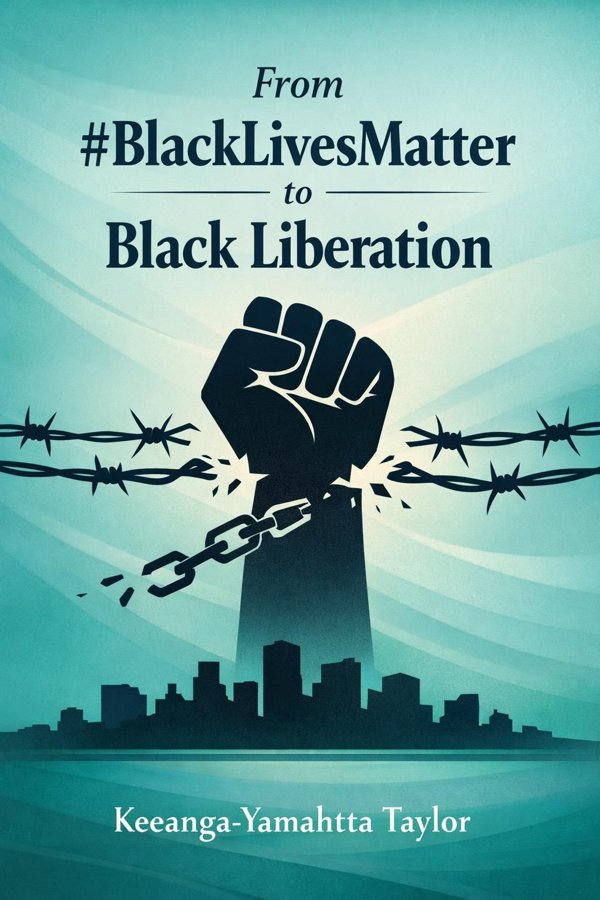
From #BlackLivesMatter to Black Liberation: Summary & Key Insights
 10 min6 chaptersAudio available
What Is From #BlackLivesMatter to Black Liberation About?
From #BlackLivesMatter to Black Liberation by Keeanga-Yamahtta Taylor is a sociology book spanning 6 pages. Activist and scholar Keeanga-Yamahtta Taylor examines the historical and contemporary dimensions of racism in the United States, tracing the development of the Black Lives Matter movement and its connection to broader struggles for Black liberation. The book explores structural inequality, mass incarceration, and the persistence of racial injustice, offering a critical analysis of how capitalism and systemic racism intersect.
This FizzRead summary covers all 6 key chapters of From #BlackLivesMatter to Black Liberation in approximately 10 minutes, distilling the most important ideas, arguments, and takeaways from Keeanga-Yamahtta Taylor's work. Also available as an audio summary and Key Quotes Podcast.
From #BlackLivesMatter to Black Liberation
Activist and scholar Keeanga-Yamahtta Taylor examines the historical and contemporary dimensions of racism in the United States, tracing the development of the Black Lives Matter movement and its connection to broader struggles for Black liberation. The book explores structural inequality, mass incarceration, and the persistence of racial injustice, offering a critical analysis of how capitalism and systemic racism intersect.
Who Should Read From #BlackLivesMatter to Black Liberation?
This book is perfect for anyone interested in sociology and looking to gain actionable insights in a short read. Whether you're a student, professional, or lifelong learner, the key ideas from From #BlackLivesMatter to Black Liberation by Keeanga-Yamahtta Taylor will help you think differently.
- ✓Readers who enjoy sociology and want practical takeaways
- ✓Professionals looking to apply new ideas to their work and life
- ✓Anyone who wants the core insights of From #BlackLivesMatter to Black Liberation in just 10 minutes
Want the full summary?
Get instant access to this book summary and 100K+ more with Fizz Moment.
Get Free SummaryAvailable on App Store • Free to download
Key Chapters
To understand the 21st-century cry of Black Lives Matter, we must begin with the long arc of struggle that preceded it. The civil rights movement of the 1950s and 1960s represented a monumental challenge to American apartheid, dismantling the legal scaffold of segregation and opening new possibilities for equality. Yet, as I emphasize in my analysis, it confronted but did not destroy the deeper structural forces that reproduce racial dominance.
In the aftermath of landmark legislation—the Civil Rights Act of 1964, the Voting Rights Act of 1965—Black freedom became constrained by a new politics of containment. Formal integration into the political and economic systems coincided with disinvestment from urban Black communities, the suburbanization of whiteness, and the criminalization of poverty. The promise of civil rights was hijacked by neoliberal restructuring: unemployment soared in Black neighborhoods while public services were gutted under the banner of austerity. In my discussion of this period, I underline how the state substituted the rhetoric of opportunity for substantive equality, creating a “post–civil rights” mythology that obscured persistent inequality.
By retracing this transition, I demonstrate how racial ideology evolved—not disappeared. The 1970s and 1980s saw the rise of a colorblind consensus that redefined racism as individual prejudice instead of systemic exclusion. This narrative allowed policymakers to deny the need for redistributive justice while blaming Black people for their own oppression. Through welfare reform, mass incarceration, and punitive policing, the state reasserted racial control under new guises.
This historical lens matters for anyone trying to understand why the language of progress rings hollow today. The generation that came of age chanting Black Lives Matter inherited both the victories and the defeats of the civil rights era. They inherited the courage of those who challenged Jim Crow, but also the institutions that learned to adapt, to absorb dissent, and to protect capital at any cost. This section thus invites readers to appreciate the depth of continuity—the way economic and racial domination have intertwined across decades despite the shifting language of equality.
When I trace the emergence of Black Lives Matter, I begin not with a single act of violence but with the accumulation of grief and rage that erupted into a new politics. The killings of Trayvon Martin and Michael Brown were tragic sparks, but the explosion had been long prepared. Black communities had watched the steady militarization of police forces, the normalization of surveillance, and the impunity of officers who kill. Social media gave this anger a voice, turning local protests into a global conversation.
From its earliest days, Black Lives Matter defied political orthodoxy. It refused centralized leadership, insisted on inclusivity, and embraced intersectionality. It challenged not only state violence but the complacency of liberal discourse that reduces racism to interpersonal conflict. In my analysis, I describe how this decentralized structure represents both strength and vulnerability: it democratizes activism, energizes local initiatives, but lacks a unified political strategy capable of confronting the machinery of governance.
Moreover, Black Lives Matter signified a generational rupture. Young activists had grown weary of the symbolic gestures of representation that marked the Obama years. They saw clearly that the existence of Black faces in high places did not dismantle the systems that brutalize ordinary Black lives. In their chants and their occupations, they demanded to redefine freedom—not as access to elite spaces, but as safety, dignity, and collective power.
The rise of this movement forced the nation to confront its contradictions. It placed police violence at the center of public consciousness, politicized a new generation, and created networks that linked local struggles in Ferguson, Baltimore, Chicago, and beyond. Yet, as I argue, the power of Black Lives Matter lies not simply in protest but in its potential to expand consciousness—to make visible the intersection between racial violence and economic exploitation. It is a call not just against the police, but against the system that makes police repression inevitable.
+ 4 more chapters — available in the FizzRead app
All Chapters in From #BlackLivesMatter to Black Liberation
About the Author
Keeanga-Yamahtta Taylor is an American scholar, writer, and activist. She is a professor of African American Studies at Princeton University and a leading voice on race, class, and social movements in the United States. Her work focuses on Black politics, housing inequality, and the intersections of race and capitalism.
Get This Summary in Your Preferred Format
Read or listen to the From #BlackLivesMatter to Black Liberation summary by Keeanga-Yamahtta Taylor anytime, anywhere. FizzRead offers multiple formats so you can learn on your terms — all free.
Available formats: App · Audio · PDF · EPUB — All included free with FizzRead
Download From #BlackLivesMatter to Black Liberation PDF and EPUB Summary
Key Quotes from From #BlackLivesMatter to Black Liberation
“To understand the 21st-century cry of Black Lives Matter, we must begin with the long arc of struggle that preceded it.”
“When I trace the emergence of Black Lives Matter, I begin not with a single act of violence but with the accumulation of grief and rage that erupted into a new politics.”
Frequently Asked Questions about From #BlackLivesMatter to Black Liberation
From #BlackLivesMatter to Black Liberation by Keeanga-Yamahtta Taylor is a sociology book that explores key ideas across 6 chapters. Activist and scholar Keeanga-Yamahtta Taylor examines the historical and contemporary dimensions of racism in the United States, tracing the development of the Black Lives Matter movement and its connection to broader struggles for Black liberation. The book explores structural inequality, mass incarceration, and the persistence of racial injustice, offering a critical analysis of how capitalism and systemic racism intersect.
You Might Also Like
Between the World and Me
Ta-Nehisi Coates
10 min
Half the Sky
Nicholas D. Kristof, Sheryl WuDunn
10 min
Men Explain Things To Me
Rebecca Solnit
10 min
Rational Ritual
Michael Suk-Young Chwe
10 min
The New Jim Crow
Michelle Alexander
10 min
Beyond Culture
Edward T. Hall
10 minBrowse by Category
Ready to read From #BlackLivesMatter to Black Liberation?
Get the full summary and 100K+ more books with Fizz Moment.