
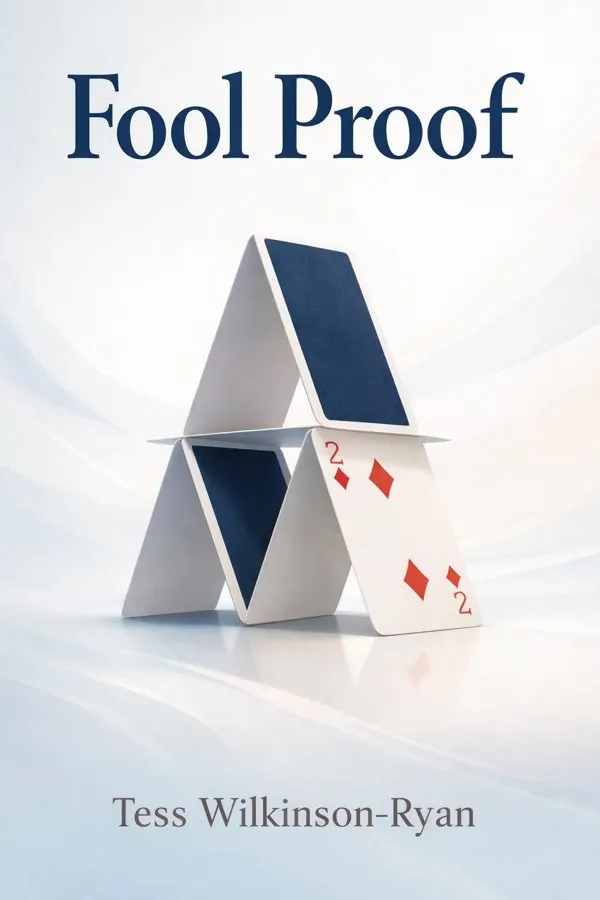
Fool Proof: How Fear of Playing the Sucker Shapes Our Selves and the Social Order—and What We Can Do About It: Summary & Key Insights
 10 min10 chaptersAudio available
What Is Fool Proof: How Fear of Playing the Sucker Shapes Our Selves and the Social Order—and What We Can Do About It About?
Fool Proof: How Fear of Playing the Sucker Shapes Our Selves and the Social Order—and What We Can Do About It by Tess Wilkinson-Ryan is a psychology book spanning 10 pages. In 'Fool Proof', Tess Wilkinson-Ryan, a professor of law and psychology, explores the deep-seated human fear of being duped or taken advantage of. She examines how this fear shapes our personal decisions, social interactions, and political attitudes, and how it can lead to mistrust and division. Drawing on psychological research and real-world examples, Wilkinson-Ryan offers insights into how we can better understand and manage this fear to build more cooperative and trusting communities.
This FizzRead summary covers all 10 key chapters of Fool Proof: How Fear of Playing the Sucker Shapes Our Selves and the Social Order—and What We Can Do About It in approximately 10 minutes, distilling the most important ideas, arguments, and takeaways from Tess Wilkinson-Ryan's work. Also available as an audio summary and Key Quotes Podcast.
Fool Proof: How Fear of Playing the Sucker Shapes Our Selves and the Social Order—and What We Can Do About It
In 'Fool Proof', Tess Wilkinson-Ryan, a professor of law and psychology, explores the deep-seated human fear of being duped or taken advantage of. She examines how this fear shapes our personal decisions, social interactions, and political attitudes, and how it can lead to mistrust and division. Drawing on psychological research and real-world examples, Wilkinson-Ryan offers insights into how we can better understand and manage this fear to build more cooperative and trusting communities.
Who Should Read Fool Proof: How Fear of Playing the Sucker Shapes Our Selves and the Social Order—and What We Can Do About It?
This book is perfect for anyone interested in psychology and looking to gain actionable insights in a short read. Whether you're a student, professional, or lifelong learner, the key ideas from Fool Proof: How Fear of Playing the Sucker Shapes Our Selves and the Social Order—and What We Can Do About It by Tess Wilkinson-Ryan will help you think differently.
- ✓Readers who enjoy psychology and want practical takeaways
- ✓Professionals looking to apply new ideas to their work and life
- ✓Anyone who wants the core insights of Fool Proof: How Fear of Playing the Sucker Shapes Our Selves and the Social Order—and What We Can Do About It in just 10 minutes
Want the full summary?
Get instant access to this book summary and 100K+ more with Fizz Moment.
Get Free SummaryAvailable on App Store • Free to download
Key Chapters
The fear of exploitation has deep evolutionary roots. Long before we built economies and courts, our ancestors needed mechanisms for detecting cheaters — those who would take more than they gave, or exploit cooperation for selfish gain. Psychologists have shown that we are exquisitely sensitive to fairness norms and betrayal cues. Being cheated triggered strong emotional reactions because it threatened both survival and social status. To be exploited was to lose standing, to appear naïve, and to risk exclusion.
Today, those ancient instincts still shape our judgment. The neural systems that detect deception or loss activate intensely even when the stakes are trivial. That’s why losing a small sum to a scammer can feel so disproportionately painful. We are defending not just our wallets but our identities as competent members of the social world. The moral story we tell ourselves is that smart, responsible people don’t get tricked — that suckerhood is a moral failure, not just bad luck.
Yet this mechanism, once adaptive, becomes self-defeating in complex modern societies. We encounter people we’ll never meet again, digital systems we don’t fully understand, and institutions that require baseline trust. Our primitive protection reflex often misfires, pushing us into suspicion or disengagement. Recognizing the evolutionary origins of this fear allows us to treat it with compassion rather than shame. It was designed to protect us — but in a world built on interdependence, it can also isolate us.
At its heart, fear of being a sucker is moral. It touches on dignity, fairness, and pride. When we suspect someone has taken advantage of us, what hurts is not just the material loss but the moral imbalance: we gave more than they deserved. We fear others will see us as gullible, and that judgment carries moral weight. In my research, I’ve found that people’s reactions to unfairness are often stronger when they see themselves as victims of deception than when they simply lose by chance. That’s because deceit attacks our self-concept as moral actors.
Emotions like guilt, shame, and pride regulate these experiences. Guilt tells us when we’ve been careless; shame warns us that our social identity has taken a hit. Pride, by contrast, protects our sense of integrity. These emotions are neither good nor bad — they are moral compass points. The problem arises when we allow them to dominate our social decision-making, leading us to distrust indiscriminately.
Imagine relationships governed by suspicion — partnerships where every concession feels like a potential betrayal. That emotional vigilance may guard us from short-term pain, but it poisons intimacy and collaboration. Understanding the emotional architecture behind sucker aversion doesn’t mean suppressing those feelings. It means recognizing them as signals — data about what matters to us — rather than as destiny.
+ 8 more chapters — available in the FizzRead app
All Chapters in Fool Proof: How Fear of Playing the Sucker Shapes Our Selves and the Social Order—and What We Can Do About It
About the Author
Tess Wilkinson-Ryan is a professor of law and psychology at the University of Pennsylvania. Her research focuses on moral psychology, contract law, and the ways in which people’s moral intuitions influence their legal and social judgments. She writes and speaks widely on the intersection of law, psychology, and everyday decision-making.
Get This Summary in Your Preferred Format
Read or listen to the Fool Proof: How Fear of Playing the Sucker Shapes Our Selves and the Social Order—and What We Can Do About It summary by Tess Wilkinson-Ryan anytime, anywhere. FizzRead offers multiple formats so you can learn on your terms — all free.
Available formats: App · Audio · PDF · EPUB — All included free with FizzRead
Download Fool Proof: How Fear of Playing the Sucker Shapes Our Selves and the Social Order—and What We Can Do About It PDF and EPUB Summary
Key Quotes from Fool Proof: How Fear of Playing the Sucker Shapes Our Selves and the Social Order—and What We Can Do About It
“The fear of exploitation has deep evolutionary roots.”
“At its heart, fear of being a sucker is moral.”
Frequently Asked Questions about Fool Proof: How Fear of Playing the Sucker Shapes Our Selves and the Social Order—and What We Can Do About It
Fool Proof: How Fear of Playing the Sucker Shapes Our Selves and the Social Order—and What We Can Do About It by Tess Wilkinson-Ryan is a psychology book that explores key ideas across 10 chapters. In 'Fool Proof', Tess Wilkinson-Ryan, a professor of law and psychology, explores the deep-seated human fear of being duped or taken advantage of. She examines how this fear shapes our personal decisions, social interactions, and political attitudes, and how it can lead to mistrust and division. Drawing on psychological research and real-world examples, Wilkinson-Ryan offers insights into how we can better understand and manage this fear to build more cooperative and trusting communities.
You Might Also Like

The Body Keeps the Score
Bessel van der Kolk
10 min
Surrounded by Idiots
Thomas Erikson
10 min
Emotional Intelligence
Daniel Goleman
10 min
Attached
Amir Levine
10 min
Why Does He Do That
Lundy Bancroft
10 min
Women Who Run with the Wolves
Clarissa Pinkola Estés
10 minBrowse by Category
Ready to read Fool Proof: How Fear of Playing the Sucker Shapes Our Selves and the Social Order—and What We Can Do About It?
Get the full summary and 100K+ more books with Fizz Moment.