
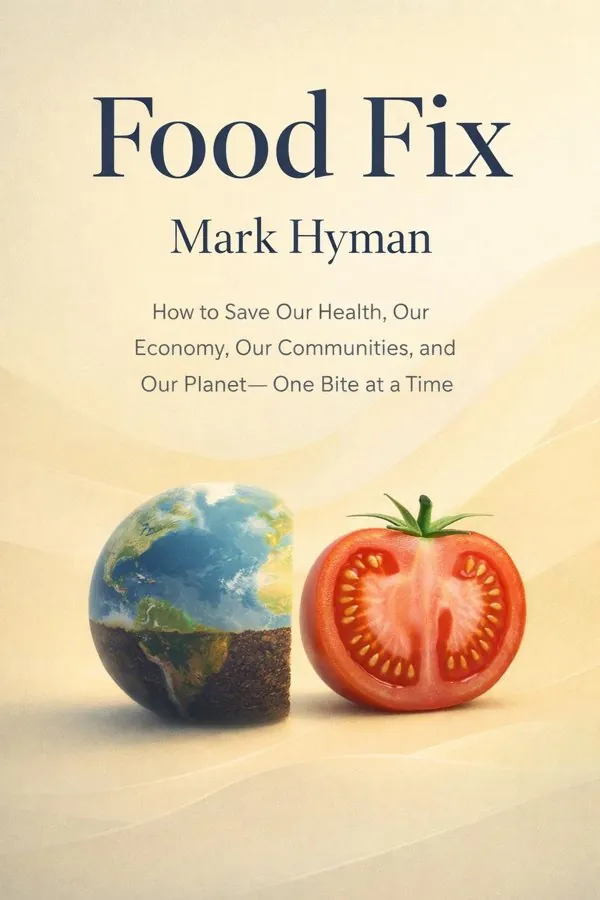
Food Fix: How to Save Our Health, Our Economy, Our Communities, and Our Planet—One Bite at a Time: Summary & Key Insights
by Mark Hyman
 10 min10 chaptersAudio available
What Is Food Fix: How to Save Our Health, Our Economy, Our Communities, and Our Planet—One Bite at a Time About?
Food Fix: How to Save Our Health, Our Economy, Our Communities, and Our Planet—One Bite at a Time by Mark Hyman is a health_med book spanning 10 pages. In 'Food Fix', Dr. Mark Hyman explores how the global food system contributes to chronic disease, environmental destruction, and economic inequality. He presents a comprehensive plan to transform the way we produce, distribute, and consume food, advocating for sustainable agriculture, better nutrition policies, and community-based solutions to restore both human and planetary health.
This FizzRead summary covers all 10 key chapters of Food Fix: How to Save Our Health, Our Economy, Our Communities, and Our Planet—One Bite at a Time in approximately 10 minutes, distilling the most important ideas, arguments, and takeaways from Mark Hyman's work. Also available as an audio summary and Key Quotes Podcast.
Food Fix: How to Save Our Health, Our Economy, Our Communities, and Our Planet—One Bite at a Time
In 'Food Fix', Dr. Mark Hyman explores how the global food system contributes to chronic disease, environmental destruction, and economic inequality. He presents a comprehensive plan to transform the way we produce, distribute, and consume food, advocating for sustainable agriculture, better nutrition policies, and community-based solutions to restore both human and planetary health.
Who Should Read Food Fix: How to Save Our Health, Our Economy, Our Communities, and Our Planet—One Bite at a Time?
This book is perfect for anyone interested in health_med and looking to gain actionable insights in a short read. Whether you're a student, professional, or lifelong learner, the key ideas from Food Fix: How to Save Our Health, Our Economy, Our Communities, and Our Planet—One Bite at a Time by Mark Hyman will help you think differently.
- ✓Readers who enjoy health_med and want practical takeaways
- ✓Professionals looking to apply new ideas to their work and life
- ✓Anyone who wants the core insights of Food Fix: How to Save Our Health, Our Economy, Our Communities, and Our Planet—One Bite at a Time in just 10 minutes
Want the full summary?
Get instant access to this book summary and 100K+ more with Fizz Moment.
Get Free SummaryAvailable on App Store • Free to download
Key Chapters
As a physician, I’ve spent decades watching one truth repeat itself: the food we eat is either the most powerful form of medicine—or the slowest form of poison. Our current diet, dominated by ultra-processed products, refined carbs, and industrial fats, is fueling what can only be described as a pandemic of chronic disease.
Most of my patients come in believing their ailments are genetic or inevitable. But when we dig deeper, we find that their biology is out of sync with the ultraprocessed, nutrient-deficient food environment they inhabit. Modern diets drive inflammation, disrupt the microbiome, and spike insulin—all pathways linked to obesity, diabetes, heart disease, dementia, and depression. These aren’t isolated diseases; they’re symptoms of the same systemic failure.
In *Food Fix*, I argue that this is not merely a personal health issue—it’s an economic and political one. Our public health systems are collapsing under the weight of preventable illness, yet the major drivers of disease—poor diet, agricultural policy, marketing to children—remain largely unaddressed. Imagine if, instead of subsidizing the ingredients of soda and snack cakes, we subsidized vegetables, fruits, and regenerative farming. We could reverse the chronic disease epidemic overnight.
The scientific evidence is unequivocal: diets rich in whole, unprocessed food—colorful vegetables, healthy fats, modest portions of sustainably raised animals—heal the body at the cellular level. By shifting what we eat, we can shut off inflammation, restore hormonal balance, and even alter gene expression. The body wants to heal. When we feed it the right information, it will.
+ 8 more chapters — available in the FizzRead app
All Chapters in Food Fix: How to Save Our Health, Our Economy, Our Communities, and Our Planet—One Bite at a Time
About the Author
Dr. Mark Hyman is an American physician, author, and advocate for functional medicine. He has written several bestselling books on nutrition and health and serves as the Head of Strategy and Innovation at the Cleveland Clinic Center for Functional Medicine.
Get This Summary in Your Preferred Format
Read or listen to the Food Fix: How to Save Our Health, Our Economy, Our Communities, and Our Planet—One Bite at a Time summary by Mark Hyman anytime, anywhere. FizzRead offers multiple formats so you can learn on your terms — all free.
Available formats: App · Audio · PDF · EPUB — All included free with FizzRead
Download Food Fix: How to Save Our Health, Our Economy, Our Communities, and Our Planet—One Bite at a Time PDF and EPUB Summary
Key Quotes from Food Fix: How to Save Our Health, Our Economy, Our Communities, and Our Planet—One Bite at a Time
“When we look at a cheeseburger or a bottle of soda, we see a price tag that hides a much greater bill waiting elsewhere in the system.”
“As a physician, I’ve spent decades watching one truth repeat itself: the food we eat is either the most powerful form of medicine—or the slowest form of poison.”
Frequently Asked Questions about Food Fix: How to Save Our Health, Our Economy, Our Communities, and Our Planet—One Bite at a Time
Food Fix: How to Save Our Health, Our Economy, Our Communities, and Our Planet—One Bite at a Time by Mark Hyman is a health_med book that explores key ideas across 10 chapters. In 'Food Fix', Dr. Mark Hyman explores how the global food system contributes to chronic disease, environmental destruction, and economic inequality. He presents a comprehensive plan to transform the way we produce, distribute, and consume food, advocating for sustainable agriculture, better nutrition policies, and community-based solutions to restore both human and planetary health.
More by Mark Hyman
You Might Also Like

On Immunity
Eula Biss
10 min
The Three-Body Problem
Liu Cixin
10 min
Community Health Volunteer Toolkit: Training and Practical Activities
World Health Organization
10 min
Healing Back Pain: The Mind-Body Connection
John E. Sarno
10 min
Health Literacy for All: Practical Guides to Communicate Health Information (Compilations)
World Health Organization
10 min
The Complete Guide to Sports Supplements: An Evidence-Based Review
Anita Bean
10 minBrowse by Category
Ready to read Food Fix: How to Save Our Health, Our Economy, Our Communities, and Our Planet—One Bite at a Time?
Get the full summary and 100K+ more books with Fizz Moment.