
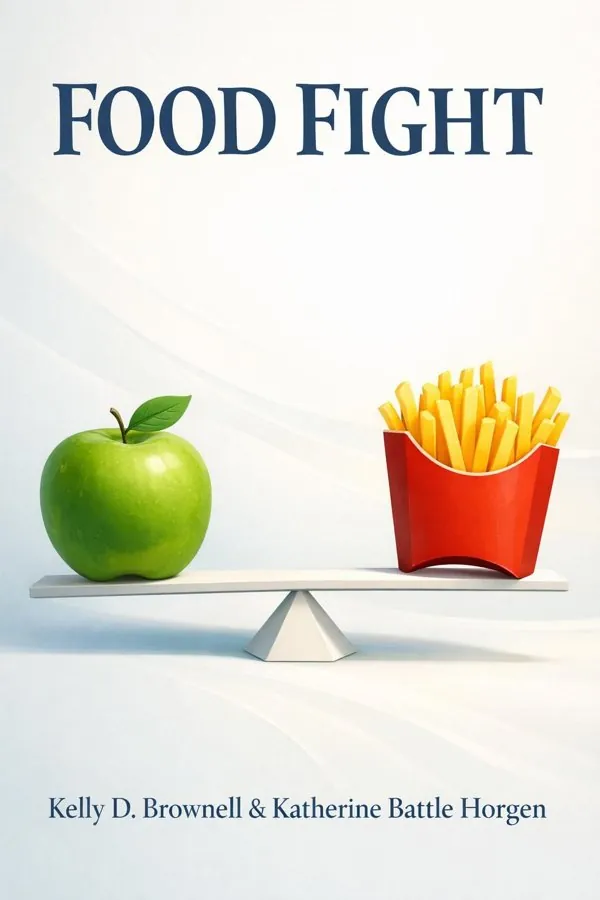
Food Fight: The Inside Story of the Food Industry, America's Obesity Crisis, and What We Can Do About It: Summary & Key Insights
by Kelly D. Brownell, Katherine Battle Horgen
 10 min5 chaptersAudio available
What Is Food Fight: The Inside Story of the Food Industry, America's Obesity Crisis, and What We Can Do About It About?
Food Fight: The Inside Story of the Food Industry, America's Obesity Crisis, and What We Can Do About It by Kelly D. Brownell, Katherine Battle Horgen is a health_med book spanning 5 pages. Food Fight explores how the modern food industry contributes to the obesity epidemic in the United States. The authors, both experts in nutrition and public health, analyze the marketing, production, and policy forces that shape eating habits and propose strategies for individuals and governments to promote healthier choices.
This FizzRead summary covers all 5 key chapters of Food Fight: The Inside Story of the Food Industry, America's Obesity Crisis, and What We Can Do About It in approximately 10 minutes, distilling the most important ideas, arguments, and takeaways from Kelly D. Brownell, Katherine Battle Horgen's work. Also available as an audio summary and Key Quotes Podcast.
Food Fight: The Inside Story of the Food Industry, America's Obesity Crisis, and What We Can Do About It
Food Fight explores how the modern food industry contributes to the obesity epidemic in the United States. The authors, both experts in nutrition and public health, analyze the marketing, production, and policy forces that shape eating habits and propose strategies for individuals and governments to promote healthier choices.
Who Should Read Food Fight: The Inside Story of the Food Industry, America's Obesity Crisis, and What We Can Do About It?
This book is perfect for anyone interested in health_med and looking to gain actionable insights in a short read. Whether you're a student, professional, or lifelong learner, the key ideas from Food Fight: The Inside Story of the Food Industry, America's Obesity Crisis, and What We Can Do About It by Kelly D. Brownell, Katherine Battle Horgen will help you think differently.
- ✓Readers who enjoy health_med and want practical takeaways
- ✓Professionals looking to apply new ideas to their work and life
- ✓Anyone who wants the core insights of Food Fight: The Inside Story of the Food Industry, America's Obesity Crisis, and What We Can Do About It in just 10 minutes
Want the full summary?
Get instant access to this book summary and 100K+ more with Fizz Moment.
Get Free SummaryAvailable on App Store • Free to download
Key Chapters
Over the past few decades, America’s food environment has undergone a seismic shift. Once characterized by moderate portions and home-cooked meals, it is now dominated by fast food, convenience items, and calorie-dense snacks available almost anywhere and anytime. Larger portion sizes, aggressive pricing, and easy access have contributed to consumption patterns that our biology was never designed to manage.
In this new landscape, abundance is deceptive. While food is everywhere, nutritional quality has deteriorated. High-fat, high-sugar products are the cheapest and most heavily promoted, creating a paradox where malnutrition and obesity coexist. We trace how postwar industrialization, agricultural subsidies, and technological innovation converged to produce this reality—where manufacturing profit often outweighs human health.
More troubling is the normalization of overeating. Restaurants and corporations have learned that selling “more for less” drives customer satisfaction. A single soda, burger, or bag of chips now contains multiple servings compared to its 1970s counterpart. The industry has taught consumers to equate value with volume, erasing intuitive mechanisms of hunger and satiety.
As authors and researchers, we challenge the illusion that these are neutral evolutions. They are deliberate constructions shaped by marketing decisions and policy frameworks. Understanding this evolution is essential to reversing it. Once we recognize that our current food environment is designed for corporate success, not human well-being, we can begin reimagining an environment that truly nourishes bodies and communities.
One of the most potent forces driving unhealthy consumption is marketing—especially when aimed at children. Food companies spend billions annually to ensure that their brands are omnipresent, from television screens and sports arenas to online platforms and educational spaces. The psychology behind these campaigns is ingenious and insidious. Advertisers do not merely promote food; they cultivate identity and desire. To a child, a sweet breakfast cereal becomes a symbol of fun and freedom, while a fizzy drink represents excitement and social connection.
We dissect how corporations exploit basic psychological mechanisms, from classical conditioning to emotional association. Children, lacking cognitive defenses against persuasion, become lifelong brand loyalists before they can make informed choices. Marketing blurs the boundary between need and want, and soon, consumption feels like self-expression.
These manipulations extend beyond childhood. Adults are bombarded with imagery that links indulgence to comfort and reward. We learn to eat not because we are hungry but because we seek pleasure, distraction, or solace. The industry’s success lies in masking this conditioning as personal choice. When people blame themselves for overeating, they fail to see that they are playing a game whose rules were written by marketers.
Our goal here is not to vilify marketing itself—it can be used for good—but to illuminate the ethical dilemma inherent in exploiting human vulnerability for profit. Recognizing these tactics is the first step toward reclaiming autonomy. By understanding how our cravings are crafted, we empower ourselves to make decisions that reflect genuine need rather than corporate intention.
+ 3 more chapters — available in the FizzRead app
All Chapters in Food Fight: The Inside Story of the Food Industry, America's Obesity Crisis, and What We Can Do About It
About the Authors
Kelly D. Brownell is a professor of public policy and psychology known for his research on obesity and food policy. Katherine Battle Horgen is a psychologist and researcher specializing in eating behavior and public health.
Get This Summary in Your Preferred Format
Read or listen to the Food Fight: The Inside Story of the Food Industry, America's Obesity Crisis, and What We Can Do About It summary by Kelly D. Brownell, Katherine Battle Horgen anytime, anywhere. FizzRead offers multiple formats so you can learn on your terms — all free.
Available formats: App · Audio · PDF · EPUB — All included free with FizzRead
Download Food Fight: The Inside Story of the Food Industry, America's Obesity Crisis, and What We Can Do About It PDF and EPUB Summary
Key Quotes from Food Fight: The Inside Story of the Food Industry, America's Obesity Crisis, and What We Can Do About It
“Over the past few decades, America’s food environment has undergone a seismic shift.”
“One of the most potent forces driving unhealthy consumption is marketing—especially when aimed at children.”
Frequently Asked Questions about Food Fight: The Inside Story of the Food Industry, America's Obesity Crisis, and What We Can Do About It
Food Fight: The Inside Story of the Food Industry, America's Obesity Crisis, and What We Can Do About It by Kelly D. Brownell, Katherine Battle Horgen is a health_med book that explores key ideas across 5 chapters. Food Fight explores how the modern food industry contributes to the obesity epidemic in the United States. The authors, both experts in nutrition and public health, analyze the marketing, production, and policy forces that shape eating habits and propose strategies for individuals and governments to promote healthier choices.
You Might Also Like

On Immunity
Eula Biss
10 min
The Three-Body Problem
Liu Cixin
10 min
Community Health Volunteer Toolkit: Training and Practical Activities
World Health Organization
10 min
Healing Back Pain: The Mind-Body Connection
John E. Sarno
10 min
Health Literacy for All: Practical Guides to Communicate Health Information (Compilations)
World Health Organization
10 min
The Complete Guide to Sports Supplements: An Evidence-Based Review
Anita Bean
10 minBrowse by Category
Ready to read Food Fight: The Inside Story of the Food Industry, America's Obesity Crisis, and What We Can Do About It?
Get the full summary and 100K+ more books with Fizz Moment.