
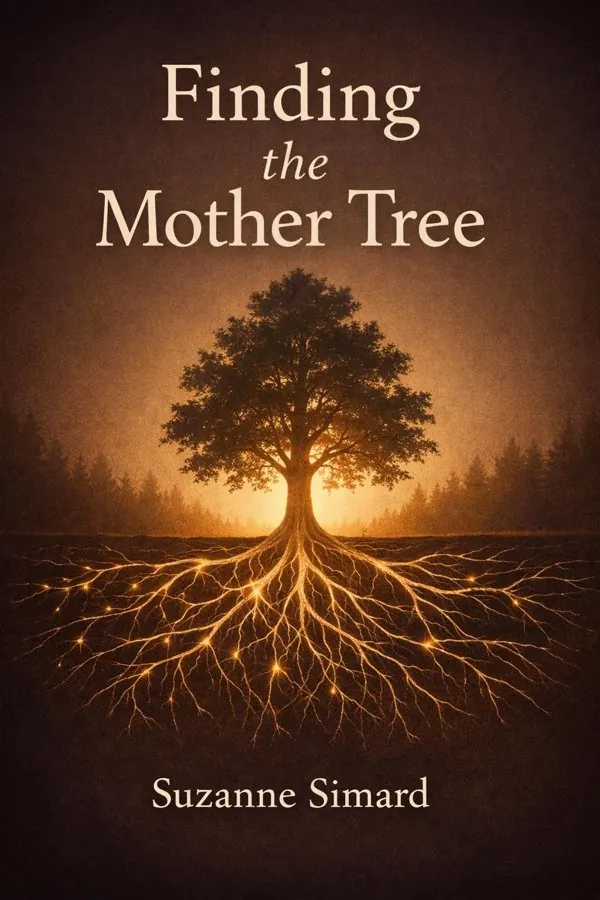
Finding the Mother Tree: Discovering the Wisdom of the Forest: Summary & Key Insights
 10 min6 chaptersAudio available
What Is Finding the Mother Tree: Discovering the Wisdom of the Forest About?
Finding the Mother Tree: Discovering the Wisdom of the Forest by Suzanne Simard is a life_science book spanning 6 pages. In this groundbreaking memoir, forest ecologist Suzanne Simard reveals how trees communicate and cooperate through underground fungal networks. Drawing on decades of research in the forests of British Columbia, she shows that trees are not solitary organisms but part of a complex, interdependent community. The book blends scientific discovery with personal narrative, exploring how Simard’s life and work have reshaped our understanding of forests and the natural world.
This FizzRead summary covers all 6 key chapters of Finding the Mother Tree: Discovering the Wisdom of the Forest in approximately 10 minutes, distilling the most important ideas, arguments, and takeaways from Suzanne Simard's work. Also available as an audio summary and Key Quotes Podcast.
Finding the Mother Tree: Discovering the Wisdom of the Forest
In this groundbreaking memoir, forest ecologist Suzanne Simard reveals how trees communicate and cooperate through underground fungal networks. Drawing on decades of research in the forests of British Columbia, she shows that trees are not solitary organisms but part of a complex, interdependent community. The book blends scientific discovery with personal narrative, exploring how Simard’s life and work have reshaped our understanding of forests and the natural world.
Who Should Read Finding the Mother Tree: Discovering the Wisdom of the Forest?
This book is perfect for anyone interested in life_science and looking to gain actionable insights in a short read. Whether you're a student, professional, or lifelong learner, the key ideas from Finding the Mother Tree: Discovering the Wisdom of the Forest by Suzanne Simard will help you think differently.
- ✓Readers who enjoy life_science and want practical takeaways
- ✓Professionals looking to apply new ideas to their work and life
- ✓Anyone who wants the core insights of Finding the Mother Tree: Discovering the Wisdom of the Forest in just 10 minutes
Want the full summary?
Get instant access to this book summary and 100K+ more with Fizz Moment.
Get Free SummaryAvailable on App Store • Free to download
Key Chapters
I was born into a family of loggers, people who saw trees both as livelihood and legacy. My ancestors worked these forests before any of us spoke of ecosystems or networks. As a girl, I watched my father and uncles fell trees with a precision that came from love for the land, not greed. There was reverence in their craft, even as they cut. I felt it in the hush that followed after a giant fell—a silence almost sacred, as though the forest itself paused to breathe.
That balance between use and respect was fragile. By the time I began my professional journey, industrial forestry had turned the woods into an economic equation. We reduced complex, living systems into monocultures, believing we could optimize growth as if forests were machines. Yet the forests I had grown up in—the ones rich with moss and birds and the soft click of beetles—told a different story. They were vibrant communities, not factories.
My childhood curiosity about how forests heal themselves led me into science. I wanted to know what sustained their harmony. My education, though, began with lessons in dominance and control. Trees, I was taught, were individuals fighting for sunlight, resources, and space. It was Darwinian competition transposed onto the landscape. Still, deep down, I felt nature whisper otherwise. Walking through the forests, I sensed unity—a secret interconnectedness. That quiet intuition would soon drive me to seek evidence of a much grander design.
When I entered the forestry profession, I was young, eager, and convinced I could improve forest management for the future. The standard practice was simple: replace old-growth forests with uniform plantations. The idea was that identical seedlings would grow faster without the interference of old trees, weeds, or competing species. But as I monitored those forests, I saw saplings languish rather than thrive. Yellowed needles, poor survival rates, instability—something was deeply wrong.
One afternoon, after watching young conifers die under the full sun, I walked among the remaining birches and noticed something peculiar. The firs near birches looked healthier than those in pure stands. It was as if the presence of the birch was protecting them, feeding them somehow. Birch and fir were supposed to be competitors, yet the forest seemed to tell a different tale.
That observation sparked my first great question: Could trees be cooperating?
Curiosity turned into determination. I began tracing the possibility of underground exchanges—flows of carbon and nutrients invisible to the naked eye. The idea flew in the face of accepted forestry wisdom. My colleagues dismissed it as sentimentality masquerading as science. But I couldn’t ignore what the forest was quietly showing me. Through experimentation, I would soon learn that my intuition was correct—trees were engaged in reciprocal relationships, communicating through subtle, living networks beneath our feet.
+ 4 more chapters — available in the FizzRead app
All Chapters in Finding the Mother Tree: Discovering the Wisdom of the Forest
About the Author
Suzanne Simard is a Canadian forest ecologist and professor of forest ecology at the University of British Columbia. Her pioneering research on the communication between trees through mycorrhizal networks has transformed modern forestry and ecology. She is recognized as one of the world’s leading experts on plant communication and forest resilience.
Get This Summary in Your Preferred Format
Read or listen to the Finding the Mother Tree: Discovering the Wisdom of the Forest summary by Suzanne Simard anytime, anywhere. FizzRead offers multiple formats so you can learn on your terms — all free.
Available formats: App · Audio · PDF · EPUB — All included free with FizzRead
Download Finding the Mother Tree: Discovering the Wisdom of the Forest PDF and EPUB Summary
Key Quotes from Finding the Mother Tree: Discovering the Wisdom of the Forest
“I was born into a family of loggers, people who saw trees both as livelihood and legacy.”
“When I entered the forestry profession, I was young, eager, and convinced I could improve forest management for the future.”
Frequently Asked Questions about Finding the Mother Tree: Discovering the Wisdom of the Forest
Finding the Mother Tree: Discovering the Wisdom of the Forest by Suzanne Simard is a life_science book that explores key ideas across 6 chapters. In this groundbreaking memoir, forest ecologist Suzanne Simard reveals how trees communicate and cooperate through underground fungal networks. Drawing on decades of research in the forests of British Columbia, she shows that trees are not solitary organisms but part of a complex, interdependent community. The book blends scientific discovery with personal narrative, exploring how Simard’s life and work have reshaped our understanding of forests and the natural world.
You Might Also Like

The Selfish Gene
Richard Dawkins
10 min
Awakenings
Oliver Sacks
10 min
Parasite Rex: Inside the Bizarre World of Nature's Most Dangerous Creatures
Carl Zimmer
10 min
The Atlas of Life on Earth
Various
10 min
The Book of Humans: The Story of How We Became Us
Adam Rutherford
10 min
The Horse
Wendy Williams
10 minBrowse by Category
Ready to read Finding the Mother Tree: Discovering the Wisdom of the Forest?
Get the full summary and 100K+ more books with Fizz Moment.