
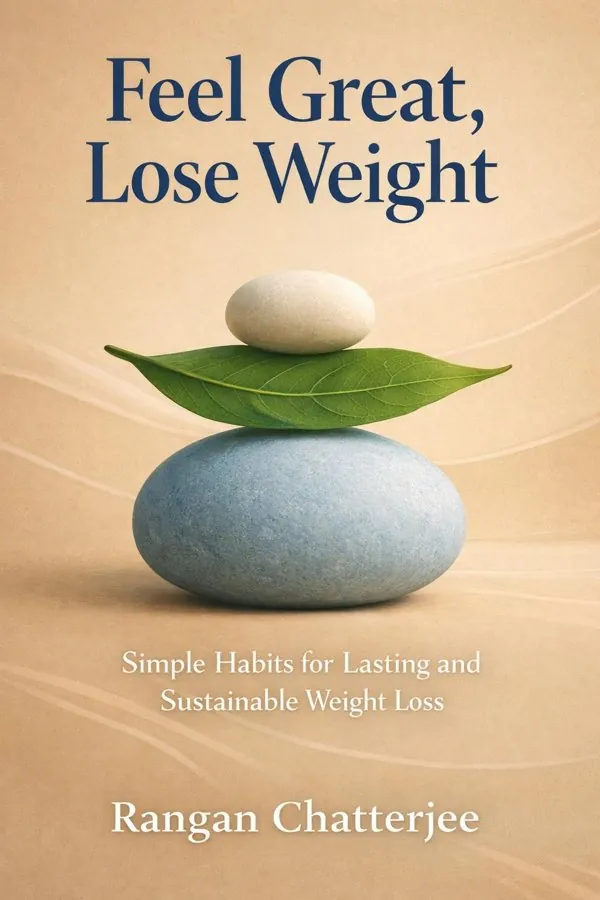
Feel Great, Lose Weight: Simple Habits for Lasting and Sustainable Weight Loss: Summary & Key Insights
 10 min9 chaptersAudio available
Key Takeaways from Feel Great, Lose Weight: Simple Habits for Lasting and Sustainable Weight Loss
One of the most damaging myths about weight is that it is simply the result of laziness or lack of discipline.
Harsh self-judgment feels motivating in the moment, but over time it erodes the very energy needed for lasting change.
Many people blame food alone for weight struggles while ignoring the state in which they eat.
Going to bed late can quietly sabotage even the best eating plan.
Nutrition becomes far more sustainable when it is guided by how food makes you feel rather than by obsessive calorie fear.
What Is Feel Great, Lose Weight: Simple Habits for Lasting and Sustainable Weight Loss About?
Feel Great, Lose Weight: Simple Habits for Lasting and Sustainable Weight Loss by Rangan Chatterjee is a health_med book spanning 11 pages. Feel Great, Lose Weight is a refreshing alternative to the punishing diet culture that treats weight loss as a battle of willpower. In this practical and compassionate book, Dr. Rangan Chatterjee argues that lasting change happens when we stop obsessing over the number on the scale and start improving the quality of our daily lives. Weight gain, he explains, is often a symptom of deeper imbalances involving stress, poor sleep, emotional overload, social pressures, and unsustainable habits. Rather than prescribing rigid rules, he offers a flexible framework built on small, realistic actions that help the body and mind work better together. What makes this book especially valuable is Chatterjee’s authority as a physician and leading voice in lifestyle medicine. Through years of clinical practice, broadcasting, and public health education, he has seen how conventional advice often ignores the real drivers of behavior. His message is both empowering and humane: when people feel better physically and emotionally, healthier choices become easier and weight loss becomes more sustainable. This book matters because it replaces shame with understanding and quick fixes with lasting self-care.
This FizzRead summary covers all 9 key chapters of Feel Great, Lose Weight: Simple Habits for Lasting and Sustainable Weight Loss in approximately 10 minutes, distilling the most important ideas, arguments, and takeaways from Rangan Chatterjee's work. Also available as an audio summary and Key Quotes Podcast.
Feel Great, Lose Weight: Simple Habits for Lasting and Sustainable Weight Loss
Feel Great, Lose Weight is a refreshing alternative to the punishing diet culture that treats weight loss as a battle of willpower. In this practical and compassionate book, Dr. Rangan Chatterjee argues that lasting change happens when we stop obsessing over the number on the scale and start improving the quality of our daily lives. Weight gain, he explains, is often a symptom of deeper imbalances involving stress, poor sleep, emotional overload, social pressures, and unsustainable habits. Rather than prescribing rigid rules, he offers a flexible framework built on small, realistic actions that help the body and mind work better together.
What makes this book especially valuable is Chatterjee’s authority as a physician and leading voice in lifestyle medicine. Through years of clinical practice, broadcasting, and public health education, he has seen how conventional advice often ignores the real drivers of behavior. His message is both empowering and humane: when people feel better physically and emotionally, healthier choices become easier and weight loss becomes more sustainable. This book matters because it replaces shame with understanding and quick fixes with lasting self-care.
Who Should Read Feel Great, Lose Weight: Simple Habits for Lasting and Sustainable Weight Loss?
This book is perfect for anyone interested in health_med and looking to gain actionable insights in a short read. Whether you're a student, professional, or lifelong learner, the key ideas from Feel Great, Lose Weight: Simple Habits for Lasting and Sustainable Weight Loss by Rangan Chatterjee will help you think differently.
- ✓Readers who enjoy health_med and want practical takeaways
- ✓Professionals looking to apply new ideas to their work and life
- ✓Anyone who wants the core insights of Feel Great, Lose Weight: Simple Habits for Lasting and Sustainable Weight Loss in just 10 minutes
Want the full summary?
Get instant access to this book summary and 100K+ more with Fizz Moment.
Get Free SummaryAvailable on App Store • Free to download
Key Chapters
One of the most damaging myths about weight is that it is simply the result of laziness or lack of discipline. Chatterjee challenges this idea from the start by showing that excess weight is often the visible outcome of invisible pressures. Sleep deprivation changes hunger hormones. Chronic stress raises cortisol and increases cravings. Emotional loneliness can drive comfort eating. Busy schedules reduce time for cooking, movement, and recovery. In other words, many people are not failing a diet; they are living in environments and routines that make healthy behavior much harder.
This shift matters because it changes the question from “What is wrong with me?” to “What is happening in my life?” A person who snacks late at night may not lack willpower; they may be exhausted, overstimulated, and using food as relief. Someone who cannot exercise consistently may be overwhelmed by work, caregiving, or self-criticism. Chatterjee encourages readers to investigate the true causes of their habits instead of trying to overpower them through restriction.
A practical application is to do a personal audit. Track your eating patterns for a week, but do more than record food. Note stress levels, sleep duration, energy, emotions, and social context. You may discover that your “bad choices” happen in predictable situations: after poor sleep, during conflict, or when meals are skipped earlier in the day.
The actionable takeaway is simple: before trying to fix your weight, identify the real conditions influencing it. Solve the root problem, not just the visible symptom.
Harsh self-judgment feels motivating in the moment, but over time it erodes the very energy needed for lasting change. Chatterjee insists that you cannot hate yourself into health. Guilt, shame, and body disgust may trigger short bursts of control, but they usually lead to all-or-nothing behavior: a strict week, a slip, then a spiral of defeat. Real progress begins when people stop treating themselves like failures and start responding like a caring coach.
This is not soft thinking or avoidance. Self-compassion is a practical strategy because it reduces emotional reactivity and helps people recover quickly from setbacks. If you miss a workout and tell yourself, “I’ve ruined everything,” you are more likely to abandon the plan altogether. If instead you say, “Today was difficult, but one choice does not define me,” you preserve momentum. Chatterjee wants readers to build a relationship with themselves that supports consistency rather than punishment.
A useful example is reframing internal language. Instead of saying, “I have no control around food,” try, “I am learning what triggers me.” Instead of, “I’m so lazy,” try, “My current routine is draining me.” This subtle change creates room for problem-solving. It also lowers stress, which itself supports better health.
Practical tools include writing a compassionate note to yourself, asking what you would say to a friend in the same situation, or setting goals based on care rather than criticism. “I want more energy” is often more sustainable than “I need to fix my body.”
The actionable takeaway: replace shame-based motivation with supportive self-talk for one week and notice whether healthier choices feel easier to repeat.
Many people blame food alone for weight struggles while ignoring the state in which they eat. Chatterjee highlights stress as one of the hidden drivers of modern weight gain. When the body is under constant pressure, it does not just affect mood; it changes biology and behavior. Stress can increase cortisol, disrupt blood sugar regulation, intensify cravings for high-calorie foods, impair sleep, and reduce motivation for movement. It also narrows attention so immediate comfort feels more important than long-term goals.
This means that a stressful life can make healthy eating feel disproportionately difficult. A person might know exactly what to do, yet still reach for sugar, alcohol, or endless snacking because their nervous system is overloaded. Chatterjee’s insight is that health habits improve when stress is reduced, not just when food rules are tightened.
He encourages readers to create “micro moments” of recovery throughout the day. This might include five slow breaths before meals, a short walk between meetings, turning off notifications for an hour, journaling after work, or spending ten minutes in daylight without a screen. None of these habits seems dramatic, but together they lower baseline tension and reduce the urge to self-soothe with food.
A practical example: if you regularly overeat in the evening, examine the hours before dinner. Were you rushing, skipping breaks, or carrying unresolved frustration? Adding a decompression ritual before eating may help more than stricter meal rules.
The actionable takeaway is to treat stress management as a weight-loss tool. Choose one daily calming practice and commit to it for the next seven days.
Going to bed late can quietly sabotage even the best eating plan. Chatterjee makes sleep a central part of sustainable weight loss because poor sleep affects almost every system involved in appetite, impulse control, and energy balance. When you are sleep-deprived, hunger tends to rise, cravings become stronger, mood worsens, and the ability to make thoughtful choices declines. At the same time, tiredness reduces the likelihood of exercise, meal preparation, and emotional resilience.
This is why exhausted people often feel stuck in a cycle: they sleep poorly, eat for energy, rely on convenience foods, move less, and then feel frustrated by the results. Chatterjee’s point is not merely that sleep is healthy; it is that sleep makes healthy behavior more possible.
He recommends simple, realistic interventions rather than perfection. Keep a more consistent bedtime, dim lights in the evening, avoid scrolling in bed, reduce caffeine later in the day, and create a wind-down routine that signals safety to the body. Even small improvements in sleep quality can lower cravings and improve self-control.
For example, someone who snacks heavily at night may find that the problem is not nighttime hunger alone but fatigue-driven reward seeking. Going to bed thirty to sixty minutes earlier may reduce the urge to keep eating. Likewise, a well-rested morning often leads to better breakfast choices and more patience throughout the day.
The actionable takeaway: focus on sleep before trying to tighten your diet. Pick one sleep habit tonight, such as charging your phone outside the bedroom or setting a fixed bedtime, and protect it for a full week.
Nutrition becomes far more sustainable when it is guided by how food makes you feel rather than by obsessive calorie fear. Chatterjee encourages readers to move away from rigid dieting and toward eating patterns that support stable energy, satisfaction, and metabolic health. This means emphasizing whole and minimally processed foods, balancing meals, and paying attention to how different foods affect hunger, mood, and focus.
A key idea is that overeating often becomes more likely when meals are nutritionally poor or psychologically restrictive. If breakfast is skipped, lunch is rushed, and snacks are highly processed, the body and brain may push hard for quick energy later. By contrast, meals built around protein, fiber, healthy fats, and unprocessed ingredients tend to improve fullness and reduce chaotic cravings.
Chatterjee avoids turning food into a moral issue. There are no “good” people and “bad” foods. Instead, he asks readers to become curious. Which breakfast keeps you full until lunch? Which snacks leave you wanting more? Which foods support calmer energy? This approach promotes awareness rather than rebellion.
Practical examples include eating eggs and fruit instead of sugary cereal, adding beans or vegetables to lunch, preparing simple meals at home, or pausing before second helpings to check whether you are still hungry. It may also mean reducing ultra-processed foods not through willpower alone but by making better alternatives more available.
The actionable takeaway is to build one meal each day around nourishment and satisfaction. Ask after eating: “Do I feel energized, stable, and comfortably full?” Let that answer guide future choices.
Exercise fails when it is treated as a penalty for eating. Chatterjee argues that movement becomes sustainable only when it is connected to pleasure, identity, and daily life rather than guilt. Many people associate fitness with discomfort, comparison, and unrealistic standards. As a result, they either force themselves into routines they hate or avoid movement entirely. The problem is not lack of information; it is the emotional meaning attached to exercise.
By reframing movement as something that helps you feel better now, not just look different later, Chatterjee lowers the barrier to action. Walking, dancing, stretching, gardening, cycling with family, bodyweight exercises, and short strength sessions all count. The goal is not to become perfect but to become consistently active in ways that fit your life.
This matters because regular movement improves insulin sensitivity, mood, stress resilience, sleep, and confidence. It also creates a positive feedback loop: people who move more often tend to make healthier decisions elsewhere because they feel more connected to their bodies.
A practical application is to stop asking, “What burns the most calories?” and start asking, “What can I realistically enjoy and repeat?” A 20-minute walk after dinner every day may be more transformative than an intense gym plan that lasts one week. Pairing movement with existing routines can help: squats while the kettle boils, walking calls, stretches before bed, or cycling to nearby errands.
The actionable takeaway is to choose one form of movement you genuinely do not mind doing and schedule it three times this week. Consistency matters more than intensity.
Willpower is unreliable, especially when your surroundings constantly push you toward convenience, distraction, and overeating. Chatterjee emphasizes that sustainable change is easier when the environment is designed to support the behavior you want. Social circles, kitchen setup, work patterns, digital habits, and family routines all shape health more than people often realize. Success is rarely about being stronger than temptation every day; it is about facing less unnecessary temptation in the first place.
This idea applies both at home and in social life. If ultra-processed snacks are visible on the counter, they will likely be eaten. If you stay up late watching shows, sleep and appetite suffer the next day. If your friends only socialize around heavy meals and alcohol, your default choices may drift. Chatterjee does not suggest isolation or rigid control, but he does encourage conscious design.
Examples are simple and effective: keep healthier foods visible and ready to eat, prepare tomorrow’s lunch tonight, place workout clothes by the bed, agree on shared meal habits with a partner, or set app limits on your phone to reduce nighttime scrolling. Socially, it can help to suggest walks, brunches, or active outings instead of always meeting around indulgence.
He also reminds readers that identity is influenced by community. Spending time with people who normalize balance, movement, and self-care can make healthier living feel ordinary rather than exceptional.
The actionable takeaway: make one environmental change today that removes friction from a healthy habit or adds friction to an unhelpful one. Small changes in setup can produce big changes in behavior.
People often quit not because they failed, but because they believed failure meant the plan no longer worked. Chatterjee normalizes setbacks as an unavoidable part of behavior change. Stressful weeks, emotional eating, holidays, illness, travel, and low motivation will happen. The crucial question is not whether you can avoid all disruption, but whether you can recover without collapsing into self-blame.
This is where his message becomes especially practical. Sustainable weight loss requires flexibility. If your routine breaks, the goal is not to restart perfectly on Monday; it is to do the next helpful thing as soon as possible. One difficult meal does not matter much. The story you attach to it matters far more. If a slip becomes proof that you are hopeless, it can trigger days or weeks of disengagement. If it becomes information, you can adapt and continue.
A useful strategy is to create a “reset list” in advance: drink water, take a walk, eat a balanced next meal, go to bed earlier, and stop the spiral of guilt. Another is to review what triggered the setback. Were you under-slept, overcommitted, or emotionally overwhelmed? The answer helps you strengthen the system rather than attack yourself.
Chatterjee’s broader point is that consistency is built through recovery skills. Healthy people are not perfect; they are responsive. They know how to return.
The actionable takeaway is to write your personal recovery plan before the next difficult day arrives. When setbacks happen, follow the plan instead of your emotions.
Transformation rarely comes from one dramatic overhaul. It comes from a handful of repeated behaviors that make you feel calmer, more nourished, and more in control. Chatterjee brings together the book’s major themes by encouraging readers to build simple rituals across the core pillars of health: food, movement, sleep, and stress. When these pillars support one another, weight loss becomes more natural because the body is no longer fighting constant disruption.
The power of rituals is that they reduce decision fatigue. Instead of negotiating with yourself every day, you create a rhythm. You might begin the morning without checking your phone, eat a protein-rich breakfast, take a midday walk, pause before dinner to breathe, and keep a regular bedtime. These actions may seem ordinary, but their combined effect can be profound. Better sleep improves appetite control. Lower stress reduces emotional eating. Better nutrition supports energy for movement. Movement improves mood and sleep.
Chatterjee advises readers to start small enough that success is likely. Grand plans often fail because they demand too much change at once. A better approach is stacking one or two rituals onto existing routines. For instance, take three deep breaths before every meal, walk for ten minutes after lunch, or dim lights at 9 p.m. each night.
The ultimate aim is not temporary compliance but a lifestyle that feels good enough to maintain. When health habits become part of who you are rather than a short-term challenge, weight loss is more likely to last.
The actionable takeaway: choose two tiny daily rituals from different pillars of health and practice them consistently for the next two weeks.
All Chapters in Feel Great, Lose Weight: Simple Habits for Lasting and Sustainable Weight Loss
About the Author
Dr. Rangan Chatterjee is a British physician, bestselling author, broadcaster, and one of the leading public voices in lifestyle medicine. He became widely known through the BBC television series Doctor in the House, where he helped patients improve chronic health issues through practical changes in everyday life. He also hosts the popular podcast Feel Better, Live More, which explores health, behavior, and well-being with experts from many fields. Chatterjee’s work focuses on making medical advice accessible, realistic, and sustainable, especially in areas such as stress, sleep, nutrition, movement, and mindset. Across his books and media work, he encourages people to take small, consistent steps toward better health rather than chasing extreme solutions or short-term fixes.
Get This Summary in Your Preferred Format
Read or listen to the Feel Great, Lose Weight: Simple Habits for Lasting and Sustainable Weight Loss summary by Rangan Chatterjee anytime, anywhere. FizzRead offers multiple formats so you can learn on your terms — all free.
Available formats: App · Audio · PDF · EPUB — All included free with FizzRead
Download Feel Great, Lose Weight: Simple Habits for Lasting and Sustainable Weight Loss PDF and EPUB Summary
Key Quotes from Feel Great, Lose Weight: Simple Habits for Lasting and Sustainable Weight Loss
“One of the most damaging myths about weight is that it is simply the result of laziness or lack of discipline.”
“Harsh self-judgment feels motivating in the moment, but over time it erodes the very energy needed for lasting change.”
“Many people blame food alone for weight struggles while ignoring the state in which they eat.”
“Going to bed late can quietly sabotage even the best eating plan.”
“Nutrition becomes far more sustainable when it is guided by how food makes you feel rather than by obsessive calorie fear.”
Frequently Asked Questions about Feel Great, Lose Weight: Simple Habits for Lasting and Sustainable Weight Loss
Feel Great, Lose Weight: Simple Habits for Lasting and Sustainable Weight Loss by Rangan Chatterjee is a health_med book that explores key ideas across 9 chapters. Feel Great, Lose Weight is a refreshing alternative to the punishing diet culture that treats weight loss as a battle of willpower. In this practical and compassionate book, Dr. Rangan Chatterjee argues that lasting change happens when we stop obsessing over the number on the scale and start improving the quality of our daily lives. Weight gain, he explains, is often a symptom of deeper imbalances involving stress, poor sleep, emotional overload, social pressures, and unsustainable habits. Rather than prescribing rigid rules, he offers a flexible framework built on small, realistic actions that help the body and mind work better together. What makes this book especially valuable is Chatterjee’s authority as a physician and leading voice in lifestyle medicine. Through years of clinical practice, broadcasting, and public health education, he has seen how conventional advice often ignores the real drivers of behavior. His message is both empowering and humane: when people feel better physically and emotionally, healthier choices become easier and weight loss becomes more sustainable. This book matters because it replaces shame with understanding and quick fixes with lasting self-care.
More by Rangan Chatterjee

You Might Also Like

On Immunity
Eula Biss
10 min
The Three-Body Problem
Liu Cixin
10 min
Community Health Volunteer Toolkit: Training and Practical Activities
World Health Organization
10 min
Healing Back Pain: The Mind-Body Connection
John E. Sarno
10 min
Health Literacy for All: Practical Guides to Communicate Health Information (Compilations)
World Health Organization
10 min
The Complete Guide to Sports Supplements: An Evidence-Based Review
Anita Bean
10 minBrowse by Category
Ready to read Feel Great, Lose Weight: Simple Habits for Lasting and Sustainable Weight Loss?
Get the full summary and 100K+ more books with Fizz Moment.