
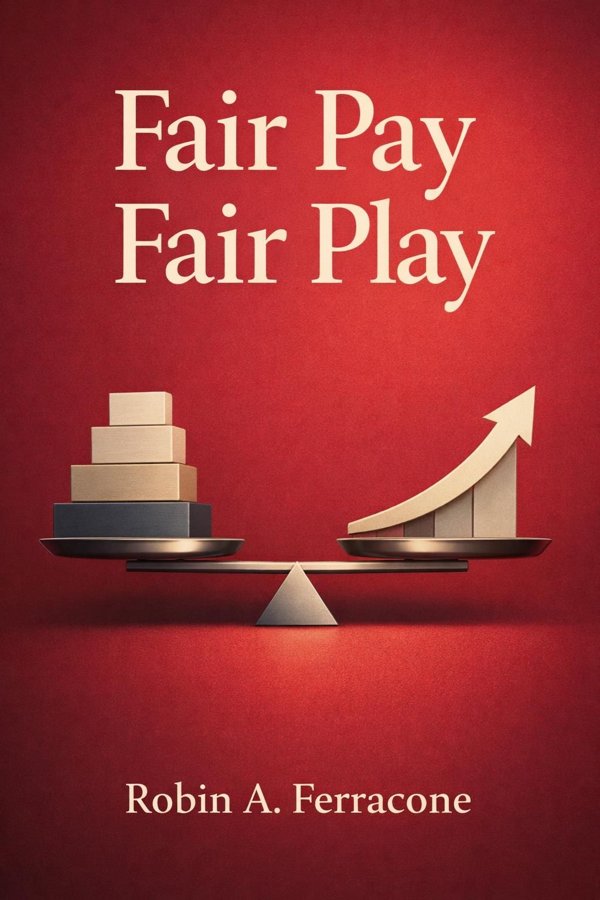
Fair Pay Fair Play: Aligning Executive Performance and Pay: Summary & Key Insights
 10 min7 chaptersAudio available
What Is Fair Pay Fair Play: Aligning Executive Performance and Pay About?
Fair Pay Fair Play: Aligning Executive Performance and Pay by Robin A. Ferracone is a leadership book spanning 7 pages. Fair Pay Fair Play explores how companies can design executive compensation systems that are both fair and performance-driven. Robin A. Ferracone provides a framework for aligning pay with performance, ensuring transparency, and maintaining shareholder trust. The book offers practical tools and case studies to help boards and executives make informed compensation decisions that support long-term value creation.
This FizzRead summary covers all 7 key chapters of Fair Pay Fair Play: Aligning Executive Performance and Pay in approximately 10 minutes, distilling the most important ideas, arguments, and takeaways from Robin A. Ferracone's work. Also available as an audio summary and Key Quotes Podcast.
Fair Pay Fair Play: Aligning Executive Performance and Pay
Fair Pay Fair Play explores how companies can design executive compensation systems that are both fair and performance-driven. Robin A. Ferracone provides a framework for aligning pay with performance, ensuring transparency, and maintaining shareholder trust. The book offers practical tools and case studies to help boards and executives make informed compensation decisions that support long-term value creation.
Who Should Read Fair Pay Fair Play: Aligning Executive Performance and Pay?
This book is perfect for anyone interested in leadership and looking to gain actionable insights in a short read. Whether you're a student, professional, or lifelong learner, the key ideas from Fair Pay Fair Play: Aligning Executive Performance and Pay by Robin A. Ferracone will help you think differently.
- ✓Readers who enjoy leadership and want practical takeaways
- ✓Professionals looking to apply new ideas to their work and life
- ✓Anyone who wants the core insights of Fair Pay Fair Play: Aligning Executive Performance and Pay in just 10 minutes
Want the full summary?
Get instant access to this book summary and 100K+ more with Fizz Moment.
Get Free SummaryAvailable on App Store • Free to download
Key Chapters
During my years advising major corporations, I’ve watched public sentiment around executive pay shift from admiration to outrage. The growing gap between executive compensation and average worker pay isn’t just a number—it’s a symbol of broken trust. Too often, compensation decisions are reactive, driven by peer comparisons rather than genuine performance linkage. Boards fear losing top talent and get caught in a cycle of escalation, benchmarking against competitors whose pay structures themselves are inflated.
This dynamic distorts not only perception but also the fundamental purpose of pay: driving performance that benefits shareholders. In this section, I explore the anatomy of the executive pay paradox—why, despite careful design, incentives frequently fail to produce sustainable value. The problem stems from short-termism, flawed performance metrics, and the cultural conditioning of 'pay for market' rather than 'pay for results.'
To change this narrative, we need to redefine fairness. Fair pay must be transparent, grounded in performance, and clearly connected to the company’s success over time. Transparency—what I call 'open architecture'—isn’t about disclosing every technical formula; it’s about allowing stakeholders to understand *why* people are paid what they are. It’s about fairness not as equality, but as justified differentiation.
The public frustration with executive packages is not merely about the money—it’s about perceived fairness. Restoring that trust means aligning compensation design with business philosophy. In essence, a fair pay system must evolve beyond compliance to become a moral compass for performance.
At the center of this book lies the Pay for Performance Alignment (P4P) framework—a structured approach for ensuring that executive rewards truly reflect corporate outcomes. The framework provides both a diagnostic tool and a design philosophy. Its foundation is simple: executives should earn more when they deliver sustainable value and less when they don’t. But implementing that principle requires disciplined design.
The P4P model evaluates alignment through three primary dimensions: performance measurement, compensation delivery, and governance mechanisms. It begins with rigorous analysis of company results relative to peers—distinguishing absolute performance from relative performance. This comparative approach curbs the distortions of market inflation and ensures that pay reflects genuine competitiveness, not mere momentum.
Through case examples, I show how boards can use this model to benchmark total shareholder return (TSR), profitability, and strategic achievements against real performance peers. The core lesson is that alignment is measurable. When pay outcomes track performance outcomes within a defined tolerance range, alignment exists. If the curve between pay and performance diverges significantly, correction is needed—either in metrics, target setting, or delivery timing.
The P4P framework has been adopted by numerous boards to bring analytic discipline to judgment. By quantifying alignment, we move the conversation from defensiveness ('we pay what the market demands') to credibility ('we pay for real value delivered'). In that shift lies the power of fair play: the ability to explain decisions with data, transparency, and integrity.
+ 5 more chapters — available in the FizzRead app
All Chapters in Fair Pay Fair Play: Aligning Executive Performance and Pay
About the Author
Robin A. Ferracone is the founder and CEO of Farient Advisors LLC, a leading executive compensation and performance advisory firm. She has over three decades of experience advising boards and management teams on pay and performance alignment, governance, and shareholder engagement.
Get This Summary in Your Preferred Format
Read or listen to the Fair Pay Fair Play: Aligning Executive Performance and Pay summary by Robin A. Ferracone anytime, anywhere. FizzRead offers multiple formats so you can learn on your terms — all free.
Available formats: App · Audio · PDF · EPUB — All included free with FizzRead
Download Fair Pay Fair Play: Aligning Executive Performance and Pay PDF and EPUB Summary
Key Quotes from Fair Pay Fair Play: Aligning Executive Performance and Pay
“During my years advising major corporations, I’ve watched public sentiment around executive pay shift from admiration to outrage.”
“At the center of this book lies the Pay for Performance Alignment (P4P) framework—a structured approach for ensuring that executive rewards truly reflect corporate outcomes.”
Frequently Asked Questions about Fair Pay Fair Play: Aligning Executive Performance and Pay
Fair Pay Fair Play: Aligning Executive Performance and Pay by Robin A. Ferracone is a leadership book that explores key ideas across 7 chapters. Fair Pay Fair Play explores how companies can design executive compensation systems that are both fair and performance-driven. Robin A. Ferracone provides a framework for aligning pay with performance, ensuring transparency, and maintaining shareholder trust. The book offers practical tools and case studies to help boards and executives make informed compensation decisions that support long-term value creation.
You Might Also Like

Extreme Ownership
Jocko Willink
10 min
Dare to Lead
Brene Brown
10 min
Leaders Eat Last
Simon Sinek
10 min
The 21 Irrefutable Laws of Leadership
John Maxwell
10 min
Start With Why
Simon Sinek
10 min
How to Lead When You're Not in Charge
Clay Scroggins
10 minBrowse by Category
Ready to read Fair Pay Fair Play: Aligning Executive Performance and Pay?
Get the full summary and 100K+ more books with Fizz Moment.