
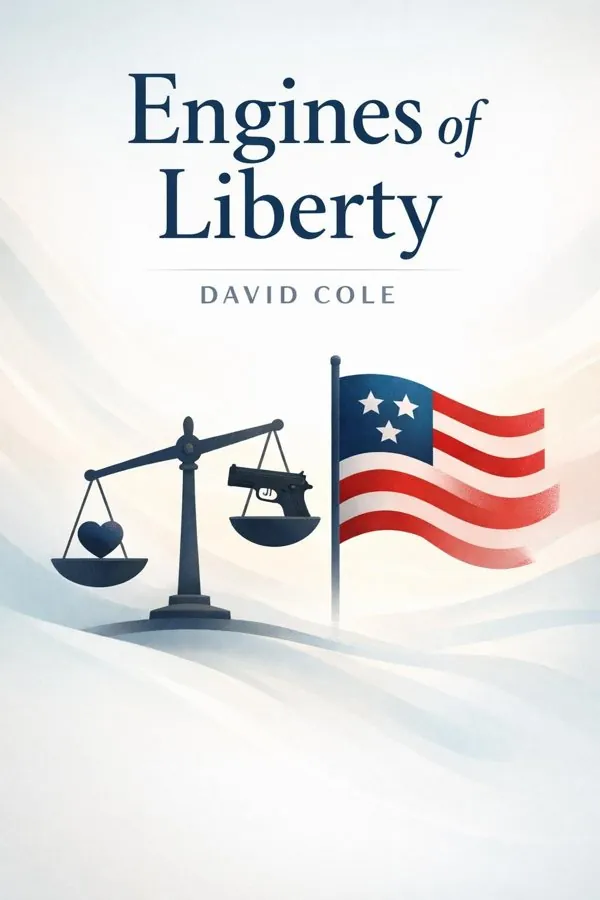
Engines of Liberty: The Power of Citizen Activists to Make Constitutional Law: Summary & Key Insights
by David Cole
 10 min12 chaptersAudio available
What Is Engines of Liberty: The Power of Citizen Activists to Make Constitutional Law About?
Engines of Liberty: The Power of Citizen Activists to Make Constitutional Law by David Cole is a politics book spanning 12 pages. In Engines of Liberty, David Cole explores how ordinary citizens and grassroots organizations have shaped constitutional law in the United States. Through case studies on marriage equality, gun rights, and human rights, Cole demonstrates that constitutional change often originates from sustained activism rather than judicial decisions alone. The book highlights the strategic efforts of advocacy groups and the long-term influence of civic engagement on American democracy.
This FizzRead summary covers all 12 key chapters of Engines of Liberty: The Power of Citizen Activists to Make Constitutional Law in approximately 10 minutes, distilling the most important ideas, arguments, and takeaways from David Cole's work. Also available as an audio summary and Key Quotes Podcast.
Engines of Liberty: The Power of Citizen Activists to Make Constitutional Law
In Engines of Liberty, David Cole explores how ordinary citizens and grassroots organizations have shaped constitutional law in the United States. Through case studies on marriage equality, gun rights, and human rights, Cole demonstrates that constitutional change often originates from sustained activism rather than judicial decisions alone. The book highlights the strategic efforts of advocacy groups and the long-term influence of civic engagement on American democracy.
Who Should Read Engines of Liberty: The Power of Citizen Activists to Make Constitutional Law?
This book is perfect for anyone interested in politics and looking to gain actionable insights in a short read. Whether you're a student, professional, or lifelong learner, the key ideas from Engines of Liberty: The Power of Citizen Activists to Make Constitutional Law by David Cole will help you think differently.
- ✓Readers who enjoy politics and want practical takeaways
- ✓Professionals looking to apply new ideas to their work and life
- ✓Anyone who wants the core insights of Engines of Liberty: The Power of Citizen Activists to Make Constitutional Law in just 10 minutes
Want the full summary?
Get instant access to this book summary and 100K+ more with Fizz Moment.
Get Free SummaryAvailable on App Store • Free to download
Key Chapters
The heart of constitutional development is a dynamic exchange between advocacy, public sentiment, and institutional interpretation. When I analyze the way change unfolds, I see it less as a linear path from activism to judicial ruling and more as a series of interlocking processes that shape what the Constitution means to us all.
Advocacy groups begin by identifying an injustice—a gap between constitutional principle and lived reality. They work not only to remedy that gap through litigation, but also to shift the broader culture so that their interpretation of constitutional values feels legitimate and compelling. This cultural groundwork is essential; judges, after all, are not immune to the surrounding social context. Law is responsive, not isolated.
Public opinion, education campaigns, and coalition-building converge to reframe understanding. When a movement takes root, it circulates its narrative widely, through courts, media, and everyday discussion. Strategic litigation follows, but litigation is never the first step—it is often the culmination of years of preparation that alter both the social and moral terrain.
The synergy of these forces—advocacy, public engagement, and strategic legal action—translates civic energy into constitutional resonance. We must abandon the myth that change is purely doctrinal; doctrine evolves because society insists that it do so. The Constitution, then, is not just a document; it is a living conversation between institutions and citizens, one continually rewritten by participation.
When we speak of the movement for same-sex marriage, it is tempting to begin with the Supreme Court’s landmark decision in *Obergefell v. Hodges*. But to do so would obscure the real architects of that change—the LGBTQ+ activists, legal advocates, and ordinary couples who steadily built the social and legal groundwork for that moment.
Decades before the Court recognized marriage equality, organizations like Lambda Legal, GLAD, and the Human Rights Campaign undertook a meticulous effort to transform public understanding. They challenged discriminatory statutes, educated communities, and allied themselves with sympathetic legislators and journalists. Every courtroom brief was backed by countless hours of storytelling—families openly sharing their lives, love, and aspirations, reframing marriage not as a radical demand but as a simple call for dignity and inclusion.
The movement understood that litigation alone could not win hearts. It had to change minds. So activists pursued a two-pronged strategy: advancing legal cases that highlighted the real costs of exclusion, while launching cultural campaigns that humanized same-sex couples. From the struggle against the Defense of Marriage Act to state-level fights for recognition, these efforts gradually normalized the idea of equality under the law.
By the time *Obergefell* was decided, the constitutional argument mirrored what citizens had long been expressing. The Court echoed the moral reasoning that had already taken hold socially: the recognition that the right to marry is fundamentally about individual dignity. The activists did not merely win a case—they reshaped the meaning of equal protection itself. Their patient work illustrates how advocacy transforms moral conviction into constitutional doctrine.
+ 10 more chapters — available in the FizzRead app
All Chapters in Engines of Liberty: The Power of Citizen Activists to Make Constitutional Law
About the Author
David Cole is an American legal scholar, author, and civil rights attorney. He serves as the National Legal Director of the American Civil Liberties Union (ACLU) and is a professor at Georgetown University Law Center. Cole has written extensively on constitutional law, civil liberties, and social justice.
Get This Summary in Your Preferred Format
Read or listen to the Engines of Liberty: The Power of Citizen Activists to Make Constitutional Law summary by David Cole anytime, anywhere. FizzRead offers multiple formats so you can learn on your terms — all free.
Available formats: App · Audio · PDF · EPUB — All included free with FizzRead
Download Engines of Liberty: The Power of Citizen Activists to Make Constitutional Law PDF and EPUB Summary
Key Quotes from Engines of Liberty: The Power of Citizen Activists to Make Constitutional Law
“The heart of constitutional development is a dynamic exchange between advocacy, public sentiment, and institutional interpretation.”
“When we speak of the movement for same-sex marriage, it is tempting to begin with the Supreme Court’s landmark decision in *Obergefell v.”
Frequently Asked Questions about Engines of Liberty: The Power of Citizen Activists to Make Constitutional Law
Engines of Liberty: The Power of Citizen Activists to Make Constitutional Law by David Cole is a politics book that explores key ideas across 12 chapters. In Engines of Liberty, David Cole explores how ordinary citizens and grassroots organizations have shaped constitutional law in the United States. Through case studies on marriage equality, gun rights, and human rights, Cole demonstrates that constitutional change often originates from sustained activism rather than judicial decisions alone. The book highlights the strategic efforts of advocacy groups and the long-term influence of civic engagement on American democracy.
You Might Also Like

Antifa: The Anti-Fascist Handbook
Mark Bray
10 min
Attack from Within: How Disinformation Is Sabotaging America
Barbara McQuade
10 min
Coercion, Capital, and European States, AD 990–1992
Charles Tilly
10 min
Digital Democracy: Concepts, Methodologies, Tools, and Applications
Various Authors
10 min
Fascism
Stanley G. Payne
10 min
Fire And Fury: Inside The Trump White House
Michael Wolff
10 minBrowse by Category
Ready to read Engines of Liberty: The Power of Citizen Activists to Make Constitutional Law?
Get the full summary and 100K+ more books with Fizz Moment.