
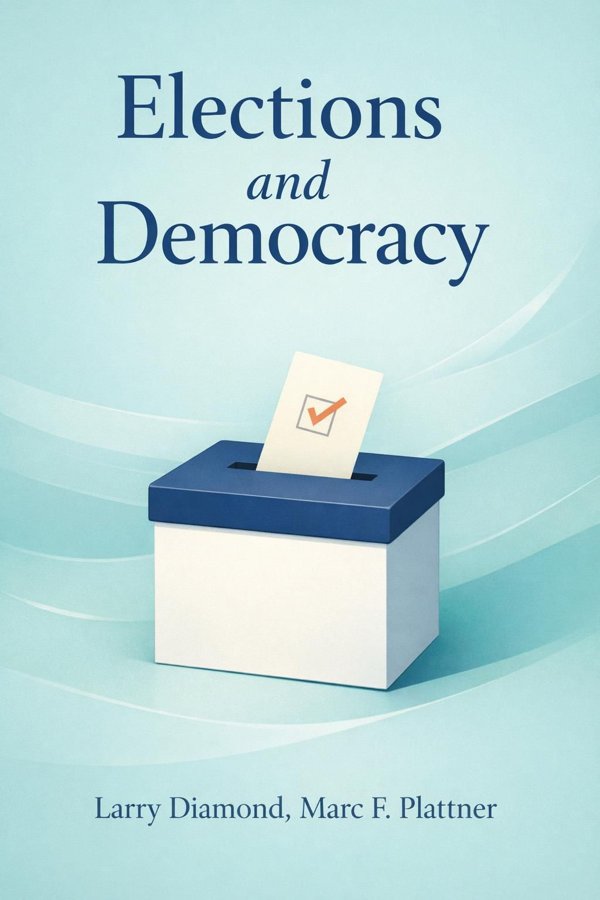
Elections and Democracy: Summary & Key Insights
by Larry Diamond, Marc F. Plattner
 10 min11 chaptersAudio available
What Is Elections and Democracy About?
Elections and Democracy by Larry Diamond, Marc F. Plattner is a politics book spanning 11 pages. This scholarly compendium explores the relationship between elections and democratic governance, analyzing how electoral processes shape political legitimacy, accountability, and representation across different regimes. It includes comparative studies and theoretical essays on democratization, electoral integrity, and the challenges of sustaining democracy in transitional societies.
This FizzRead summary covers all 11 key chapters of Elections and Democracy in approximately 10 minutes, distilling the most important ideas, arguments, and takeaways from Larry Diamond, Marc F. Plattner's work. Also available as an audio summary and Key Quotes Podcast.
Elections and Democracy
This scholarly compendium explores the relationship between elections and democratic governance, analyzing how electoral processes shape political legitimacy, accountability, and representation across different regimes. It includes comparative studies and theoretical essays on democratization, electoral integrity, and the challenges of sustaining democracy in transitional societies.
Who Should Read Elections and Democracy?
This book is perfect for anyone interested in politics and looking to gain actionable insights in a short read. Whether you're a student, professional, or lifelong learner, the key ideas from Elections and Democracy by Larry Diamond, Marc F. Plattner will help you think differently.
- ✓Readers who enjoy politics and want practical takeaways
- ✓Professionals looking to apply new ideas to their work and life
- ✓Anyone who wants the core insights of Elections and Democracy in just 10 minutes
Want the full summary?
Get instant access to this book summary and 100K+ more with Fizz Moment.
Get Free SummaryAvailable on App Store • Free to download
Key Chapters
To understand the democratic significance of elections, we must begin with their conceptual foundations: legitimacy and representation. Elections transform private opinions into public authority. They provide a mechanism through which rulers derive consent, making the governed the source of government. In our theoretical analysis, we argue that the legitimacy of any democratic regime depends on this periodic reaffirmation of consent. It is through free and fair contests that citizens exercise sovereignty, affirming not only who governs but how governance itself is accountable.
Representation, however, is not a mere mechanical outcome of vote counting. It embodies complex relationships between institutions, parties, and citizens' identities. Different electoral systems convert votes into representation differently, sometimes exaggerating majorities, sometimes amplifying minorities. Majoritarian systems often yield strong governments but risk over-representing dominant groups, while proportional systems promise inclusivity but can dilute decisiveness. What becomes clear is that electoral design bears heavily on the perceived fairness of democracy. The legitimacy conferred by elections thus depends not only on participation but on the equity of representation produced.
In exploring these foundations, we bring together perspectives from political theory and comparative practice. Elections are both moral and procedural instruments: they assert that authority should rest on consent, and they operationalize that consent through legally defined competition. When they fail — when they are falsified, coerced, or manipulated — legitimacy collapses. The crisis that follows, whether in authoritarian transitions or faltering democracies, reveals how central this institution is to the democratic idea itself.
+ 9 more chapters — available in the FizzRead app
All Chapters in Elections and Democracy
About the Authors
Larry Diamond is a political sociologist and senior fellow at the Hoover Institution, known for his research on democracy and governance. Marc F. Plattner is co-editor of the Journal of Democracy and has written extensively on democratic theory and practice.
Get This Summary in Your Preferred Format
Read or listen to the Elections and Democracy summary by Larry Diamond, Marc F. Plattner anytime, anywhere. FizzRead offers multiple formats so you can learn on your terms — all free.
Available formats: App · Audio · PDF · EPUB — All included free with FizzRead
Download Elections and Democracy PDF and EPUB Summary
Key Quotes from Elections and Democracy
“To understand the democratic significance of elections, we must begin with their conceptual foundations: legitimacy and representation.”
“Across the world’s transitions, elections have been both milestones and battlegrounds.”
Frequently Asked Questions about Elections and Democracy
Elections and Democracy by Larry Diamond, Marc F. Plattner is a politics book that explores key ideas across 11 chapters. This scholarly compendium explores the relationship between elections and democratic governance, analyzing how electoral processes shape political legitimacy, accountability, and representation across different regimes. It includes comparative studies and theoretical essays on democratization, electoral integrity, and the challenges of sustaining democracy in transitional societies.
You Might Also Like

Antifa: The Anti-Fascist Handbook
Mark Bray
10 min
Attack from Within: How Disinformation Is Sabotaging America
Barbara McQuade
10 min
Coercion, Capital, and European States, AD 990–1992
Charles Tilly
10 min
Digital Democracy: Concepts, Methodologies, Tools, and Applications
Various Authors
10 min
Fascism
Stanley G. Payne
10 min
Fire And Fury: Inside The Trump White House
Michael Wolff
10 minBrowse by Category
Ready to read Elections and Democracy?
Get the full summary and 100K+ more books with Fizz Moment.