
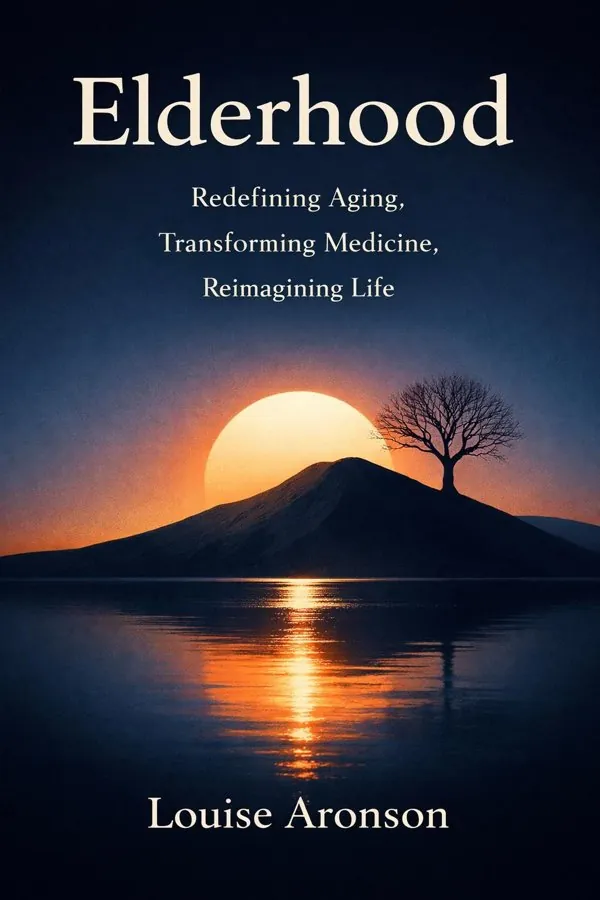
Elderhood: Redefining Aging, Transforming Medicine, Reimagining Life: Summary & Key Insights
 10 min11 chaptersAudio available
What Is Elderhood: Redefining Aging, Transforming Medicine, Reimagining Life About?
Elderhood: Redefining Aging, Transforming Medicine, Reimagining Life by Louise Aronson is a health_med book spanning 11 pages. In Elderhood, geriatrician Louise Aronson explores what it means to grow old in the twenty-first century. Drawing on her decades of medical practice and personal experience, she examines the cultural, social, and medical dimensions of aging, challenging stereotypes and advocating for a more humane and realistic understanding of later life. The book blends storytelling, science, and philosophy to reimagine how society can better support and value its elders.
This FizzRead summary covers all 11 key chapters of Elderhood: Redefining Aging, Transforming Medicine, Reimagining Life in approximately 10 minutes, distilling the most important ideas, arguments, and takeaways from Louise Aronson's work. Also available as an audio summary and Key Quotes Podcast.
Elderhood: Redefining Aging, Transforming Medicine, Reimagining Life
In Elderhood, geriatrician Louise Aronson explores what it means to grow old in the twenty-first century. Drawing on her decades of medical practice and personal experience, she examines the cultural, social, and medical dimensions of aging, challenging stereotypes and advocating for a more humane and realistic understanding of later life. The book blends storytelling, science, and philosophy to reimagine how society can better support and value its elders.
Who Should Read Elderhood: Redefining Aging, Transforming Medicine, Reimagining Life?
This book is perfect for anyone interested in health_med and looking to gain actionable insights in a short read. Whether you're a student, professional, or lifelong learner, the key ideas from Elderhood: Redefining Aging, Transforming Medicine, Reimagining Life by Louise Aronson will help you think differently.
- ✓Readers who enjoy health_med and want practical takeaways
- ✓Professionals looking to apply new ideas to their work and life
- ✓Anyone who wants the core insights of Elderhood: Redefining Aging, Transforming Medicine, Reimagining Life in just 10 minutes
Want the full summary?
Get instant access to this book summary and 100K+ more with Fizz Moment.
Get Free SummaryAvailable on App Store • Free to download
Key Chapters
My journey into eldercare began less as a calling and more as an awakening. When I first entered medicine, geriatrics was not the glamorous path. The most prestigious residencies went to those who pursued cardiology or oncology, not those who tended to frail nursing home residents. Yet, time and again, I found myself drawn to older patients. Their lives were stories—the full arcs of human existence—and their needs demanded both scientific skill and humane attention.
Over the years, I came to realize how medicine often betrays its elders. We reward interventions and procedures, but rarely conversations. We praise the conquering of disease, but not the stewardship of aging. My patients taught me that medicine is not merely about prolongation but about accompaniment. Their resilience and humor—coupled with society’s neglect—compelled me to rethink what we consider good doctoring.
This reflection gave birth to *Elderhood*. It is not a book about how to resist aging, but about how to experience it fully. My own life, as both a doctor and a woman nearing the later chapters of midlife, gave me the vantage point to critique medicine’s failings while daring to imagine something more humane. Each story I share is a thread in a larger tapestry that redefines what growing old can mean when seen through empathy instead of fear.
Across history, old age has been interpreted in countless ways. In some eras, elders were the keepers of wisdom—the griots, the sages, the tribal storytellers. In others, they were considered burdens, reminders of mortality to be hidden away. In the ancient world, figures like Cicero wrote eloquently on the virtues of aging, seeing in it a time of reflection and philosophical maturity. By contrast, in the twenty-first century West, youth has become our defining god. Older bodies are seen as failures of discipline; wrinkles are treated like diseases.
When I researched how different societies approach aging, I found that the measure of a civilization often lies in how it treats its elders. In parts of Asia and Africa, intergenerational households remain common, and the old are embedded in daily life. In America, we have medicalized aging—creating institutions that care for the body but isolate the person. This shift has profound consequences. When we lose elders from our communal spaces, we lose collective memory, continuity, and perspective.
Relearning reverence for elderhood does not mean romanticizing it. It means recognizing that old age, like every life stage, combines power and limitation. It requires us to see elders not as faded versions of their younger selves but as beings still becoming. My call is simple: restore elders to the center of our shared human story.
+ 9 more chapters — available in the FizzRead app
All Chapters in Elderhood: Redefining Aging, Transforming Medicine, Reimagining Life
About the Author
Louise Aronson is a physician, writer, and professor of medicine at the University of California, San Francisco. A graduate of Harvard Medical School, she is a leading voice in geriatrics and medical humanities. Her essays and stories have appeared in major publications, and she is known for her advocacy for reform in the care and perception of older adults.
Get This Summary in Your Preferred Format
Read or listen to the Elderhood: Redefining Aging, Transforming Medicine, Reimagining Life summary by Louise Aronson anytime, anywhere. FizzRead offers multiple formats so you can learn on your terms — all free.
Available formats: App · Audio · PDF · EPUB — All included free with FizzRead
Download Elderhood: Redefining Aging, Transforming Medicine, Reimagining Life PDF and EPUB Summary
Key Quotes from Elderhood: Redefining Aging, Transforming Medicine, Reimagining Life
“My journey into eldercare began less as a calling and more as an awakening.”
“Across history, old age has been interpreted in countless ways.”
Frequently Asked Questions about Elderhood: Redefining Aging, Transforming Medicine, Reimagining Life
Elderhood: Redefining Aging, Transforming Medicine, Reimagining Life by Louise Aronson is a health_med book that explores key ideas across 11 chapters. In Elderhood, geriatrician Louise Aronson explores what it means to grow old in the twenty-first century. Drawing on her decades of medical practice and personal experience, she examines the cultural, social, and medical dimensions of aging, challenging stereotypes and advocating for a more humane and realistic understanding of later life. The book blends storytelling, science, and philosophy to reimagine how society can better support and value its elders.
You Might Also Like
On Immunity
Eula Biss
10 min
The Three-Body Problem
Liu Cixin
10 min
Community Health Volunteer Toolkit: Training and Practical Activities
World Health Organization
10 min
Healing Back Pain: The Mind-Body Connection
John E. Sarno
10 min
Health Literacy for All: Practical Guides to Communicate Health Information (Compilations)
World Health Organization
10 min
The Complete Guide to Sports Supplements: An Evidence-Based Review
Anita Bean
10 minBrowse by Category
Ready to read Elderhood: Redefining Aging, Transforming Medicine, Reimagining Life?
Get the full summary and 100K+ more books with Fizz Moment.