
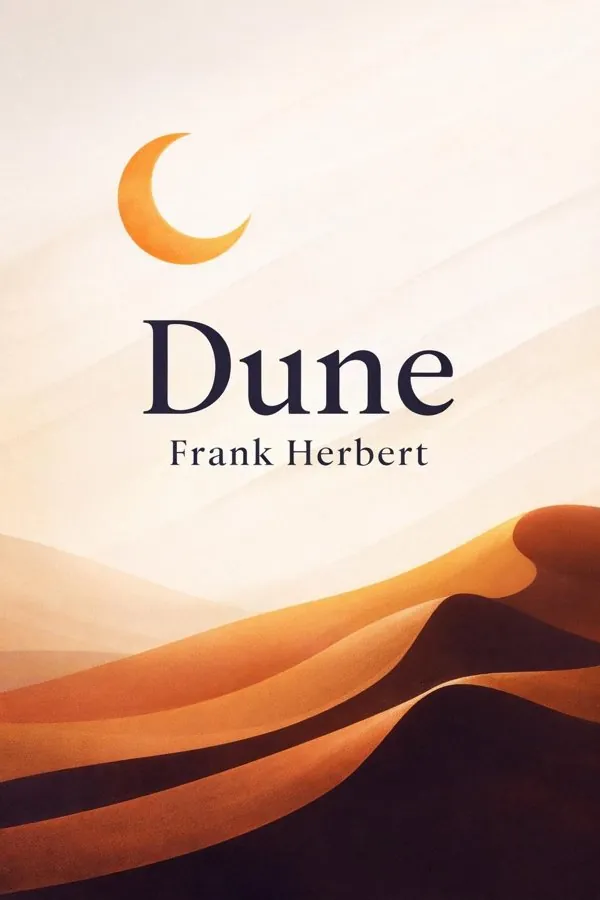
Dune: Summary & Key Insights
 10 min5 chaptersAudio available
What Is Dune About?
Dune by Frank Herbert is a fiction book published in 1965 spanning 5 pages. Dune es una novela épica de ciencia ficción escrita por Frank Herbert y publicada originalmente en 1965 por Chilton Books. Ambientada en el lejano futuro, narra la historia de Paul Atreides, cuya familia acepta el control del planeta desértico Arrakis, la única fuente de la sustancia más valiosa del universo: la melange o 'especia'. La obra explora temas de política, religión, ecología y poder, convirtiéndose en una de las piezas más influyentes del género.
This FizzRead summary covers all 5 key chapters of Dune in approximately 10 minutes, distilling the most important ideas, arguments, and takeaways from Frank Herbert's work. Also available as an audio summary and Key Quotes Podcast.
Dune
Dune es una novela épica de ciencia ficción escrita por Frank Herbert y publicada originalmente en 1965 por Chilton Books. Ambientada en el lejano futuro, narra la historia de Paul Atreides, cuya familia acepta el control del planeta desértico Arrakis, la única fuente de la sustancia más valiosa del universo: la melange o 'especia'. La obra explora temas de política, religión, ecología y poder, convirtiéndose en una de las piezas más influyentes del género.
Who Should Read Dune?
This book is perfect for anyone interested in fiction and looking to gain actionable insights in a short read. Whether you're a student, professional, or lifelong learner, the key ideas from Dune by Frank Herbert will help you think differently.
- ✓Readers who enjoy fiction and want practical takeaways
- ✓Professionals looking to apply new ideas to their work and life
- ✓Anyone who wants the core insights of Dune in just 10 minutes
Want the full summary?
Get instant access to this book summary and 100K+ more with Fizz Moment.
Get Free SummaryAvailable on App Store • Free to download
Key Chapters
The story begins in a universe governed not by abstract democracy but by feudal interstellar powers. At its center stands House Atreides, led by Duke Leto—a nobleman known for his integrity and compassion—living under the watchful eye of the Emperor, whose fear of Leto’s popularity becomes the engine of the plot. When the Emperor commands House Atreides to take control of the planet Arrakis, it seems at first a grand opportunity. Yet beneath this gesture lies silent treachery, for the planet had long been the domain of House Harkonnen, arch-rivals of the Atreides, renowned for their cruelty and cunning.
In this assignment, power shifts become ecological metaphors. Arrakis is not merely a territory, but a living system. To control the spice is to control time itself, perception, and ultimately, civilization. As Duke Leto prepares his family for the move, he perceives both opportunity and doom. He knows the Emperor wishes to entrap him, yet his sense of duty compels him to go forward.
From the first, Paul Atreides, Leto’s son, moves through visions and lessons that shape his intellect and intuition. His mother, Lady Jessica of the Bene Gesserit sisterhood, has trained him in mental discipline, awareness, and the secret arts of their order. Together they represent two forms of power—the political and the spiritual—that will soon merge into something far greater. The weight of destiny begins to form, whispering through the spice-scented air of the universe.
Paul’s prophetic dreams before reaching Arrakis mark the transition from political intrigue to mystical foresight. He dreams not of wealth or prestige, but of the Fremen—the desert-dwelling people of Arrakis—and of a young woman who will become significant in his fate. These visions are not mere dreams; they signal a consciousness expanding toward the cosmic. His destiny starts to pull him into a web larger than any human scheme.
Upon arriving on Arrakis, the Atreides begin their intricate dance of diplomacy and survival. They study spice production, desert ecology, and the strange symbiosis between sandworms and spice. Each discovery deepens the sense that Arrakis itself possesses awareness, that the planet has its own rhythm and judgment.
Paul’s fascination with the Fremen grows alongside his realization that prophecy may not simply predict the future—it may shape it. He hears stories of a messiah foretold in Fremen legend, a figure called the Mahdi who would lead them to freedom. The echoes of this prophecy merge with his own inner transformations, creating a tension between fate and free will that defines his journey. For Paul, recognizing destiny means accepting responsibility—a step that will alter not only his life but the course of the galaxy.
+ 3 more chapters — available in the FizzRead app
All Chapters in Dune
About the Author
Frank Herbert (1920–1986) fue un escritor estadounidense de ciencia ficción, periodista y fotógrafo. Es conocido principalmente por la serie 'Dune', que redefinió el género con su complejidad política y ecológica. Antes de dedicarse a la escritura, trabajó como reportero y editor, y su interés por la ecología y la filosofía influyó profundamente en su obra.
Get This Summary in Your Preferred Format
Read or listen to the Dune summary by Frank Herbert anytime, anywhere. FizzRead offers multiple formats so you can learn on your terms — all free.
Available formats: App · Audio · PDF · EPUB — All included free with FizzRead
Download Dune PDF and EPUB Summary
Key Quotes from Dune
“The story begins in a universe governed not by abstract democracy but by feudal interstellar powers.”
“Paul’s prophetic dreams before reaching Arrakis mark the transition from political intrigue to mystical foresight.”
Frequently Asked Questions about Dune
Dune by Frank Herbert is a fiction book that explores key ideas across 5 chapters. Dune es una novela épica de ciencia ficción escrita por Frank Herbert y publicada originalmente en 1965 por Chilton Books. Ambientada en el lejano futuro, narra la historia de Paul Atreides, cuya familia acepta el control del planeta desértico Arrakis, la única fuente de la sustancia más valiosa del universo: la melange o 'especia'. La obra explora temas de política, religión, ecología y poder, convirtiéndose en una de las piezas más influyentes del género.
You Might Also Like





Browse by Category
Ready to read Dune?
Get the full summary and 100K+ more books with Fizz Moment.