
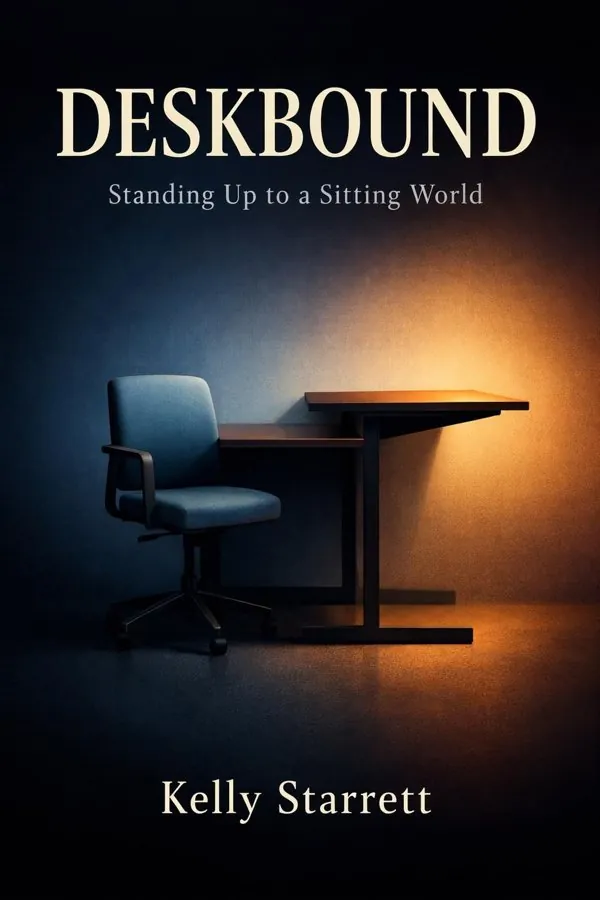
Deskbound: Standing Up to a Sitting World: Summary & Key Insights
 10 min4 chaptersAudio available
What Is Deskbound: Standing Up to a Sitting World About?
Deskbound: Standing Up to a Sitting World by Kelly Starrett is a health_med book spanning 4 pages. Deskbound: Standing Up to a Sitting World es un libro de salud y bienestar que explora los efectos negativos del sedentarismo prolongado y ofrece estrategias prácticas para mejorar la postura, movilidad y rendimiento físico en entornos de oficina. El autor, el Dr. Kelly Starrett, combina su experiencia en fisioterapia y entrenamiento físico para enseñar cómo rediseñar el espacio de trabajo, incorporar movimiento diario y prevenir lesiones derivadas de estar sentado demasiado tiempo.
This FizzRead summary covers all 4 key chapters of Deskbound: Standing Up to a Sitting World in approximately 10 minutes, distilling the most important ideas, arguments, and takeaways from Kelly Starrett's work. Also available as an audio summary and Key Quotes Podcast.
Deskbound: Standing Up to a Sitting World
Deskbound: Standing Up to a Sitting World es un libro de salud y bienestar que explora los efectos negativos del sedentarismo prolongado y ofrece estrategias prácticas para mejorar la postura, movilidad y rendimiento físico en entornos de oficina. El autor, el Dr. Kelly Starrett, combina su experiencia en fisioterapia y entrenamiento físico para enseñar cómo rediseñar el espacio de trabajo, incorporar movimiento diario y prevenir lesiones derivadas de estar sentado demasiado tiempo.
Who Should Read Deskbound: Standing Up to a Sitting World?
This book is perfect for anyone interested in health_med and looking to gain actionable insights in a short read. Whether you're a student, professional, or lifelong learner, the key ideas from Deskbound: Standing Up to a Sitting World by Kelly Starrett will help you think differently.
- ✓Readers who enjoy health_med and want practical takeaways
- ✓Professionals looking to apply new ideas to their work and life
- ✓Anyone who wants the core insights of Deskbound: Standing Up to a Sitting World in just 10 minutes
Want the full summary?
Get instant access to this book summary and 100K+ more with Fizz Moment.
Get Free SummaryAvailable on App Store • Free to download
Key Chapters
Posture is a living reflection of your movement history. Every slouched hour stacks into a shape that reveals the story of how you’ve used—or misused—your body. The spine is not a rigid column; it is a dynamic, segmented structure designed to transmit force while maintaining flexibility. The hips, shoulders, and ankles are joint systems meant for fluid motion. When sitting dominates your day, these structures adapt to a pattern of dysfunction.
Biomechanically, sitting primarily affects hip flexors, hamstrings, glutes, and spinal alignment. Your hip flexors shorten, pulling the pelvis forward and increasing lumbar lordosis. Your glutes weaken from disuse, compromising stability and power. The thoracic spine rounds, and your shoulders drift forward into internal rotation. This posture is what I call the 'adapted sitting position'—it becomes your default shape, even when you’re standing or walking.
I’ve coached professional athletes who discovered their running stride was limited not by training volume but by the same tight hip angles seen in office workers. Correcting this involves restoring neutral joint positions and rebuilding mobility through movement. Neutral spine alignment is foundational—once regained, it supports efficient breathing, stable load transfer, and improved coordination.
Mobility assessments, as described in *Deskbound*, are not about flexibility contests. They are about recognizing restrictions. When you test your squat, hinge, or overhead position and notice impingement or tightness, you are identifying the echoes of your sedentary hours. Mobility is not just an exercise concept; it’s a diagnostic tool for reclaiming functionality.
Through deliberate interventions—movement breaks, soft tissue work, and structural alignment exercises—you can retrain the body to express its natural capacity. Each correction of posture is more than aesthetic; it is an act of reclaiming your anatomical integrity. The goal isn’t to punish sitting—it’s to restore choice. When your body is free, movement becomes effortless again.
+ 2 more chapters — available in the FizzRead app
All Chapters in Deskbound: Standing Up to a Sitting World
About the Author
Kelly Starrett es fisioterapeuta, entrenador de movilidad y cofundador de MobilityWOD (ahora The Ready State). Es conocido por su trabajo en optimización del movimiento humano y rendimiento físico, y ha asesorado a atletas de élite, equipos deportivos profesionales y organizaciones militares. También es autor de los bestsellers Becoming a Supple Leopard y Ready to Run.
Get This Summary in Your Preferred Format
Read or listen to the Deskbound: Standing Up to a Sitting World summary by Kelly Starrett anytime, anywhere. FizzRead offers multiple formats so you can learn on your terms — all free.
Available formats: App · Audio · PDF · EPUB — All included free with FizzRead
Download Deskbound: Standing Up to a Sitting World PDF and EPUB Summary
Key Quotes from Deskbound: Standing Up to a Sitting World
“When I began treating people with chronic pain and movement dysfunction, I realized that most weren’t injured from accidents or sport—they were injured by normal life.”
“Posture is a living reflection of your movement history.”
Frequently Asked Questions about Deskbound: Standing Up to a Sitting World
Deskbound: Standing Up to a Sitting World by Kelly Starrett is a health_med book that explores key ideas across 4 chapters. Deskbound: Standing Up to a Sitting World es un libro de salud y bienestar que explora los efectos negativos del sedentarismo prolongado y ofrece estrategias prácticas para mejorar la postura, movilidad y rendimiento físico en entornos de oficina. El autor, el Dr. Kelly Starrett, combina su experiencia en fisioterapia y entrenamiento físico para enseñar cómo rediseñar el espacio de trabajo, incorporar movimiento diario y prevenir lesiones derivadas de estar sentado demasiado tiempo.
More by Kelly Starrett
You Might Also Like

On Immunity
Eula Biss
10 min
The Three-Body Problem
Liu Cixin
10 min
Community Health Volunteer Toolkit: Training and Practical Activities
World Health Organization
10 min
Healing Back Pain: The Mind-Body Connection
John E. Sarno
10 min
Health Literacy for All: Practical Guides to Communicate Health Information (Compilations)
World Health Organization
10 min
The Complete Guide to Sports Supplements: An Evidence-Based Review
Anita Bean
10 minBrowse by Category
Ready to read Deskbound: Standing Up to a Sitting World?
Get the full summary and 100K+ more books with Fizz Moment.