
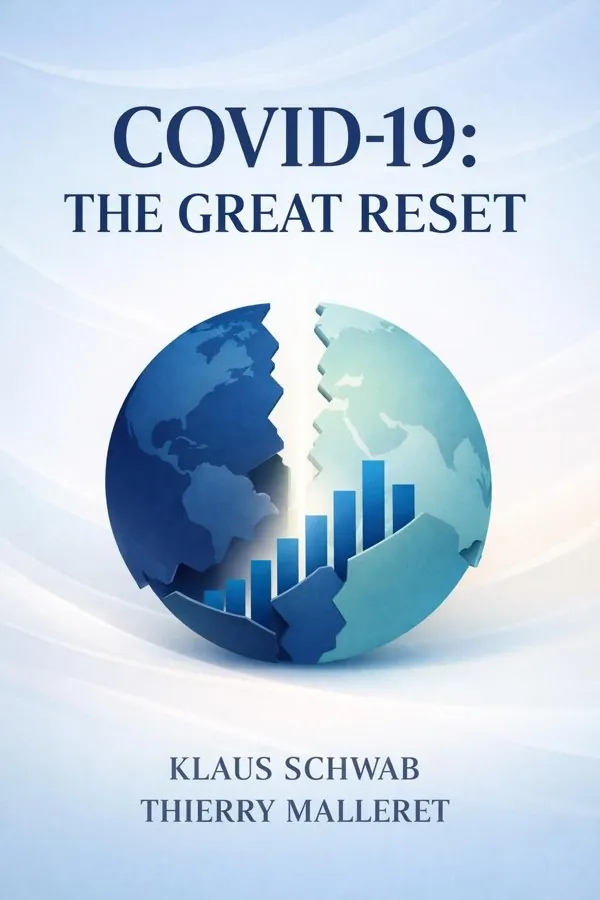
COVID-19: The Great Reset: Summary & Key Insights
by Klaus Schwab, Thierry Malleret
 10 min6 chaptersAudio available
What Is COVID-19: The Great Reset About?
COVID-19: The Great Reset by Klaus Schwab, Thierry Malleret is a economics book spanning 6 pages. COVID-19: The Great Reset explores how the pandemic has accelerated systemic changes in the global economy, politics, and society. The authors argue that the crisis offers an opportunity to reshape capitalism, governance, and sustainability toward a more inclusive and resilient world order.
This FizzRead summary covers all 6 key chapters of COVID-19: The Great Reset in approximately 10 minutes, distilling the most important ideas, arguments, and takeaways from Klaus Schwab, Thierry Malleret's work. Also available as an audio summary and Key Quotes Podcast.
COVID-19: The Great Reset
COVID-19: The Great Reset explores how the pandemic has accelerated systemic changes in the global economy, politics, and society. The authors argue that the crisis offers an opportunity to reshape capitalism, governance, and sustainability toward a more inclusive and resilient world order.
Who Should Read COVID-19: The Great Reset?
This book is perfect for anyone interested in economics and looking to gain actionable insights in a short read. Whether you're a student, professional, or lifelong learner, the key ideas from COVID-19: The Great Reset by Klaus Schwab, Thierry Malleret will help you think differently.
- ✓Readers who enjoy economics and want practical takeaways
- ✓Professionals looking to apply new ideas to their work and life
- ✓Anyone who wants the core insights of COVID-19: The Great Reset in just 10 minutes
Want the full summary?
Get instant access to this book summary and 100K+ more with Fizz Moment.
Get Free SummaryAvailable on App Store • Free to download
Key Chapters
Before the outbreak, the global system was already strained. Economic inequality had reached extreme levels in both developed and developing nations, environmental degradation continued despite pledges under global accords, and political polarization undercut governance from local councils to international agencies. These vulnerabilities were not hidden—they were extensively documented by economists, ecologists, and social thinkers. Yet, they persisted because incrementalism reigned. The global economy was trapped in short-term cycles of profit and consumption, while the planet’s ecological balance teetered.
In reflecting on this period, I see the pandemic as a mirror. It did not create inequality or polarization—it simply magnified them. The virus struck unevenly, exposing the gaps between those who could protect themselves and those who could not. Geographically, nations with fragile healthcare systems struggled most; socially, the poor and the marginalized bore the heaviest toll. These disparities illustrated how the pre-pandemic system was not only inefficient but unjust.
Environmental vulnerability is another critical strand in this overview. Though temporarily lockdowns reduced emissions, the urgent lesson remains: our economic system is fundamentally misaligned with planetary health. The pre-COVID era sustained growth through extractive models that undermined future stability. The pandemic’s shock showed how interconnected these vulnerabilities are—a health crisis cannot be understood without considering ecological fragility or socioeconomic imbalance.
These weaknesses prepared the ground for the concept of the 'Great Reset.' Unless addressed, they will deepen post-pandemic instability. But if acknowledged and reworked, they form the foundation for evolution—not revolution, but strategic transformation. The realization that the “status quo” was neither sustainable nor desirable is what makes this moment a chance unlike any other.
At the macroeconomic level, COVID-19 revolutionized fiscal and monetary policy. Governments intervened as never before, injecting liquidity, expanding welfare programs, and redefining the limits of market autonomy. Central banks embarked on extraordinary measures—quantitative easing on an unprecedented scale, coordinated fiscal expansion, and direct support for enterprises and households. What emerged is a new narrative of state involvement in the economy.
I write about this shift not as ideological advocacy but as recognition of reality. When the market system falters under systemic shock, governments become the ultimate guarantors of social stability. The pandemic dismantled taboos against massive public spending and revealed that fiscal prudence must now coexist with social investment. This recalibration requires careful balance—too little support breeds insecurity and unrest; too much may risk inflation or debt overload. Nevertheless, a dynamic form of macroeconomic management is now indispensable.
We also must consider global debt levels. The surge in public borrowing will shape economic planning for years, influencing taxation, social insurance, and investment priorities. But the notion of austerity must be carefully re-examined: post-crisis recovery cannot thrive under contractionary orthodoxy. Fiscal responsibility must be harmonized with inclusive growth and climate resilience.
In this new era, collaboration among central banks and governments, policy coordination across borders, and reform of international institutions such as the IMF and the World Bank will define the future economic landscape. I emphasize repeatedly that macroeconomic reset is no mere bureaucratic adjustment—it is an ethical realignment of priorities toward long-term stability and public good.
+ 4 more chapters — available in the FizzRead app
All Chapters in COVID-19: The Great Reset
About the Authors
Klaus Schwab is the founder and executive chairman of the World Economic Forum. Thierry Malleret is the co-founder of the Monthly Barometer and a former senior partner at a global investment firm.
Get This Summary in Your Preferred Format
Read or listen to the COVID-19: The Great Reset summary by Klaus Schwab, Thierry Malleret anytime, anywhere. FizzRead offers multiple formats so you can learn on your terms — all free.
Available formats: App · Audio · PDF · EPUB — All included free with FizzRead
Download COVID-19: The Great Reset PDF and EPUB Summary
Key Quotes from COVID-19: The Great Reset
“Before the outbreak, the global system was already strained.”
“At the macroeconomic level, COVID-19 revolutionized fiscal and monetary policy.”
Frequently Asked Questions about COVID-19: The Great Reset
COVID-19: The Great Reset by Klaus Schwab, Thierry Malleret is a economics book that explores key ideas across 6 chapters. COVID-19: The Great Reset explores how the pandemic has accelerated systemic changes in the global economy, politics, and society. The authors argue that the crisis offers an opportunity to reshape capitalism, governance, and sustainability toward a more inclusive and resilient world order.
You Might Also Like
Business Adventures
John Brooks
10 min
Nudge
Richard H. Thaler, Cass R. Sunstein
10 min
The Hitchhiker"s Guide to the Galaxy
Douglas Adams
10 minThe Muqaddimah
Ibn Khaldun
10 minThe Outsiders
William N. Thorndike
10 min
A Little History of Economics
Niall Kishtainy
10 minBrowse by Category
Ready to read COVID-19: The Great Reset?
Get the full summary and 100K+ more books with Fizz Moment.