
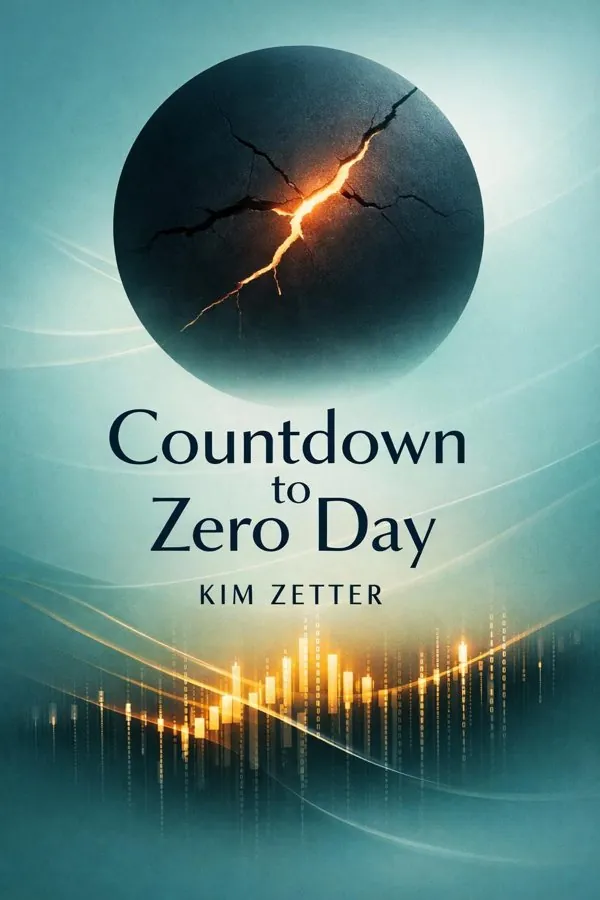
Countdown to Zero Day: Stuxnet and the Launch of the World's First Digital Weapon: Summary & Key Insights
by Kim Zetter
 10 min7 chaptersAudio available
What Is Countdown to Zero Day: Stuxnet and the Launch of the World's First Digital Weapon About?
Countdown to Zero Day: Stuxnet and the Launch of the World's First Digital Weapon by Kim Zetter is a war_military book spanning 7 pages. Countdown to Zero Day is an investigative account of the Stuxnet computer worm, a sophisticated cyberweapon that targeted Iran’s nuclear program. Kim Zetter reveals how the malware was discovered, how it worked, and how it marked the dawn of a new era in cyberwarfare. Drawing on interviews with security experts, government officials, and researchers, the book explores the geopolitical, technical, and ethical implications of digital weapons and their potential to reshape global conflict.
This FizzRead summary covers all 7 key chapters of Countdown to Zero Day: Stuxnet and the Launch of the World's First Digital Weapon in approximately 10 minutes, distilling the most important ideas, arguments, and takeaways from Kim Zetter's work. Also available as an audio summary and Key Quotes Podcast.
Countdown to Zero Day: Stuxnet and the Launch of the World's First Digital Weapon
Countdown to Zero Day is an investigative account of the Stuxnet computer worm, a sophisticated cyberweapon that targeted Iran’s nuclear program. Kim Zetter reveals how the malware was discovered, how it worked, and how it marked the dawn of a new era in cyberwarfare. Drawing on interviews with security experts, government officials, and researchers, the book explores the geopolitical, technical, and ethical implications of digital weapons and their potential to reshape global conflict.
Who Should Read Countdown to Zero Day: Stuxnet and the Launch of the World's First Digital Weapon?
This book is perfect for anyone interested in war_military and looking to gain actionable insights in a short read. Whether you're a student, professional, or lifelong learner, the key ideas from Countdown to Zero Day: Stuxnet and the Launch of the World's First Digital Weapon by Kim Zetter will help you think differently.
- ✓Readers who enjoy war_military and want practical takeaways
- ✓Professionals looking to apply new ideas to their work and life
- ✓Anyone who wants the core insights of Countdown to Zero Day: Stuxnet and the Launch of the World's First Digital Weapon in just 10 minutes
Want the full summary?
Get instant access to this book summary and 100K+ more with Fizz Moment.
Get Free SummaryAvailable on App Store • Free to download
Key Chapters
When antivirus companies first stumbled upon the worm, it appeared unremarkable—until analysts realized it behaved nothing like the viruses they normally dealt with. I remember the sense of awe that rippled through the cybersecurity community: this code was enormous, precise, and layered with digital traps that made analysis almost impossible. Researchers at VirusBlokAda in Belarus and later Symantec and Kaspersky would piece together the puzzle, each revealing parts of its inner logic.
What astonished investigators was its engineering depth. Stuxnet exploited four previously unknown vulnerabilities in Windows—a rarity in the world of malware, where even one zero-day exploit was considered rare and valuable. Its design included legitimate digital certificates stolen from reputable companies, helping it appear trustworthy while infiltrating systems. Inside, it hid repositories of code targeting programmable logic controllers—the digital brains managing machinery. It was the first known malware to leap beyond computers and manipulate the physical world.
In recounting these discoveries, I convey the growing realization among analysts: someone had built this with near-unlimited resources and inside knowledge. This was not criminal malware designed for profit—it was a weapon made with military precision. The worm’s complexity marked a turning point, a moment when the line between virtual infiltration and kinetic attack disappeared.
To understand why such a weapon was created, one must step back to the political landscape surrounding Iran’s nuclear ambitions. Iran’s enrichment facility at Natanz was a focal point of international anxiety—target of sanctions, negotiations, and covert surveillance. Western nations suspected that its program was edging toward nuclear weapons capability. Yet traditional military strikes were risky: they could ignite regional war.
It was this high-stakes tension that likely drove a search for alternatives—a silent tool that could cripple Iran’s progress without firing a single missile. By 2009, Natanz was operating thousands of centrifuges, delicate machines spinning uranium hexafluoride gas to purify fissile material. Physical sabotage would be nearly impossible without detection. But digital interference offered a new possibility. If code could alter centrifuge speeds and damage them internally while showing false data to operators, Iran could be set back years.
In connecting geopolitics to engineering, I wanted readers to see how intelligence objectives intersected with cybercapacity. Each strategic decision was filtered through concerns about escalation, deniability, and timing. The chapter grounds Stuxnet in the landscape of nuclear fear and diplomatic paralysis—a political freeze that made digital sabotage seem the most elegant solution to a global problem.
+ 5 more chapters — available in the FizzRead app
All Chapters in Countdown to Zero Day: Stuxnet and the Launch of the World's First Digital Weapon
About the Author
Kim Zetter is an award-winning investigative journalist who has covered cybersecurity, national security, and technology for publications such as Wired, The New York Times, and Politico. She is recognized for her in-depth reporting on digital espionage and cyberwarfare.
Get This Summary in Your Preferred Format
Read or listen to the Countdown to Zero Day: Stuxnet and the Launch of the World's First Digital Weapon summary by Kim Zetter anytime, anywhere. FizzRead offers multiple formats so you can learn on your terms — all free.
Available formats: App · Audio · PDF · EPUB — All included free with FizzRead
Download Countdown to Zero Day: Stuxnet and the Launch of the World's First Digital Weapon PDF and EPUB Summary
Key Quotes from Countdown to Zero Day: Stuxnet and the Launch of the World's First Digital Weapon
“When antivirus companies first stumbled upon the worm, it appeared unremarkable—until analysts realized it behaved nothing like the viruses they normally dealt with.”
“To understand why such a weapon was created, one must step back to the political landscape surrounding Iran’s nuclear ambitions.”
Frequently Asked Questions about Countdown to Zero Day: Stuxnet and the Launch of the World's First Digital Weapon
Countdown to Zero Day: Stuxnet and the Launch of the World's First Digital Weapon by Kim Zetter is a war_military book that explores key ideas across 7 chapters. Countdown to Zero Day is an investigative account of the Stuxnet computer worm, a sophisticated cyberweapon that targeted Iran’s nuclear program. Kim Zetter reveals how the malware was discovered, how it worked, and how it marked the dawn of a new era in cyberwarfare. Drawing on interviews with security experts, government officials, and researchers, the book explores the geopolitical, technical, and ethical implications of digital weapons and their potential to reshape global conflict.
You Might Also Like

Patriot
Andrew Britton
10 min
War
John Hersey
10 min
An Army at Dawn: The War in North Africa, 1942–1943
Rick Atkinson
10 min
Brave New War: The Next Stage of Terrorism and the End of Globalization
John Robb
10 min
Catch-22
Joseph Heller
10 min
Command and Control: Nuclear Weapons, the Damascus Accident, and the Illusion of Safety
Eric Schlosser
10 minBrowse by Category
Ready to read Countdown to Zero Day: Stuxnet and the Launch of the World's First Digital Weapon?
Get the full summary and 100K+ more books with Fizz Moment.