
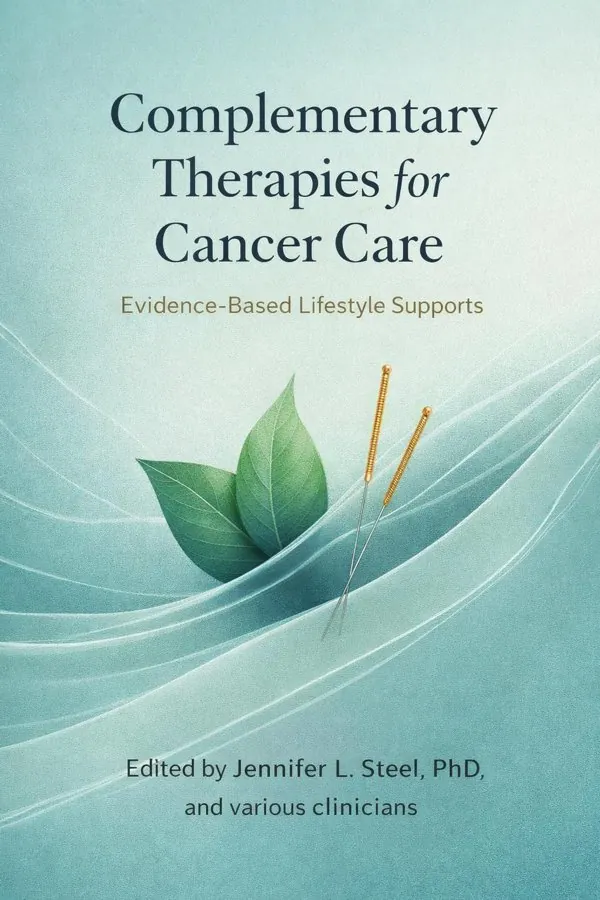
Complementary Therapies for Cancer Care: Evidence-Based Lifestyle Supports: Summary & Key Insights
by Edited by Jennifer L. Steel, PhD, and various clinicians
 10 min9 chaptersAudio available
Key Takeaways from Complementary Therapies for Cancer Care: Evidence-Based Lifestyle Supports
A cancer diagnosis often exposes a hidden flaw in modern medicine: treating disease is not always the same as caring for the person living through it.
Food becomes emotionally charged during cancer, yet few areas are so crowded with myths.
One of the most persistent myths in cancer care is that rest alone is the safest response to exhaustion.
Cancer does not only attack the body; it can keep the mind in a constant state of alarm.
Patients often turn to acupuncture, herbs, and natural products because they seem gentler than medical treatments.
What Is Complementary Therapies for Cancer Care: Evidence-Based Lifestyle Supports About?
Complementary Therapies for Cancer Care: Evidence-Based Lifestyle Supports by Edited by Jennifer L. Steel, PhD, and various clinicians is a health_med book spanning 7 pages. Cancer care is no longer defined only by surgery, chemotherapy, radiation, or medication. Increasingly, patients and clinicians recognize that healing also depends on how people eat, move, sleep, cope, and find emotional stability while navigating treatment. Complementary Therapies for Cancer Care: Evidence-Based Lifestyle Supports brings these dimensions together in a practical, research-informed guide to integrative oncology. Rather than promoting unproven alternatives or miracle cures, the book examines which supportive therapies have credible evidence behind them and how they can be used safely alongside standard cancer treatment. Edited by Jennifer L. Steel, PhD, a respected clinical health psychologist and psycho-oncology researcher, and shaped by contributions from multiple clinicians, the book bridges science and day-to-day care. It explores nutrition, exercise, mindfulness, acupuncture, herbal supports, psychological care, and spiritual well-being through the lens of symptom management, quality of life, and whole-person healing. Its importance lies in its balance: compassionate without being sentimental, open-minded without abandoning evidence. For patients, caregivers, and healthcare professionals, this book offers a clearer map through the confusing world of complementary cancer care and shows how lifestyle support can become a meaningful part of treatment and recovery.
This FizzRead summary covers all 9 key chapters of Complementary Therapies for Cancer Care: Evidence-Based Lifestyle Supports in approximately 10 minutes, distilling the most important ideas, arguments, and takeaways from Edited by Jennifer L. Steel, PhD, and various clinicians's work. Also available as an audio summary and Key Quotes Podcast.
Complementary Therapies for Cancer Care: Evidence-Based Lifestyle Supports
Cancer care is no longer defined only by surgery, chemotherapy, radiation, or medication. Increasingly, patients and clinicians recognize that healing also depends on how people eat, move, sleep, cope, and find emotional stability while navigating treatment. Complementary Therapies for Cancer Care: Evidence-Based Lifestyle Supports brings these dimensions together in a practical, research-informed guide to integrative oncology. Rather than promoting unproven alternatives or miracle cures, the book examines which supportive therapies have credible evidence behind them and how they can be used safely alongside standard cancer treatment.
Edited by Jennifer L. Steel, PhD, a respected clinical health psychologist and psycho-oncology researcher, and shaped by contributions from multiple clinicians, the book bridges science and day-to-day care. It explores nutrition, exercise, mindfulness, acupuncture, herbal supports, psychological care, and spiritual well-being through the lens of symptom management, quality of life, and whole-person healing. Its importance lies in its balance: compassionate without being sentimental, open-minded without abandoning evidence. For patients, caregivers, and healthcare professionals, this book offers a clearer map through the confusing world of complementary cancer care and shows how lifestyle support can become a meaningful part of treatment and recovery.
Who Should Read Complementary Therapies for Cancer Care: Evidence-Based Lifestyle Supports?
This book is perfect for anyone interested in health_med and looking to gain actionable insights in a short read. Whether you're a student, professional, or lifelong learner, the key ideas from Complementary Therapies for Cancer Care: Evidence-Based Lifestyle Supports by Edited by Jennifer L. Steel, PhD, and various clinicians will help you think differently.
- ✓Readers who enjoy health_med and want practical takeaways
- ✓Professionals looking to apply new ideas to their work and life
- ✓Anyone who wants the core insights of Complementary Therapies for Cancer Care: Evidence-Based Lifestyle Supports in just 10 minutes
Want the full summary?
Get instant access to this book summary and 100K+ more with Fizz Moment.
Get Free SummaryAvailable on App Store • Free to download
Key Chapters
A cancer diagnosis often exposes a hidden flaw in modern medicine: treating disease is not always the same as caring for the person living through it. This book begins by clarifying that integrative oncology is not a rejection of conventional treatment but an expansion of it. Complementary therapies matter because cancer affects far more than a tumor. It disrupts appetite, sleep, energy, mood, identity, relationships, and hope. A truly effective care model must address those realities.
The central point is that complementary therapies should be evidence-based, coordinated with oncology treatment, and chosen for specific goals such as reducing nausea, improving sleep, managing fatigue, easing pain, or lowering anxiety. That distinction is crucial. The book pushes back against the false choice between mainstream medicine and holistic support. Instead, it proposes a both-and model: chemotherapy may target disease, while nutrition counseling helps maintain strength, mindfulness reduces distress, and exercise preserves function.
This framework also protects patients from misinformation. In cancer care, desperation can make people vulnerable to exaggerated claims. Integrative oncology insists on asking disciplined questions: What does the evidence show? Is it safe? Could it interfere with treatment? Who is qualified to provide it? Those questions transform complementary care from guesswork into responsible practice.
In real clinical settings, this may look like an oncologist referring a patient with severe fatigue to supervised exercise therapy, or a nurse recommending meditation training for sleep disruption during radiation. It is not about replacing treatment. It is about strengthening the patient’s ability to tolerate and recover from treatment.
Actionable takeaway: evaluate every complementary therapy by three standards—evidence, safety, and fit with your treatment goals.
Food becomes emotionally charged during cancer, yet few areas are so crowded with myths. Patients are often told to avoid sugar, take expensive supplements, try extreme fasting, or adopt restrictive diets that promise to starve cancer. The book offers a more grounded message: nutrition in cancer care should focus first on preserving strength, supporting treatment tolerance, and addressing individual symptoms rather than chasing simplistic dietary dogma.
The authors explain that nutritional needs vary widely by diagnosis, treatment type, side effects, age, and baseline health. A patient dealing with mouth sores, nausea, or weight loss needs a very different plan than someone struggling with steroid-related appetite increases or long-term metabolic risk after treatment. Evidence-based supportive nutrition is therefore adaptive, not ideological.
Practical oncology nutrition may involve increasing protein during recovery, using small frequent meals during chemotherapy, choosing soft foods for swallowing difficulty, or managing gastrointestinal effects through careful hydration and fiber adjustment. For some, a registered dietitian may help prevent malnutrition; for others, the goal may be improving blood sugar control or reducing inflammation through sustainable whole-food patterns. The book also emphasizes caution with supplements and herbal products, which can interact with medications or create false confidence.
Perhaps the deepest insight is that nutrition restores agency. When treatment feels overwhelming, eating well can become one of the few daily actions that feels purposeful. But empowerment must be informed, not fear-driven. Good nutrition support reduces confusion by replacing internet mythology with individualized care.
Actionable takeaway: build a cancer nutrition plan around symptom management, adequate calories and protein, and guidance from a qualified oncology dietitian whenever possible.
One of the most persistent myths in cancer care is that rest alone is the safest response to exhaustion. The book argues the opposite: appropriately prescribed movement is one of the most effective tools for reducing cancer-related fatigue, preserving function, and improving quality of life. In many cases, exercise does not drain energy—it helps restore it.
The key is that exercise in oncology is not about athletic performance. It is about maintaining physical capacity during and after treatment. Chemotherapy, radiation, surgery, and hormonal therapies can reduce muscle mass, impair endurance, disturb balance, and weaken cardiovascular health. Without intentional movement, patients may enter a cycle in which fatigue leads to inactivity, inactivity causes deconditioning, and deconditioning worsens fatigue.
The authors discuss practical forms of exercise support, including walking programs, resistance training, stretching, and gentle aerobic movement tailored to the patient’s condition. For one person, this may mean ten-minute walks twice a day during treatment. For another, it may involve supervised strength work after surgery to restore mobility. Patients with neuropathy, bone metastases, or severe weakness need individualized plans, but the general principle remains: movement should be adapted, not abandoned.
Exercise also carries psychological benefits. It can improve mood, restore a sense of competence, and help patients reconnect with their bodies after feeling betrayed by illness. Even modest activity can provide structure during chaotic periods of care.
Importantly, the book supports evidence-based dosing rather than one-size-fits-all recommendations. Safe exercise requires attention to medical status, treatment timing, fall risk, and symptom burden.
Actionable takeaway: start with the highest level of movement you can safely sustain, even if it is brief and gentle, and increase gradually with clinical guidance.
Cancer does not only attack the body; it can keep the mind in a constant state of alarm. Waiting for scans, coping with side effects, fearing recurrence, and navigating uncertainty can activate a chronic stress response that erodes sleep, concentration, and emotional resilience. This book explains how mind-body therapies help patients interrupt that cycle and regain a measure of inner stability.
Mindfulness, meditation, guided imagery, breathing exercises, yoga, and relaxation training are presented not as spiritual trends but as clinically useful tools. Their value lies in helping patients regulate attention, reduce physiological arousal, and respond to discomfort with less panic. A person in treatment may not be able to control the disease process, but they can learn how to breathe through anxiety before an infusion, use body scanning to release tension at bedtime, or practice brief grounding techniques after receiving difficult news.
The book also makes an important distinction: mind-body therapies do not ask patients to deny pain or “stay positive” at all costs. Instead, they create space to observe fear, sadness, and uncertainty without being consumed by them. This is particularly relevant in oncology, where emotional suppression can worsen distress.
Practical applications include hospital-based meditation groups, app-guided breathing sessions, restorative yoga during survivorship, or cognitive-behavioral relaxation exercises for insomnia. Even five minutes of intentional practice can have real value when symptoms and appointments dominate daily life.
The broader lesson is that emotional regulation is not a luxury add-on. It is part of symptom management. When stress decreases, sleep, pain perception, mood, and treatment adherence may improve as well.
Actionable takeaway: choose one mind-body practice you can repeat daily for 5 to 10 minutes, especially during predictable moments of stress.
Patients often turn to acupuncture, herbs, and natural products because they seem gentler than medical treatments. Yet “natural” is not a synonym for safe, and the book treats this area with both openness and caution. Some supportive modalities may be helpful for symptom control, but only when they are evaluated carefully and integrated responsibly with oncology care.
Acupuncture receives particular attention because it has accumulated evidence for selected cancer-related symptoms such as nausea, pain, hot flashes, xerostomia, and sometimes neuropathy or fatigue. In practice, this means a patient receiving chemotherapy may use acupuncture to reduce nausea or improve general symptom burden under the supervision of trained clinicians. The therapy is not presented as a cure for cancer but as a supportive intervention with specific, measurable goals.
Herbal medicine and dietary supplements are approached more conservatively. The book underscores the risk of interactions with chemotherapy, targeted therapies, anticoagulants, and anesthesia. An herb that seems harmless may alter drug metabolism, increase bleeding risk, or complicate liver function. The problem is not only biological but informational: many supplements are poorly regulated, inconsistently dosed, and promoted with unsupported claims.
This chapter’s real contribution is its insistence on disciplined evaluation. Complementary therapies deserve to be judged by evidence quality, provider training, and relevance to the patient’s needs. The best use of natural supports is strategic, transparent, and medically coordinated.
Examples include disclosing all supplements before surgery, seeking licensed acupuncture from professionals experienced with oncology patients, and avoiding products marketed as “immune boosters” without clinical review.
Actionable takeaway: never add herbs, supplements, or acupuncture to cancer care without informing your oncology team and verifying the provider’s qualifications.
Many people assume emotional suffering is an unavoidable side effect of cancer, something to endure quietly while doctors focus on the disease itself. This book challenges that assumption by showing that psychological and behavioral care are not peripheral concerns. They directly affect coping, symptom burden, treatment adherence, family functioning, and overall quality of life.
Depression, anxiety, trauma responses, health-related fear, and existential distress are common in cancer populations, yet they are often underrecognized. The authors emphasize that emotional distress can influence how patients sleep, eat, communicate with clinicians, manage medication schedules, and make treatment decisions. When distress goes untreated, the practical consequences can be serious.
Behavioral interventions such as cognitive-behavioral therapy, supportive counseling, stress management, sleep interventions, and coping-skills training can help patients regain structure and control. A patient overwhelmed by recurring catastrophic thoughts may learn to challenge them. A caregiver on the edge of burnout may benefit from therapy focused on role strain and emotional regulation. Someone with insomnia related to steroids or anxiety may respond well to behavioral sleep treatment rather than more medication alone.
The book also highlights the spiritual dimension of healing. For some patients, meaning, faith, prayer, ritual, or reflective conversation can reduce despair and foster resilience. Spiritual care is not treated as dogma but as one possible pathway for addressing suffering that medicine cannot fully solve.
By integrating psychological and spiritual care, oncology becomes more humane and more effective. Patients do better when they are not left alone with fear.
Actionable takeaway: treat persistent anxiety, depression, insomnia, or hopelessness as clinical concerns deserving professional support, not as personal weakness.
The strongest supportive therapy can become ineffective, or even harmful, when applied without regard for the individual. One of the book’s most important insights is that complementary cancer care must be personalized. There is no universal anti-cancer lifestyle protocol that fits every diagnosis, every stage, every body, or every social context.
A frail older adult in active chemotherapy may need fall-prevention exercise and calorie-dense foods. A younger survivor returning to work may need fatigue management, sleep support, and stress reduction. A patient with advanced disease may prioritize pain relief, emotional peace, and meaningful time with family over long-term preventive strategies. Personalization means the intervention follows the patient’s realities rather than forcing the patient into an idealized wellness model.
This approach also respects constraints that are often ignored in health advice. Financial limitations, transportation barriers, caregiver responsibilities, cultural food practices, and language differences all affect whether a therapy is practical. Recommending weekly acupuncture or expensive supplements means little if the patient cannot access them. Evidence-based care must also be feasible care.
The book therefore encourages clinicians to align recommendations with symptoms, goals, risks, preferences, and treatment stage. Even within the same category, such as mindfulness or exercise, intensity and format should vary. A bedridden patient may use guided breathing. A physically able survivor may benefit from structured strength training.
The deeper message is compassionate realism. Good care is not about offering the most interventions. It is about offering the right ones to the right person at the right time.
Actionable takeaway: when considering any supportive therapy, ask not just “Does it help?” but “Is it appropriate for my current condition, goals, and resources?”
A surprising number of patients use complementary therapies without telling their oncology team. Often this silence comes from fear of judgment or the assumption that lifestyle supports are irrelevant to medical treatment. The book makes clear that poor communication is one of the greatest risks in integrative cancer care. Without open discussion, clinicians cannot identify dangerous interactions, and patients cannot benefit from coordinated support.
Trust is central here. Patients are more likely to disclose supplement use, special diets, meditation practices, or acupuncture when clinicians ask respectfully rather than dismissively. Likewise, patients are more likely to follow safe recommendations when they feel heard instead of shamed. Integrative care works best when complementary therapies are discussed as part of the full treatment picture rather than hidden in the background.
In practical terms, communication can prevent serious problems. A supplement may interfere with surgery. An herb may alter liver metabolism of chemotherapy. A restrictive diet may worsen weight loss. On the positive side, a disclosed symptom such as insomnia or fatigue may lead to referrals for evidence-based behavioral therapy, exercise oncology, or acupuncture. Honest conversation turns scattered self-experimentation into coordinated care.
The book also implies that communication must extend across disciplines. Oncologists, nurses, dietitians, psychologists, rehabilitation specialists, and integrative practitioners should share relevant information. Whole-person care cannot happen in professional silos.
For patients and caregivers, this chapter offers reassurance: asking about complementary therapies is not a distraction from “real” treatment. It is part of being medically informed.
Actionable takeaway: bring a complete list of supplements, self-care practices, and complementary therapies to medical appointments and discuss them openly with your care team.
The book ultimately argues that the future of cancer care will be judged not only by survival statistics but by how well medicine supports people in living through treatment and beyond it. Advances in precision drugs and diagnostics matter enormously, yet patients also need help with fatigue, cognitive changes, pain, fear, appetite, sexuality, sleep, and survivorship. Whole-person care is not a sentimental aspiration; it is the logical next step in high-quality oncology.
Integrative care models point toward that future by embedding lifestyle support and symptom-focused complementary therapies into mainstream practice. Instead of leaving patients to search online for answers, cancer centers can provide vetted nutrition services, psycho-oncology, rehabilitation, mindfulness programs, and referral pathways for evidence-based acupuncture or supportive care. This reduces misinformation and improves equity by making quality resources part of formal treatment.
The book also suggests that research must continue to sharpen standards. Not all complementary therapies have equal evidence, and not every promising practice has been studied well enough. The solution is not rejection but better investigation, clearer guidelines, and more rigorous implementation. As evidence grows, supportive care can become more precise, accessible, and tailored.
For survivors, the future includes long-term recovery, recurrence anxiety management, and reducing treatment-related chronic conditions. For patients with advanced disease, it includes comfort, dignity, and meaningful quality of life. In both cases, the same principle applies: medicine should treat disease while caring for the whole human being.
Actionable takeaway: seek cancer programs that integrate symptom management, rehabilitation, nutrition, and mental health into standard oncology rather than treating them as optional extras.
All Chapters in Complementary Therapies for Cancer Care: Evidence-Based Lifestyle Supports
About the Authors
Jennifer L. Steel, PhD, is a clinical health psychologist, researcher, and academic leader known for her work in psycho-oncology, behavioral medicine, and quality-of-life research in cancer populations. Her scholarship has focused on how psychological distress, coping, social support, and lifestyle factors influence the cancer experience from diagnosis through survivorship and advanced illness. As editor of this volume, she brings a strong evidence-based perspective to integrative oncology, emphasizing interventions that are compassionate, practical, and scientifically grounded. The book also reflects the expertise of various clinicians from complementary and conventional care disciplines, underscoring its multidisciplinary approach. Together, they present cancer support not as an alternative to medicine, but as a broader, whole-person model of care designed to improve symptom management, resilience, and everyday functioning.
Get This Summary in Your Preferred Format
Read or listen to the Complementary Therapies for Cancer Care: Evidence-Based Lifestyle Supports summary by Edited by Jennifer L. Steel, PhD, and various clinicians anytime, anywhere. FizzRead offers multiple formats so you can learn on your terms — all free.
Available formats: App · Audio · PDF · EPUB — All included free with FizzRead
Download Complementary Therapies for Cancer Care: Evidence-Based Lifestyle Supports PDF and EPUB Summary
Key Quotes from Complementary Therapies for Cancer Care: Evidence-Based Lifestyle Supports
“A cancer diagnosis often exposes a hidden flaw in modern medicine: treating disease is not always the same as caring for the person living through it.”
“Food becomes emotionally charged during cancer, yet few areas are so crowded with myths.”
“One of the most persistent myths in cancer care is that rest alone is the safest response to exhaustion.”
“Cancer does not only attack the body; it can keep the mind in a constant state of alarm.”
“Patients often turn to acupuncture, herbs, and natural products because they seem gentler than medical treatments.”
Frequently Asked Questions about Complementary Therapies for Cancer Care: Evidence-Based Lifestyle Supports
Complementary Therapies for Cancer Care: Evidence-Based Lifestyle Supports by Edited by Jennifer L. Steel, PhD, and various clinicians is a health_med book that explores key ideas across 9 chapters. Cancer care is no longer defined only by surgery, chemotherapy, radiation, or medication. Increasingly, patients and clinicians recognize that healing also depends on how people eat, move, sleep, cope, and find emotional stability while navigating treatment. Complementary Therapies for Cancer Care: Evidence-Based Lifestyle Supports brings these dimensions together in a practical, research-informed guide to integrative oncology. Rather than promoting unproven alternatives or miracle cures, the book examines which supportive therapies have credible evidence behind them and how they can be used safely alongside standard cancer treatment. Edited by Jennifer L. Steel, PhD, a respected clinical health psychologist and psycho-oncology researcher, and shaped by contributions from multiple clinicians, the book bridges science and day-to-day care. It explores nutrition, exercise, mindfulness, acupuncture, herbal supports, psychological care, and spiritual well-being through the lens of symptom management, quality of life, and whole-person healing. Its importance lies in its balance: compassionate without being sentimental, open-minded without abandoning evidence. For patients, caregivers, and healthcare professionals, this book offers a clearer map through the confusing world of complementary cancer care and shows how lifestyle support can become a meaningful part of treatment and recovery.
You Might Also Like

On Immunity
Eula Biss
10 min
The Three-Body Problem
Liu Cixin
10 min
Community Health Volunteer Toolkit: Training and Practical Activities
World Health Organization
10 min
Healing Back Pain: The Mind-Body Connection
John E. Sarno
10 min
Health Literacy for All: Practical Guides to Communicate Health Information (Compilations)
World Health Organization
10 min
The Complete Guide to Sports Supplements: An Evidence-Based Review
Anita Bean
10 minBrowse by Category
Ready to read Complementary Therapies for Cancer Care: Evidence-Based Lifestyle Supports?
Get the full summary and 100K+ more books with Fizz Moment.