
Start With Why vs Zero to One: Which Should You Read?
A detailed comparison of Start With Why by Simon Sinek and Zero to One by Peter Thiel. Discover the key differences, strengths, and which book is right for you.
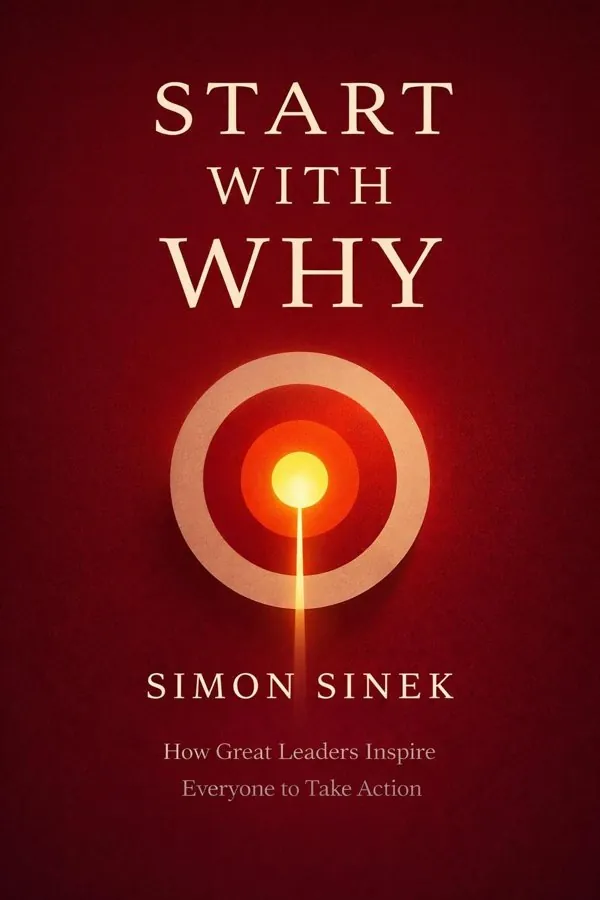
Start With Why
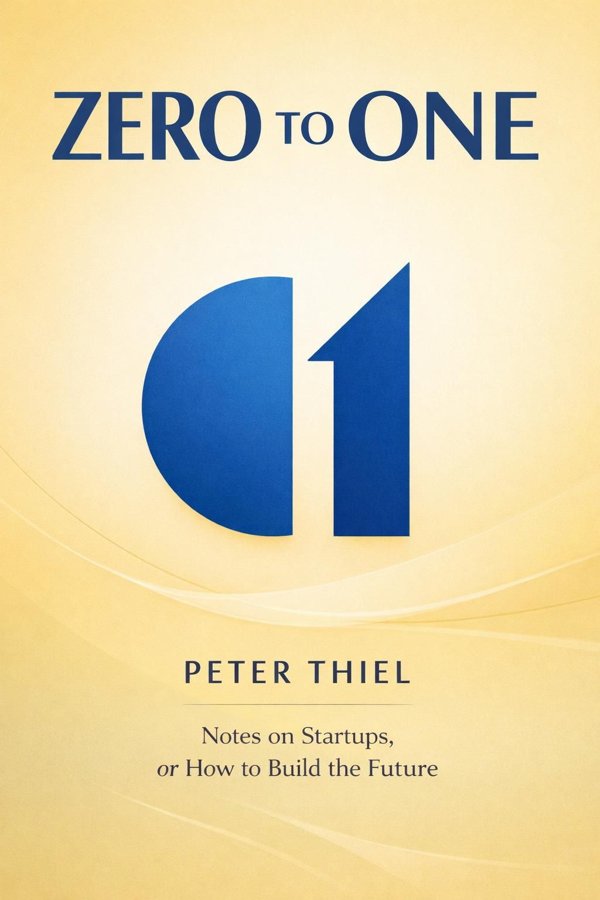
Zero to One
In-Depth Analysis
Simon Sinek’s 'Start With Why' and Peter Thiel’s 'Zero to One' have become foundational texts in the fields of leadership and entrepreneurship, respectively, yet they approach their subjects from markedly different philosophical, methodological, and practical angles. Both books aim to equip readers with frameworks for lasting impact, but their definitions of impact, and the means to achieve it, diverge sharply.
Sinek’s 'Start With Why' builds its thesis around the Golden Circle: a visual model that distinguishes between 'what' a company does, 'how' it does it, and—most importantly—'why' it exists. Sinek’s central argument is that organizations and leaders who begin with 'why'—a clear sense of purpose—are more successful at inspiring employees, customers, and partners. He illustrates this with vivid examples, such as Apple’s relentless focus on challenging the status quo, or Martin Luther King Jr.’s ability to galvanize millions by articulating a vision ('I have a dream') rather than just a plan. Sinek’s methodology is largely anecdotal and illustrative, emphasizing emotional resonance over empirical analysis. His tone is motivational, and his advice, while profound, can lack the granular detail necessary for immediate implementation. The book’s primary strength lies in its ability to reframe how people think about leadership and organizational culture, inspiring introspection and discussion about purpose at all levels.
In contrast, 'Zero to One' by Peter Thiel (with Blake Masters) is less concerned with inspiration and more focused on the mechanics and philosophy of breakthrough innovation. Thiel posits that true progress comes not from incremental improvements (going from 1 to n), but from radical leaps (zero to one) that create entirely new paradigms. He draws on his experience co-founding PayPal and investing in successful startups, weaving in lessons such as the value of creating monopolies over competing in crowded markets, the importance of proprietary technology, and the pitfalls of mimetic competition. Thiel’s arguments are often contrarian—he challenges the glorification of competition and insists that successful companies are defined by their uniqueness. His advice is specific: for example, he details why startups should aim for a small, concentrated market before scaling, and why founders should plan for decades rather than quarters. The book is dense with aphorisms and logical frameworks, but less concerned with emotional storytelling.
Methodologically, Sinek’s approach is qualitative and narrative-driven, designed to spark self-reflection and cultural change. He organizes his ideas around memorable metaphors and stories, building emotional buy-in. Thiel, meanwhile, employs logical reasoning and case studies from Silicon Valley, grounding his advice in direct entrepreneurial experience. Where Sinek asks readers to look inward for their 'why,' Thiel asks them to look outward, to the frontiers of technology, market forces, and strategic positioning.
Philosophically, Sinek’s model is universalist: any organization or individual, in any field, can benefit from articulating a clear purpose. His framework is most applicable to leaders seeking cultural transformation, whether in business, education, or non-profits. Thiel, in contrast, is particularist: his advice is tailored for high-growth startups and ambitious entrepreneurs who want to build the next Google or PayPal. While Sinek’s message is inclusive—everyone can find their 'why'—Thiel’s is exclusive, aimed at the few who seek to create something truly unprecedented.
In terms of practical implications, Sinek’s book is a tool for aligning teams and clarifying vision. Organizations can use the 'why' framework to craft mission statements, improve hiring, or inspire brand loyalty. However, some critics argue that Sinek’s advice, while compelling, lacks specificity on how to operationalize 'why' beyond rhetoric. Thiel’s book, by contrast, is a tactical guide for those building companies: he addresses how to choose partners, how to plan for monopoly, and how to think about technology and risk. His advice is especially relevant for readers in the tech sector, offering a roadmap for navigating the challenges of innovation.
Both books offer long-term value, but in different domains. 'Start With Why' is timeless in its message—organizations will always need to inspire and align people. 'Zero to One' is enduring for those in entrepreneurship, especially technology, where the pace of change rewards those who can spot and seize unique opportunities. Ultimately, reading both books offers a holistic education: Sinek teaches why you should act; Thiel teaches how to act when building something entirely new.
Side-by-Side Comparison
| Aspect | Start With Why | Zero to One |
|---|---|---|
| Core Philosophy | Start With Why posits that understanding and communicating your underlying purpose—the 'why'—is the key to inspiring action, leadership, and loyalty. | Zero to One advocates for bold, original innovation and challenges readers to create unique value, rather than merely competing in existing markets. |
| Writing Style | Sinek uses a narrative-driven, conversational tone, often referencing real-world examples like Apple and Martin Luther King Jr. to illustrate his points. | Thiel adopts a more analytical, sometimes contrarian tone, presenting dense arguments, aphorisms, and direct challenges to conventional wisdom. |
| Practical Application | Practical takeaways focus on framing mission statements, leadership communication, and organizational culture, but are often high-level rather than step-by-step. | Thiel provides actionable frameworks for startups—such as building monopolies, hiring, and thinking about technology—grounded in his entrepreneurial experience. |
| Target Audience | Best suited for leaders, managers, and anyone seeking to inspire teams or transform organizational culture. | Targeted primarily at entrepreneurs, startup founders, and those interested in the mechanics of business innovation. |
| Scientific Rigor | Relies on anecdotes and illustrative stories rather than data-driven research; its arguments are persuasive but not rigorously empirical. | Leans on Thiel's personal experiences and logical reasoning; offers insights but eschews formal scientific validation. |
| Emotional Impact | Employs emotionally resonant examples to galvanize readers around the importance of purpose and inspiration. | Focuses on intellectual stimulation, occasionally provoking with sharp critiques of conventional thinking, but less emotionally charged. |
| Actionability | Encourages readers to discover and communicate their 'why,' but leaves much of the implementation process up to the reader. | Details specific, actionable advice for startup building, market analysis, and long-term strategy. |
| Depth of Analysis | Analyzes the power of purpose and communication deeply, but the core premise can feel repetitive over multiple chapters. | Explores a broad range of topics in entrepreneurship and innovation, often at a philosophical or strategic level. |
| Readability | Highly accessible, making complex ideas about leadership easy to grasp for general audiences. | Denser and more conceptual, requiring some familiarity with business and technology for full comprehension. |
| Long-term Value | Offers a timeless framework for leadership and organizational alignment, applicable across industries. | Provides enduring lessons for founders and innovators, especially those aiming to disrupt markets. |
Key Differences
Purpose Versus Innovation
'Start With Why' centers on the importance of articulating and leading with purpose, while 'Zero to One' focuses on the creation of unique innovations that disrupt markets and redefine industries.
Style and Accessibility
Sinek’s book is narrative and conversational, making it accessible to a wide audience, whereas Thiel’s is dense, analytical, and best suited for readers with some business acumen.
Scope of Advice
'Start With Why' provides a broad, universal framework applicable to organizations of any size or industry. 'Zero to One' delivers specialized, actionable advice primarily for startups and tech entrepreneurs.
Emotional Versus Intellectual Appeal
Sinek leverages emotionally compelling stories to inspire, while Thiel relies on logic, contrarian insights, and strategic frameworks to provoke intellectual engagement.
Implementation Guidance
'Start With Why' inspires change but leaves practical steps open-ended. 'Zero to One' offers concrete strategies for market selection, team building, and product development.
Use of Examples
Sinek draws from a diverse array of leadership examples across history and industries; Thiel bases his insights on personal entrepreneurial experience and Silicon Valley case studies.
Approach to Competition
Sinek discusses competition in the context of inspiration and loyalty, while Thiel systematically deconstructs the concept, arguing that the best companies avoid competition entirely by creating new markets.
Who Should Read Which?
The Aspiring Leader
→ Start With Why
Those seeking to motivate teams, transform company culture, or clarify their personal leadership style will benefit most from Sinek’s inspirational and accessible guidance on purpose-driven leadership.
The Startup Founder
→ Zero to One
Entrepreneurs and innovators looking for actionable strategies to build disruptive companies will find Thiel’s frameworks, market insights, and contrarian wisdom especially relevant and practical.
The Career Changer
→ Start With Why
Individuals reevaluating their professional path will appreciate Sinek’s emphasis on identifying and communicating core motivations, helping them choose future roles or ventures aligned with their values.
Which Should You Read First?
For readers new to leadership, organizational culture, or the world of business, it is advisable to start with 'Start With Why.' Sinek’s book serves as an excellent primer on the power of purpose and inspiration, building a foundational mindset that is beneficial regardless of industry. This approach helps readers clarify what drives them and their teams, which is crucial before embarking on any entrepreneurial or innovative endeavor. Once you have a grasp of leadership fundamentals and the importance of purpose, proceed to 'Zero to One.' Thiel’s book is more demanding and tailored to those ready to implement strategic, high-growth ideas. It will be especially valuable for readers with a concrete business idea or those actively involved in startups. By first understanding 'why,' then learning how to build something truly novel, readers can maximize their potential for both personal fulfillment and entrepreneurial success.
Want the full summary?
Get instant access to this book summary and 100K+ more with Fizz Moment.
Get Free SummaryAvailable on App Store • Free to download
Frequently Asked Questions
Is Start With Why better than Zero to One for beginners in leadership?
Yes, 'Start With Why' is generally more approachable for beginners in leadership. Simon Sinek uses accessible language and relatable examples, focusing on discovering personal and organizational purpose. The book provides a foundational mindset shift that can benefit new leaders seeking to inspire and align teams, whereas 'Zero to One' is more advanced and assumes a background in business or startups.
Which book offers more actionable advice for startup founders: Start With Why or Zero to One?
'Zero to One' delivers significantly more actionable advice for startup founders. Peter Thiel provides frameworks for building monopolies, differentiating products, and strategic planning based on his own entrepreneurial successes and failures. While 'Start With Why' inspires readers to clarify purpose, Thiel’s book offers detailed, practical steps for creating and scaling a business.
How do the philosophies of Start With Why and Zero to One differ for business innovation?
'Start With Why' promotes innovation by urging organizations to ground their actions in a clear sense of purpose, believing that inspired teams are more innovative. 'Zero to One,' on the other hand, emphasizes creating singular, breakthrough products or services by thinking differently about markets and competition, prioritizing uniqueness and technological progress over incremental improvement.
Is Zero to One suitable for non-entrepreneurs or general readers?
'Zero to One' is best suited for entrepreneurs, investors, and those interested in the startup ecosystem. Its dense, strategic content and focus on the mechanics of innovation may be less relevant or accessible to general readers or those outside business and technology fields. General audiences seeking inspiration may find 'Start With Why' more relatable.
What are the main criticisms of Start With Why compared to Zero to One?
A primary criticism of 'Start With Why' is its lack of detailed guidance on how to implement the 'why' framework beyond inspirational rhetoric; some readers find the message repetitive. In contrast, 'Zero to One' is sometimes viewed as too theoretical or narrow, focused on elite startups rather than universally applicable, and its contrarian views may not resonate with all audiences.
Which book should I read if I'm interested in organizational culture?
'Start With Why' is the stronger choice for readers interested in organizational culture. Sinek explores how purpose-driven leadership can transform workplace dynamics, build trust, and inspire lasting engagement. While Thiel touches on culture in the context of startups, his focus is primarily on innovation and competition rather than broad cultural change.
The Verdict
Both 'Start With Why' and 'Zero to One' are influential in their domains, but their usefulness depends on your goals and background. If you are a leader, manager, or someone striving to inspire teams and cultivate a strong, purpose-driven organizational culture, 'Start With Why' offers a compelling framework to clarify and communicate core values. Its accessible style and universal message make it a foundational read for those new to leadership or seeking to reignite their team's motivation. Conversely, if you are an aspiring entrepreneur, startup founder, or innovation-driven professional, 'Zero to One' provides a rare, incisive look into the mechanics of creating groundbreaking companies. Thiel's advice is tactical, often contrarian, and best suited for those seeking to disrupt markets rather than simply operate within them. Readers should expect a more challenging, concept-heavy experience, but the practical guidance is invaluable for anyone serious about building a startup. In summary: 'Start With Why' is essential for understanding purpose and leadership; 'Zero to One' is indispensable for mastering innovation and strategy in high-growth ventures. Choose based on your current ambitions and professional context, or read both for a comprehensive perspective.
Related Comparisons

Want to read both books?
Get AI-powered summaries of both Start With Why and Zero to One in just 20 minutes total.