
Good to Great vs Zero to One: Which Should You Read?
A detailed comparison of Good to Great by Jim Collins and Zero to One by Peter Thiel. Discover the key differences, strengths, and which book is right for you.
Good to Great
Zero to One
In-Depth Analysis
Both 'Good to Great' by Jim Collins (with reference to its companion, 'Great by Choice') and 'Zero to One' by Peter Thiel represent towering contributions to business literature, yet their vision, methodology, and practical takeaways diverge sharply.
'Good to Great' is the product of exhaustive research: Collins and Hansen studied companies that dramatically outperformed their peers over extended periods of chaos and change. Their findings materialize as repeatable disciplines, such as the '20 Mile March'—the notion that relentless, measured progress (instead of erratic bursts of effort) enables companies to weather unpredictable environments. For example, the authors illustrate how Southwest Airlines consistently hit performance targets, avoiding both overextension and complacency, which insulated it from industry downturns. Another principle, 'Fire Bullets, Then Cannonballs,' encourages leaders to experiment with small-scale initiatives before committing massive resources—an empirically grounded approach to innovation. The 'SMaC Recipe' underscores the importance of simple, consistent operating procedures, while 'Productive Paranoia' explains how the best leaders always prepare for worst-case scenarios, ensuring their companies survive existential threats.
The strength of 'Good to Great' lies in its scientific rigor and practical orientation. Collins and Hansen’s research sifts through vast data, employing comparative analysis to separate enduring behaviors from one-off successes. The book’s frameworks are both descriptive and prescriptive: readers receive not just a diagnosis of what works, but toolkits for implementation. The result is a blueprint for excellence in the face of uncertainty, with lessons widely applicable to established organizations, public sector bodies, and even personal leadership.
In contrast, 'Zero to One' is a clarion call for radical innovation. Thiel’s core thesis is that progress happens not by incremental improvement (going from 1 to n), but by building entirely new things (zero to one). He draws from his own experience co-founding PayPal and investing in Facebook to challenge the dogmas of competition and incrementalism. Thiel argues that true value comes from creating monopolies—companies that do something so unique that no one else can compete. He cautions against the 'illusion of competition,' positing that most businesses waste effort fighting over existing markets instead of inventing new ones. Pithy chapters like 'Every Happy Company Is Different' and 'The Last Mover Advantage' encapsulate Thiel’s contrarian wisdom: monopolies are good for innovation, and the most important companies are those that last, not those that move first.
Methodologically, 'Zero to One' is not built on exhaustive research or case studies. Instead, it is grounded in Thiel's personal philosophy and selective anecdotes. The book is a series of provocations—designed to jolt readers into rethinking fundamental assumptions about business, technology, and the future. Thiel’s writing is brisk and aphoristic, making complex ideas accessible and memorable. For example, his assertion that 'brilliant thinking is rare, but courage is in even shorter supply than genius' (p. 24) crystallizes the book’s focus on boldness.
The practical implications of these divergent philosophies are profound. 'Good to Great' is a manual for navigating chaos with discipline and empirical feedback loops. It is best suited for organizations seeking to institutionalize greatness, especially in unpredictable markets. In contrast, 'Zero to One' is for aspiring entrepreneurs and innovators who want to leapfrog competition by creating something fundamentally new. Thiel’s book is less about managing existing enterprises and more about birthing the next Google or SpaceX.
Philosophically, Collins and Hansen trust in the power of process, humility, and adaptation. Their heroes are Level 5 Leaders—modest, determined individuals who build enduring institutions. Thiel, by contrast, celebrates the visionary founder who shuns consensus, sees the unseen, and bets big on uncharted territory. Where Collins prizes consistency, Thiel prizes originality.
In sum, 'Good to Great' and 'Zero to One' are complementary rather than competing. One offers the scaffolding for sustained excellence; the other, the spark for revolutionary change. Together, they map the terrain between stability and disruption—inviting readers to decide which path fits their purpose.
Side-by-Side Comparison
| Aspect | Good to Great | Zero to One |
|---|---|---|
| Core Philosophy | Good to Great advocates for disciplined, empirical, and systematic progress, asserting that greatness is achieved through consistency, leadership, and adherence to proven principles. | Zero to One champions radical innovation and contrarian thinking, urging entrepreneurs to create unique value by building monopolies rather than competing in existing markets. |
| Writing Style | Collins uses a research-driven, methodical tone, peppering his narrative with case studies, data, and clear conceptual frameworks. | Thiel's writing is provocative, philosophical, and direct, often challenging conventional wisdom with sharp aphorisms and personal anecdotes. |
| Practical Application | The book provides actionable frameworks like the '20 Mile March' and 'SMaC Recipe,' emphasizing replicable disciplines for organizations operating in chaos. | Zero to One is less prescriptive, focusing on mindset shifts, high-level strategic insights, and guiding questions for entrepreneurs rather than operational checklists. |
| Target Audience | Primarily aimed at business leaders, managers, and organizations seeking sustained growth in turbulent environments. | Geared toward startup founders, aspiring entrepreneurs, and innovators interested in disrupting industries and building new markets. |
| Scientific Rigor | Built on nine years of empirical research, Collins and Hansen back their conclusions with data, comparative analysis, and clear methodology. | Thiel's arguments are based on personal experience, logical reasoning, and anecdotal evidence, with little formal research underpinning the narrative. |
| Emotional Impact | Inspires confidence through stories of perseverance and survival, but remains analytically detached and even-handed in tone. | Provokes excitement and urgency, appealing to the reader's ambition and desire to break new ground. |
| Actionability | Offers concrete, repeatable steps for navigating uncertainty, such as the 'Fire Bullets, Then Cannonballs' approach to innovation. | Encourages boldness and risk-taking but leaves implementation details to the reader's creativity and judgment. |
| Depth of Analysis | Delves deeply into patterns across successful companies, dissecting behaviors and principles with comprehensive case studies. | Explores philosophical and theoretical dimensions of innovation in depth, but with less systematic comparison of real-world examples. |
| Readability | Clear, structured, and accessible, though at times dense with frameworks and terminology. | Crisp, concise, and often witty, balancing big ideas with memorable phrases and stories. |
| Long-term Value | Ideal as a reference for organizations facing ongoing instability, offering enduring principles for resilience and excellence. | Most valuable for those at the beginning of entrepreneurial journeys or seeking paradigm-shifting perspectives. |
Key Differences
Research vs. Philosophy
'Good to Great' is built on extensive empirical research, offering data-driven frameworks and case studies. 'Zero to One' is philosophical and anecdotal, rooted in Thiel's personal experience and logic.
Incremental vs. Disruptive Change
Collins focuses on disciplined, sustained progress and the transformation from good to great within existing organizations. Thiel urges readers to create entirely new paradigms—to leap from zero to one rather than simply improve.
Leadership Archetypes
'Good to Great' champions 'Level 5 Leaders'—humble, disciplined, team-oriented stewards. 'Zero to One' celebrates the visionary founder, someone bold enough to defy consensus and build monopolies.
Applicability
'Good to Great' offers actionable frameworks for organizations of all sizes, especially those seeking resilience in chaos. 'Zero to One' is most applicable to startups, founders, and those aiming for radical innovation.
Level of Prescriptiveness
'Good to Great' provides detailed, replicable steps and checklists. 'Zero to One' is more about mindset and theory, leaving practical execution up to the reader.
Tone and Readability
Collins writes with analytical clarity and structured argumentation, whereas Thiel's style is brisk, provocative, and filled with memorable, punchy aphorisms.
Treatment of Competition
'Good to Great' treats competition as a landscape to be navigated through disciplined performance. Thiel, on the other hand, sees competition as a trap—advocating for monopoly as the ultimate business goal.
Who Should Read Which?
The Established Leader
→ Good to Great
This reader is responsible for guiding an existing organization through change or crisis. Collins’ empirically tested frameworks and leadership models provide actionable strategies for achieving sustainable excellence and resilience.
The Aspiring Entrepreneur
→ Zero to One
Anyone looking to launch a startup, disrupt an industry, or create something unprecedented will benefit from Thiel’s focus on innovation, monopoly-building, and contrarian thinking. The book inspires boldness and creative ambition.
The Thoughtful Innovator
→ Both
Readers who want both practical discipline and revolutionary insight should read both books. Together, they provide a comprehensive toolkit for building, scaling, and reinventing organizations in any environment.
Which Should You Read First?
For most readers, starting with 'Good to Great' provides a strong foundation in the principles of disciplined growth, empirical experimentation, and leadership under uncertainty. This is especially true for managers, professionals, or anyone seeking to understand what makes organizations thrive in chaos. The book’s frameworks and case studies offer tools that can be applied immediately, even in entrepreneurial settings. After absorbing Collins’ frameworks, move on to 'Zero to One' to challenge your assumptions and expand your perspective. Thiel’s bold, contrarian insights will help you think beyond incremental improvement and consider how to invent entirely new markets or technologies. If you are already a founder or deeply immersed in the startup world, you might reverse the order: Thiel first, Collins second, to ground your ambitions in proven discipline. For most, however, the journey from good to great lays the groundwork for the leap from zero to one.
Want the full summary?
Get instant access to this book summary and 100K+ more with Fizz Moment.
Get Free SummaryAvailable on App Store • Free to download
Frequently Asked Questions
Is 'Good to Great' better than 'Zero to One' for beginners in business?
For business beginners, 'Good to Great' offers a more structured and accessible entry point. Its empirically derived frameworks and clear case studies make complex organizational principles easy to grasp. In contrast, 'Zero to One' assumes some familiarity with entrepreneurial concepts and leans heavily on abstract thinking. Beginners seeking a step-by-step guide to organizational success will likely find Collins' work more immediately actionable.
Which book is more research-based: 'Good to Great' or 'Zero to One'?
'Good to Great' is grounded in nine years of rigorous empirical research, featuring comparative studies, data analysis, and systematic frameworks. Each conclusion is backed by evidence from real companies over extended periods. 'Zero to One,' on the other hand, is largely based on Peter Thiel’s personal experiences, logical arguments, and anecdotal examples, with minimal reference to external research or comparative data.
Does 'Zero to One' provide practical steps for launching a startup?
While 'Zero to One' is rich in strategic insights and philosophical provocations, it does not offer a detailed, step-by-step guide to launching a startup. Instead, it focuses on challenging readers to think differently about innovation, monopoly, and technology. The book provides guiding questions and mental models, but leaves tactical execution largely to the reader's judgment and creativity.
How do the leadership lessons in 'Good to Great' compare to those in 'Zero to One'?
'Good to Great' emphasizes Level 5 Leadership—quiet humility, relentless discipline, and a focus on building enduring organizations. Its leaders are methodical, empirical, and team-oriented. 'Zero to One' spotlights the visionary founder who bucks convention, embraces risk, and pursues singular, transformative goals. Thiel’s leadership ideal is bold, contrarian, and willing to challenge the status quo.
Is 'Good to Great' still relevant for startups, or is it only for large companies?
'Good to Great' is primarily aimed at established organizations, but its principles—such as disciplined progress, empirical experimentation, and clarity of process—are highly relevant to startups facing uncertainty. Startups can benefit from Collins’ frameworks to build resilient cultures and avoid common pitfalls, even if the book's case studies skew toward larger enterprises.
Who should read 'Zero to One' instead of 'Good to Great'?
Aspiring entrepreneurs, startup founders, and innovators who want to disrupt industries or create new markets will find 'Zero to One' more directly relevant. Thiel’s focus on unique value creation, monopoly-building, and contrarian thinking is especially valuable for those seeking to make a leap from zero to one, rather than incremental improvement.
The Verdict
Both 'Good to Great' and 'Zero to One' are indispensable, but they serve different ambitions and stages of the business journey. 'Good to Great' is the definitive guide for leaders and organizations seeking to build enduring excellence in turbulent conditions. Its research-backed frameworks—like the '20 Mile March' and 'Fire Bullets, Then Cannonballs'—make it essential reading for managers, executives, and anyone tasked with organizational stewardship. Its disciplined, process-oriented approach is particularly valuable to established firms or those seeking long-term resilience. 'Zero to One,' by contrast, is a manifesto for those intent on building the future. Entrepreneurs, inventors, and ambitious thinkers will find Thiel’s contrarian wisdom indispensable for challenging orthodoxy and crafting groundbreaking ventures. Its greatest value lies in provoking readers to ask bolder questions and aim for transformative impact, rather than incremental gains. If you are leading an existing organization through uncertainty, start with 'Good to Great.' If you’re dreaming of building something entirely new, 'Zero to One' is your essential starting point. Ultimately, those who master both books will be best equipped to navigate the spectrum from disciplined execution to radical innovation.
Related Comparisons
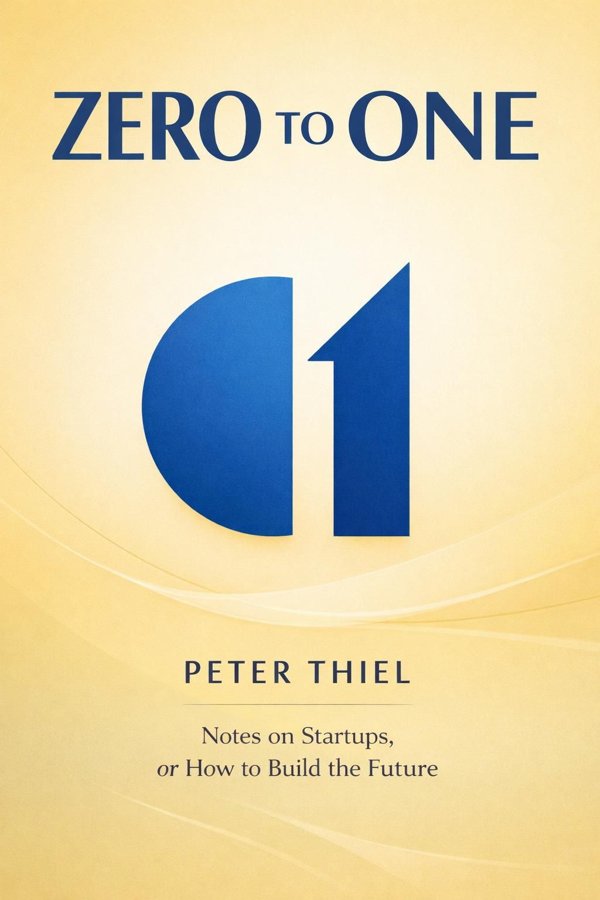
Zero to One vs Blue Ocean Strategy: How to Create Uncontested Market Space and Make the Competition Irrelevant
Good to Great vs Built to Last: Successful Habits of Visionary Companies
Good to Great vs The Toyota Way: 14 Management Principles from the World's Greatest Manufacturer
Zero to One vs The Lean Startup
Want to read both books?
Get AI-powered summaries of both Good to Great and Zero to One in just 20 minutes total.