
Rich Dad Poor Dad vs The Millionaire Next Door: Which Should You Read?
A detailed comparison of Rich Dad Poor Dad by Robert Kiyosaki and The Millionaire Next Door by Thomas Stanley. Discover the key differences, strengths, and which book is right for you.
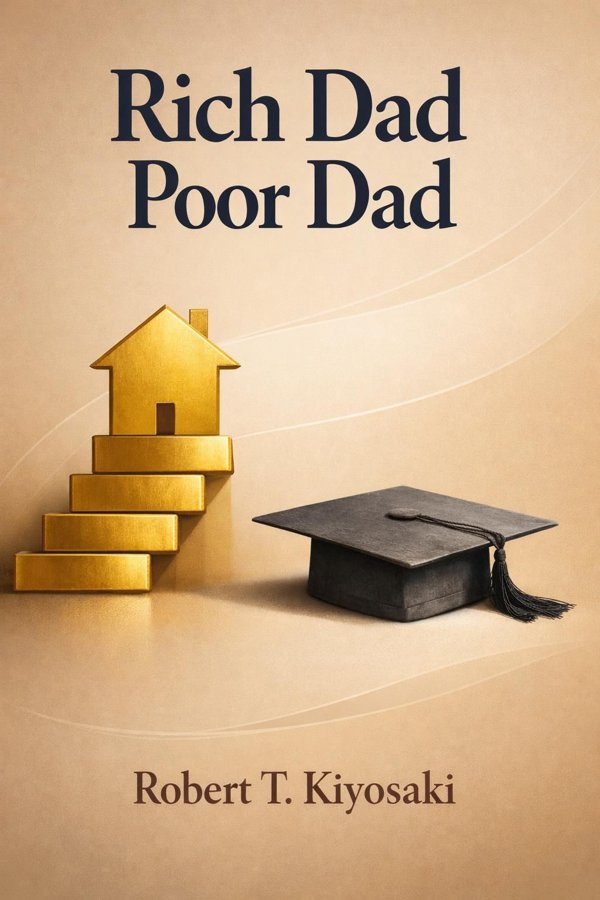
Rich Dad Poor Dad
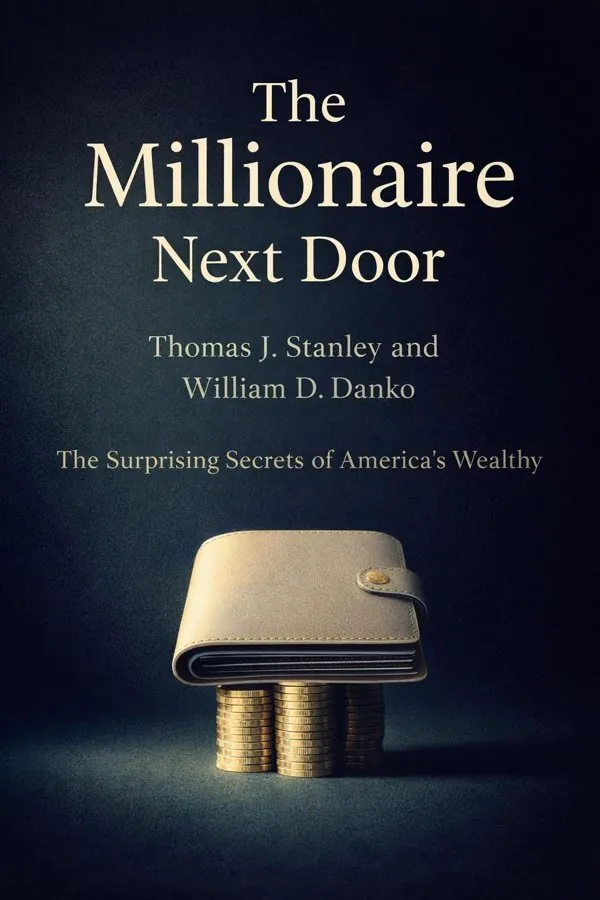
The Millionaire Next Door
In-Depth Analysis
Robert Kiyosaki’s "Rich Dad Poor Dad" and Thomas J. Stanley and William D. Danko’s "The Millionaire Next Door" are two of the most influential personal finance books, yet they diverge dramatically in both their approach and their core messages. Exploring these differences reveals not just distinct philosophies, but also divergent practical implications for readers seeking financial independence.
Kiyosaki’s "Rich Dad Poor Dad" is, at heart, a narrative-driven argument for financial literacy and the transformative power of a new mindset. The book’s structure revolves around the contrasting influences of two father figures: his biological father (the ‘Poor Dad’) who represents mainstream values—academic achievement, job stability, and a focus on income—and his friend’s father (the ‘Rich Dad’), who embodies entrepreneurial thinking, investment acumen, and a keen understanding of assets and liabilities. Kiyosaki draws on personal anecdotes to illustrate how the lessons from his ‘Rich Dad’ led him to question conventional wisdom: “The poor and the middle class work for money. The rich have money work for them.” Throughout, he emphasizes concepts like the importance of buying or building assets that generate passive income, understanding cash flow, and recognizing that financial education is often neglected by formal schooling.
In contrast, "The Millionaire Next Door" eschews anecdote in favor of empirical analysis. Stanley and Danko conducted extensive surveys and interviews with hundreds of millionaires, aiming to identify the true drivers of wealth accumulation in America. Their findings are often counterintuitive: the majority of millionaires are not flashy spenders with high incomes, but rather ordinary individuals who live below their means, invest prudently, and exhibit remarkable frugality. The book introduces the distinction between Prodigious Accumulators of Wealth (PAWs) and Under Accumulators of Wealth (UAWs), showing that income level does not necessarily equate to net worth. Instead, consistent saving, budgeting, and wise investment decisions are the keys to building wealth over time.
Methodologically, the two books could hardly be more different. Kiyosaki’s approach is qualitative and subjective—he uses stories, parables, and hypothetical scenarios to drive home his points. For instance, he describes his early lessons in running a small business and learning to spot opportunities for asset acquisition, all framed within the context of his two ‘dads’ and their differing worldviews. There is little in the way of data or broad-based research; the reader is meant to infer universal truths from the author’s personal journey. This makes "Rich Dad Poor Dad" highly accessible and emotionally resonant, but it can also leave readers searching for more concrete, actionable steps.
Stanley and Danko, by contrast, ground their arguments in quantitative research. They analyze the spending, investing, and saving patterns of thousands of households, providing tables, charts, and statistical breakdowns throughout. For example, they note that many millionaires buy used cars, live in modest homes, and prioritize financial independence over status symbols. The authors’ rigorous methodology lends authority to their conclusions: the behaviors they recommend—budgeting, planning, and self-discipline—are not just theoretical but demonstrably effective across a substantial sample size.
Philosophically, both books challenge the myth of the high-income spender as the archetype of wealth. Yet, their remedies diverge. Kiyosaki is revolutionary, urging readers to reject the conventional path of exchanging time for money and to instead pursue financial education, asset ownership, and entrepreneurship. He is critical of the education system and the broader culture that, in his view, keeps people financially ignorant. "The single most powerful asset we all have is our mind," he writes, advocating for lifelong learning and risk-taking.
Stanley and Danko, on the other hand, are evolutionary. They do not call for wholesale rejection of employment or the traditional path; instead, they advocate for maximizing wealth within one’s existing circumstances through self-discipline and prudent choices. Their millionaires are not typically entrepreneurs or risk-takers; they are teachers, engineers, and small business owners who quietly amass wealth over decades. The focus is less on mindset transformation and more on habitual action: budgeting, avoiding debt, and investing for the long term.
Practically, this means Kiyosaki’s book is often seen as a catalyst for changing how readers think about money, especially those who feel stuck or constrained by their current financial situation. "Rich Dad Poor Dad" can be especially powerful for readers who are just beginning their financial journey or who have never considered alternative paths to wealth. However, for readers seeking a straightforward, low-risk roadmap to wealth accumulation, Stanley and Danko provide a more reliable guide. Their book is filled with checklists, benchmarks, and behavioral templates, making it ideal for those who value clear, actionable advice.
In sum, "Rich Dad Poor Dad" excels at motivating readers to question their assumptions and expand their ambitions, while "The Millionaire Next Door" provides the empirical backbone and practical strategies to turn those ambitions into reality. Together, they offer complementary perspectives: one inspires, the other instructs. Savvy readers would do well to absorb the lessons of both—the mindset of Kiyosaki’s ‘Rich Dad’ is potent, but it is Stanley and Danko’s disciplined, research-backed approach that most reliably leads to financial independence.
Side-by-Side Comparison
| Aspect | Rich Dad Poor Dad | The Millionaire Next Door |
|---|---|---|
| Core Philosophy | Rich Dad Poor Dad promotes a mindset shift from conventional employment to financial independence through entrepreneurship, investment, and understanding assets versus liabilities. | The Millionaire Next Door emphasizes disciplined saving, frugal living, and the power of consistent, practical decisions over time to build wealth, regardless of income. |
| Writing Style | Kiyosaki employs a conversational, anecdotal style, using personal stories and parables to illustrate financial concepts. | Stanley and Danko use a data-driven, analytical approach, presenting findings from surveys and case studies in a straightforward, research-oriented manner. |
| Target Audience | Aimed at readers disillusioned with traditional career paths or financial education, and those seeking inspiration to break free from the rat race. | Targets individuals interested in understanding real-world wealth accumulation patterns, including professionals and families seeking actionable, research-backed strategies. |
| Practical Application | Focuses on changing attitudes towards money and encourages self-education, but offers fewer concrete step-by-step strategies. | Provides detailed behavioral traits and habits to emulate, with clear, actionable steps for budgeting, investing, and lifestyle choices. |
| Scientific Rigor | Largely anecdotal, reliant on the author’s personal experiences and observations without empirical validation. | Grounded in comprehensive surveys and data analysis of high-net-worth individuals, offering statistically significant insights. |
| Emotional Impact | Motivates readers through narrative and the promise of escaping financial mediocrity, often evoking strong personal resonance. | Inspires through evidence and case studies, but its tone is more detached and analytical, focusing on long-term behavioral change. |
| Depth of Analysis | Covers foundational principles in broad strokes, prioritizing big-picture thinking over in-depth technical details. | Delves deeply into the characteristics, habits, and statistical profiles of millionaires, dissecting wealth-building behaviors in detail. |
| Actionability | Prompts a shift in mindset and awareness, but leaves much of the how-to up to the reader’s initiative. | Outlines specific behaviors and decisions to adopt, such as living below one’s means and disciplined investing, making implementation straightforward. |
| Long-term Value | Serves as an enduring motivational primer for financial independence, though some recommendations may feel abstract over time. | Offers a timeless blueprint for wealth accumulation, grounded in behavioral consistency and practical advice applicable across generations. |
Key Differences
Methodological Approach
Rich Dad Poor Dad is anecdotal, relying on personal stories and parables, while The Millionaire Next Door is grounded in empirical research and statistical analysis of real millionaires’ behaviors.
Focus on Mindset vs. Habits
Kiyosaki emphasizes changing one’s mindset and understanding financial principles, whereas Stanley and Danko stress the importance of habitual discipline, frugality, and planning.
Scope of Advice
Rich Dad Poor Dad provides broad, high-level guidance encouraging entrepreneurship and asset-building, while The Millionaire Next Door offers specific, actionable steps based on observed behaviors.
Intended Reader Motivation
Rich Dad Poor Dad is designed to inspire and provoke a reassessment of personal beliefs about wealth; The Millionaire Next Door is meant to instruct and guide through factual evidence and practical examples.
Representation of Wealth
Kiyosaki often associates wealth with entrepreneurship and investment, sometimes using aspirational examples; Stanley and Danko reveal that many millionaires are regular professionals who accumulate wealth quietly through discipline.
Emphasis on Education
Rich Dad Poor Dad is critical of traditional academic education and advocates for self-directed financial learning, while The Millionaire Next Door does not critique education but focuses on financial behaviors irrespective of formal schooling.
Emotional vs. Analytical Tone
Kiyosaki’s tone is motivational and personal, creating a sense of urgency and possibility; Stanley and Danko maintain an analytical, detached tone, emphasizing rational decision-making.
Who Should Read Which?
The Aspiring Entrepreneur
→ Rich Dad Poor Dad
This reader is seeking inspiration, a shift in perspective, and foundational financial concepts to break free from traditional employment. Rich Dad Poor Dad’s focus on entrepreneurship, financial education, and asset-building aligns perfectly with their ambitions.
The Analytical Planner
→ The Millionaire Next Door
This reader values empirical evidence and actionable steps. The Millionaire Next Door’s data-driven insights into the habits and behaviors of real millionaires provide a practical roadmap for disciplined, long-term wealth accumulation.
The Family-Oriented Saver
→ The Millionaire Next Door
Readers who prioritize stability, generational wealth, and pragmatic strategies will benefit from the book’s focus on budgeting, frugality, and intergenerational financial planning, all grounded in real-world statistics and examples.
Which Should You Read First?
For most readers, starting with Rich Dad Poor Dad is recommended, especially if they are new to personal finance or have struggled to connect with traditional financial advice. Kiyosaki’s narrative style and foundational concepts—such as understanding assets and liabilities, and the importance of financial education—serve as an engaging entry point that can motivate readers to take control of their finances. This mindset shift is crucial for absorbing more practical, data-driven advice later on. After internalizing the motivational and philosophical groundwork laid by Rich Dad Poor Dad, readers should proceed to The Millionaire Next Door. Stanley and Danko’s work will appeal more to those who are ready to implement real changes, offering research-based, actionable steps and behavioral benchmarks. Readers with analytical backgrounds, or those who prefer empirical evidence, may also choose to read The Millionaire Next Door first for its practical utility, but the majority will benefit from the inspiration provided by Kiyosaki before diving into the discipline and structure advocated by Stanley and Danko.
Want the full summary?
Get instant access to this book summary and 100K+ more with Fizz Moment.
Get Free SummaryAvailable on App Store • Free to download
Frequently Asked Questions
Is Rich Dad Poor Dad better than The Millionaire Next Door for beginners?
For absolute beginners, Rich Dad Poor Dad may be more engaging, as it introduces foundational financial concepts through relatable stories and real-life scenarios. Its narrative approach demystifies complex ideas like assets, liabilities, and cash flow, making them accessible to readers who might otherwise find personal finance intimidating. However, it does not provide as many step-by-step actions as The Millionaire Next Door, which may be more suitable for readers ready to implement systematic changes. Beginners looking for inspiration and a mindset shift will benefit most from Rich Dad Poor Dad.
Which book offers more actionable financial advice: Rich Dad Poor Dad or The Millionaire Next Door?
The Millionaire Next Door offers more specific, actionable financial advice grounded in real-world behavior. Through its analysis of survey data, it identifies habits such as budgeting, frugal living, and investing as critical to building wealth. The book provides concrete benchmarks and habits to adopt, making it easier for readers to implement changes immediately. Rich Dad Poor Dad, while motivational, is less prescriptive and focuses more on shifting attitudes and encouraging self-education.
How does the scientific rigor of The Millionaire Next Door compare to Rich Dad Poor Dad?
The Millionaire Next Door is significantly more rigorous in its methodology, relying on data from surveys and interviews with hundreds of millionaires to draw its conclusions. The authors present statistical evidence and real-life case studies that back up their recommendations. In contrast, Rich Dad Poor Dad is anecdotal and based primarily on Kiyosaki’s personal experience, offering less empirical validation. Readers seeking evidence-based insights will find The Millionaire Next Door more reliable.
What are the main philosophical differences between Rich Dad Poor Dad and The Millionaire Next Door?
Rich Dad Poor Dad advocates for a radical shift in mindset, encouraging readers to pursue entrepreneurship, financial education, and asset building to achieve independence. It is critical of traditional education and employment as paths to wealth. The Millionaire Next Door, on the other hand, emphasizes the importance of everyday discipline, frugality, and long-term financial habits, regardless of career or educational background. It suggests that wealth is accessible to anyone willing to make prudent choices consistently over time.
Who should read The Millionaire Next Door instead of Rich Dad Poor Dad?
Readers who appreciate data-driven analysis, are interested in proven wealth-building behaviors, or prefer step-by-step guidance will find The Millionaire Next Door more valuable. It is particularly suited to individuals who want to understand what actually works in the real world, rather than relying on inspirational stories. Professionals, families, and those interested in intergenerational wealth will benefit from its research-backed approach.
What are the limitations of Rich Dad Poor Dad compared to The Millionaire Next Door?
While Rich Dad Poor Dad excels at motivating readers and providing a new perspective on money, its advice is often general and lacks the detailed, actionable steps found in The Millionaire Next Door. Some critics argue that Kiyosaki’s anecdotes can oversimplify complex financial realities, and his emphasis on entrepreneurship may not suit all readers. The Millionaire Next Door’s reliance on real data and practical behaviors makes it a more comprehensive guide for readers ready to take concrete action.
The Verdict
Both "Rich Dad Poor Dad" and "The Millionaire Next Door" are seminal works in the personal finance genre, but their strengths appeal to different types of readers. "Rich Dad Poor Dad" is best for those at the start of their financial journey, or anyone craving a radical shift in mindset about money, work, and wealth. Its inspirational anecdotes and focus on financial literacy make it an excellent motivational primer, particularly for those who feel constrained by traditional financial advice or employment structures. On the other hand, "The Millionaire Next Door" excels in its empirical approach, offering readers practical, research-backed behaviors that have consistently produced wealth for ordinary people. Its value lies in demystifying the millionaire lifestyle, showing that wealth is most often accumulated through discipline, frugality, and long-term planning, not flashy incomes or risky ventures. For readers seeking to understand the broad principles of wealth creation and the importance of mindset, start with "Rich Dad Poor Dad." For those ready to implement proven, actionable strategies in their daily lives, "The Millionaire Next Door" is indispensable. Ideally, readers should absorb the motivational spark of Kiyosaki’s work, then use Stanley and Danko’s research to chart a realistic, sustainable path to financial independence.
Related Comparisons
Want to read both books?
Get AI-powered summaries of both Rich Dad Poor Dad and The Millionaire Next Door in just 20 minutes total.