
Rich Dad Poor Dad vs The 4-Hour Workweek: Which Should You Read?
A detailed comparison of Rich Dad Poor Dad by Robert Kiyosaki and The 4-Hour Workweek by Tim Ferriss. Discover the key differences, strengths, and which book is right for you.
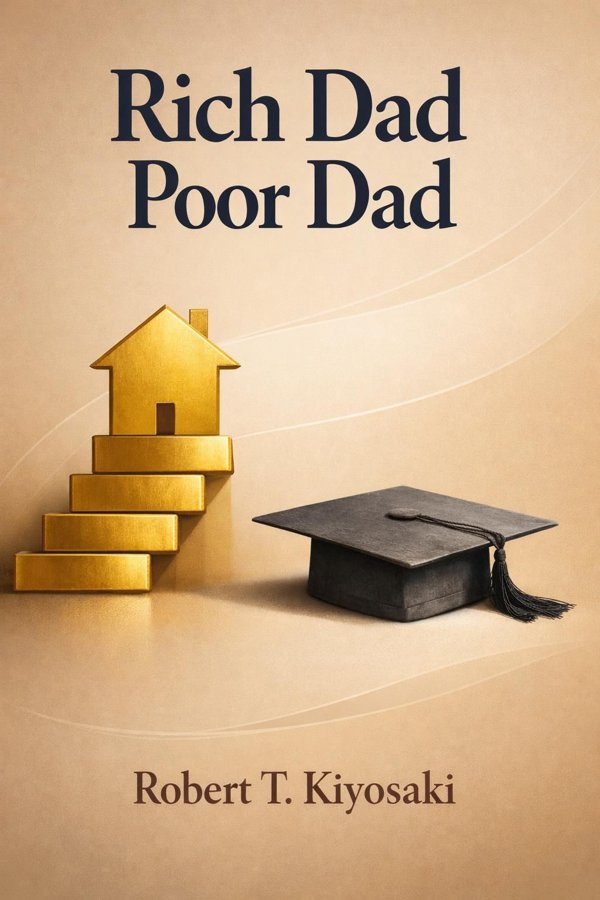

Rich Dad Poor Dad
The 4-Hour Workweek
In-Depth Analysis
Although both 'Rich Dad Poor Dad' by Robert Kiyosaki and 'The 4-Hour Workweek' by Tim Ferriss target transformative shifts in their readers’ lives, their scopes, methodologies, and underlying philosophies diverge significantly. Kiyosaki’s book centers on financial literacy and the psychological barriers that prevent wealth accumulation. He contrasts the advice of his 'rich dad'—who emphasizes investing, risk-taking, and the importance of building and acquiring assets—with his 'poor dad', who advocates for education and job security. The narrative structure is didactic, using parables and repeated personal anecdotes to drive home distinctions between assets (which generate income) and liabilities (which drain resources). For example, Kiyosaki’s repeated assertion that 'the rich buy assets, the poor and middle class buy liabilities they think are assets' encapsulates his central thesis.
In contrast, Ferriss’s 'The 4-Hour Workweek' is less about money for its own sake and more about reclaiming time and autonomy. Ferriss proposes the 'New Rich'—those who abandon the traditional work-retirement cycle in favor of mini-retirements, remote work, and business automation. His methodology is systematic, broken into the 'DEAL' framework: Define, Eliminate, Automate, and Liberate. Throughout, Ferriss provides granular, step-by-step instructions, such as scripts for outsourcing tasks to virtual assistants, building online businesses with minimal investment, and designing a lifestyle unbound by location or rigid schedules. His argument is supported by a mix of personal experiment, interviews, and references to productivity studies.
Philosophically, Kiyosaki’s outlook is rooted in the belief that traditional education systems fail to teach the most vital skill—how money works. He criticizes the 'rat race' mentality, where hard work is assumed to be the only path to security, and pushes readers to develop financial acumen, understand cash flow, and overcome the fear and cynicism that block wealth creation. Kiyosaki’s approach is broad and motivational; he rarely offers precise formulas, instead urging readers to seek out practical knowledge, take calculated risks, and learn from mistakes. One example is his emphasis on the power of entrepreneurship and real estate investing as vehicles for financial freedom, even though he stops short of providing detailed how-tos.
Ferriss, meanwhile, is prescriptive and experimental. He champions the idea of 'lifestyle design', challenging readers to question assumptions about work, retirement, and success. He provides actionable templates for automating income (e.g., drop-shipping businesses, membership sites) and maximizing productivity (e.g., the 80/20 rule, eliminating email distractions). Ferriss’s advice is underpinned by a belief in constant testing and iteration—what he calls 'meta-learning'. His infamous recommendation to outsource life’s minutiae, such as hiring a virtual assistant in India to manage emails or scheduling, is emblematic of his approach. Moreover, Ferriss’s use of case studies and specific resources (e.g., Elance, now Upwork, for freelancers) gives readers immediate tools to implement his advice.
In their practical implications, 'Rich Dad Poor Dad' offers a mental reset for those stuck in conventional money habits, inspiring readers to see earning and spending in terms of long-term wealth-building. However, the book’s lack of technical detail means readers often need to supplement it with further study or expertise before acting. Conversely, 'The 4-Hour Workweek' arms readers with concrete tactics, making it possible to take immediate steps toward greater freedom, though its suggestions sometimes oversimplify the challenges of entrepreneurship, automation, or outsourcing, and may not translate seamlessly to every context.
Both books have been criticized: Kiyosaki for anecdotal evidence and a lack of actionable specifics; Ferriss for over-promising the ease and universality of his methods. Yet both have profoundly influenced their respective genres—Kiyosaki in personal finance, Ferriss in productivity and lifestyle entrepreneurship—by foregrounding the power of mindset and the importance of questioning social norms. Ultimately, while Kiyosaki equips readers with the foundational mindset to pursue wealth, Ferriss provides a tactical playbook for those ready to redesign their daily lives. Readers’ needs and starting points will determine which book offers more immediate value.
Side-by-Side Comparison
| Aspect | Rich Dad Poor Dad | The 4-Hour Workweek |
|---|---|---|
| Core Philosophy | Rich Dad Poor Dad promotes financial independence through understanding assets and liabilities, advocating for mindset shifts away from traditional employment toward entrepreneurial thinking. | The 4-Hour Workweek argues for lifestyle design by leveraging automation, outsourcing, and ruthless prioritization, urging readers to escape the 9-to-5 through high-leverage productivity. |
| Writing Style | Kiyosaki employs a conversational, anecdotal style, recounting real-life stories and lessons learned from his two father figures, making complex concepts accessible. | Ferriss adopts an energetic, often provocative tone, mixing step-by-step guides with personal experimentation, case studies, and bold challenges to conventional wisdom. |
| Practical Application | Practical advice centers on financial literacy, basic investing, and identifying assets, but is sometimes criticized for vagueness and lack of detailed step-by-step plans. | Highly actionable, with specific tactics for outsourcing, time management, and online business creation, including resource lists and sample emails. |
| Target Audience | Ideal for individuals seeking to understand the basics of personal finance and shift their mindset about money, especially those new to financial education. | Targeted at knowledge workers and aspiring entrepreneurs who desire more freedom and efficiency, as well as those interested in remote work or mini-retirements. |
| Scientific Rigor | Relies on personal anecdotes and observations rather than empirical research or validated financial models. | Draws on Tim Ferriss's self-experimentation, references to productivity literature, and some empirical studies, but is still largely anecdotal. |
| Actionability | Offers motivational insights and a call to action but leaves many steps open-ended, requiring readers to seek further resources. | Highly actionable, providing templates, strategies, and specific next steps that readers can implement immediately. |
| Depth of Analysis | Focuses on big-picture concepts like the difference between assets and liabilities, but leaves deeper financial mechanics unexplored. | Delves into granular strategies for productivity and business automation, although sometimes glosses over potential pitfalls or complexities. |
| Emotional Impact | Inspires readers to rethink their relationship with money and overcome societal expectations. | Empowers readers with a sense of possibility and control over their time and lifestyle. |
| Long-term Value | Serves as a foundational mindset shift for financial literacy, though some advice may feel dated or overly simplistic for advanced readers. | Remains relevant as a blueprint for lifestyle design, though some tactics (e.g., specific tools) may require updating as technology evolves. |
Key Differences
Foundational Mindset vs. Tactical Execution
'Rich Dad Poor Dad' focuses on instilling a wealth-building mindset and understanding basic financial principles, while 'The 4-Hour Workweek' provides specific, tactical steps for creating a flexible, automated income.
Narrative vs. Framework Approach
Kiyosaki uses personal stories and parables to illustrate his points, whereas Ferriss structures his book around clear frameworks (like DEAL) and provides checklists, templates, and case studies.
Scope of Advice
'Rich Dad Poor Dad' addresses broad concepts of personal finance and investing, while 'The 4-Hour Workweek' zeroes in on productivity, outsourcing, and building location-independent businesses.
Level of Detail
Kiyosaki offers high-level advice with limited specifics, whereas Ferriss delves into detailed, step-by-step instructions for implementing his recommendations.
Intended Outcomes
Kiyosaki aims to help readers achieve financial independence through asset accumulation, while Ferriss helps readers achieve time and location freedom, even if their income remains modest.
Reader Prerequisites
'Rich Dad Poor Dad' is accessible to those with little financial background, whereas 'The 4-Hour Workweek' is most effective for readers comfortable with technology and willing to experiment.
Who Should Read Which?
The Financial Novice
→ Rich Dad Poor Dad
This reader is just starting to think seriously about money and wealth. 'Rich Dad Poor Dad' offers accessible, story-driven explanations of fundamental concepts that will help build a strong foundation before moving on to more advanced strategies.
The Aspiring Digital Nomad
→ The 4-Hour Workweek
For those eager to break free from the office and create a location-independent lifestyle, 'The 4-Hour Workweek' provides actionable frameworks, real-world examples, and step-by-step guidance to start automating income and designing a life with more freedom.
The Burned-Out Professional
→ The 4-Hour Workweek
Someone stuck in a demanding job but yearning for balance and autonomy will find Ferriss’s approach to eliminating unnecessary work, outsourcing tasks, and reclaiming time both practical and transformative.
Which Should You Read First?
For most readers, it is advisable to begin with 'Rich Dad Poor Dad.' This book lays the groundwork for understanding the importance of financial literacy, the distinction between assets and liabilities, and the mindset required to break out of traditional employment patterns. These foundational concepts are crucial before attempting to implement the more advanced productivity and entrepreneurship strategies Ferriss recommends in 'The 4-Hour Workweek.' If you already have a solid grasp of personal finance or are specifically seeking to redesign your work-life balance, you may choose to start with 'The 4-Hour Workweek.' However, for those new to financial independence or entrepreneurship, Kiyosaki’s book provides the essential context and motivation to fully appreciate and execute Ferriss’s tactical advice. Ultimately, the ideal sequence depends on your current level of financial knowledge and your immediate goals.
Want the full summary?
Get instant access to this book summary and 100K+ more with Fizz Moment.
Get Free SummaryAvailable on App Store • Free to download
Frequently Asked Questions
Is Rich Dad Poor Dad better than The 4-Hour Workweek for beginners in personal finance?
Yes, 'Rich Dad Poor Dad' is generally better for beginners in personal finance because it introduces foundational concepts such as assets, liabilities, and the importance of financial education. Kiyosaki’s narrative-driven approach makes it accessible and inspiring for those who are new to managing money or thinking about building wealth. While it lacks in-depth technical details, it is excellent for shifting mindsets and motivating readers to pursue further learning.
Which book provides more actionable steps for starting an online business?
'The 4-Hour Workweek' is far more actionable for readers interested in starting an online business. Tim Ferriss offers concrete steps, including choosing a niche, testing product ideas, setting up automated systems, and even provides sample templates for outsourcing and communication. In contrast, 'Rich Dad Poor Dad' focuses more on general financial principles rather than step-by-step business creation.
Do either of these books offer scientific or research-backed strategies?
Both books lean heavily on the authors’ personal experiences and anecdotal evidence. 'Rich Dad Poor Dad' relies almost exclusively on stories from Kiyosaki’s life, while 'The 4-Hour Workweek' blends Ferriss’s experiments with occasional references to productivity literature (e.g., the Pareto Principle). However, neither book is grounded in rigorous academic research or peer-reviewed studies.
Which book is better for someone seeking work-life balance?
'The 4-Hour Workweek' is specifically designed for readers seeking work-life balance. Ferriss advocates for eliminating unnecessary work, outsourcing, and leveraging technology to create more free time for personal pursuits. His practical tips make it especially useful for those looking to escape the traditional work grind or establish a more flexible lifestyle.
Is it necessary to have business experience before reading The 4-Hour Workweek?
No, prior business experience is not required to benefit from 'The 4-Hour Workweek.' Ferriss writes for a general audience and provides step-by-step instructions suitable for novices. However, readers with some background in entrepreneurship or technology may find it easier to implement the strategies and overcome potential challenges.
Can I use both books together to achieve financial freedom?
Absolutely. Many readers find that beginning with 'Rich Dad Poor Dad' helps them develop a strong financial foundation and the right mindset, while 'The 4-Hour Workweek' provides the tactical steps for creating a business or lifestyle that supports financial freedom. Used together, they offer both vision and practical tools for achieving wealth and autonomy.
The Verdict
Both 'Rich Dad Poor Dad' and 'The 4-Hour Workweek' are transformative, but their strengths cater to different readers and stages of personal development. 'Rich Dad Poor Dad' is ideal for those at the beginning of their financial journey, offering foundational mindset shifts and basic principles about money, assets, and liabilities. Its motivational, story-driven approach is especially potent for readers who need to overcome ingrained beliefs about work and wealth. However, it stops short of providing detailed actionable steps, which may leave more advanced readers wanting. 'The 4-Hour Workweek', by contrast, is a tactical manual for those ready to take control of their time and income. Ferriss’s actionable strategies for automation, outsourcing, and online entrepreneurship make it a better fit for readers who already have some exposure to business concepts or are looking to optimize their professional and personal lives for greater freedom. Readers should be aware that not every tactic is universally applicable, and some may require adaptation or additional research. For most readers, starting with 'Rich Dad Poor Dad' builds the essential mindset, while following up with 'The 4-Hour Workweek' provides the practical tools to implement lifestyle changes. Choose based on your immediate needs: foundational financial literacy and mindset, or actionable strategies for lifestyle design and business automation.
Related Comparisons
Want to read both books?
Get AI-powered summaries of both Rich Dad Poor Dad and The 4-Hour Workweek in just 20 minutes total.