
Meditations vs Letters from a Stoic: Which Should You Read?
A detailed comparison of Meditations by Marcus Aurelius and Letters from a Stoic by Seneca. Discover the key differences, strengths, and which book is right for you.


Meditations
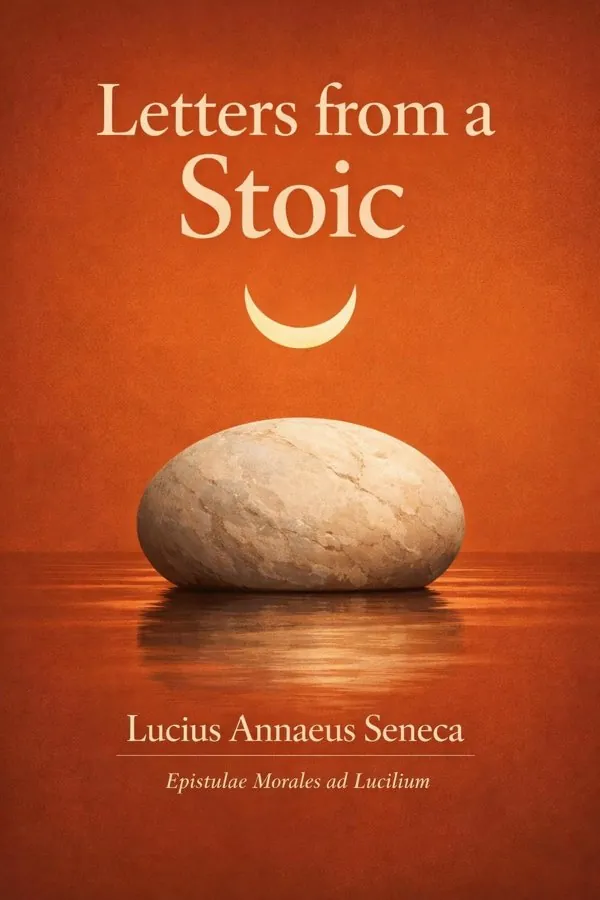
Letters from a Stoic
In-Depth Analysis
Meditations and Letters from a Stoic are two of the most influential surviving works of Stoicism, yet they differ profoundly in form, voice, and the kind of wisdom they deliver. Both books insist that peace depends less on controlling events than on governing judgment, desire, and action. Both argue that virtue matters more than reputation, wealth, or comfort. But the experience of reading them is strikingly different: Marcus Aurelius lets us overhear a man trying to steady himself; Seneca addresses us through Lucilius as a teacher trying to steady someone else.
That difference in form shapes everything. Meditations was never meant for publication. It is a private notebook in which Marcus repeats and refines reminders he already knows but struggles to live by. This gives the work a raw ethical sincerity. In Book II, he opens with the famous morning exercise: expect to meet meddling, ungrateful, arrogant, deceitful, envious, and antisocial people. The point is not cynicism but preparedness. Since such people act from ignorance of good and evil, he tells himself, he should not be shocked by them or alienated from them. This is Stoicism as mental preemption. Marcus writes not to discover a theory but to stop himself from reacting badly before the day begins.
Seneca, by contrast, writes for persuasion and clarification. His letters are highly literary and often unfold like miniature essays. When he argues that time is our most squandered possession, he develops the thought carefully: people guard property and money, yet let others consume their lives. This is one reason Letters from a Stoic often feels more accessible. Seneca states problems in a fully social way, dramatizes ordinary self-deception, and then extracts a principle. Marcus may tell himself, in compressed form, not to waste the remainder of life in thoughts about others unless they concern the common good. Seneca will linger over the mechanisms of waste, distraction, and false busyness until the reader sees himself in them.
The two authors also differ in how they present duty. Marcus writes as emperor, and his Stoicism is inseparable from role ethics. Book V is especially powerful here: when he resists getting out of bed, he reminds himself that he was made for action, like a human being fulfilling its function, not for nestling under blankets. Duty is natural, not theatrical. He is not trying to become extraordinary; he is trying not to betray what a rational and social creature is for. This gives Meditations unusual force for readers facing responsibility, leadership, or exhaustion. The book confronts inertia directly.
Seneca’s treatment of duty is less imperial and more pedagogical. He is interested in how habits, passions, and social illusions sabotage freedom. His discussions of wealth are especially nuanced. Unlike a caricatured ascetic, Seneca does not say possessions are evil. He says dependence is the problem. Wealth is acceptable if one can lose it without losing oneself. This distinction between use and attachment is characteristic of his practical subtlety. It also explains why Letters from a Stoic often feels modern: it addresses abundance, status anxiety, and performative success without requiring total withdrawal from public life.
Emotionally, Meditations is more austere but often more piercing. Because Marcus is speaking to himself, there is no attempt to charm. Again and again he returns to mortality, the brevity of fame, and the smallness of human drama within cosmic time. In Book III and Book IV, he dilates on how quickly both the praiser and the praised disappear. This can feel severe, but it has a cleansing effect. Vanity loses its grip when viewed from the scale of transience. The emotional effect is not comfort in the ordinary sense; it is purification through perspective.
Seneca, on the other hand, can be severe while remaining companionable. His letters on friendship, grief, fear, and anger often give the reader the sense of being guided rather than rebuked. He is particularly good at exposing false values. On friendship, he insists that true friends are loved for themselves and chosen through virtue, not advantage. On the passions, he treats destructive emotion not as destiny but as something reason can interrupt and retrain. Here Seneca often feels more psychologically explanatory than Marcus. Marcus says, in essence, “Do not be carried away”; Seneca more often asks why we are carried away and what habits let it happen.
For beginners, this distinction matters. Meditations can be deceptively difficult because its famous quotability hides the fact that it is built from fragments, allusions, and repeated Stoic assumptions. Readers may sense its grandeur before they fully grasp its system. Letters from a Stoic is easier to enter because Seneca argues more openly and situates ideas in recognizable dilemmas. Yet once one understands Stoicism, Meditations may become the more inexhaustible book, precisely because it records philosophy under pressure. It shows not just Stoic doctrine, but Stoic maintenance.
In the end, these books complement each other. Seneca is often the better guide to Stoic concepts; Marcus is often the better witness to Stoic practice. Seneca teaches the architecture of the inner life. Marcus shows what it feels like to live inside that architecture while tired, irritated, busy, mortal, and responsible. If Seneca helps readers understand Stoicism, Marcus helps them rehearse it. Together they form one of the strongest literary pairings in philosophy: the counselor and the ruler, the essayist and the diarist, the teacher of wisdom and the struggler to remember it every morning.
Side-by-Side Comparison
| Aspect | Meditations | Letters from a Stoic |
|---|---|---|
| Core Philosophy | Meditations presents Stoicism as a private discipline of self-government. Marcus Aurelius constantly reminds himself to align judgment, action, and desire with nature, reason, mortality, and duty. | Letters from a Stoic presents Stoicism as a moral education delivered through argument, example, and counsel. Seneca emphasizes virtue as the only true good and repeatedly explains how to detach inner worth from wealth, status, and fear. |
| Writing Style | Meditations is fragmentary, compressed, and inward-facing because it was written as a personal notebook rather than a public treatise. Its power comes from aphoristic intensity: brief entries on death, annoyance, work, and perspective often land like ethical jolts. | Letters from a Stoic is expansive, rhetorical, and conversational. Seneca writes to Lucilius with crafted examples, paradoxes, and persuasive turns, making the book feel more like a sustained dialogue than a set of private reminders. |
| Practical Application | Marcus is highly practical when addressing daily resistance, especially in passages about rising from bed, dealing with difficult people, and remembering that events are not injuries unless judgment makes them so. The application is immediate, but the reader often has to infer the larger system. | Seneca often gives explicit moral exercises: rehearse poverty, guard your time, examine anger before it hardens, and choose friends by character rather than utility. His advice is more directly instructional and easier to translate into deliberate habits. |
| Target Audience | Meditations best suits readers who are comfortable with introspective, nonlinear texts and who do not mind piecing together doctrine from recurring themes. It especially resonates with people under pressure who need a mental model for composure and duty. | Letters from a Stoic suits readers who want Stoicism explained rather than merely enacted. Because Seneca defines terms, argues points, and addresses common anxieties in plain moral language, it is friendlier to newcomers. |
| Scientific Rigor | As an ancient philosophical journal, Meditations has little scientific rigor in the modern empirical sense. Its claims rest on Stoic metaphysics, moral psychology, and observation of human conduct rather than experiment. | Letters from a Stoic is similarly non-scientific by modern standards, though Seneca is often analytically sharper about emotional habits and the management of fear, anger, and desire. Its value lies in psychological insight, not evidence-based method. |
| Emotional Impact | Meditations often feels intimate and moving because the reader overhears an emperor struggling not to be vain, resentful, or distracted. Its emotional force comes from vulnerability under authority: the most powerful man in the world talking himself into humility. | Letters from a Stoic creates emotional impact through companionship. Seneca feels like a wise, worldly mentor who understands grief, ambition, fatigue, friendship, and the seductions of comfort, then answers them with patient moral clarity. |
| Actionability | Meditations is actionable in short bursts: remember death, do the work before you, meet insult with understanding, and separate events from interpretation. Yet it requires active reflection because many entries are prompts rather than step-by-step guidance. | Letters from a Stoic is more systematically actionable. Seneca repeatedly frames problems, diagnoses their causes, and recommends disciplines such as negative visualization, time-auditing, moderation, and philosophical self-examination. |
| Depth of Analysis | Marcus goes deep through repetition and self-revision rather than formal argument. By circling themes like impermanence, fame, social duty, and cosmic order, he reveals how hard wisdom is to maintain even when one already knows the principles. | Seneca offers greater discursive depth on many topics because he develops them over the course of full letters. He can spend sustained time on time, friendship, wealth, or fear, giving the reader a more articulated Stoic framework. |
| Readability | Meditations can be immediately quotable but unevenly readable as a whole due to its abrupt transitions and dense formulations. Different translations also affect whether it feels crystalline or austere. | Letters from a Stoic is generally more readable because each letter has a clearer arc and stronger rhetorical continuity. Even when Seneca is ornate, the structure helps readers follow his reasoning. |
| Long-term Value | Meditations has exceptional long-term rereading value because its condensed entries function like durable mental cues for different stages of life. A line about fame may matter at twenty-five; a line about mortality or duty may strike harder at fifty. | Letters from a Stoic has exceptional long-term value as a practical manual for living, especially when revisited by theme. Readers can return to specific letters on time, anger, friendship, luxury, or adversity as situations arise. |
Key Differences
Private Journal vs Public Moral Letters
Meditations is a self-directed notebook, so its entries are often compressed, repetitive, and unconcerned with pleasing a reader. Letters from a Stoic is crafted for communication, with Seneca shaping arguments for Lucilius through examples, transitions, and rhetorical buildup.
Stoicism Practiced vs Stoicism Explained
Marcus Aurelius shows Stoicism in real-time self-correction: he reminds himself to expect troublesome people, rise to duty, and ignore fame. Seneca more often explains why these disciplines matter, as in his sustained reflections on wasting time or becoming enslaved to luxury.
Imperial Duty vs Philosophical Counsel
Meditations is deeply marked by Marcus’s role as emperor, especially in its emphasis on work, service, social nature, and endurance under public burden. Seneca writes less from administrative duty and more from the standpoint of ethical mentorship, helping readers sort out values amid ambition and comfort.
Aphoristic Compression vs Discursive Development
Marcus often condenses entire moral positions into a few lines on mortality, perception, or obligation. Seneca develops ideas across full letters, giving readers more conceptual scaffolding and more examples to test against their own lives.
Cosmic Perspective vs Social Psychology
Meditations repeatedly lifts the reader into a vast view of nature, impermanence, and the insignificance of fame across time. Letters from a Stoic spends relatively more energy analyzing social habits and psychological traps such as busyness, greed, fear, and false friendship.
Severity of Tone vs Companionable Guidance
Marcus can sound stern because he is correcting himself with urgency, often cutting straight to death, duty, or the vanity of public opinion. Seneca is also demanding, but his voice is more companionable, often sounding like an experienced guide helping a friend reason through confusion.
Interpretive Difficulty
Meditations often asks readers to reconstruct Stoic doctrine from recurring fragments and images, which can make it harder for first-time readers. Letters from a Stoic is more legible because Seneca lays out claims directly and returns to them through orderly argument.
Who Should Read Which?
The stressed professional or leader managing responsibility and difficult people
→ Meditations
Marcus Aurelius is especially powerful for readers facing pressure, fatigue, conflict, and obligation. His reflections on meeting arrogant or ungrateful people, resisting inertia, and doing one’s work without vanity speak directly to people who need steadiness under strain.
The philosophy beginner seeking a clear introduction to Stoicism
→ Letters from a Stoic
Seneca explains Stoic ideas in fuller, more readable units and applies them to recognizable problems like wasted time, emotional excess, social ambition, and friendship. The book offers conceptual clarity without feeling abstract or academic.
The reflective rereader who wants a lifelong bedside book
→ Meditations
Because its entries are so compressed, Meditations changes as the reader changes. Different passages on mortality, fame, service, self-command, and acceptance become newly meaningful at different stages of life, making it one of the strongest rereading books in philosophy.
Which Should You Read First?
For most readers, the best order is Letters from a Stoic first, then Meditations. Seneca gives you the vocabulary and structure of Stoicism in a way Marcus Aurelius usually does not. He explains what Stoics mean by virtue, why time is life’s most precious resource, how to think about wealth without becoming owned by it, and how to handle anger, fear, and desire through reason. That foundation makes Marcus much easier to appreciate. Once you have Seneca’s framework, Meditations becomes far richer. You start to recognize that Marcus is not being vague or merely inspirational; he is actively rehearsing specific Stoic disciplines: separating events from judgments, accepting fate, subordinating ego to the common good, and remembering mortality to clarify action. Reading Marcus after Seneca also helps you see a crucial distinction between knowing Stoic principles and maintaining them under pressure. If, however, you already love fragmentary, reflective books, you can sample Meditations first and then use Seneca to deepen your understanding.
Want the full summary?
Get instant access to this book summary and 100K+ more with Fizz Moment.
Get Free SummaryAvailable on App Store • Free to download
Frequently Asked Questions
Is Meditations better than Letters from a Stoic for beginners?
Usually, no. For most beginners, Letters from a Stoic is the easier entry point because Seneca explains Stoic ideas in complete arguments and applies them to everyday concerns like time, friendship, wealth, anxiety, and anger. Meditations is more fragmented and assumes familiarity with Stoic habits of thought. That said, some beginners connect immediately with Marcus Aurelius because the book feels intimate and direct, especially its reflections on difficult people, mortality, and daily duty. If you prefer a journal-like voice and are comfortable piecing ideas together, Meditations can still work first, but Seneca is generally the more beginner-friendly guide.
What are the main differences between Meditations and Letters from a Stoic?
The main difference is form and voice. Meditations is a private notebook: Marcus Aurelius writes to himself in compressed reminders, often revisiting the same themes of death, duty, reason, cosmic order, and inner restraint. Letters from a Stoic is a public-facing philosophical correspondence: Seneca writes to Lucilius in polished letters that develop arguments about virtue, time, anger, wealth, and friendship. Marcus gives you Stoicism in practice under pressure; Seneca gives you Stoicism explained. Marcus is more aphoristic and inward; Seneca is more rhetorical and outward-facing. Readers who want reflective intensity often prefer Marcus, while readers who want conceptual clarity often prefer Seneca.
Which book is more practical for modern life: Meditations or Letters from a Stoic?
Both are practical, but in different ways. Meditations is practical in moments of stress: when you are irritated at coworkers, dreading responsibility, tempted by praise, or overwhelmed by setbacks, Marcus Aurelius offers sharp mental resets. His reminders to do the work of a human being, accept what is outside your control, and resist anger remain immediately usable. Letters from a Stoic is practical at the level of habit formation. Seneca gives clearer guidance on how to use time, test your dependence on comfort, think about money, choose friends, and examine passions before they dominate you. For instant perspective, Marcus often wins; for structured self-improvement, Seneca usually does.
Is Letters from a Stoic better than Meditations for understanding Stoicism deeply?
If your goal is understanding Stoicism as a system of thought, Letters from a Stoic is usually better. Seneca lays out principles, argues for them, and applies them across many concrete topics. He explains why virtue is the only true good, why time is our most valuable possession, how wealth should be used without attachment, and how reason can master destructive emotions. Meditations is deep in a different sense: it reveals what Stoicism looks like when one is actively trying to live it. Marcus Aurelius offers less exposition but more existential texture. So for doctrinal understanding choose Seneca first; for lived philosophical intensity, Marcus is unmatched.
Which is more emotionally powerful, Meditations by Marcus Aurelius or Letters from a Stoic by Seneca?
Many readers find Meditations more emotionally piercing because of its vulnerability. There is something unforgettable about an emperor reminding himself not to be vain, resentful, self-indulgent, or afraid of death. The emotional force comes from sincerity rather than performance. Seneca is powerful in a different register: he feels like an experienced mentor speaking directly to a friend who is trying to live better. His letters on wasted time, friendship, grief, and luxury often feel warmer and more companionable. If you want stark, solitary moral intensity, Marcus Aurelius may affect you more. If you want humane guidance with rhetorical elegance, Seneca may resonate more deeply.
Should I read Meditations and Letters from a Stoic together or separately?
Reading them together can be excellent because they illuminate each other. A useful method is to read a few of Seneca’s letters on a theme such as anger, time, or wealth, and then turn to Meditations to see how similar Stoic principles sound inside Marcus Aurelius’s private self-discipline. Seneca provides the exposition; Marcus provides the internal rehearsal. However, if you are new to Stoicism, reading them separately may prevent overload. Start with Letters from a Stoic for conceptual grounding, then move to Meditations for concentrated reflection. Together they offer one of the best combinations in philosophy: theory made vivid by practice.
The Verdict
If you want the clearest recommendation, read Letters from a Stoic first and Meditations second. Seneca is the better teacher: he explains Stoic ideas with greater continuity, gives fuller treatment to topics like time, friendship, wealth, and emotional discipline, and is generally easier for modern readers to follow. For anyone asking which book better introduces Stoicism, Letters from a Stoic is usually the stronger answer. But Meditations is the more singular book. Marcus Aurelius offers something rarer than philosophical instruction: he lets you witness a mind attempting to remain decent, rational, and humble under immense power and pressure. Because the work is private, it often feels more morally naked than Seneca. Its fragmented form can be challenging, yet that same compression gives it immense rereading value. A single page can reset your priorities. So the better beginner’s book is Seneca, while the more haunting lifelong companion may be Marcus. If you want explanation, structure, and practical moral essays, choose Letters from a Stoic. If you want distilled spiritual and ethical discipline in its most intimate form, choose Meditations. Ideally, do not treat them as rivals. Seneca teaches the language of Stoicism; Marcus teaches the daily struggle of remembering to speak it.
Related Comparisons


Want to read both books?
Get AI-powered summaries of both Meditations and Letters from a Stoic in just 20 minutes total.