
Can't Hurt Me vs The Way of the Superior Man: Which Should You Read?
A detailed comparison of Can't Hurt Me by David Goggins and The Way of the Superior Man by David Deida. Discover the key differences, strengths, and which book is right for you.
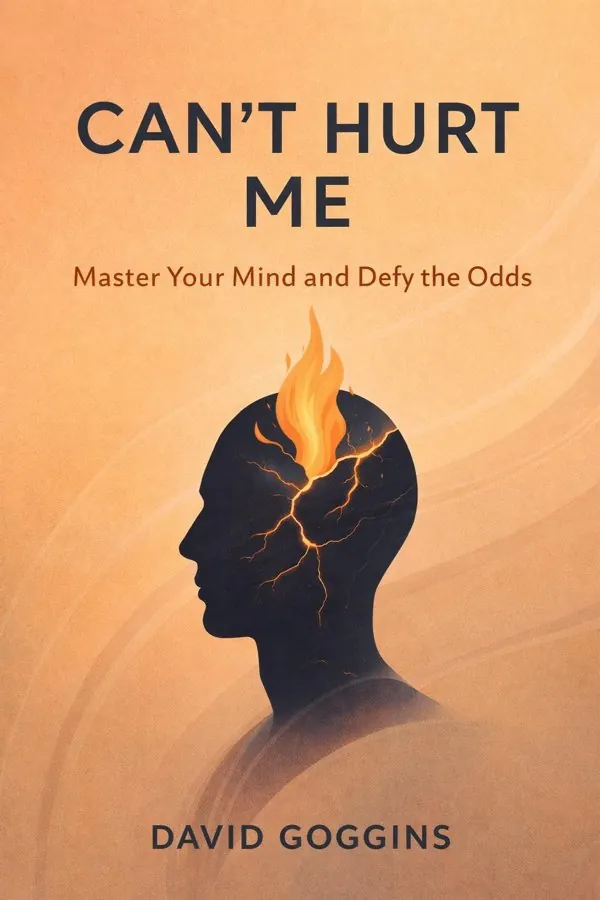
Can't Hurt Me
The Way of the Superior Man
In-Depth Analysis
David Goggins’s Can't Hurt Me and David Deida’s The Way of the Superior Man are both self-help books built around a demand that readers stop living passively. Yet they approach that demand from strikingly different angles. Goggins’s book is a memoir of self-overhaul through pain, discipline, and relentless confrontation with limitation. Deida’s is a spiritual-psychological manual about purpose, masculine development, and the way intimacy exposes inner weakness. Both reject comfort as a governing principle, but one is forged in physical extremity and autobiographical struggle, while the other is framed through presence, polarity, and existential alignment.
Can't Hurt Me is rooted in narrative credibility. Goggins begins with a childhood marked by abuse, instability, racism, and fear, making his later extremity feel like a response to psychic damage as much as ambition. The emotional engine of the book is not simply achievement but self-reclamation. His transformation from an overweight exterminator into a Navy SEAL candidate and ultramarathon runner dramatizes his central belief: identity is not fixed, and most people accept limits far too early. Practical concepts like the 'Accountability Mirror,' where he literally writes down hard truths about himself, and the 'cookie jar,' where he stores memories of past victories for future use, make the book memorable because they convert motivation into ritual.
The Way of the Superior Man, by contrast, does not rely on a personal redemption plot. Its authority comes from the confident delivery of principles. Deida repeatedly argues that a man must stop waiting for external conditions to become easy before he commits to his purpose. He warns against organizing life around comfort, female approval, or emotional weather. Instead, he urges readers to discover and live their deepest mission, remain present in moments of relational tension, and tell the truth rather than retreat into numbness. His chapters are short because each is meant to function like a challenge or koan: brief, provocative, and difficult to evade.
The biggest difference between the books lies in what they believe the main obstacle to growth actually is. For Goggins, the obstacle is weakness reinforced by excuses, self-pity, and the desire to avoid pain. His answer is voluntary hardship. Running on broken feet, enduring Hell Week, or pushing beyond apparent exhaustion are not just stunts in the book; they are proofs that the mind quits before the body must. The book’s famous emphasis on operating beyond one’s perceived limits is meant to shatter identity-level beliefs like 'I’m lazy,' 'I’m broken,' or 'this is just who I am.'
For Deida, the obstacle is less laziness than misalignment. A person suffers because he fragments his attention, suppresses truth, and confuses comfort with meaning. This is why solitude matters so much in the book: without stillness, purpose is drowned out by noise and dependency. In relationships, Deida argues that emotional challenges are not interruptions to purpose but tests of presence. Where Goggins would likely say, 'Do the hard thing anyway,' Deida says, in effect, 'Stay deeply present and truthful while doing what your core purpose requires.' That makes Deida more relational and metaphysical, while Goggins remains behavioral and combative.
Their tones also produce different reader experiences. Can't Hurt Me is emotionally immediate because it shows the raw materials of transformation: a brutal father, academic struggles, obesity, repeated failure, and humiliating self-recognition. You watch Goggins flunk, suffer, adapt, and rebuild. The result is highly motivating because the reader feels that discipline has been paid for in blood. The book’s weakness is that it can imply that extremity is the most authentic route to growth. Many readers will draw strength from that; others may find it psychologically narrow or physically unrealistic.
The Way of the Superior Man has the opposite strength and weakness. It excels at diagnosing subtle forms of avoidance that look respectable on the surface: indecision, overthinking, emotional caretaking, or drifting through work without mission. Its best insights concern how purpose and intimacy interact. A man who lacks direction often becomes needy in love, and a man who fears emotional intensity will abandon truth to preserve temporary harmony. These are sharp observations. But Deida’s language about masculine and feminine energies can feel overly generalized, and some readers will resist the book’s essentialist framing of gender and attraction.
In practical terms, Goggins is easier to implement immediately. If you finish Can't Hurt Me, you can build a punishing training plan, list your excuses, and start collecting proof that you can endure more than you thought. The feedback loop is visible. With Deida, implementation is less measurable but no less demanding. You have to notice when you are performing, hesitating, or betraying your deepest purpose in work and relationships. You must practice presence under emotional stress, which is harder to quantify than miles run or weight lost.
Ultimately, these books serve different forms of transformation. Can't Hurt Me is most powerful when a reader needs to rebuild self-respect through action. It is especially effective for people trapped in inertia, shame, or victim thinking. The Way of the Superior Man is more useful when the issue is not basic activation but direction: how to live with integrity, mission, and emotional depth once brute discipline alone is no longer enough. Goggins teaches readers how to become harder. Deida asks what that hardness is for, how it should be integrated with love, truth, and purpose. Read together, they form an illuminating contrast between outer conquest and inner alignment.
Side-by-Side Comparison
| Aspect | Can't Hurt Me | The Way of the Superior Man |
|---|---|---|
| Core Philosophy | Can't Hurt Me argues that radical self-transformation is possible through extreme ownership, disciplined suffering, and deliberate confrontation with weakness. Goggins treats pain as a tool for building identity, using ideas like the 'Accountability Mirror' and 'cookie jar' to turn trauma and failure into fuel. | The Way of the Superior Man centers on living from purpose, presence, and sexual-spiritual polarity rather than comfort or approval. Deida’s philosophy is less about conquering the body and more about aligning masculine energy with mission, truth-telling, and emotional openness in relationships. |
| Writing Style | Goggins writes in a blunt, autobiographical, high-intensity style that mixes memoir with challenge-based coaching. The voice is urgent, confessional, and often militaristic, built around dramatic episodes like Hell Week, weight loss, and ultramarathons. | Deida writes in short, aphoristic chapters that feel like condensed teachings or provocations. His style is meditative yet confrontational, often sounding like a spiritual mentor offering principles rather than a memoirist narrating lived events. |
| Practical Application | The book is highly concrete: readers can imitate tactics such as writing weaknesses on a mirror, revisiting past wins in the 'cookie jar,' and setting physically demanding goals. Its lessons are often implemented through measurable behavior change, especially around fitness, routine, and resilience. | Deida’s advice is practical in a different way, applying to everyday decisions about work, intimacy, and attention. Readers are asked to notice when they drift, avoid truth, seek comfort, or become dependent on emotional validation, then return to purpose and presence. |
| Target Audience | Can't Hurt Me is best suited for readers drawn to toughness, recovery from adversity, performance psychology, or transformation through discipline. It strongly appeals to athletes, military-minded readers, and anyone who responds to direct motivational pressure. | The Way of the Superior Man is aimed primarily at men thinking about vocation, masculine identity, intimacy, and spiritual development, though some of its broader lessons about purpose and presence can resonate beyond that audience. Its framework will especially attract readers interested in relationship dynamics and inner work. |
| Scientific Rigor | Goggins offers experiential wisdom rather than research-based argument, and many of his claims about human potential are rooted in personal example more than scientific evidence. His famous '40% rule' is motivationally powerful but not rigorously defended as a formal psychological principle. | Deida is even less empirically grounded, relying on metaphysical claims, archetypal language, and generalized ideas about masculine and feminine energy. The book’s value lies in interpretive insight and self-reflection, not in scientific validation. |
| Emotional Impact | The emotional force comes from Goggins’s life story: abuse, racism, obesity, repeated failure, and relentless reinvention. Readers often feel shock, urgency, and empowerment because the book insists that suffering can be repurposed rather than merely survived. | Deida’s emotional impact is more intimate and unsettling, especially when he challenges readers to examine where they are dishonest in love or distracted from purpose. Instead of inspiring through trauma and triumph, it destabilizes complacency by exposing subtle forms of avoidance. |
| Actionability | Its advice translates quickly into action because it emphasizes visible tests: wake up earlier, train harder, stop negotiating with excuses, and build evidence of discipline. Even the narrative itself models a repeatable cycle of choosing discomfort, failing, adjusting, and returning stronger. | Its actions are less externally dramatic but still demanding: sit in solitude, speak truth in relationships, stop postponing your mission, and remain present under emotional pressure. The challenge is that these practices require nuanced self-observation rather than a checklist alone. |
| Depth of Analysis | Goggins goes deep on grit, shame, self-image, and the psychology of earned confidence, but he tends to simplify complexity into a battle between discipline and weakness. The analysis is strongest when tied to his own life and less nuanced when generalized to everyone. | Deida offers deeper treatment of relational energy, identity, and existential purpose, though his framework can feel sweeping and essentialist. The book is intellectually provocative because it connects desire, fear, mission, and intimacy into one worldview. |
| Readability | The memoir structure makes it highly readable, especially for people who want momentum, narrative stakes, and dramatic transformation. Its intensity can be exhausting for some, but it rarely feels abstract. | The short-chapter format makes it easy to dip into, yet the conceptual language can be polarizing and occasionally opaque. It reads quickly, but readers may need to pause often to interpret or challenge its claims. |
| Long-term Value | Can't Hurt Me has lasting value as a motivational reset, especially during periods of stagnation, self-pity, or low discipline. Many readers return to it when they need to re-harden their standards and remember that confidence can be built through action. | The Way of the Superior Man tends to reward rereading over time because its lessons shift as a reader’s work, relationships, and maturity evolve. Its long-term value lies less in adrenaline and more in recurring reflection on purpose, intimacy, and presence. |
Key Differences
Memoir-Driven vs Principle-Driven
Can't Hurt Me builds its argument through Goggins’s life story, using episodes like childhood abuse, failed attempts, SEAL training, and ultrarunning to prove its claims. The Way of the Superior Man mostly skips narrative and instead delivers concentrated principles, such as staying aligned with purpose and remaining present during relational tension.
Physical Extremity vs Relational-Spiritual Presence
Goggins uses physical hardship as the main training ground for character, treating pain as a forge for mental toughness. Deida focuses more on invisible tests: telling the truth in love, tolerating emotional intensity, and not losing direction amid desire, comfort, or distraction.
Concrete Techniques vs Interpretive Practices
Goggins gives named tools like the Accountability Mirror and cookie jar, which readers can apply immediately and visibly. Deida’s practices are more internal and interpretive, such as noticing when you drift from purpose, use busyness to avoid truth, or seek reassurance instead of grounding yourself.
Universal Framing vs Gendered Framework
Can't Hurt Me speaks in broadly universal terms about discipline, adversity, and human potential, even if its style is especially attractive to certain readers. The Way of the Superior Man is explicitly framed around masculine development and masculine-feminine polarity, which makes it more targeted and also more controversial.
Adrenaline and Urgency vs Reflection and Provocation
Reading Goggins often feels like being pushed into immediate action by someone who refuses to let you rationalize weakness. Reading Deida feels more like being confronted by a teacher who exposes the deeper motives behind your indecision, especially in work and intimacy.
Resilience After Damage vs Purpose Beyond Competence
Goggins is fundamentally concerned with proving that a damaged past does not determine your future, and that confidence can be earned through hardship. Deida is more concerned with what happens after basic competence: whether your life is actually organized around mission, truth, and embodied presence.
Low Ambiguity vs High Ambiguity
Can't Hurt Me is easy to decode: suffer voluntarily, stop making excuses, and strengthen your mind by doing difficult things. The Way of the Superior Man often requires interpretation because its language about energy, polarity, and purpose can be symbolic rather than literal.
Who Should Read Which?
The stuck but ambitious reader who feels capable of more but keeps falling into excuses, numbing habits, or inconsistent effort
→ Can't Hurt Me
Goggins is ideal for readers who need a sharp break from passivity. His story of moving from abuse, obesity, and hopelessness into extreme discipline gives readers both emotional credibility and practical methods for rebuilding self-respect through action.
The purpose-seeking reader who is functioning well on the outside but feels inwardly divided in work, love, or identity
→ The Way of the Superior Man
Deida is stronger for readers whose issue is not laziness but misalignment. The book presses on deeper questions about mission, presence, sexual dynamics, and emotional truth, especially when life looks successful but does not feel fully integrated.
The reflective high-performer who already has discipline but wants a fuller philosophy of growth
→ Read both, starting with Can't Hurt Me
This reader can benefit from Goggins’s uncompromising approach to resilience and then use Deida to examine what that resilience serves. Together, the books balance achievement psychology with relational and existential inquiry.
Which Should You Read First?
If you are deciding which to read first, start with Can't Hurt Me if your main problem is stagnation, inconsistency, or low self-belief. Goggins provides immediate momentum because he links transformation to visible action: honest self-assessment, painful effort, and repeated proof that you can exceed your current identity. The narrative format also makes it easier to absorb when you are not yet in a reflective or philosophical mood. Read The Way of the Superior Man second, once you have some traction and want to think more deeply about direction, relationships, and inner alignment. Deida’s book works best when the reader is ready to examine subtler patterns, such as emotional avoidance, dependence on comfort, or uncertainty about purpose. In that sense, Goggins helps you build force, while Deida helps you refine how that force should be expressed. If you start with Deida, some of the insights may remain abstract; if you start with Goggins, you may have the discipline needed to engage Deida’s challenges more honestly.
Want the full summary?
Get instant access to this book summary and 100K+ more with Fizz Moment.
Get Free SummaryAvailable on App Store • Free to download
Frequently Asked Questions
Is Can't Hurt Me better than The Way of the Superior Man for beginners?
For most beginners to self-help, Can't Hurt Me is easier to grasp because its lessons are anchored in story, not abstract philosophy. Goggins gives readers a vivid transformation arc—from abuse and obesity to SEAL training and ultramarathons—and pairs it with practical tools like the Accountability Mirror and the cookie jar. The Way of the Superior Man is shorter, but it assumes comfort with concepts like masculine purpose, polarity, and spiritual presence. If you are new to personal development and want concrete momentum first, Goggins is usually the more accessible starting point. If you are already reflective and mainly interested in relationships and purpose, Deida may still resonate more.
Which book is more practical: Can't Hurt Me or The Way of the Superior Man?
Can't Hurt Me is more practical in the traditional, action-oriented sense because it gives readers obvious ways to apply its message: train harder, embrace discomfort, tell yourself the truth, and build confidence through repeated proof. Its advice is behaviorally concrete and often measurable. The Way of the Superior Man is practical in a more interpretive way. It helps readers examine how they show up in intimacy, work, solitude, and truth-telling, but its guidance requires self-awareness rather than a checklist. If by practical you mean 'What can I do tomorrow morning?' Goggins wins. If you mean 'What framework changes how I show up in life and love?' Deida may be more transformative.
Should I read Can't Hurt Me or The Way of the Superior Man for discipline and motivation?
For discipline and motivation specifically, Can't Hurt Me is the stronger choice. The entire book is organized around radical self-command: losing weight rapidly to qualify for military service, surviving punishing selection environments, and repeatedly choosing suffering over ease. It is designed to make excuses feel flimsy. The Way of the Superior Man does address fear, procrastination, and comfort-seeking, but its goal is broader than motivation. It wants readers to orient their lives around purpose and presence, especially in relationships. If you need to get unstuck, toughen your routines, and build momentum through action, Goggins is more direct and energizing.
Is The Way of the Superior Man too dated or controversial compared with Can't Hurt Me?
Many readers do find The Way of the Superior Man more controversial because its core framework depends on masculine and feminine polarity, and some of its gendered claims can feel dated, essentialist, or overly broad. That does not make it useless; in fact, many readers still find its ideas on purpose, emotional honesty, and presence deeply clarifying. But it demands a more critical reading than Can't Hurt Me. Goggins can also be polarizing, especially in his glorification of extreme suffering, yet his framework is less culturally contentious because it focuses on discipline and resilience rather than gender dynamics. Deida offers more philosophical risk and, for some, more interpretive reward.
Which book is better for healing trauma and building confidence: Can't Hurt Me or The Way of the Superior Man?
Can't Hurt Me is better suited to readers who want a trauma-to-strength narrative built around earned confidence. Goggins does not offer therapy, but he shows how a damaged self-image can be reshaped through honest self-assessment and difficult action. His account of growing up in abuse and later refusing to remain defined by it gives the book unusual force for readers emerging from shame or helplessness. The Way of the Superior Man is less focused on trauma recovery and more focused on alignment, purpose, and relational depth. It may help readers understand emotional avoidance, but it is not primarily a healing memoir or a confidence-building blueprint.
Can women read The Way of the Superior Man and still benefit, or is Can't Hurt Me more universal?
Women can absolutely read The Way of the Superior Man and still benefit from its insights on purpose, presence, emotional honesty, and the dangers of comfort-based living. However, because Deida frames much of the book through masculine development and sexual polarity, some readers may need to translate or selectively reinterpret its claims. Can't Hurt Me is generally more universal in framing because its central themes—discipline, adversity, accountability, and self-reinvention—are not tied to one gendered model of development. If you want the book that requires the least conceptual translation across audiences, Goggins is the safer recommendation.
The Verdict
If you want a book that will jolt you into action, Can't Hurt Me is the stronger recommendation. David Goggins offers a brutally memorable case for discipline as identity repair. The book is especially powerful for readers facing inertia, self-doubt, shame, or the lingering effects of hardship. Its lessons are concrete, its emotional stakes are high, and its core message is unmistakable: stop negotiating with your weakness and build proof that you can do hard things. If, however, you are less interested in raw motivation and more interested in how purpose, intimacy, and presence fit together, The Way of the Superior Man offers a different kind of depth. Deida’s book is not primarily about becoming tougher; it is about becoming more aligned. It asks what your life is actually for, how you show up under emotional pressure, and whether your relationships reflect truth or avoidance. For the right reader, that can be more profound than Goggins’s physical and psychological extremity. Overall, Can't Hurt Me is the more universally accessible and actionable book, while The Way of the Superior Man is the more philosophically provocative but also more polarizing one. Choose Goggins if you need momentum. Choose Deida if you need orientation. Read both if you want a fuller model of growth: one teaches how to build force of will; the other asks how to direct it.
Related Comparisons
Want to read both books?
Get AI-powered summaries of both Can't Hurt Me and The Way of the Superior Man in just 20 minutes total.