
Can't Hurt Me vs The Power of Now: Which Should You Read?
A detailed comparison of Can't Hurt Me by David Goggins and The Power of Now by Eckhart Tolle. Discover the key differences, strengths, and which book is right for you.
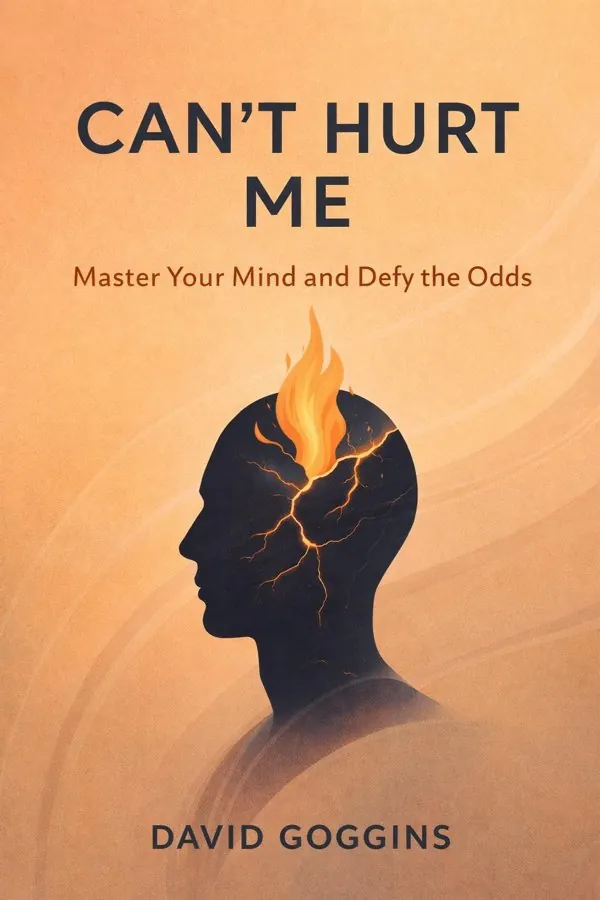
Can't Hurt Me
The Power of Now
In-Depth Analysis
David Goggins’s Can't Hurt Me and Eckhart Tolle’s The Power of Now are both self-help books concerned with liberation from suffering, but they define both the problem and the path in almost opposite ways. Goggins begins with a damaged self that must be rebuilt through discipline, confrontation, and earned toughness. Tolle begins with a misidentified self that must be seen through by detaching from compulsive thought and returning to present awareness. One book says, in effect, “become harder”; the other says, “become more conscious.” Their shared promise is transformation, yet the means, tone, and assumptions differ dramatically.
Can't Hurt Me is anchored in narrative extremity. Goggins’s childhood abuse, experience of racism, academic struggle, and later obesity are not decorative backstory; they are the material from which his philosophy emerges. His argument is not simply that hard work matters. It is that a person can stop organizing life around past injury by voluntarily entering difficulty and proving, repeatedly, that old identities no longer govern them. This is why key ideas such as the Accountability Mirror and the Cookie Jar matter. The mirror is not just a motivational trick; it is a ritual of honest self-confrontation. The Cookie Jar is not just positive thinking; it is the deliberate retrieval of previous victories to survive present pain. Even his Navy SEAL and endurance stories function as case studies in identity reconstruction through ordeal.
The Power of Now has a very different architecture. Rather than telling a dramatic life story, Tolle presents a framework for observing the mind. His core insight is that most psychological suffering is amplified because the mind lives in past and future while the body lives only now. Anxiety comes from future projection; guilt and resentment often come from attachment to past mental narratives. Tolle’s solution is not achievement but disidentification: notice the voice in the head, observe emotion without becoming it, and discover a layer of awareness deeper than thought. Where Goggins uses effort to reforge the self, Tolle questions whether the egoic self we defend so fiercely is the source of suffering in the first place.
This difference appears clearly in how each author treats pain. For Goggins, pain is instructional. He goes toward physical and psychological strain because adversity exposes weakness, excuses, and hidden reserves. The training process itself becomes moral education. In Tolle, pain is not something to glorify or accumulate; it is something to witness without adding mental resistance. His concept of the “pain-body” suggests that people can become unconsciously attached to old emotional suffering and reactivate it through thought patterns. So while Goggins says hardship can make you stronger when consciously chosen, Tolle says suffering often persists because it is unconsciously rehearsed.
Their models of action also diverge. Can't Hurt Me is intensely behavior-driven. If you are overweight, undisciplined, or stuck, Goggins would likely prescribe a demanding plan, public accountability, and repeated contact with discomfort. He trusts transformation through doing. The Power of Now is attention-driven. Tolle would ask what thought pattern, fear narrative, or unconscious identification is operating before, during, and after action. He trusts transformation through awareness. This makes Goggins more immediately galvanizing and Tolle more quietly destabilizing in a philosophical sense.
In terms of readership, Goggins is often better for people who need ignition. Someone trapped in passivity may benefit from his refusal to sentimentalize weakness. His life demonstrates that terrible beginnings need not determine final identity. However, his examples are so extreme that some readers may confuse inspiration with prescription and adopt a punishing, unsustainable model of growth. Tolle is often better for people whose main problem is not laziness but overactivity of mind: chronic anxiety, rumination, emotional reactivity, or inability to be still. Yet readers who want measurable steps may find his advice too intangible at first, because “observe your thoughts” can sound simple while being psychologically subtle.
Neither book is especially rigorous in scientific terms. Goggins argues from lived extremity; Tolle argues from spiritual phenomenology. But both have been influential because they articulate truths many readers feel before they can formalize them. Goggins captures the insight that comfort can become a prison and that self-respect is built, not merely felt. Tolle captures the insight that mental noise distorts reality and that many inner problems are sustained by unconscious identification with thought.
The most productive way to compare them is not as rivals but as interventions at different points in the cycle of suffering. Goggins is strongest when someone is hiding from challenge, rationalizing mediocrity, or defining themselves by injury. Tolle is strongest when someone is trapped in psychological time, unable to stop thinking, and generating suffering through resistance to what already is. If Goggins helps readers build capacity, Tolle helps them stop confusing consciousness with mental chatter. One develops force; the other develops stillness.
Ultimately, the books can even complement each other. Goggins without Tolle can produce relentless striving, where self-worth depends on perpetual conquest. Tolle without Goggins can be misunderstood as passivity, where acceptance becomes avoidance of necessary effort. Read together, they suggest a more complete formula: act with discipline, but do not become enslaved to the mind that narrates, fears, and judges every step. Goggins teaches how to endure the storm; Tolle teaches how not to become the storm internally. That is why both remain powerful, despite speaking in radically different voices.
Side-by-Side Comparison
| Aspect | Can't Hurt Me | The Power of Now |
|---|---|---|
| Core Philosophy | Can't Hurt Me argues that identity can be rebuilt through radical self-discipline, voluntary hardship, and repeated confrontation with weakness. Goggins treats pain as a proving ground where excuses are destroyed and hidden capacity is uncovered. | The Power of Now teaches that suffering is intensified by identification with thought and time-based mental patterns. Tolle’s central claim is that freedom comes less from conquering hardship than from inhabiting the present without mental resistance. |
| Writing Style | Goggins writes in a blunt, autobiographical, high-intensity voice shaped by trauma, military training, and endurance sport. The tone is confrontational and motivational, often using personal episodes as direct challenges to the reader. | Tolle uses a calm, meditative, question-and-answer style that resembles spiritual instruction more than memoir. The prose is repetitive by design, aiming to slow the reader down and point them toward inner observation rather than adrenaline. |
| Practical Application | The book offers concrete frameworks such as the Accountability Mirror, the Cookie Jar, and setting audacious physical goals to forge resilience. Its methods are often behavior-first: act, endure, repeat, and let identity catch up. | Tolle’s practices are inward and experiential, including observing the mind, noticing emotional reactivity, and returning attention to breath, silence, and bodily awareness. The application is less task-based and more about interrupting unconscious patterns in real time. |
| Target Audience | Can't Hurt Me is especially suited to readers who feel trapped by passivity, self-pity, low standards, or fear of discomfort. It strongly appeals to athletes, high-performers, and people drawn to extreme examples of self-transformation. | The Power of Now is ideal for readers overwhelmed by anxiety, overthinking, emotional reactivity, or constant mental noise. It tends to resonate with people open to spirituality, mindfulness, and noncompetitive forms of personal growth. |
| Scientific Rigor | Goggins’s claims are grounded mostly in anecdote, personal experience, and extreme performance rather than systematic evidence. Its persuasiveness comes from lived credibility, but it does not carefully distinguish universal principles from what worked for an unusually driven individual. | Tolle also relies more on spiritual insight and phenomenological observation than empirical research. While many of his ideas overlap with mindfulness psychology, the book itself does not build its case through studies, citations, or scientific debate. |
| Emotional Impact | The emotional force of Can't Hurt Me comes from Goggins’s childhood abuse, racism, obesity, and repeated acts of self-overcoming. Readers often feel shocked, energized, and sometimes judged by the intensity of his refusal to accept limitation. | The Power of Now produces a different emotional effect: relief, spaciousness, and a sense that one can step back from suffering. Rather than stirring outrage against weakness, it softens identification with inner turmoil. |
| Actionability | Its advice is immediately actionable because it translates mindset into difficult but concrete behaviors: train harder, tell the truth about your weakness, and seek discomfort intentionally. The challenge is that the actions may feel too extreme for average readers if taken literally. | Tolle’s instructions are simple in wording but subtle in execution: observe thought, stay with the present, and witness emotions without becoming them. The practices are accessible daily, though readers may struggle to know whether they are 'doing it right.' |
| Depth of Analysis | Goggins offers deep analysis of self-deception, victimhood, and performance identity through narrative episodes such as SEAL training and ultramarathons. However, his framework narrows toward grit and personal responsibility, sometimes underplaying structural or psychological complexity. | Tolle goes deeper into the mechanics of consciousness, ego, and temporal identification, especially in his treatment of compulsive thinking and the pain-body. His analysis is philosophically broader, though less grounded in ordinary social realities and personal history. |
| Readability | Can't Hurt Me is highly readable for readers who like momentum, storytelling, and vivid turning points. The memoir structure makes abstract lessons easier to remember because they are attached to dramatic tests and outcomes. | The Power of Now is readable in short segments, but its abstract language and spiritual vocabulary can feel elusive or circular. Many readers benefit from reading it slowly rather than straight through. |
| Long-term Value | The book has long-term value as a recurring source of motivation during periods of stagnation, self-doubt, or complacency. Its main limitation is that constant reliance on intensity may not support every season of life equally well. | Tolle’s book often gains value over time because presence is a practice readers revisit at different depths as they mature. Its ideas can remain useful beyond crisis, especially for reducing chronic mental agitation and improving emotional steadiness. |
Key Differences
Transformation Through Force vs Transformation Through Awareness
Goggins believes change happens by imposing new standards on yourself through effort, pain, and repetition. Tolle believes change happens when you observe the mind clearly enough that unconscious patterns lose their grip, as in his emphasis on noticing thought rather than obeying it.
Memoir-Driven Teaching vs Concept-Driven Teaching
Can't Hurt Me teaches through a dramatic personal arc: abuse, obesity, military selection, endurance events. The Power of Now relies far less on life story and far more on spiritual explanation, especially its analysis of ego, presence, and the pain-body.
External Challenge vs Internal Witnessing
Goggins repeatedly sends the reader outward into hard tasks, whether physical training or public accountability. Tolle sends the reader inward, asking them to notice the voice in the head, the body’s tension, and the difference between awareness and thought.
Intensity vs Stillness
The emotional engine of Can't Hurt Me is intensity: urgency, confrontation, and the refusal to be average. The emotional engine of The Power of Now is stillness: slowing mental momentum, relaxing resistance, and discovering calm beneath mental agitation.
Performance Identity vs Ego Transcendence
Goggins is concerned with building a stronger self capable of extraordinary endurance and responsibility. Tolle is skeptical of overidentification with the constructed self altogether, arguing that egoic identity is often the root of suffering.
Concrete Tools vs Subtle Practices
Goggins provides highly memorable devices like the Accountability Mirror and the Cookie Jar, which readers can adopt immediately. Tolle’s practices—presence, breath awareness, observing emotions—are simple but require more patience because their results are inward and cumulative.
Motivational Shock vs Meditative Reframing
Can't Hurt Me often jolts readers by exposing complacency and framing comfort as a trap. The Power of Now works less by shock than by reframing, persuading readers that many of their problems are sustained by identification with thought and time.
Who Should Read Which?
The stalled achiever who knows they are capable of more but keeps avoiding discomfort
→ Can't Hurt Me
Goggins is especially effective for readers whose main obstacle is not confusion but avoidance. His blunt focus on accountability, discipline, and voluntary hardship directly targets the habits of delay, excuse-making, and self-protective comfort.
The anxious thinker who feels trapped in rumination, future fear, or emotional reactivity
→ The Power of Now
Tolle’s framework is built for this exact problem. His emphasis on observing thought, leaving psychological time, and inhabiting the present offers relief to readers whose suffering is intensified by overidentification with mental narratives.
The serious self-development reader who wants both performance and inner peace
→ Can't Hurt Me
Start with Goggins for momentum, then add Tolle for balance. The first book helps build self-respect through action, while the second prevents action from becoming ego-driven compulsion; together they create a more complete growth model.
Which Should You Read First?
For most readers, the best reading order is Can't Hurt Me first, then The Power of Now. Goggins is more immediately accessible because he tells a gripping story and translates his lessons into concrete challenges. If you are stuck, passive, or discouraged, he can create momentum quickly. His book gives you energy, standards, and a stronger sense that change is possible even after trauma, failure, or years of self-neglect. Then read The Power of Now to balance that drive with awareness. After Goggins, some readers become highly motivated but also overly aggressive with themselves, as if every weakness must be crushed. Tolle helps correct that by teaching presence, emotional observation, and freedom from compulsive thinking. He can prevent discipline from turning into inner violence. The main exception is this: if you are currently overwhelmed by anxiety, burnout, or nonstop mental chatter, start with The Power of Now. In that case, you may need calm and clarity before you need intensity. But for the average reader seeking transformation, Goggins first and Tolle second creates the more effective progression.
Want the full summary?
Get instant access to this book summary and 100K+ more with Fizz Moment.
Get Free SummaryAvailable on App Store • Free to download
Frequently Asked Questions
Is Can't Hurt Me better than The Power of Now for beginners?
It depends on what kind of beginner you are. If you are new to self-help and want a gripping story with obvious takeaways, Can't Hurt Me is usually easier to enter because Goggins teaches through vivid episodes: losing weight fast, surviving brutal training, and using tools like the Accountability Mirror. If you are a beginner specifically struggling with anxiety, racing thoughts, or emotional overwhelm, The Power of Now may be more directly helpful. Tolle is less plot-driven and more abstract, so some beginners find it profound while others find it slippery. In general, Goggins is better for action-oriented beginners; Tolle is better for introspection-oriented beginners.
Which book is better for anxiety and overthinking: Can't Hurt Me or The Power of Now?
For anxiety and overthinking specifically, The Power of Now is usually the stronger choice. Tolle directly addresses how fear is often produced by living mentally in the future and by identifying too fully with thought. His emphasis on observing the mind, returning attention to the body, and grounding in the present moment targets the mechanics of rumination. Can't Hurt Me can still help anxious readers, especially if their anxiety is mixed with avoidance and low confidence, because Goggins pushes readers toward courageous action. But his high-intensity tone can also feel amplifying rather than calming. If your main struggle is mental noise, Tolle is generally the more precise remedy.
Should I read The Power of Now or Can't Hurt Me if I need discipline?
If your main need is discipline, Can't Hurt Me is the clearer recommendation. Goggins is relentlessly focused on standards, accountability, and doing hard things even when motivation disappears. He offers memorable frameworks and dramatic examples that make discipline feel like a trainable identity, not a personality trait you either have or do not have. The Power of Now may still help indirectly because discipline often improves when you are less entangled in emotional resistance and distracting thought. However, Tolle is not primarily writing a book about habit formation or performance. For readers asking, "Should I read The Power of Now or Can't Hurt Me if I need discipline?" the practical answer is usually Goggins first.
Can Can't Hurt Me and The Power of Now be read together, or do they contradict each other?
They can absolutely be read together, and in many ways they complement each other. Goggins emphasizes effort, hardship, and self-overcoming; Tolle emphasizes awareness, surrender, and freedom from compulsive mental activity. At first glance those approaches seem opposed, but they address different failures. Goggins helps when you are underperforming because of excuses, fear, or comfort addiction. Tolle helps when you are suffering because your mind is constantly projecting, judging, and resisting. The real risk is reading either one one-dimensionally: Goggins without presence can become self-punishment, while Tolle without disciplined action can become passivity. Together, they create a more balanced model of growth.
Is The Power of Now too spiritual compared with Can't Hurt Me?
Yes, The Power of Now is significantly more spiritual in tone and language than Can't Hurt Me. Tolle discusses ego, presence, stillness, and a deeper dimension of consciousness beyond ordinary thought. Readers comfortable with mindfulness, contemplative traditions, or nondual language often find this illuminating. Readers who prefer concrete, secular, performance-based advice may find it vague or overly mystical. Can't Hurt Me is not secular in an academic sense, but it feels grounded in biography, grit, and physical proof. If you dislike spiritual framing, Goggins will likely feel more accessible. If you are open to inward and contemplative language, Tolle may reach dimensions of suffering that discipline alone cannot solve.
Which has more practical exercises, Can't Hurt Me or The Power of Now?
Can't Hurt Me usually feels more practical because its methods are explicit and memorable. Goggins gives readers named tools and behavioral challenges, such as writing hard truths on sticky notes, using past wins as fuel, and setting punishing but clear goals that reveal your limits. The Power of Now contains practices too, but they are experiential rather than procedural: observe your thinking, notice emotional reactivity, inhabit the present, feel inner-body awareness, and stop feeding psychological time. Those are powerful exercises, but they are less checklist-friendly. If you want structured techniques you can implement immediately, Goggins has the advantage. If you want awareness practices that deepen through repetition, Tolle offers a subtler kind of practicality.
The Verdict
If you want a self-help book that hits like a physical challenge, Can't Hurt Me is the stronger pick. David Goggins excels at turning adversity into a usable framework for discipline, especially for readers stuck in excuses, lethargy, self-pity, or fear of discomfort. His life story gives the book credibility and urgency, and his tools are unusually memorable because they emerge from extreme lived experience. The downside is that his model can feel punishing, and not every reader should imitate his intensity literally. If you want a book that addresses inner suffering at the level of consciousness, The Power of Now is more transformative. Eckhart Tolle is especially valuable for readers dealing with chronic overthinking, anxiety, emotional reactivity, or a constant inability to be where they are. He offers less adrenaline but more inward clarity. The limitation is that some readers will find the language abstract, spiritual, or difficult to operationalize. My overall recommendation is this: choose Can't Hurt Me if your core problem is avoidance; choose The Power of Now if your core problem is mental noise. If you can read both, they make a surprisingly powerful pair. Goggins teaches how to act when life is hard. Tolle teaches how to stop multiplying that hardness internally. One builds toughness; the other builds presence. For many readers, the best long-term growth comes from combining both.
Related Comparisons
Want to read both books?
Get AI-powered summaries of both Can't Hurt Me and The Power of Now in just 20 minutes total.