
Thinking Fast and Slow vs Blink: Which Should You Read?
A detailed comparison of Thinking Fast and Slow by Daniel Kahneman and Blink by Malcolm Gladwell. Discover the key differences, strengths, and which book is right for you.
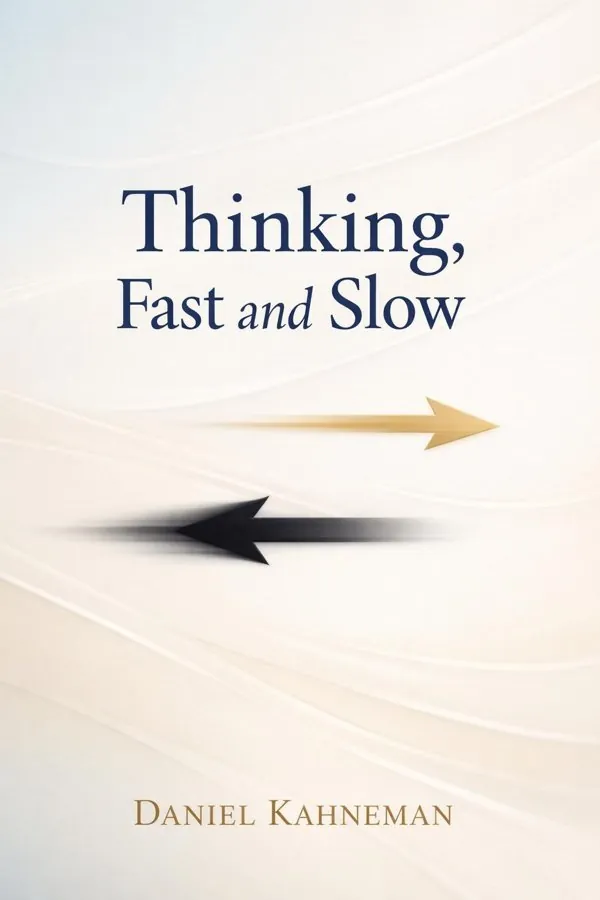
Thinking Fast and Slow
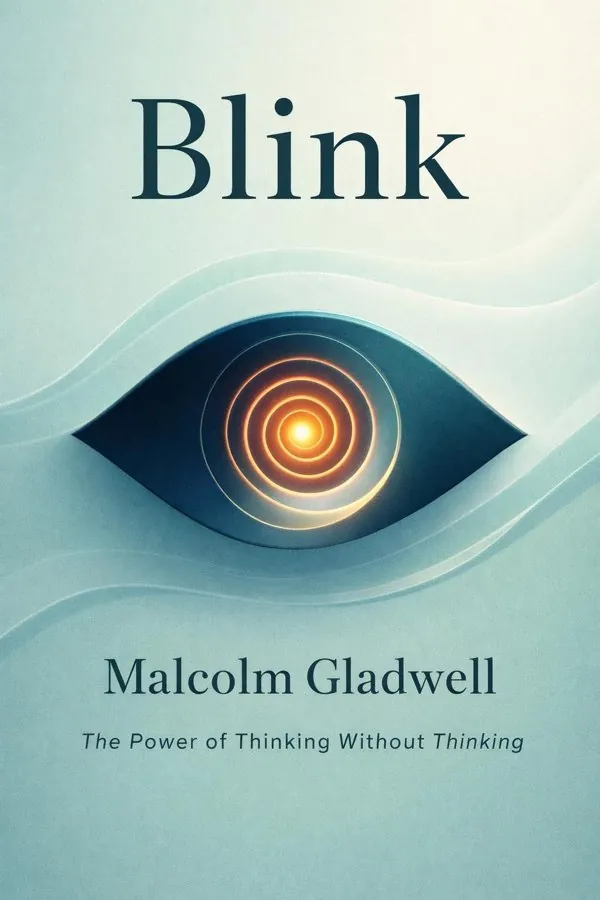
Blink
In-Depth Analysis
Daniel Kahneman’s 'Thinking, Fast and Slow' and Malcolm Gladwell’s 'Blink' both explore the mechanisms of human decision-making, but their methodologies, philosophical underpinnings, and practical implications diverge in significant ways.
Kahneman’s work is rooted in decades of experimental psychology. His central thesis is the existence of two cognitive systems: System 1, which operates automatically and quickly, and System 2, which is slow, effortful, and logical. Kahneman meticulously demonstrates how System 1’s heuristics—mental shortcuts such as availability or representativeness—can lead to systematic errors. For instance, he recounts the famous 'Linda problem,' where participants ignore statistical base rates in favor of a compelling narrative, illustrating the conjunction fallacy. Kahneman’s analysis is grounded in empirical studies, from prospect theory (which redefined our understanding of risk and value) to the planning fallacy (our chronic underestimation of task completion times). By integrating experimental findings with real-world implications, Kahneman provides a comprehensive architecture of errors, showing not just how but why we deviate from rationality.
In contrast, Gladwell’s 'Blink' is a journalistic inquiry into the power and pitfalls of rapid cognition—what he terms 'thin-slicing.' Gladwell opens with the Getty kouros, a Greek statue whose authenticity baffled experts until a few, relying on gut instinct, sensed something was wrong. This anecdote sets the tone for his exploration of snap judgments, from marriage counselors who can predict divorce after a few minutes of observation, to emergency room doctors who rapidly diagnose heart attacks. Gladwell’s methodology is to weave together psychological research (such as John Gottman’s studies on marital stability) with narrative nonfiction, crafting a narrative that is both engaging and provocative.
The difference in methodological rigor is pronounced. Kahneman’s arguments are heavily footnoted and self-critical; he often points out the limitations of his own findings and the persistent, sometimes intractable nature of cognitive biases. His analysis of overconfidence and the illusion of understanding, for example, critiques our propensity to construct coherent narratives from random events—a process known as hindsight bias. Kahneman’s practical advice is often sobering: while we can sometimes mitigate biases, many are deeply ingrained and resistant to change.
Gladwell, meanwhile, is less focused on scientific caution. He tends to generalize from case studies, highlighting instances where intuition is either miraculous or disastrous. For example, his account of the Amadou Diallo shooting by New York police illustrates how thin-slicing can lead to tragic misjudgments under pressure. Yet, Gladwell also celebrates the power of expertise, as in the case of art experts or seasoned firefighters whose intuition is honed through years of pattern recognition. Gladwell’s approach, while less exhaustive, is highly accessible and often leaves readers feeling empowered to trust—or at least scrutinize—their gut feelings.
Philosophically, Kahneman is fundamentally skeptical of intuition. He systematically demonstrates that while System 1 is indispensable, it is also the source of most cognitive errors. Kahneman’s prospect theory, for example, reveals how people overweight losses relative to gains, leading to irrational risk aversion. His broader message is one of humility: our minds are not built for consistent rationality. Gladwell, on the other hand, is more ambivalent. He acknowledges the dangers of snap judgments, but he also revels in their occasional brilliance. His advice often centers on cultivating the right conditions for intuition to flourish—expertise, reflection, and awareness of context.
The practical implications of each book differ accordingly. 'Thinking, Fast and Slow' is invaluable for professionals in economics, medicine, policy, and management, as it provides a toolkit for identifying and correcting biases. Kahneman’s insights have reshaped fields from public policy to finance, with concepts like loss aversion and anchoring now standard in behavioral economics. 'Blink' is more likely to appeal to those interested in personal development, leadership, or creative fields, where intuition can be both a blessing and a curse. Gladwell’s stories encourage readers to be mindful of when to trust their instincts and when to pause for further analysis.
In summary, both books illuminate the quirks of human cognition, but Kahneman provides a rigorous, research-based framework for understanding and improving judgment, while Gladwell offers a captivating, story-driven exploration of intuition’s possibilities and pitfalls. Readers seeking depth and scholarly insight will find 'Thinking, Fast and Slow' indispensable, while those drawn to accessible, thought-provoking narratives will enjoy 'Blink.'
Side-by-Side Comparison
| Aspect | Thinking Fast and Slow | Blink |
|---|---|---|
| Core Philosophy | Kahneman presents a dual-process model, arguing that human thought is governed by two systems: the fast, intuitive System 1 and the slow, deliberative System 2, emphasizing the pervasive influence of biases in both. | Gladwell focuses on 'thin-slicing,' the capacity to make snap judgments using minimal information, positing that quick thinking can be both powerful and perilous depending on context. |
| Writing Style | Kahneman adopts a measured, academic tone, using detailed explanations, experiments, and technical terms, often pausing to elaborate on underlying psychological principles. | Gladwell writes in a narrative-driven, journalistic style, using storytelling, real-world anecdotes, and engaging case studies to illustrate psychological concepts. |
| Scientific Rigor | Deeply grounded in decades of empirical research, Kahneman meticulously cites experiments, replicable studies, and theoretical frameworks developed with Amos Tversky and others. | While Gladwell references scientific studies, his approach is more selective and less rigorous, often prioritizing compelling stories over methodological depth. |
| Practical Application | Kahneman provides actionable insights for recognizing and mitigating biases in decision-making but often emphasizes the inherent limitations of our cognition. | Gladwell focuses on practical examples where snap judgments either succeed or fail, offering advice on when to trust intuition, though sometimes oversimplifying complex phenomena. |
| Depth of Analysis | Offers comprehensive, nuanced discussions of cognitive processes, systematically dissecting heuristics, biases, and their implications for economics, medicine, and policy. | Touches on various topics through vivid stories but tends to skim the surface, prioritizing breadth and accessibility over analytical depth. |
| Readability | Demands careful reading due to its density and technical language, though Kahneman strives to clarify concepts with examples and summaries. | Highly readable and accessible, Blink is structured to appeal to general audiences with clear language and gripping narratives. |
| Long-term Value | Considered foundational in psychology and behavioral economics, Thinking, Fast and Slow offers enduring frameworks that inform academic and professional practices. | Blink is memorable and thought-provoking but less foundational, serving as an engaging introduction rather than a comprehensive reference. |
| Target Audience | Ideal for readers seeking an in-depth, scientific understanding of cognitive biases and decision-making. | Best suited for those interested in popular psychology and real-world stories that illustrate the power and pitfalls of intuition. |
| Actionability | Empowers readers to spot and mitigate their own cognitive errors through self-reflection and skepticism, though solutions are often complex. | Encourages readers to trust or question their gut instincts based on context, providing practical if sometimes anecdotal guidance. |
Key Differences
Scientific Foundation
'Thinking, Fast and Slow' is based on decades of empirical research and experimental psychology, with Kahneman rigorously citing studies and acknowledging limitations. 'Blink' is rooted in journalistic storytelling, selectively referencing research to support vivid anecdotes.
Depth vs. Accessibility
Kahneman offers a comprehensive, detailed analysis of cognitive processes, while Gladwell prioritizes breadth and readability, making complex ideas accessible through engaging narratives.
View on Intuition
Kahneman is skeptical of intuition, showing it as a frequent source of error unless grounded in expertise. Gladwell adopts a more ambivalent stance, illustrating both the brilliance and dangers of snap judgments.
Practical Guidance
'Thinking, Fast and Slow' provides nuanced, research-based strategies for improving decision-making, though often emphasizing the difficulty of overcoming biases. 'Blink' offers practical, story-based advice on when to trust or question gut feelings.
Intended Audience
Kahneman writes for an audience seeking academic rigor and depth, including professionals and students. Gladwell targets a general audience curious about psychology and real-world applications.
Use of Examples
Kahneman primarily uses controlled experiments and statistical data, such as the 'Linda problem' or prospect theory. Gladwell illustrates his points with real-life cases, like the Getty kouros or police decision-making under pressure.
Long-term Reference Value
'Thinking, Fast and Slow' serves as a foundational text in behavioral sciences, often cited in research and academic contexts. 'Blink' is a memorable introduction but less likely to be used as a reference in scholarly or professional settings.
Who Should Read Which?
The Busy Professional
→ Blink
With its fast-paced narratives and actionable insights, 'Blink' is ideal for professionals seeking quick, practical takeaways on intuition and decision-making without delving into dense academic theory.
The Analytical Thinker
→ Thinking, Fast and Slow
Analytical readers or those in academic, scientific, or policy-related fields will appreciate Kahneman’s rigorous exploration of cognitive biases, offering frameworks that can be directly applied to complex decision-making tasks.
The Curious Generalist
→ Both
Readers who enjoy connecting ideas across disciplines should start with 'Blink' for narrative context and then move to 'Thinking, Fast and Slow' to deepen their understanding, benefiting from both accessibility and scholarly depth.
Which Should You Read First?
For readers with little background in psychology, starting with 'Blink' is advantageous. Gladwell’s storytelling eases the reader into the complexities of intuition, providing memorable case studies that illustrate the stakes of rapid decision-making. This creates a strong conceptual foundation and piques curiosity about how our minds work. Once familiar with the basic ideas, transitioning to 'Thinking, Fast and Slow' allows readers to deepen their understanding, engaging with the scientific details and frameworks that underpin the phenomena Gladwell describes. For students or professionals in psychology, economics, or policy, beginning with Kahneman provides the theoretical rigor and empirical grounding necessary to critically evaluate popular accounts like Gladwell’s. However, even these readers may find value in Gladwell’s real-world stories as illustrations of concepts explored in greater depth by Kahneman. Ultimately, reading both books—starting with 'Blink' for accessibility, then 'Thinking, Fast and Slow' for depth—offers a balanced and comprehensive understanding.
Want the full summary?
Get instant access to this book summary and 100K+ more with Fizz Moment.
Get Free SummaryAvailable on App Store • Free to download
Frequently Asked Questions
Is 'Thinking, Fast and Slow' better than 'Blink' for beginners in psychology?
'Blink' is generally more approachable for beginners due to its engaging, narrative-driven style and minimal use of technical jargon. 'Thinking, Fast and Slow,' while foundational, is denser and assumes some familiarity with psychological concepts, making it better suited for readers willing to engage deeply with the material. Beginners seeking a comprehensive introduction to cognitive science may find Gladwell’s book a gentler entry point.
Which book offers more practical strategies for decision-making: 'Thinking, Fast and Slow' or 'Blink'?
'Thinking, Fast and Slow' offers more scientifically grounded strategies for recognizing and mitigating biases, though the solutions can be complex and require sustained effort. 'Blink' provides practical examples of when to trust or question your intuition, but its advice is more anecdotal and less systematic. For actionable, research-based guidance, Kahneman's work is more robust.
Does 'Blink' oversimplify the science compared to 'Thinking, Fast and Slow'?
Yes, 'Blink' tends to simplify complex psychological phenomena in order to make them accessible and engaging for a broad audience. Gladwell relies heavily on stories and illustrative cases, sometimes glossing over methodological nuances that Kahneman emphasizes. While this makes 'Blink' entertaining and memorable, it may sacrifice scientific precision.
Which book is more suitable for professionals in business or policy: 'Thinking, Fast and Slow' or 'Blink'?
'Thinking, Fast and Slow' is generally more suitable for professionals in business, policy, or analytics, as it offers a rigorous foundation in cognitive biases and decision theory, supported by empirical research. Its frameworks are directly applicable to fields like economics, management, and policy analysis. 'Blink,' while insightful, is better for those seeking a general appreciation of intuition in action.
How do the authors' backgrounds influence their approach in each book?
Kahneman is a Nobel Prize-winning psychologist whose academic rigor is evident in his meticulous documentation of experiments and theoretical models. His scientific background leads to a cautious, evidence-based approach. Gladwell, as a journalist and storyteller, prioritizes accessibility and narrative impact, drawing on a wide range of anecdotes and real-world cases to make psychological insights relatable.
Can 'Blink' and 'Thinking, Fast and Slow' be read together for a fuller understanding of intuition?
Absolutely. Reading both books provides a well-rounded perspective: 'Blink' introduces the excitement and nuance of intuition through engaging stories, while 'Thinking, Fast and Slow' offers the scientific foundation necessary to critically evaluate when intuition can be trusted. Together, they balance accessibility with depth.
The Verdict
Both 'Thinking, Fast and Slow' and 'Blink' are valuable contributions to our understanding of the mind, but they serve distinct audiences and purposes. Kahneman’s book is the definitive resource for readers seeking an in-depth, scientifically rigorous exploration of cognitive biases and dual-process theory. Its frameworks have become foundational in psychology, behavioral economics, and policy, making it indispensable for students, professionals, and anyone looking to critically examine their own thinking. However, its academic tone and density may pose a challenge for casual readers. Gladwell’s 'Blink,' on the other hand, excels as an accessible, narrative-driven introduction to the power and pitfalls of rapid cognition. Its compelling stories and clear language make it ideal for readers new to psychology or those seeking practical insights into everyday decision-making. While it lacks the scientific rigor and depth of Kahneman’s work, it succeeds in sparking curiosity and encouraging self-reflection. In summary, choose 'Thinking, Fast and Slow' for comprehensive insight and long-term value, especially if you have an academic or professional interest in decision science. Opt for 'Blink' if you prefer engaging stories and immediate, relatable examples of intuition in action. Ideally, read both to gain a nuanced understanding of the strengths and limits of intuition and rationality.
Related Comparisons

Want to read both books?
Get AI-powered summaries of both Thinking Fast and Slow and Blink in just 20 minutes total.