
Thinking Fast and Slow vs Emotional Intelligence: Which Should You Read?
A detailed comparison of Thinking Fast and Slow by Daniel Kahneman and Emotional Intelligence by Daniel Goleman. Discover the key differences, strengths, and which book is right for you.
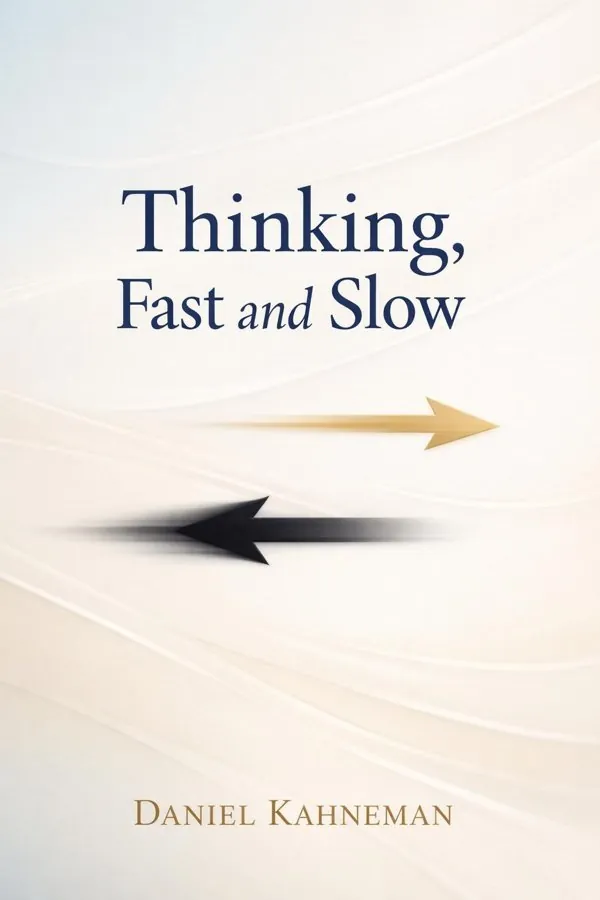
Thinking Fast and Slow
Emotional Intelligence
In-Depth Analysis
Daniel Kahneman’s 'Thinking Fast and Slow' and Daniel Goleman’s 'Emotional Intelligence' have both profoundly shaped popular and academic understandings of psychology, yet they diverge significantly in scope, methodology, and aims. Kahneman’s treatise is a meticulous dissection of the dual-process theory of cognition. He introduces readers to the interplay between System 1 (fast, intuitive, and automatic) and System 2 (slow, deliberate, and logical), anchoring his arguments in decades of experimental data. For example, Kahneman explores how heuristics like the availability heuristic or anchoring bias lead us astray in everyday judgments—such as overestimating the frequency of plane crashes after hearing about one in the news. The book’s structure mirrors its content: rigorous, systematic, and sometimes challenging, with each chapter building methodically on the last. Kahneman’s reliance on empirical evidence, including his Nobel-winning work on Prospect Theory (which describes how people perceive gains and losses asymmetrically), cements the book’s credibility among scholars and practitioners alike.
In contrast, Goleman’s 'Emotional Intelligence' expands the conversation beyond cognition into the realm of emotion and social interaction. Goleman synthesizes findings from neuroscience, developmental psychology, and organizational behavior to construct the Emotional Competence Framework. He argues that five core skills—self-awareness, self-regulation, motivation, empathy, and social skills—are at least as important as IQ for success, especially in leadership and management. Goleman’s prose is accessible and narrative-driven; he relays stories of effective leaders, troubled employees, and classroom interventions, making his points vivid and relatable. While Goleman references psychological studies, his synthesis often moves quickly from data to actionable advice, such as recommending regular self-reflection or empathy-building exercises in the workplace. This makes the book especially valuable for readers seeking personal and professional growth.
Methodologically, Kahneman grounds his conclusions in tightly controlled experiments, often involving clever manipulations to reveal hidden biases—such as the famous 'Linda problem,' which exposes errors in probabilistic reasoning. He is careful to highlight the limitations of intuition and the persistence of errors even among experts, cautioning against overconfidence. Goleman, on the other hand, is more interpretative, drawing links between disparate fields and offering frameworks that, while research-based, sometimes lack the granular evidentiary support of Kahneman’s claims. For instance, Goleman’s assertion that EQ is a stronger predictor of leadership success than IQ is supported by research but is also embedded in broader, sometimes anecdotal, narratives.
Philosophically, the books differ in their views on human nature and potential for change. Kahneman adopts a somewhat skeptical stance, emphasizing the stubbornness of cognitive errors and the difficulty of overcoming innate biases. He proposes that recognizing these limitations is itself an achievement but is modest about individuals’ capacity for transformation. Goleman is more optimistic: by developing self-awareness, empathy, and other EQ skills, individuals can radically improve their relationships, well-being, and workplace performance. This difference shapes the books’ practical implications. Kahneman’s work is best seen as a diagnostic lens for critical thinking, invaluable for those seeking to avoid error in high-stakes decisions—such as policy-makers, economists, or scientists. Goleman’s book, by contrast, is a manual for personal growth and leadership, widely adopted in business schools and HR departments.
Both books have enduring influence. 'Thinking Fast and Slow' is routinely cited in academic literature and has spurred further research in behavioral economics and cognitive psychology. Its concepts, such as loss aversion and framing effects, have entered the public lexicon. 'Emotional Intelligence' has catalyzed a movement in education and management, with schools and corporations developing curricula and training programs based on Goleman’s framework. Readers looking for rigorous, data-driven insights into decision-making will find Kahneman indispensable, while those aiming to enhance their emotional and social effectiveness will benefit most from Goleman’s practical wisdom.
Side-by-Side Comparison
| Aspect | Thinking Fast and Slow | Emotional Intelligence |
|---|---|---|
| Core Philosophy | Kahneman's core philosophy centers on the dual-system model of cognition, highlighting the interplay between fast, automatic thinking (System 1) and slow, effortful reasoning (System 2). He posits that much of human error stems from the dominance of intuitive over analytical processes. | Goleman’s philosophy emphasizes the centrality of emotional intelligence (EQ) as a determinant of success and well-being. He argues that self-awareness, empathy, and social skills are crucial for personal growth and effective leadership, often outweighing raw cognitive ability. |
| Writing Style | Kahneman adopts a rigorous, academic tone, weaving complex psychological experiments with real-world examples. His prose is methodical and precise, often requiring close attention to grasp nuanced arguments. | Goleman writes in a more accessible, narrative-driven style, using anecdotes and workplace scenarios to illustrate concepts. His approach is conversational, making the material approachable for a broad audience. |
| Practical Application | Practical implications are subtly embedded, with a focus on helping readers recognize and mitigate cognitive biases in decision-making. The book is more diagnostic than prescriptive, inviting self-reflection rather than offering step-by-step solutions. | Goleman provides actionable frameworks, such as the Emotional Competence Framework, and concrete strategies for developing EQ skills. His guidance is explicitly geared toward self-improvement and organizational effectiveness. |
| Target Audience | Aimed at readers interested in psychology, behavioral economics, and critical thinking, including academics, professionals, and policy-makers. | Targeted toward business leaders, managers, educators, and anyone seeking to improve interpersonal effectiveness and leadership through emotional skills. |
| Scientific Rigor | Rooted in decades of empirical research, Kahneman meticulously cites experiments, statistical data, and theoretical models, such as Prospect Theory and the heuristics-and-biases tradition. | While grounded in psychological research, Goleman’s arguments often synthesize studies into broader themes and frameworks, making some claims more interpretative and less empirically granular. |
| Emotional Impact | The book is intellectually stimulating but emotionally detached, prompting readers to challenge their assumptions rather than engage their feelings. | Goleman’s work is designed to resonate emotionally, encouraging readers to reflect on their feelings, relationships, and self-awareness. |
| Actionability | Kahneman offers tools for critical self-examination but less in the way of actionable steps; the value lies in heightened awareness of mental pitfalls. | Goleman provides clear pathways for developing EQ competencies, with actionable advice for both individual and organizational growth. |
| Depth of Analysis | Delves deeply into the mechanics of human judgment, employing detailed case studies and experiments to dissect the roots of cognitive biases. | Explores the facets of emotional intelligence comprehensively, but with less experimental detail and more focus on synthesis and practical relevance. |
| Readability | Dense and conceptually challenging, requiring sustained attention and prior familiarity with psychological terminology. | Highly readable and engaging, suitable for readers of all backgrounds, including those with little prior exposure to psychology. |
| Long-term Value | Offers enduring insights into human cognition, frequently cited in academia and influential across multiple disciplines. | Valuable for ongoing personal and professional development, with frameworks that can be repeatedly revisited and applied. |
Key Differences
Theoretical Focus
Kahneman focuses on cognitive processes—how people think, perceive, and make decisions, primarily via the dual-system model. Goleman explores the role of emotions, emphasizing how emotional competencies drive personal and professional success.
Methodology
'Thinking Fast and Slow' is grounded in laboratory experiments and quantitative studies, describing specific research designs and results. 'Emotional Intelligence' is based on a synthesis of research and practical observation, with less emphasis on experimental detail.
Writing Style
Kahneman’s style is academic and analytical, requiring close attention and some background knowledge. Goleman writes in a narrative, accessible style, making his concepts easy to absorb for a wide audience.
Practical Orientation
'Emotional Intelligence' offers clear, actionable frameworks and advice for skill development, particularly in leadership and interpersonal relationships. 'Thinking Fast and Slow' is more diagnostic, aiming to foster awareness of cognitive biases rather than prescribing concrete steps.
Emotional Engagement
Goleman seeks to engage readers emotionally, prompting self-reflection and empathy. Kahneman maintains a detached, intellectual tone, focusing on understanding rather than emotional resonance.
Target Audience
Kahneman’s book is suited for those interested in psychology, economics, and scientific reasoning. Goleman’s audience is broader, encompassing business professionals, educators, and anyone invested in emotional growth.
Enduring Influence
'Thinking Fast and Slow' is a core text in cognitive psychology and behavioral economics. 'Emotional Intelligence' has profoundly shaped education, leadership, and organizational training programs.
Who Should Read Which?
The Busy Professional
→ Emotional Intelligence
This reader needs actionable advice and frameworks to enhance workplace effectiveness and leadership. Goleman’s practical strategies for self-management, empathy, and social skills directly address the challenges faced by professionals in dynamic environments.
The Analytical Thinker
→ Thinking Fast and Slow
Someone who enjoys dissecting complex problems and understanding the roots of human error will appreciate Kahneman’s data-driven, systematic exploration of cognitive biases and decision-making processes.
The Lifelong Learner
→ Both
A reader eager to develop both intellectual insight and emotional competence will benefit from the empirical rigor of 'Thinking Fast and Slow' and the practical wisdom of 'Emotional Intelligence.' Together, they offer a holistic understanding of human behavior.
Which Should You Read First?
For readers with no background in psychology, starting with 'Emotional Intelligence' is advisable. Goleman’s approachable style, relatable anecdotes, and actionable frameworks provide an engaging introduction to understanding emotions and their impact on personal and professional life. This foundational perspective on self-awareness and social interaction can be immediately applied and appreciated by beginners or those seeking self-improvement. Once comfortable with psychological concepts, readers can progress to 'Thinking Fast and Slow.' Kahneman’s book demands more focus and analytical engagement but rewards the effort with deep insights into the mechanics of thought, judgment, and decision-making. For readers with an academic or analytical background, the order can be reversed—beginning with Kahneman for a rigorous foundation in cognitive science before expanding into the applied world of emotional intelligence. Ultimately, both books are complementary, but the optimal sequence depends on the reader’s familiarity with psychology and their primary goals.
Want the full summary?
Get instant access to this book summary and 100K+ more with Fizz Moment.
Get Free SummaryAvailable on App Store • Free to download
Frequently Asked Questions
Is 'Thinking Fast and Slow' better than 'Emotional Intelligence' for beginners in psychology?
'Emotional Intelligence' is generally more accessible for beginners. Daniel Goleman uses clear language, engaging anecdotes, and practical examples, making complex ideas easy to grasp even without a background in psychology. In contrast, 'Thinking Fast and Slow' delves deeply into experimental research and cognitive theory, requiring more concentration and some familiarity with psychological concepts. Beginners interested in understanding emotions and social dynamics may find Goleman’s book a more approachable entry point.
Which book is more useful for business leaders: 'Thinking Fast and Slow' or 'Emotional Intelligence'?
Business leaders will likely find 'Emotional Intelligence' more directly applicable. Goleman’s book is tailored to professional environments, with frameworks for leadership, teamwork, and workplace effectiveness. He provides actionable advice on cultivating self-awareness, empathy, and communication skills critical for management. While Kahneman’s insights into bias and decision-making are valuable for strategic thinking, Goleman’s focus on interpersonal skills aligns more closely with the daily challenges faced by leaders.
How do the methodologies of 'Thinking Fast and Slow' and 'Emotional Intelligence' differ?
'Thinking Fast and Slow' is rooted in experimental psychology, with Kahneman meticulously describing studies, statistical analyses, and theoretical models like Prospect Theory. The book often presents specific experiments and their implications for human judgment. 'Emotional Intelligence,' by contrast, synthesizes findings from diverse fields and emphasizes frameworks for personal development. Goleman relies more on illustrative anecdotes and accessible summaries of research, focusing on actionable skills rather than experimental detail.
Can 'Thinking Fast and Slow' help improve emotional intelligence?
While 'Thinking Fast and Slow' does not directly address emotional intelligence, it can indirectly support its development by fostering greater self-awareness of cognitive biases and errors in judgment. Understanding the mechanisms of fast and slow thinking can help readers recognize when emotions may be influencing their decisions. However, for targeted strategies to develop EQ, Goleman’s 'Emotional Intelligence' offers a more comprehensive and practical approach.
For someone interested in self-improvement, which book offers more actionable advice?
'Emotional Intelligence' is more actionable for self-improvement. Goleman provides explicit steps and exercises for developing self-awareness, self-regulation, and social skills, making it easy for readers to implement changes. 'Thinking Fast and Slow' is more diagnostic, highlighting the pitfalls of human cognition but offering fewer direct strategies for change. Readers seeking clear guidance and practical tools will benefit more from Goleman’s book.
Are there significant overlaps between 'Thinking Fast and Slow' and 'Emotional Intelligence'?
Although both books explore human behavior and the limits of rationality, their focus areas are distinct. Kahneman examines the cognitive architecture of decision-making, emphasizing biases and heuristics, while Goleman centers on the role of emotions in personal and professional success. Some overlap exists in their mutual recognition of non-rational influences on behavior, but their frameworks, examples, and applications are largely complementary rather than redundant.
The Verdict
Both 'Thinking Fast and Slow' and 'Emotional Intelligence' are foundational texts, but their best audiences and use cases differ significantly. Kahneman’s book is indispensable for readers fascinated by the mechanics of thought, judgment, and decision-making. Its rigorous exploration of cognitive biases, heuristics, and the limitations of rationality is ideal for students, scholars, analysts, and professionals in fields such as behavioral economics, policy-making, and science who seek to sharpen their critical thinking and avoid mental pitfalls. Goleman’s 'Emotional Intelligence,' on the other hand, is a practical handbook for personal and organizational development. Its engaging narrative and actionable frameworks are especially valuable for business leaders, managers, educators, and anyone aiming to enhance their interpersonal skills and emotional awareness. The book’s accessibility makes it suitable for general readers and those new to psychology. In summary, those looking for deep, empirical insights into how we think should prioritize 'Thinking Fast and Slow.' Readers seeking to improve self-management, relationships, and leadership capabilities will gain more from 'Emotional Intelligence.' Many will benefit from reading both, but the optimal choice depends on whether your primary interest lies in cognitive science or emotional and social skills.
Related Comparisons

Want to read both books?
Get AI-powered summaries of both Thinking Fast and Slow and Emotional Intelligence in just 20 minutes total.