
Blink vs The Wager: Which Should You Read?
A detailed comparison of Blink by Malcolm Gladwell and The Wager by David Grann. Discover the key differences, strengths, and which book is right for you.
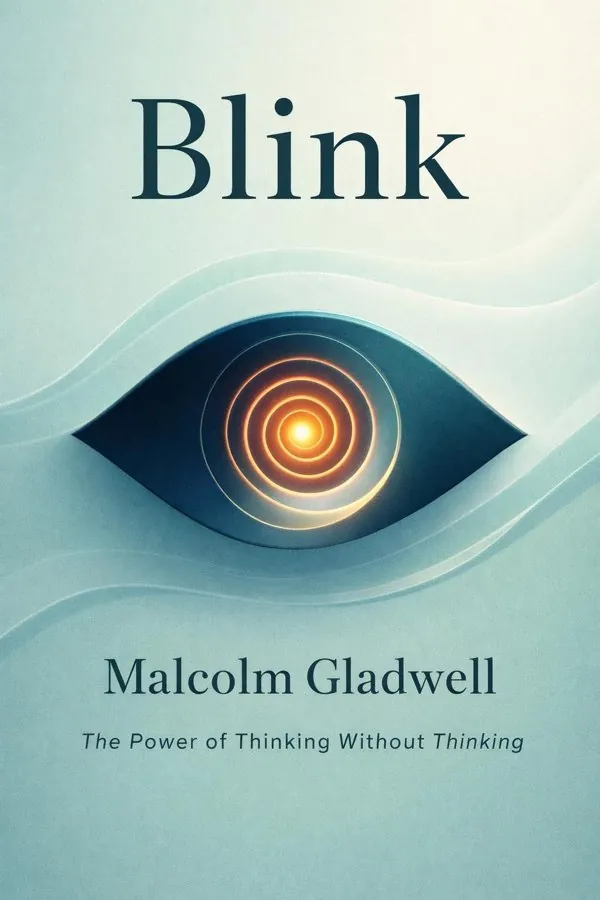
Blink
The Wager
In-Depth Analysis
At first glance, Malcolm Gladwell’s "Blink" and David Grann’s "The Wager" seem to belong to entirely different branches of nonfiction. One is a popular psychology book about rapid cognition; the other is a historical narrative about shipwreck, mutiny, and imperial collapse. Yet both are, at a deeper level, books about judgment under pressure. They ask what people perceive in high-stakes moments, how they interpret incomplete evidence, and why some decisions become enduringly persuasive even when they are deeply flawed. The difference lies in scale and method: Gladwell turns scattered case studies into a theory of intuition, while Grann takes one catastrophic voyage and turns it into a study of survival, authority, and contested truth.
"Blink" is concept-driven. Its most famous early case, the allegedly ancient Greek kouros statue purchased by the J. Paul Getty Museum, sets the tone perfectly. Scientific testing and prolonged analysis suggested authenticity, yet a few experts felt at once that something was wrong. Gladwell uses this to introduce “thin-slicing,” the mind’s ability to extract meaningful patterns from very small amounts of information. Throughout the book, he builds variations on that idea: emergency room physicians using fast rules to diagnose heart attacks; marriage researcher John Gottman predicting relationship outcomes from brief observations; the dangers of implicit bias shaping split-second responses. The book’s real strength is its paradoxical argument that instinct is not the opposite of intelligence. In the best cases, it is compressed expertise.
"The Wager," by contrast, is narrative-driven. It reconstructs the disastrous 1741 voyage of a British warship sent as part of a larger imperial mission against Spain. After rounding Cape Horn under brutal conditions, the ship wrecked off the coast of Patagonia, leaving survivors to confront starvation, factional struggle, and the collapse of naval hierarchy. Grann’s genius is to make the historical archive feel unstable and alive. Different groups of survivors return to Britain with conflicting stories: some depict themselves as heroic loyalists, others portray rivals as mutineers or tyrants. The result is not just a survival narrative but an investigation into how official truth gets made. If "Blink" studies immediate judgment at the level of the individual mind, "The Wager" shows judgment as a political and institutional process, shaped by power, rhetoric, and legal procedure.
Their difference in emotional register is striking. Gladwell wants the reader to experience surprise and recognition. You finish a chapter of "Blink" thinking, “I never realized how much information first impressions contain,” or, just as often, “I never realized how vulnerable I am to unconscious distortion.” The chapter on the “Warren Harding error,” for example, reveals how appearance can trick people into attributing competence, dignity, or leadership to someone who merely looks the part. The emotional effect is subtle but unsettling: the reader becomes suspicious of both confidence and intuition, even as the book asks us to respect skilled snap judgment.
Grann aims for immersion rather than conceptual shock. In "The Wager," readers feel cold, hunger, fear, and escalating mistrust. The body matters constantly: rotting supplies, weakening men, impossible weather, and the physical degradation that strips discipline from naval order. That embodied suffering gives the book moral weight. Leadership is not discussed abstractly; it is tested amid scarcity and terror. When command breaks down, the consequences are immediate and brutal. This makes Grann’s book more emotionally intense and, for many readers, more memorable on a visceral level.
In terms of evidence, the books are rigorous in different ways. Gladwell synthesizes psychology, neuroscience, and anecdotal reporting for a broad audience. He is brilliant at popularization, but his method depends on selecting illustrative cases that crystallize a point. That makes "Blink" highly readable, but occasionally vulnerable to overgeneralization. A reader looking for nuanced treatment of research design or scholarly debate will find the book stimulating rather than definitive.
Grann’s rigor is archival. He works through logs, depositions, naval records, and later testimony, showing where accounts converge and where they diverge. This method gives "The Wager" a built-in complexity that resists neat moral simplification. Was a particular officer preserving discipline or abusing authority? Was a survivor loyal or opportunistic? Grann does not merely recount events; he demonstrates how historical truth emerges from contested and self-interested narratives. That makes his book feel more durable as history, even if it is less directly prescriptive than Gladwell’s work.
The practical difference between them is also important. "Blink" invites immediate application. It affects how one thinks about interviews, consumer preferences, emergency judgments, and social bias. A manager can read it and reconsider whether long hiring processes really outperform expert intuition; a clinician can reflect on whether simple heuristics can cut through informational overload. "The Wager" offers no such compact lessons, but it repays reflection in deeper ways. It is valuable for readers interested in how groups fracture, how legitimacy is sustained, and how institutions decide whom to believe.
Ultimately, these books serve different reading appetites. "Blink" is for readers who want an intellectual framework they can carry into daily life. "The Wager" is for readers who want a gripping true story that opens into larger questions about empire, law, and human nature. If Gladwell teaches that judgments made in a blink can be brilliant or disastrous, Grann shows what happens when those judgments are enforced through hierarchy, contested in public, and remembered by history. Together, they form an unexpectedly rich pairing: one maps the psychology of rapid decision-making, and the other dramatizes the consequences when such decisions unfold in the harshest possible world.
Side-by-Side Comparison
| Aspect | Blink | The Wager |
|---|---|---|
| Core Philosophy | "Blink" argues that fast thinking can be astonishingly powerful when it is shaped by expertise, pattern recognition, and carefully filtered information. Gladwell’s central claim is not that intuition is always right, but that snap judgments can outperform deliberation under the right conditions. | "The Wager" is fundamentally about survival, authority, and the instability of truth under extreme conditions. Grann uses the 1741 wreck of HMS Wager and its aftermath to show how competing narratives, imperial ambition, and human desperation shape what societies accept as fact. |
| Writing Style | Gladwell writes in a brisk, idea-driven, highly accessible style built from anecdotes, case studies, and provocative claims. Chapters often pivot from one surprising example to another, creating momentum through conceptual revelation. | Grann writes with the pacing of narrative history and the suspense of literary journalism. He reconstructs scenes, personalities, and conflicts in a vivid, cinematic manner, making the book read like an adventure story grounded in archival research. |
| Practical Application | "Blink" has direct application to hiring, policing, medicine, consumer choice, and interpersonal judgment. Readers can use its ideas to think more carefully about when to trust first impressions and when to slow down. | "The Wager" is less of a how-to book, but it offers practical insight into leadership failure, group breakdown, crisis behavior, and the politics of testimony. Its lessons are indirect yet valuable for anyone studying institutions, command, or human behavior under stress. |
| Target Audience | This book is ideal for general nonfiction readers, psychology enthusiasts, managers, and people interested in decision-making. It especially appeals to readers who enjoy big ideas presented without heavy technical language. | This book suits readers of narrative nonfiction, maritime history, survival stories, and imperial history. It is particularly strong for those who want a deeply reported true story rather than a concept-led argument. |
| Scientific Rigor | "Blink" draws on psychology and cognitive science, including thin-slicing, implicit bias, and rapid cognition, but it is written as popular synthesis rather than formal scholarship. Some of its claims are memorable and suggestive, though critics have noted that Gladwell can simplify complex research for narrative effect. | "The Wager" is rigorous in a different way: its authority comes from archival documents, naval records, court-martial proceedings, and conflicting eyewitness accounts. Rather than presenting scientific findings, Grann demonstrates evidentiary rigor through historical reconstruction and source comparison. |
| Emotional Impact | The emotional force of "Blink" comes from surprise, unease, and self-recognition, especially when Gladwell shows how prejudice or overconfidence can distort instant judgments. It is intellectually stimulating more than emotionally immersive. | "The Wager" carries far greater visceral intensity, with shipwreck, starvation, mutiny, violence, and moral collapse driving the narrative. Readers feel fear, desperation, and the instability of loyalty in ways that make the book deeply affecting. |
| Actionability | Although not a step-by-step manual, "Blink" gives readers immediately usable frameworks: trim irrelevant information, respect trained intuition, and beware of bias in first impressions. Its examples from emergency medicine and art authentication translate readily into real-life reflection. | "The Wager" offers fewer explicit tools, but it sharpens judgment about leadership, credibility, and decision-making under extreme uncertainty. The actionability is interpretive rather than procedural, emerging from reflection on failure rather than direct advice. |
| Depth of Analysis | Gladwell covers a wide range of cases, from the kouros statue to the Warren Harding effect, often prioritizing conceptual breadth over sustained depth in any single case. The analytical payoff lies in cross-case patterning rather than exhaustive treatment. | Grann goes much deeper into a single episode, examining not only the wreck itself but also the social hierarchy aboard ship, the rival survivor accounts, and the political stakes of the court-martial. Its depth comes from immersion and layered context. |
| Readability | "Blink" is extremely readable, with short sections, memorable hooks, and clean prose that makes abstract cognition feel intuitive. It is easy to dip into and discuss chapter by chapter. | "The Wager" is also highly readable, but in a more sustained narrative mode that rewards continuous reading. Its complexity is still approachable because Grann controls suspense and exposition with great skill. |
| Long-term Value | The book remains valuable as a vocabulary-builder for thinking about intuition, bias, and expertise, even if some examples feel tied to early-2000s pop psychology. Its phrases and frameworks continue to circulate in business and self-improvement conversations. | "The Wager" has strong long-term value as both a gripping true story and a study in historical ambiguity, empire, and human conduct. Its relevance is likely to endure because it is anchored in a specific event yet raises timeless questions about authority and truth. |
Key Differences
Argument-Driven vs Story-Driven Structure
"Blink" is organized around a central idea—rapid cognition—and each anecdote serves that thesis. "The Wager" unfolds as a chronological narrative, where meaning accumulates through events like the wreck, the survivor factions, and the later court-martial.
Everyday Cognition vs Extreme Survival
Gladwell focuses on situations that map onto modern life: hiring, medicine, dating, policing, and first impressions. Grann places readers in extraordinary circumstances where starvation, isolation, and collapsing discipline expose human nature under maximum pressure.
Psychological Insight vs Historical Reconstruction
"Blink" aims to explain how the mind works, often using cases such as the Getty kouros or the Warren Harding effect to reveal hidden mental processes. "The Wager" aims to reconstruct what happened and why accounts differed, using archival evidence rather than cognitive theory.
Immediate Usefulness vs Reflective Wisdom
Readers can apply "Blink" almost immediately by rethinking when to trust intuition and when to question bias. "The Wager" is less directly transferable, but it offers deeper reflection on authority, loyalty, leadership failure, and the making of official truth.
Popular Science Tone vs Literary Journalism Tone
Gladwell writes with the smooth confidence of a master explainer, distilling research into digestible insights. Grann writes with scene-building, tension, and documentary texture, making the book feel closer to a historical thriller than a conceptual essay collection.
Breadth of Cases vs Depth of Single Event
"Blink" ranges widely across disciplines and examples, prioritizing pattern recognition across many domains. "The Wager" goes deep into one event, allowing for richer character development, moral ambiguity, and a fuller sense of context.
Who Should Read Which?
The curious professional interested in psychology, management, or self-improvement
→ Blink
"Blink" offers immediately discussable ideas about first impressions, expertise, and unconscious bias that connect naturally to workplace and daily life decisions. Its examples in medicine, interpersonal judgment, and rapid assessment make it especially appealing to readers who want concepts they can apply right away.
The narrative nonfiction reader who loves suspense, survival, and history
→ The Wager
"The Wager" delivers a gripping true story with the pacing of a thriller and the substance of serious history. Readers who enjoy immersive scenes, moral ambiguity, and the unraveling of authority under extreme conditions will find it far more satisfying than a concept-led book.
The interdisciplinary reader interested in human behavior from both psychological and historical angles
→ Blink
Start with "Blink" because it provides a vocabulary for thinking about rapid judgment, filtering, and error that can later be tested against more complex real-world narratives. It is the better foundation text, even if such readers should ultimately read "The Wager" as the richer case study in human conduct under pressure.
Which Should You Read First?
Read "Blink" first if you want the cleaner conceptual entry point. It is shorter in feel, more modular, and easier to absorb in bursts. Starting with Gladwell gives you a framework for thinking about intuition, bias, expertise, and judgment under pressure. That framework can actually enrich your reading of "The Wager," because Grann’s book is full of moments where leaders and survivors must act with limited information, form impressions quickly, and defend those choices later. Then move to "The Wager" for the deeper, more immersive experience. After the abstract and anecdotal approach of "Blink," Grann’s book shows what judgment looks like when the stakes are not professional embarrassment or analytical error but starvation, mutiny, and death. In that order, the books complement each other well: first the theory of human judgment, then the lived catastrophe that tests it. If, however, you are primarily a story reader and not especially interested in psychology, you could reverse the order. For most readers, though, "Blink" first and "The Wager" second creates the richer progression.
Want the full summary?
Get instant access to this book summary and 100K+ more with Fizz Moment.
Get Free SummaryAvailable on App Store • Free to download
Frequently Asked Questions
Is Blink better than The Wager for beginners?
"Blink" is generally the better starting point for beginners if your main goal is accessibility and quick intellectual payoff. Gladwell uses short, memorable case studies—the Getty kouros, emergency room triage, first impressions—to explain big ideas without requiring background in psychology. "The Wager" is also readable, but it asks for more sustained attention because it is a layered historical narrative with multiple figures, competing testimonies, and imperial context. If you are new to nonfiction and want a book that immediately sparks discussion about everyday choices, "Blink" is easier to enter. If you prefer story over theory, though, "The Wager" may feel more natural despite its complexity.
Which book is more useful for decision-making: Blink or The Wager?
For direct decision-making, "Blink" is clearly more useful. Its whole structure is designed around how people make judgments quickly, when intuition works, and when bias or bad filtering produces error. Gladwell’s examples in medicine, art authentication, and social perception create frameworks you can actually test against your own habits. "The Wager" is useful in a broader, less immediate sense: it teaches about decision-making under chaos, leadership breakdown, and how people justify their choices afterward. If you want practical insight for work, leadership, or personal judgment, "Blink" is more actionable. If you want to understand the human consequences of decisions in extreme environments, "The Wager" goes deeper.
Is The Wager better than Blink if I want a true story?
Yes, absolutely. "The Wager" is built as a true historical narrative, and its power comes from the unfolding drama of a real shipwreck, survival ordeal, and legal-political aftermath. David Grann reconstructs events through archival evidence, making the book feel immediate while preserving the uncertainty of conflicting accounts. "Blink" uses true stories too, but mainly as illustrative case studies in service of a broader argument about rapid cognition. If you want immersive storytelling, suspense, and character conflict, "The Wager" is the better choice. If you want true stories that illuminate an idea rather than carry a plot, then "Blink" is the better fit.
Which is more scientifically grounded: Blink or The Wager?
This depends on what you mean by “scientifically grounded.” "Blink" engages directly with psychology and cognitive science, especially ideas around thin-slicing, unconscious processing, and bias. However, it is a popular synthesis, not a technical or academic treatment, so it privileges readability and insight over methodological depth. "The Wager" is not scientific in the experimental sense, but it is deeply evidence-based through historical research, ship records, court-martial documents, and eyewitness testimony. So if you want cognitive science concepts, choose "Blink." If you want a more documentary form of rigor, where evidence is weighed and narratives are contested, "The Wager" may actually feel more disciplined.
Should I read Blink or The Wager if I enjoy Malcolm Gladwell-style nonfiction?
If what you like in Malcolm Gladwell is the fast-moving chain of ideas, counterintuitive examples, and broad explanatory claims, then "Blink" is the more natural choice because it is a pure expression of that style. You get concise cases, surprising reversals, and a concept that can be applied to many domains. "The Wager" shares Gladwell’s readability and narrative momentum, but it is much more immersive and less thesis-driven. It does not move by argument so much as by unfolding evidence and tension. Readers who enjoy Gladwell’s clarity but want a richer emotional and historical experience often find "The Wager" an excellent next step.
Which book has more lasting value: Blink or The Wager?
"Blink" has lasting value as a conceptual toolkit. Terms like snap judgment, thin-slicing, and unconscious bias continue to shape how people talk about decision-making, leadership, and perception. Even where some examples feel dated, the book remains influential because it gives readers a durable vocabulary. "The Wager" has lasting value of a different kind: it is tied to one historical event, but its themes—authority, survival, mutiny, and contested truth—are timeless. If you want ideas you can repeatedly apply in modern life, "Blink" may stay more visibly useful. If you want a nonfiction book that will endure as both literature and history, "The Wager" may age better.
The Verdict
These books are excellent, but they succeed in very different ways. "Blink" is the better recommendation for readers who want a compact, idea-rich nonfiction book they can immediately connect to work, relationships, judgment, and self-awareness. Gladwell excels at giving names to mental processes people experience every day but rarely examine carefully. The book is provocative, highly discussable, and often practically useful, especially for readers interested in intuition, expertise, and bias. "The Wager," however, is the stronger recommendation for readers who value narrative power, historical depth, and emotional intensity. David Grann turns a maritime disaster into a profound study of survival, command, credibility, and imperial violence. It offers fewer direct takeaways, but it leaves a deeper imaginative imprint and feels more substantial as a work of nonfiction craft. If you are choosing based on utility, read "Blink." If you are choosing based on storytelling, read "The Wager." If you want the more memorable overall reading experience, "The Wager" probably wins. If you want the book most likely to change how you think in everyday situations, "Blink" has the edge. The ideal answer, though, is to read both: Gladwell gives you the framework for understanding rapid judgment, and Grann shows what those judgments can mean when lives, institutions, and historical reputations are on the line.
Related Comparisons
Want to read both books?
Get AI-powered summaries of both Blink and The Wager in just 20 minutes total.