
Freakonomics vs Blink: Which Should You Read?
A detailed comparison of Freakonomics by Steven Levitt and Blink by Malcolm Gladwell. Discover the key differences, strengths, and which book is right for you.
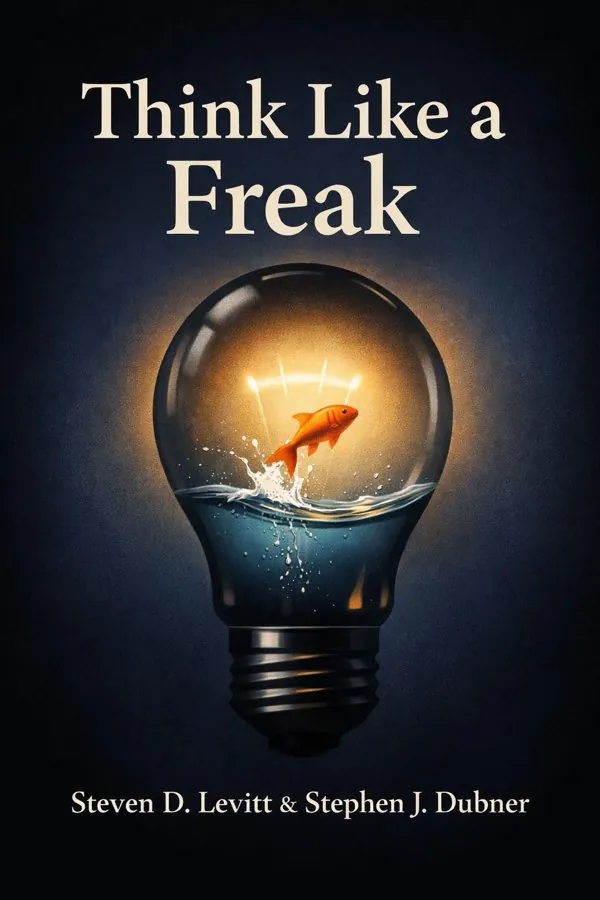
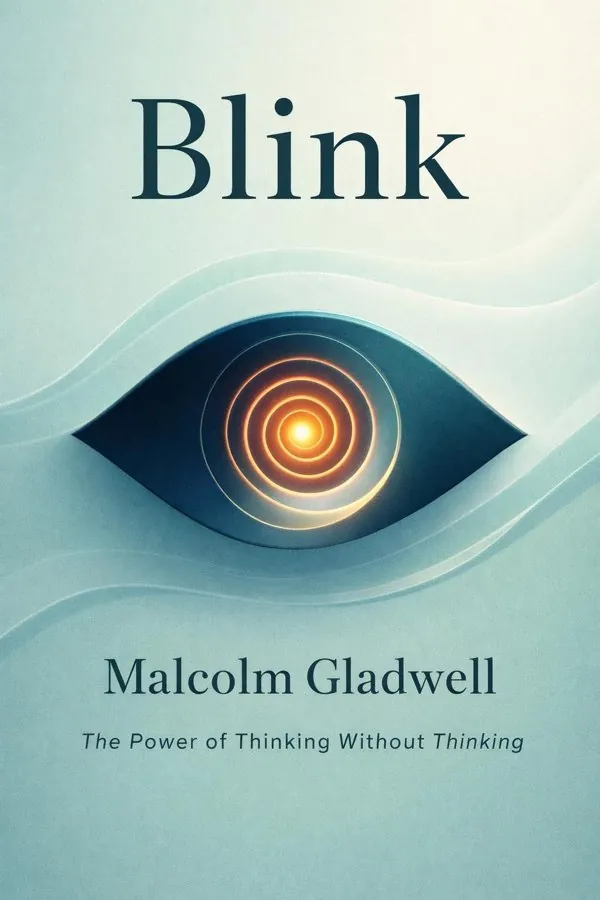
Freakonomics
Blink
In-Depth Analysis
Freakonomics and Blink became popular for a similar reason: both promised access to the hidden machinery behind everyday behavior. Yet they explain that hidden machinery in very different ways. Freakonomics, by Steven Levitt and Stephen J. Dubner, approaches human action from the outside in. It studies incentives, patterns, and measurable outcomes, asking why people behave as they do within systems. Blink, by Malcolm Gladwell, works from the inside out. It studies rapid cognition, intuition, and the unconscious processes that shape judgments before deliberation begins. One book trains the reader to think like a skeptical analyst; the other trains the reader to notice the strange intelligence and danger of first impressions.
The sharpest contrast is methodological. Freakonomics begins with the assumption that social life is full of misleading narratives. If teachers cheat on tests, if crime rates fall unexpectedly, or if certain policies fail, the explanation is rarely the one repeated in public debate. Levitt’s signature move is to ask what incentives are present and what data might reveal the truth. This reflects the book’s emphasis on saying “I don’t know,” resisting moral grandstanding, and identifying the actual problem before proposing solutions. The reader is repeatedly invited to think like a detective: if behavior changes, what reward, punishment, or pressure changed with it?
Blink, by contrast, is less interested in incentives than in perception. Gladwell’s opening example of the supposedly ancient Greek statue authenticated by scientific testing but doubted instantly by experts captures the book’s central claim. Sometimes the mind thin-slices reality faster than explicit analysis can. A connoisseur cannot always articulate why a statue feels wrong, yet that immediate reaction may be more accurate than months of formal examination. This is a powerful idea because it reverses a common prejudice: quick thinking is not always shallow thinking. In domains of expertise, rapid judgment can be condensed wisdom.
But Blink is not a simple celebration of instinct. Gladwell complicates the argument by showing how first impressions can also be poisoned by bias, fear, and context. In chapters on judging people and high-pressure decision-making, he explores the ways snap judgments distort as easily as they illuminate. This is where Blink becomes morally and psychologically richer than a slogan like “trust your gut” would suggest. The real question is not whether intuition is good, but when it is earned and when it is contaminated.
That distinction helps clarify what each book offers practically. Freakonomics is more useful when the problem is systemic. If you want to understand why people cheat in schools, how incentives in workplaces produce unintended outcomes, or why policy often fails, Levitt and Dubner provide a sharper toolkit. Their principle of thinking small is especially important: large social problems often become tractable only when broken into specific, testable components. Instead of asking how to fix education in the abstract, a Freakonomics-style thinker asks what measurable incentives shape teachers, parents, administrators, and students. It is a mode of analysis that scales well to institutions and public life.
Blink is more useful when the problem is decisional and interpersonal. How should a doctor make emergency choices? When should a hiring manager trust a first impression, and when should they distrust it? Why can an expert read a situation instantly while a novice only sees noise? These questions involve not just evidence in the abstract, but the timing, pressure, and structure of judgment itself. Gladwell’s discussion of emergency medicine, for example, illustrates that in fast-moving environments, the goal is not exhaustive analysis but the disciplined use of a few crucial cues. Good rapid cognition depends on selecting the right signals and stripping away irrelevant clutter.
In terms of scientific force, Freakonomics generally feels sturdier. Its arguments are anchored in evidence-seeking and causal reasoning, even if some famous examples have later generated debate. The point is not that every claim is beyond criticism, but that the book teaches readers to ask evidentiary questions. Blink is more vulnerable to criticism because its elegant stories can sometimes seem to outrun the reliability of the science behind them. Still, Gladwell’s gift is synthesis. He turns psychological research into memorable frameworks that readers actually retain, which partly explains the book’s lasting cultural impact.
Stylistically, the books also diverge. Freakonomics is structured around surprises. It wants to shock the reader into intellectual humility by showing that conventional explanations are often wrong. Blink is structured around revelation. It wants the reader to feel the uncanny speed of the mind and to re-evaluate experiences that seemed merely intuitive. Levitt and Dubner can feel cooler, more analytical, even mischievous. Gladwell feels more fluid and narrative, guiding readers through stories that illuminate an abstract concept.
For many readers, the best way to distinguish the books is this: Freakonomics asks, “What hidden incentives and measurable patterns explain behavior?” Blink asks, “What hidden mental processes shape judgments before conscious thought?” The first is stronger on systems, causality, and skepticism. The second is stronger on cognition, expertise, and the ambiguity of instinct.
Ultimately, they complement each other well. Freakonomics guards against naive storytelling by demanding evidence. Blink guards against naive rationalism by showing that not all knowledge is slow and explicit. Read together, they form a useful pair: one teaches you to interrogate the world’s incentives; the other teaches you to interrogate your own perceptions. If you want to become a better analyst of institutions, start with Freakonomics. If you want to become a better observer of judgment, bias, and expertise, start with Blink. Their shared achievement is making invisible processes feel legible without pretending they are simple.
Side-by-Side Comparison
| Aspect | Freakonomics | Blink |
|---|---|---|
| Core Philosophy | Freakonomics argues that the hidden logic of everyday life becomes visible when you follow incentives, distrust conventional wisdom, and use data to ask better questions. Its worldview is investigative: human behavior is often less mysterious than it appears once motives and constraints are uncovered. | Blink argues that snap judgments can contain a form of compressed expertise, and that the mind often knows more than conscious reasoning can articulate. Its core tension is that intuition is both powerful and vulnerable to bias, stress, and misleading first impressions. |
| Writing Style | Levitt and Dubner write in a provocative, puzzle-driven style, moving from surprising questions to counterintuitive explanations. The tone is playful and iconoclastic, often designed to overturn what readers think they already know. | Gladwell writes with a smoother narrative arc, often beginning with a memorable anecdote like the Getty kouros and then widening into psychology and cultural critique. The prose is highly accessible and cinematic, with stories carrying much of the argument. |
| Practical Application | Freakonomics is most useful for readers trying to analyze systems such as schools, crime, incentives at work, or policy design. It teaches a transferable habit of reframing problems and looking for measurable causes rather than immediately offering personal self-help advice. | Blink is especially practical for readers interested in hiring, interviewing, medicine, policing, design, and interpersonal judgment. It helps readers evaluate when to trust instinct, when to slow down, and how environments can sharpen or distort rapid cognition. |
| Target Audience | This book suits readers who enjoy social science, economics, public policy, and contrarian explanations of everyday behavior. It appeals to people who like intellectual puzzles more than introspective psychology. | This book suits readers curious about psychology, decision-making, perception, and the hidden mechanics of first impressions. It tends to attract a broader general-interest audience because its central question touches daily life more directly. |
| Scientific Rigor | Freakonomics leans heavily on empirical reasoning, datasets, and natural-experiment style thinking, even when its popular presentation simplifies technical debates. Its arguments often feel stronger when tracing incentives and measurable outcomes than when making broader cultural claims. | Blink draws from psychology and neuroscience, but its claims rely more on illustrative cases and interpretation than on sustained methodological scrutiny. It is insightful, though sometimes more vulnerable to overgeneralization because vivid anecdotes can carry disproportionate weight. |
| Emotional Impact | Its emotional effect comes from surprise, shock, and intellectual delight, especially when taboo topics or unlikely correlations are examined. Readers are often energized by the sense that ordinary explanations are incomplete or misleading. | Blink has a more intimate emotional impact because it speaks directly to how we judge people, make choices, and misread situations. The book can feel unsettling, especially when it shows how prejudice or stress can contaminate seemingly confident instincts. |
| Actionability | The actionability of Freakonomics lies in adopting a method: ask what incentives are operating, identify what data would actually test a claim, and break big problems into smaller ones. It changes how readers investigate issues, though it offers fewer step-by-step behavioral exercises. | Blink gives readers more immediate behavioral takeaways about slowing down under bias, respecting trained intuition, and designing decision environments carefully. Its lessons are easier to apply to personal judgment, though sometimes less systematic than Freakonomics' framework. |
| Depth of Analysis | The book goes deeper into causal explanation, especially around why people cheat, how incentives backfire, and why surface narratives fail. Its strength is analytic decomposition rather than emotional or phenomenological depth. | Blink goes deeper into the texture of cognition itself: thin-slicing, unconscious processing, stress effects, and the architecture of first impressions. Its depth is psychological rather than economic, centered on how the mind arrives at judgments before conscious reasoning catches up. |
| Readability | Freakonomics is highly readable because each chapter is framed like a mystery with a hidden answer. However, some readers may find its argumentative leaps more abrupt because it moves quickly across domains. | Blink is exceptionally readable, with clean storytelling and a central concept that remains easy to track from chapter to chapter. The narrative momentum is strong because Gladwell repeatedly returns to the drama of decisions made in an instant. |
| Long-term Value | Its long-term value lies in teaching a durable skeptical mindset: look for incentives, challenge moral posturing, and respect evidence over slogans. Even when individual examples age, the analytical posture remains useful. | Its long-term value lies in making readers permanently more aware of how much thinking happens below conscious awareness. The most durable lesson is not simply to trust intuition, but to examine the conditions under which intuition becomes expert insight or dangerous error. |
Key Differences
Systems Thinking vs. Cognitive Thinking
Freakonomics explains behavior by looking at external structures like incentives, rewards, punishments, and measurable outcomes. Blink explains behavior by looking at internal mechanisms like thin-slicing, unconscious processing, and first impressions; for example, the fake-or-real statue problem is less about incentives than perception.
Evidence as Measurement vs. Evidence as Experience
In Freakonomics, the preferred proof is data that reveals patterns hidden beneath common beliefs, such as cheating or policy effects. In Blink, evidence often arrives through vivid cases where experience and expertise produce immediate judgments before formal analysis catches up.
Public Problems vs. Personal Judgments
Freakonomics is better at explaining large-scale social puzzles such as why people cheat, how incentives distort behavior, or why simple interventions can outperform grand reforms. Blink is better at explaining intimate and high-pressure choices, like reading a stranger, making a medical call quickly, or evaluating someone on limited information.
Skepticism of Intuition vs. Rehabilitation of Intuition
Freakonomics trains readers to distrust easy stories and gut explanations unless evidence supports them. Blink partly restores confidence in intuition, but only when it grows out of real expertise and the right conditions rather than prejudice or panic.
Puzzle Structure vs. Concept Structure
Freakonomics is organized like a series of mysteries, each asking readers to infer the hidden cause behind surprising outcomes. Blink is organized around a single master concept—rapid cognition—and then explores its strengths and weaknesses through different scenarios.
Macro Transferability vs. Immediate Relatability
The lessons of Freakonomics transfer well to analyzing institutions, organizations, and policy because incentives appear everywhere. Blink often feels more immediately relatable because almost every reader has experienced a misleading first impression or a powerful gut decision.
Analytical Coolness vs. Psychological Intimacy
Freakonomics tends to maintain an observational distance, inviting readers to inspect behavior like investigators. Blink feels more intimate because it speaks directly to the reader’s own mental life, including the unsettling realization that bias and brilliance can arise from the same rapid cognitive system.
Who Should Read Which?
The policy-minded or business strategy reader
→ Freakonomics
This reader will benefit most from the book’s focus on incentives, unintended consequences, and evidence-based questioning. It is especially useful for people who need to analyze why systems produce counterproductive behavior rather than simply describe outcomes.
The psychology and decision-making enthusiast
→ Blink
This reader is likely to enjoy Gladwell’s exploration of intuition, first impressions, and thin-slicing. The book connects directly to interpersonal judgment, expertise, bias, and high-pressure choices, making it feel both intellectually stimulating and personally relevant.
The curious general nonfiction reader who wants both insight and readability
→ Blink
Although both books are accessible, Blink is typically the smoother on-ramp because its stories are emotionally and narratively immediate. It can then serve as a gateway to Freakonomics, which offers a more analytical and system-oriented kind of intellectual payoff.
Which Should You Read First?
If you are deciding which to read first, Blink is usually the better opening choice for general readers. Its premise is instantly graspable, the stories are highly memorable, and the concept of rapid cognition creates momentum from the first chapter. Because the subject is so closely tied to everyday life—first impressions, snap decisions, expert instinct—it often feels more personally engaging at the outset. That said, reading Freakonomics first is smarter if your main interest is learning a reusable analytical method. It gives you a more durable lens for evaluating claims, especially in social policy, business, education, and public debate. Where Blink sharpens self-awareness about judgment, Freakonomics sharpens your skepticism about explanations. A strong sequence for most readers is Blink first, then Freakonomics. Blink opens the door through psychology and narrative; Freakonomics then expands your thinking into incentives, data, and systems. If you reverse the order, the reading experience becomes slightly more demanding but also more disciplined, because you move from evidence-based social analysis into the subtler territory of intuition and cognition.
Want the full summary?
Get instant access to this book summary and 100K+ more with Fizz Moment.
Get Free SummaryAvailable on App Store • Free to download
Frequently Asked Questions
Is Freakonomics better than Blink for beginners?
For beginners, Blink is often the easier entry point because its central idea is immediately relatable: everyone has experienced a first impression, a gut feeling, or a snap decision. Gladwell also uses highly memorable stories, such as the disputed Greek statue, to make abstract psychology feel concrete. That said, Freakonomics may be better for beginners who enjoy puzzles, social issues, or economics-adjacent thinking. If you want to learn how incentives shape behavior and why evidence matters more than intuition in public debates, Freakonomics offers a stronger analytical foundation. So the answer depends on whether you prefer personal decision-making psychology or system-level behavioral analysis.
Which book is more practical for decision-making: Freakonomics or Blink?
Blink is more directly practical for day-to-day decision-making because it focuses on rapid cognition, thin-slicing, stress, and first impressions. Readers can immediately apply its lessons to interviews, dating, leadership, hiring, medicine, and situations where they must decide quickly. Freakonomics is practical in a broader and more strategic sense. It helps you diagnose why people behave as they do by looking at incentives, information asymmetries, and unintended consequences. If your goal is to improve your own instant judgments, Blink is the more direct choice. If your goal is to understand how systems produce behavior and outcomes, Freakonomics is the more useful framework.
Is Blink or Freakonomics more scientifically rigorous?
Freakonomics generally feels more rigorous because it is built around data, causal inference, and the habit of asking what evidence actually supports a claim. Even when some of its examples are debated, the book’s method pushes readers toward testable explanations rather than compelling anecdotes alone. Blink draws on psychology and neuroscience, but its case studies often do more argumentative work than its underlying research is able to fully sustain. That does not make Blink unserious; it means it is better understood as a provocative synthesis of research and storytelling than as a methodologically dense account. Readers prioritizing evidence-first reasoning will usually find Freakonomics stronger.
What should I read first: Blink or Freakonomics if I like Malcolm Gladwell-style books?
If you already enjoy Malcolm Gladwell-style books, reading Blink first makes sense because it delivers exactly what many Gladwell readers want: elegant storytelling, surprising ideas, and a concept that reframes ordinary experience. After that, Freakonomics can deepen your thinking by shifting from psychological insight to analytical skepticism about incentives and social systems. In other words, Blink hooks you through cognition and human drama, while Freakonomics broadens the frame to institutions and behavior at scale. This sequence works especially well for readers who want momentum and readability first, then a slightly more hard-edged style of reasoning.
Is Freakonomics better than Blink for understanding human behavior?
Both books explain human behavior, but they explain different layers of it. Freakonomics is better for understanding behavior shaped by incentives, strategic cheating, social pressures, and institutional rules. It excels when behavior is embedded in systems like schools, markets, workplaces, and public policy. Blink is better for understanding behavior that unfolds through perception, intuition, expertise, prejudice, and immediate judgment. If you want the broadest answer, Freakonomics explains why people respond to structures, while Blink explains how people mentally process situations in real time. Together they provide a more complete map than either book alone.
Which book has aged better: Blink or Freakonomics?
Freakonomics has arguably aged better at the level of mindset because its core habits remain durable: question assumptions, follow incentives, and demand evidence. Even when particular case studies feel tied to their moment, the analytical posture still transfers well to new issues. Blink remains influential, especially its idea of thin-slicing, but some readers today approach popular psychology more cautiously because of wider public debates about replication, bias, and anecdotal overreach. Still, Blink’s best insights about expert intuition, first impressions, and the fragility of snap judgments remain highly relevant. If you value enduring method, Freakonomics has the edge; if you value enduring conceptual metaphors, Blink still holds strong appeal.
The Verdict
If you must choose only one, the better pick depends on what kind of thinker you want to become. Choose Freakonomics if you want a sharper framework for analyzing systems, incentives, cheating, policy failure, and the gap between public narratives and real causes. Its greatest strength is not any single example, but the mental discipline it teaches: admit what you do not know, ask a better question, and look for evidence rather than moral theater. That makes it especially valuable for readers in business, policy, education, journalism, or any field where behavior emerges from structures and incentives. Choose Blink if you are more interested in the psychology of judgment: how experts make rapid decisions, why first impressions can be surprisingly accurate, and how bias or pressure can corrupt intuition. It is the more immediately personal book, and often the more effortlessly readable one. Readers interested in leadership, interpersonal dynamics, medicine, or decision-making under pressure may find it more directly resonant. Overall, Freakonomics is the stronger recommendation for readers seeking a durable analytical toolkit, while Blink is the stronger recommendation for readers seeking insight into the mind’s fast, hidden processes. If possible, read both: Freakonomics will teach you to question the world, and Blink will teach you to question your own judgments.
Related Comparisons
Want to read both books?
Get AI-powered summaries of both Freakonomics and Blink in just 20 minutes total.