
The Tipping Point vs Blink: Which Should You Read?
A detailed comparison of The Tipping Point by Malcolm Gladwell and Blink by Malcolm Gladwell. Discover the key differences, strengths, and which book is right for you.
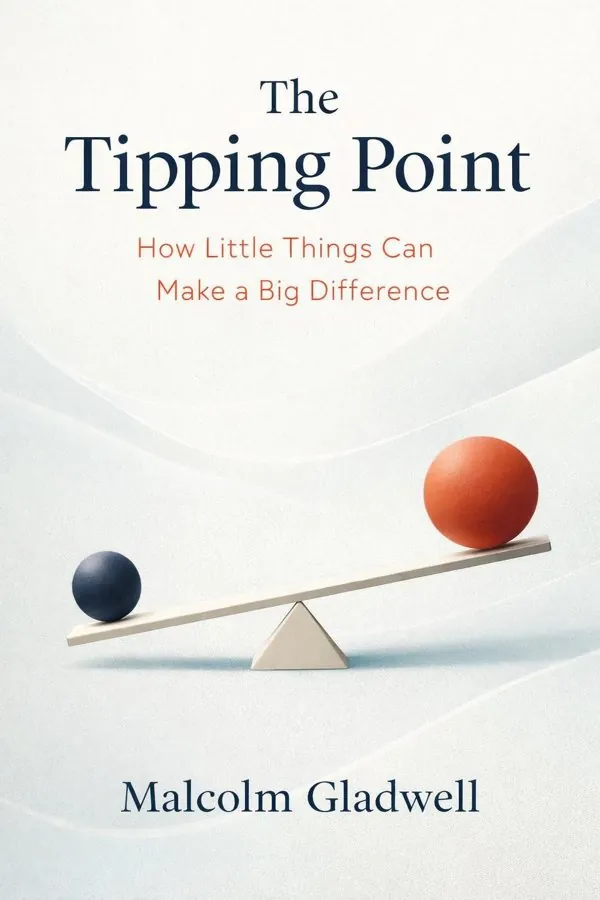
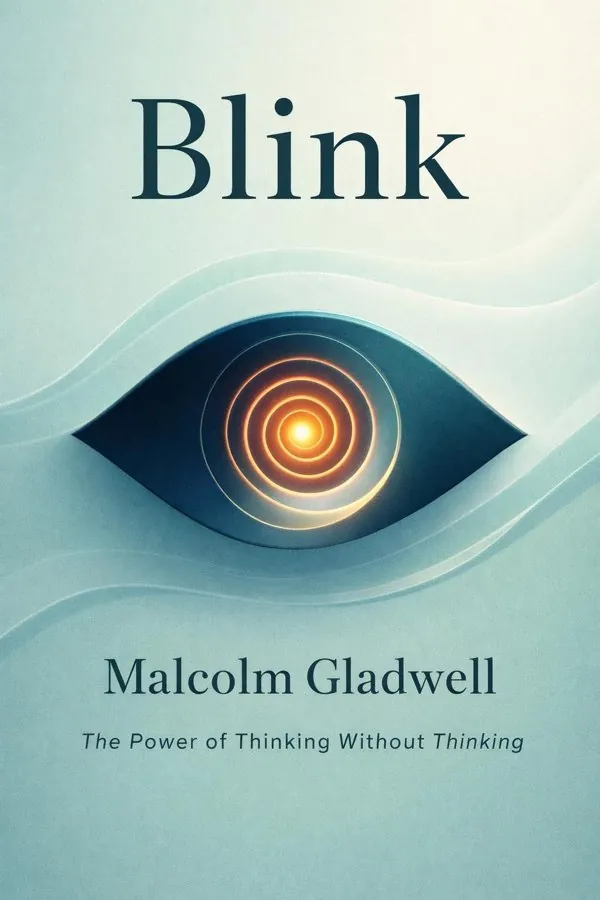
The Tipping Point
Blink
In-Depth Analysis
Malcolm Gladwell’s The Tipping Point and Blink are often grouped together because they share the same signature method: narrative-driven popular social science built from memorable case studies and distilled into elegant concepts. Yet they operate on different scales of human behavior. The Tipping Point is primarily a book about collective dynamics—how ideas, products, and behaviors spread through populations. Blink is primarily a book about individual cognition—how people make judgments in fractions of a second. Read together, they reveal a fascinating continuity in Gladwell’s thought: in both books, outcomes that seem mysterious or spontaneous are actually shaped by hidden structures. The difference is that in The Tipping Point those structures are social networks and environments, while in Blink they are unconscious mental processes and learned expertise.
The Tipping Point is built around three famous mechanisms. The Law of the Few argues that a small number of unusually influential people—Connectors, Mavens, and Salesmen—play a disproportionate role in spreading ideas. This framework appears in examples such as trend diffusion and social epidemics, where who carries a message matters as much as the message itself. The Stickiness Factor shifts the lens from messenger to message, asking why some information lodges in memory and changes behavior. Gladwell’s discussion of children’s television, especially the way educational content was adjusted to hold attention and improve retention, illustrates his belief that subtle changes in presentation can produce large downstream effects. The Power of Context then expands the frame to environment, emphasizing that behavior is highly sensitive to situational cues; the Broken Windows discussion and urban crime examples make the case that context is not background but a causal force.
Blink, by contrast, is not trying to explain why a social epidemic catches on. It asks how the mind extracts meaning from thin slices of experience. The opening kouros statue story is emblematic. Scientific testing suggests authenticity, yet experts feel instantly that something is wrong. That tension between explicit analysis and tacit recognition sets up the book’s core insight: sometimes the unconscious sees patterns before conscious reasoning can articulate them. But Blink is more ambivalent than a simple defense of instinct. It also shows how first impressions can be contaminated by prejudice, stress, and misleading cues. The book’s power lies in this oscillation between admiration for expertise and warning about bias.
One way to compare the books is to see The Tipping Point as externally oriented and Blink as internally oriented. In The Tipping Point, Gladwell asks, “What conditions make society move?” In Blink, he asks, “What conditions make judgment work?” This difference shapes the books’ practical value. The Tipping Point is fundamentally strategic. It is the more obviously useful book for marketers, campaign designers, public-health communicators, educators, and founders trying to trigger adoption. Its lessons can be translated into a playbook: identify the right network nodes, make the message memorable, and engineer environments that reinforce the desired behavior. Blink is useful in a more personal and professional sense. It helps readers think about hiring, diagnosis, military command, art authentication, dating, interviewing, and crisis response. Rather than offering a viral-growth formula, it asks readers to cultivate domains where thin-slicing is intelligent and to distrust snap judgments where bias dominates.
The books also differ in their treatment of human agency. The Tipping Point can feel empowering because it suggests that very small interventions—changing a messenger, a phrase, a room, a norm—can scale dramatically. It flatters the reader’s desire to design social outcomes. Blink is more chastening. It tells us that much of what feels like deliberate perception is automatic, and that our confidence in our own judgment may exceed our actual insight. The chapter logic around first impressions and implicit associations gives Blink a more psychologically unsettling edge. Where The Tipping Point says, in effect, “large change may be easier than you think if you understand the mechanism,” Blink says, “your own mind may be less transparent and trustworthy than you think.”
In terms of evidence, both books carry Gladwell’s strengths and weaknesses. He is superb at creating explanatory frameworks that ordinary readers remember years later. “Tipping point,” “stickiness,” and “thin-slicing” entered mainstream vocabulary precisely because he gives abstract ideas narrative form. At the same time, both books sometimes stretch from anecdote to theory faster than an academic reader might like. The Tipping Point is especially vulnerable here because it applies a contagious-disease metaphor to social phenomena that may be more complex and less law-like than the model implies. Blink can oversimplify cognitive science by making intuition seem at times almost magical when in reality its accuracy depends heavily on training, feedback, and context. Still, these are not careless books; they are books optimized for conceptual clarity and intellectual momentum rather than methodological exhaustiveness.
Stylistically, Blink is the sharper dramatic read. Because so many of its examples turn on immediate judgment—a connoisseur’s flash of doubt, a doctor’s instant triage, a commander’s split-second interpretation—it carries suspense. The Tipping Point is broader and more synthetic. Its pleasure comes less from drama than from pattern recognition: readers enjoy seeing disparate events suddenly fit a single model. That means The Tipping Point often has the bigger cultural thesis, while Blink has the more intimate psychological tension.
If one asks which book has aged better, the answer depends on use. The Tipping Point remains indispensable as a language for discussing virality and behavioral diffusion, even in the age of social media, because its core categories are still analytically useful. Blink may feel more immediately contemporary because current discussions of bias, heuristics, and expert intuition echo many of its concerns. Ultimately, The Tipping Point explains how the world catches fire; Blink explains what happens in the mind at the moment of spark. Together, they form a compelling pair: one maps the spread of influence across groups, the other maps the speed of perception within individuals.
Side-by-Side Comparison
| Aspect | The Tipping Point | Blink |
|---|---|---|
| Core Philosophy | The Tipping Point argues that social change behaves like an epidemic: under the right conditions, small inputs can trigger outsized collective effects. Its framework centers on the Law of the Few, the Stickiness Factor, and the Power of Context as the core mechanisms of diffusion. | Blink argues that the mind can make powerful judgments in an instant through rapid cognition, often before conscious reasoning catches up. Its central concern is not mass spread but the strengths and distortions of intuition, thin-slicing, and unconscious decision-making. |
| Writing Style | Gladwell writes in a sweeping, sociological mode, moving from crime trends to children’s television to fashion trends to show how ideas spread. The tone is explanatory and pattern-seeking, building broad public theories from clusters of vivid anecdotes. | Blink is tighter and more psychological, often organized around moments of immediate perception: the fake kouros statue, speed-dating, military judgment, and emergency medicine. The prose feels more suspenseful because so many examples hinge on split-second stakes. |
| Practical Application | The Tipping Point is highly useful for marketers, organizers, educators, and leaders trying to engineer momentum. It suggests concrete levers such as identifying connectors and mavens, refining message stickiness, and shaping environments that nudge behavior. | Blink is practical for people making high-pressure decisions, evaluating talent, hiring, diagnosing, negotiating, or reading interpersonal cues. Its lessons are less about designing campaigns and more about training intuition, recognizing bias, and knowing when not to trust a first impression. |
| Target Audience | This book best suits readers interested in social trends, business virality, public health metaphors, and cultural contagion. Entrepreneurs, communicators, and policy-minded readers will likely find its framework especially compelling. | This book appeals more to readers interested in psychology, judgment, expertise, and human error. It is particularly attractive to managers, clinicians, creatives, and anyone fascinated by how decisions happen beneath awareness. |
| Scientific Rigor | The Tipping Point popularizes social science effectively, but some of its conclusions rely on selective case studies and metaphoric extension from epidemiology to culture. It is conceptually memorable, though scholars have sometimes questioned how robustly the anecdotes support the general theory. | Blink also relies heavily on stories, but it is more directly anchored in cognitive psychology and behavioral research on thin-slicing, priming, and implicit bias. Even so, some examples simplify contested findings and can make intuition seem more reliable than it is across contexts. |
| Emotional Impact | Its emotional force comes from the excitement of seeing hidden social mechanisms behind everyday phenomena. Readers often finish it feeling energized by the possibility that seemingly minor interventions can reshape large systems. | Blink generates a more intimate emotional response because it touches on trust, prejudice, fear, attraction, and life-or-death judgment. It can be exhilarating when intuition works and unsettling when unconscious bias contaminates what feels like certainty. |
| Actionability | Its actionability lies in strategic design: find influential people, craft memorable messages, and alter contexts to create behavior change. Readers can readily translate its ideas into campaigns, products, educational interventions, or community initiatives. | Its actionability is more diagnostic and reflective: slow down in bias-prone situations, cultivate expertise through exposure, and create environments where good snap judgments can emerge. The advice is useful, but sometimes less directly formulaic than in The Tipping Point. |
| Depth of Analysis | The Tipping Point goes broader than deep, offering a macro-level framework for understanding how trends ignite. Its power lies in synthesis rather than in close examination of any one mechanism or dataset. | Blink offers greater depth on a narrower terrain: the psychology of first impressions and instantaneous judgment. It examines both the triumphs and failures of fast thinking with more internal tension than The Tipping Point’s largely optimistic model. |
| Readability | It is extremely readable, with clear sectioning around memorable concepts that became part of public vocabulary. The structure makes it easy to summarize and discuss, which is part of why the book itself became culturally sticky. | Blink is equally accessible but often more propulsive because many chapters revolve around revelations, reversals, and dramatic tests of perception. It reads quickly without sacrificing thematic coherence. |
| Long-term Value | Its lasting value comes from giving readers a durable language for discussing virality, influence, and environmental shaping. Even when one challenges its evidence, its conceptual triad remains useful for analyzing movements, products, and social behavior. | Its long-term value lies in sharpening self-awareness about intuition, expertise, and implicit bias. Readers may return to it whenever facing hiring decisions, first impressions, emergency judgment, or questions about whether their gut is insight or illusion. |
Key Differences
Social Spread vs Instant Judgment
The Tipping Point studies how ideas and behaviors move through populations, using concepts like Connectors and the Stickiness Factor to explain diffusion. Blink studies what happens inside a person at the moment of decision, such as when experts instantly distrust the supposedly ancient kouros statue.
Macro Framework vs Micro Psychology
The Tipping Point is a macro-level model of social epidemics, asking why entire groups suddenly change direction. Blink is a micro-level exploration of cognition, asking how a mind can infer so much—or so little—from a tiny slice of experience.
Strategic Design vs Reflective Self-Awareness
The Tipping Point lends itself to intervention: craft stickier messages, recruit the right influencers, and alter contexts to create momentum. Blink is more about self-scrutiny and judgment calibration, such as learning when expertise deserves trust and when first impressions are distorted by bias.
Optimism About Leverage vs Ambivalence About Intuition
The Tipping Point is largely optimistic, suggesting that well-placed tweaks can trigger outsized change. Blink is more mixed in tone because it presents intuition as both impressive and dangerous, especially in domains touched by stress, prejudice, or overconfidence.
Environmental Causation vs Cognitive Causation
In The Tipping Point, context is a causal engine: surroundings, norms, and cues shape behavior powerfully. In Blink, causation is often cognitive and internal: pattern recognition, thin-slicing, and implicit associations shape what we perceive before conscious thought intervenes.
Campaign Utility vs Decision Utility
A marketer or organizer can use The Tipping Point to think about product launches, educational messaging, or public-health change. A hiring manager, physician, coach, or negotiator may find Blink more useful because it speaks directly to fast judgments in real-time settings.
Memorable Taxonomy vs Memorable Paradox
The Tipping Point is organized around a clean taxonomy of three drivers, which makes it especially easy to teach and summarize. Blink is memorable in a different way: it thrives on paradox, showing that the same snap judgment mechanism can produce extraordinary insight or serious error.
Who Should Read Which?
Entrepreneurs, marketers, community builders, and policy strategists
→ The Tipping Point
These readers need to understand how messages spread, why some behaviors become contagious, and how environments amplify adoption. The book’s frameworks around influence, stickiness, and context are immediately applicable to campaigns, products, and organizational change.
Psychology enthusiasts, hiring managers, clinicians, and leaders making fast decisions
→ Blink
These readers are likely to care more about judgment under pressure, unconscious perception, first impressions, and the reliability of intuition. Blink offers a sharper lens on when fast thinking works, when it fails, and how expertise can refine snap decisions.
General nonfiction readers who want one highly engaging Malcolm Gladwell book
→ The Tipping Point
It is the more foundational Gladwell title and probably the one with the broadest cultural utility. Even readers who later disagree with parts of it usually retain its vocabulary and continue using its concepts to interpret trends and behavior.
Which Should You Read First?
Read The Tipping Point first if you are new to Gladwell. It offers the clearer conceptual scaffold and introduces the signature Gladwell method in its most teachable form: broad social observations distilled into a few highly portable ideas. Because the book is organized around three memorable principles, it creates a strong mental framework that makes his later work easier to place. You learn to expect his style of argument—case study, pattern, concept, synthesis. Then read Blink as a deepening and narrowing of that method. After seeing Gladwell explain large-scale social contagion, it is rewarding to watch him turn inward and examine the mechanics of rapid cognition. The shift from networks and environments to intuition and bias feels more coherent in that order. However, if you are primarily interested in psychology rather than social trends, you can reverse the sequence. In most cases, though, The Tipping Point first and Blink second provides the smoothest intellectual progression from social systems to individual minds.
Want the full summary?
Get instant access to this book summary and 100K+ more with Fizz Moment.
Get Free SummaryAvailable on App Store • Free to download
Frequently Asked Questions
Is The Tipping Point better than Blink for beginners?
For many beginners, The Tipping Point is the easier starting point because its central ideas are highly structured and easy to remember: the Law of the Few, the Stickiness Factor, and the Power of Context. It gives readers a clean framework for understanding why trends spread, and the examples are intuitive even if you have never read psychology or sociology before. Blink is also accessible, but it is more conceptually slippery because it deals with intuition, unconscious processing, and bias—topics that can feel paradoxical. If you want a simple entry into Gladwell’s style and method, The Tipping Point is usually the better first read for beginners.
Which Malcolm Gladwell book is more practical for business: The Tipping Point or Blink?
If your business question is about growth, word-of-mouth, marketing, adoption, or organizational influence, The Tipping Point is more directly practical. Its emphasis on influential people, memorable messaging, and environmental triggers maps well onto product launches, brand strategy, and customer behavior. Blink is more practical when the business problem involves judgment: hiring, interviewing, leadership perception, negotiation, design taste, or decision-making under pressure. In short, The Tipping Point helps you spread something; Blink helps you assess something quickly and more wisely. Many managers will actually get the most value by reading both and using them at different stages of decision and execution.
Is Blink more scientifically grounded than The Tipping Point?
Blink often feels more scientifically grounded because it draws more explicitly from psychology, implicit cognition, and studies of thin-slicing and unconscious judgment. The Tipping Point, while informed by social science, is built more heavily around a metaphor of social epidemics and a synthesis of wide-ranging examples. That said, neither book should be read as a strict academic review of the evidence. Gladwell’s method is interpretive and narrative, not systematic. Blink may appear more closely tied to laboratory findings, but it too simplifies and dramatizes research in ways that can blur the limits of the evidence. So the answer is yes, somewhat—but with caution.
Should I read The Tipping Point or Blink first if I like psychology?
If you specifically like psychology, you will probably enjoy Blink first because it focuses directly on judgment, perception, intuition, and bias. The fake Greek statue case, expert snap reactions, and the tension between instinct and error all make it feel more psychologically immediate. However, if your interest in psychology extends to social behavior and crowd dynamics, The Tipping Point may be equally satisfying because it explores how environments and networks shape decisions at scale. A good rule is this: choose Blink if you are fascinated by the mind in action; choose The Tipping Point if you are fascinated by how behavior moves through groups.
Which book has aged better, The Tipping Point or Blink?
Both have aged well, but in different ways. The Tipping Point has endured because its vocabulary became foundational for discussing virality, influence, and social contagion; even critics still use its terms. Blink has aged strongly because current conversations about implicit bias, heuristics, and expert intuition make its themes feel continuously relevant. If you work in media, marketing, or social systems, The Tipping Point may feel more enduring. If you care about judgment, hiring, medicine, policing, or personal bias, Blink may feel more contemporary. Neither is timeless in a purely academic sense, but both remain culturally and intellectually useful.
Is The Tipping Point or Blink better for understanding human behavior?
That depends on what level of human behavior you want to understand. The Tipping Point is better for understanding collective behavior—why a trend spreads, why a message catches on, why environments can trigger social shifts. Blink is better for understanding individual behavior in moments of perception and decision—why people trust a face, misread a situation, or make an expert call with minimal information. If you want the broadest answer, Blink explains the mechanics of immediate judgment, while The Tipping Point explains how many individual judgments aggregate into social movements. Together, they offer a fuller picture than either book alone.
The Verdict
If you must choose only one, the better pick depends on what kind of insight you want. Choose The Tipping Point if you are interested in influence, virality, behavior change, marketing, cultural trends, or the design of social momentum. It is Gladwell at his most architectonic: he gives you a durable framework for seeing how small causes can produce large collective effects. Its concepts are memorable, broadly applicable, and especially useful for anyone trying to move ideas through networks. Choose Blink if you are more interested in decision-making, first impressions, expertise, intuition, and bias. It is the more psychologically intimate book and, in many ways, the more tension-filled one. Where The Tipping Point often inspires strategic optimism, Blink produces a subtler mix of admiration and caution: your unconscious mind can be brilliant, but it can also betray you. On balance, The Tipping Point is the stronger recommendation for readers seeking the more universally useful framework, especially in professional or organizational contexts. But Blink may be the more personally transformative book because it changes how you interpret your own perceptions. The ideal answer, however, is not either-or. These books complement each other exceptionally well: one explains how influence spreads across society, the other explains how judgments form inside the individual. Read together, they show Gladwell’s central gift—making hidden forces visible.
Related Comparisons
Want to read both books?
Get AI-powered summaries of both The Tipping Point and Blink in just 20 minutes total.