
The Tipping Point vs The Wager: Which Should You Read?
A detailed comparison of The Tipping Point by Malcolm Gladwell and The Wager by David Grann. Discover the key differences, strengths, and which book is right for you.
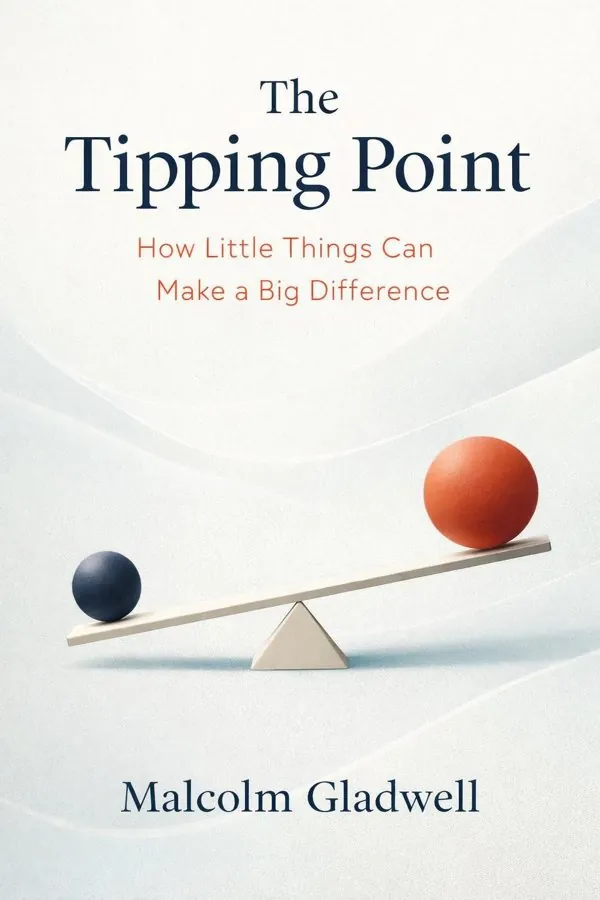
The Tipping Point
The Wager
In-Depth Analysis
Although these two books are both presented here as non-fiction, they operate in almost opposite modes. Malcolm Gladwell’s The Tipping Point is a theory-driven work of explanatory journalism; David Grann’s The Wager is a narrative history built around one disastrous eighteenth-century British naval expedition. One asks why ideas and behaviors spread. The other asks what happens when men, institutions, and stories break apart under extreme conditions. Reading them together highlights a useful contrast between books that simplify reality into memorable frameworks and books that deepen reality by restoring complexity.
The central achievement of The Tipping Point is conceptual compression. Gladwell takes a wide range of phenomena—fashion trends, crime rates, children’s television, consumer behavior—and filters them through three memorable principles. The Law of the Few suggests that social epidemics are often catalyzed by highly influential people such as Connectors, Mavens, and Salesmen. The Stickiness Factor focuses on why some messages lodge in memory and alter behavior. The Power of Context argues that environment and situational cues can radically influence outcomes. This architecture is one reason the book has had such staying power: even readers who cannot recall every case study tend to remember the framework itself.
That same compression, however, is also the source of the book’s limitations. Gladwell’s examples are vivid, but they can feel tidied into place, as though messy causation has been made elegantly legible. For example, when discussing epidemic-like social spread, he often foregrounds a few catalytic variables at the expense of structural complexity. Readers in marketing, education, or organizational leadership may find this useful because it generates leverage points. Readers looking for careful causal proof may find it too neat. In short, The Tipping Point is strongest as a thinking tool, not as a final account of why social change happens.
The Wager works in nearly the reverse direction. Rather than extracting a broad law from many cases, Grann reconstructs one extraordinary case in meticulous detail. The story follows the wreck of the British warship Wager during an imperial expedition, the desperate survival struggle that follows, and the conflicting stories told by survivors once they return. Grann excels at showing that crisis is never just physical; it is political, moral, and narrative. Hunger and exposure matter, but so do hierarchy, legitimacy, discipline, and the ability to persuade others about what happened.
What makes The Wager especially powerful is its handling of contested truth. The book is not simply about shipwrecked men trying to stay alive. It is also about how mutiny, authority, and honor are defined after the fact. Different survivors produce competing narratives, each shaped by self-preservation and status. This gives the book a modern resonance. Grann shows that a crisis does not end when the immediate danger passes; it continues in the struggle to control interpretation. If Gladwell is interested in how messages spread, Grann is interested in how stories become weapons.
Stylistically, the books deliver different kinds of pleasure. Gladwell offers the delight of pattern recognition. Readers feel they are acquiring a decoder for social life. His anecdotes are chosen for memorability and strategic relevance. Grann, by contrast, offers immersion. His scenes accumulate pressure: storms, disease, starvation, factional conflict, and the terrifying erosion of civilized norms. The emotional register is therefore very different. The Tipping Point stimulates; The Wager unsettles.
Their practical value also differs sharply. The Tipping Point is immediately usable. A founder trying to launch a product, a teacher trying to make a lesson memorable, or a campaigner trying to change behavior can all ask Gladwellian questions: Who are the key transmitters? What makes this message sticky? What features of the environment support or inhibit adoption? The book may oversimplify, but it gives the reader a map.
The Wager is less a map than a cautionary mirror. Its lessons emerge through judgment rather than prescription. Leaders can learn from the failure of command under stress, from the fragility of legitimacy when institutions lose practical authority, and from the afterlife of crisis in legal and public storytelling. But Grann does not package these into formulas. Readers must infer them. That makes the book less actionable in a step-by-step sense, but arguably richer in moral and institutional insight.
Another major difference lies in evidence. Gladwell synthesizes secondary research and journalistic anecdote to support an argument. This gives his book range, but not always depth. Grann’s evidence is archival and forensic: logs, testimonies, records, and contradictions. He is not offering experimental rigor, but he is intensely attentive to source conflict. If The Tipping Point sometimes asks to be accepted because its model is elegant, The Wager earns trust by showing the reader how historical truth is pieced together from fragments and rival claims.
For beginners, The Tipping Point is probably the easier entry point. Its prose is simple, its arguments are modular, and its concepts are highly portable. For readers seeking a more substantial literary experience, The Wager is the stronger book. It delivers not just information but drama, character, ambiguity, and a sustained meditation on power and survival.
Ultimately, these books serve different reading needs. The Tipping Point helps readers think strategically about influence and diffusion. The Wager helps readers think deeply about human behavior when systems collapse. One gives you a language for social contagion; the other gives you a story that reveals how fragile order, truth, and authority can be. If Gladwell teaches you how ideas catch fire, Grann shows what remains when the fire has burned through the structures meant to contain it.
Side-by-Side Comparison
| Aspect | The Tipping Point | The Wager |
|---|---|---|
| Core Philosophy | The Tipping Point argues that social change often behaves like an epidemic: small inputs, if delivered by the right people in the right circumstances, can suddenly produce outsized effects. Gladwell organizes this around the Law of the Few, the Stickiness Factor, and the Power of Context. | The Wager, by contrast, is fundamentally a historical narrative about survival, mutiny, imperial ambition, and competing versions of truth. Rather than offering a framework for engineered change, it examines how human behavior fractures under extreme pressure and how public narratives are constructed afterward. |
| Writing Style | Gladwell writes in an accessible, idea-driven style that blends journalism, pop sociology, and memorable anecdotes. His prose is brisk and structured around concepts, making readers feel they are being guided through a model of influence. | Grann writes with the suspense and scene-building of a novelist while remaining grounded in archival reporting. The style is immersive and cinematic, drawing readers through storms, starvation, shipwreck, and courtroom-like disputes over what really happened. |
| Practical Application | The Tipping Point is explicitly practical: marketers, educators, organizers, and product builders can use its framework to think about message design, social connectors, and environmental triggers. Its utility lies in helping readers identify leverage points in diffusion and persuasion. | The Wager offers less direct how-to guidance, but it is highly applicable for readers interested in leadership failure, crisis behavior, institutional breakdown, and reputational warfare. Its lessons are interpretive rather than procedural, emerging from the consequences of command decisions and competing testimonies. |
| Target Audience | This book suits readers of behavioral science, business strategy, marketing, and social psychology who want broad explanatory models. It especially appeals to readers who enjoy turning case studies into usable principles. | The Wager is ideal for readers of narrative history, maritime adventure, empire, and true-story survival literature. It also suits those who prefer ambiguity, character conflict, and documentary reconstruction over abstract frameworks. |
| Scientific Rigor | Gladwell draws on social science and observational case studies, but the book has often been criticized for simplifying research and overextending anecdotal evidence into general laws. Its strength is synthesis, not methodological precision. | Grann’s rigor comes from historical investigation: logs, letters, naval records, court documents, and conflicting firsthand accounts. While it is not a scientific argument, it is generally more evidentiary in the historian-journalist sense, carefully weighing source credibility. |
| Emotional Impact | The emotional effect of The Tipping Point comes from intellectual excitement—the pleasure of suddenly seeing hidden patterns in fashion trends, crime decline, or product popularity. It is stimulating more than moving. | The Wager is emotionally intense, driven by hunger, fear, violence, betrayal, and the moral collapse of men trapped in catastrophe. Readers are likely to feel tension, dread, and fascination rather than detached curiosity. |
| Actionability | Its ideas are easy to translate into action: identify connectors, refine the message until it sticks, and alter contextual conditions that shape behavior. Even when the framework is simplified, it gives readers a workable checklist for influence. | The actionability is indirect: readers extract lessons about governance, team cohesion, and narrative control after crisis. It is more useful for reflection on leadership and institutions than for immediate tactical application. |
| Depth of Analysis | Gladwell prioritizes breadth over depth, moving across examples to illuminate a central thesis about contagion in social behavior. The tradeoff is conceptual clarity at the expense of nuance in individual cases. | Grann goes deep into a single episode, showing how an imperial mission turned into wreck, starvation, factionalism, and public controversy. This narrower focus allows for richer texture, moral complexity, and historical detail. |
| Readability | The Tipping Point is extremely readable, with short sections, vivid examples, and a clear conceptual spine. It is easy to recommend to beginners because it makes big ideas feel intuitive. | The Wager is also highly readable, but in a different way: it pulls readers forward through suspense and revelation. It demands more patience with names, chronology, and historical context, though Grann keeps the pace taut. |
| Long-term Value | Its long-term value lies in its durable vocabulary: even readers who later challenge Gladwell’s claims often keep using terms like stickiness and tipping point to think about cultural spread. It remains influential as a conceptual lens. | The Wager has long-term value as a gripping case study in human endurance, imperial violence, and contested truth. It is less likely to become a daily professional framework, but more likely to stay in memory as a fully realized historical drama. |
Key Differences
Framework vs Narrative Reconstruction
The Tipping Point is built to explain many phenomena through a repeatable model, using examples like social trends and behavioral contagion to illustrate general rules. The Wager instead reconstructs one disaster in depth, showing how survival, mutiny, and competing testimonies resist easy reduction to a formula.
Portable Concepts vs Embedded Lessons
Gladwell gives readers terms they can immediately reuse—such as Stickiness Factor and Power of Context—when thinking about products, campaigns, or social influence. Grann’s lessons are embedded in scenes and decisions, such as failures of command and the struggle to define truth after catastrophe, so they must be interpreted rather than extracted as slogans.
Intellectual Excitement vs Emotional Tension
The Tipping Point generates excitement through recognition: readers enjoy seeing how apparently random outcomes might be shaped by hidden social dynamics. The Wager creates tension through physical danger and moral breakdown, with starvation, discipline, betrayal, and legal conflict producing a much stronger emotional charge.
Breadth of Cases vs Depth of One Event
Gladwell moves rapidly across industries and behaviors, using multiple case studies to support a general thesis about social epidemics. Grann stays with a single historical episode long enough to expose how environment, hierarchy, and self-interest interact in painful, unpredictable ways.
Applied Strategy vs Historical Inquiry
A reader can take The Tipping Point into a meeting and immediately ask how to make a message stick or which influential people matter most in a network. The Wager is less tactical but stronger as historical inquiry, asking readers to weigh testimony, motive, and institutional power when judging events.
Simplification vs Ambiguity
The Tipping Point is intentionally simplifying; its brilliance lies in turning social complexity into memorable principles. The Wager moves in the opposite direction, revealing that disaster produces contradictory accounts and morally compromised actors, so the truth remains layered rather than clean.
Who Should Read Which?
The marketer, founder, educator, or behavior-change strategist
→ The Tipping Point
This reader will benefit from Gladwell’s emphasis on influential social actors, memorable messages, and environmental cues. Even if the framework is somewhat simplified, it is highly usable for thinking about adoption, persuasion, and cultural spread.
The history lover who wants a gripping true story
→ The Wager
This reader is likely to value narrative momentum, archival detail, and the moral complexity of a real historical disaster. Grann delivers a vivid account of shipwreck, survival, mutiny, and contested truth that feels both cinematic and deeply researched.
The reflective reader interested in leadership, institutions, and human nature
→ The Wager
While The Tipping Point offers useful abstractions, The Wager gives a more searching look at how authority collapses under stress and how people reshape stories to preserve status and innocence. It rewards readers who want complexity rather than neat explanatory rules.
Which Should You Read First?
Read The Tipping Point first if you want an easy entry into non-fiction that quickly rewards attention. Its chapters are modular, the arguments are clear, and the concepts are memorable enough that you can start using them immediately in conversation, work, or further reading. Beginning with Gladwell also gives you a useful contrast when you later move to The Wager: you will notice how different it feels to move from a book that compresses complexity into a model to one that expands a single event into a morally and historically rich narrative. Read The Wager first only if you are primarily a story-driven reader. Its suspense, survival drama, and archival texture may hook you more powerfully than an ideas book. But for most readers, The Tipping Point works better as the opener because it is lighter, faster, and less demanding of historical concentration. Then The Wager can follow as the deeper, darker, more immersive second read that complicates any desire for tidy explanations.
Want the full summary?
Get instant access to this book summary and 100K+ more with Fizz Moment.
Get Free SummaryAvailable on App Store • Free to download
Frequently Asked Questions
Is The Tipping Point better than The Wager for beginners?
Yes, in most cases The Tipping Point is better than The Wager for beginners, especially if you want a fast, accessible non-fiction read. Gladwell’s chapters are built around clear concepts like the Law of the Few and the Stickiness Factor, so readers can quickly grasp what the book is trying to do. The Wager is also very readable, but it asks readers to follow a historical narrative, multiple figures, and shifting testimony after catastrophe. If you are new to non-fiction and want immediately memorable ideas, start with The Tipping Point. If you prefer story over theory, The Wager may still be the more enjoyable first choice.
Which book is more useful for business, marketing, and communication: The Tipping Point or The Wager?
For business, marketing, and communication, The Tipping Point is far more directly useful. Gladwell’s focus on influential people, message design, and contextual triggers maps easily onto product launches, viral campaigns, classroom engagement, and behavior-change initiatives. You can take its ideas and apply them almost immediately, even if you later refine them with more rigorous research. The Wager is useful in a different way: it provides lessons on leadership under pressure, institutional failure, and narrative control after crisis. That makes it valuable for executives and strategists, but not as a practical marketing manual in the way The Tipping Point often functions.
Is The Wager more historically rigorous than The Tipping Point?
Generally, yes. The Wager is more historically rigorous because David Grann builds the book from archival material, firsthand accounts, naval records, and conflicting survivor testimony. A major part of the book’s power comes from showing how evidence is assembled and disputed. The Tipping Point, by contrast, is a synthesis book: Gladwell combines social science, case studies, and journalistic storytelling to form a persuasive model. It is intellectually stimulating, but critics often note that it smooths over complexity and treats illustrative examples as stronger proof than they sometimes are. So if you prioritize evidentiary grounding over conceptual elegance, The Wager has the advantage.
Which is more entertaining to read: The Tipping Point or The Wager?
That depends on what you mean by entertaining. The Tipping Point is entertaining if you enjoy clever ideas, surprising case studies, and the feeling of seeing hidden patterns in everyday life. It makes you want to discuss concepts with other people because the framework feels broadly applicable. The Wager is entertaining in a more visceral sense: it has shipwreck, starvation, mutiny, imperial ambition, and courtroom-like disputes over truth. If you prefer intellectual stimulation, choose Gladwell. If you want narrative tension and emotional intensity, The Wager is more gripping and likely to keep you up late reading.
Should I read The Tipping Point or The Wager if I want deeper insight into human behavior?
If you want a broad, portable model of human behavior in social systems, read The Tipping Point. It gives you a vocabulary for how influence spreads and why certain ideas take hold. But if you want deeper insight into human behavior under extreme stress—how authority erodes, how self-interest reshapes loyalty, and how people rewrite events to survive reputationally—The Wager is the more profound book. Gladwell abstracts behavior into principles; Grann reveals behavior through ordeal and contradiction. For surface-level applicability choose The Tipping Point; for moral and psychological complexity choose The Wager.
Is The Tipping Point or The Wager better for a book club discussion?
Both can work well for a book club, but they generate different conversations. The Tipping Point is excellent for discussion if your group enjoys debating ideas, examples, and whether Gladwell’s framework still holds in today’s media environment. People can easily bring in their own examples from politics, social media, education, or consumer culture. The Wager tends to produce richer conversations about character, power, empire, morality, leadership, and unreliable testimony. If your group prefers argument about concepts, choose The Tipping Point. If it prefers dramatic narrative and ethical ambiguity, The Wager will likely create the stronger discussion.
The Verdict
If you are choosing between these books, the decision comes down to whether you want a framework or a story. The Tipping Point is the better pick for readers who want a quick, influential, highly discussable set of ideas about how trends spread and behaviors change. Its concepts—Connectors, stickiness, context—remain culturally powerful because they are easy to remember and easy to apply. Even where the book oversimplifies, it is undeniably useful as a mental model. The Wager is the stronger literary achievement. It is more immersive, more emotionally powerful, and more disciplined in its handling of evidence. Rather than reducing reality to a set of principles, it reconstructs a disaster in all its violence, ambiguity, and moral tension. Its lessons about leadership, collapse, survival, and narrative manipulation are not packaged as neat takeaways, but they are often deeper and more durable for that reason. So the recommendation is this: choose The Tipping Point if your priority is practical insight, intellectual accessibility, and conceptual language you can use immediately in work or discussion. Choose The Wager if you want a gripping historical narrative that reveals the darker, more complicated dimensions of human behavior. If you can read both, they make an excellent pairing—Gladwell shows how stories spread, while Grann shows how stories are fought over when lives and reputations depend on them.
Related Comparisons
Want to read both books?
Get AI-powered summaries of both The Tipping Point and The Wager in just 20 minutes total.