
Blink vs Talking to Strangers: Which Should You Read?
A detailed comparison of Blink by Malcolm Gladwell and Talking to Strangers by Malcolm Gladwell. Discover the key differences, strengths, and which book is right for you.
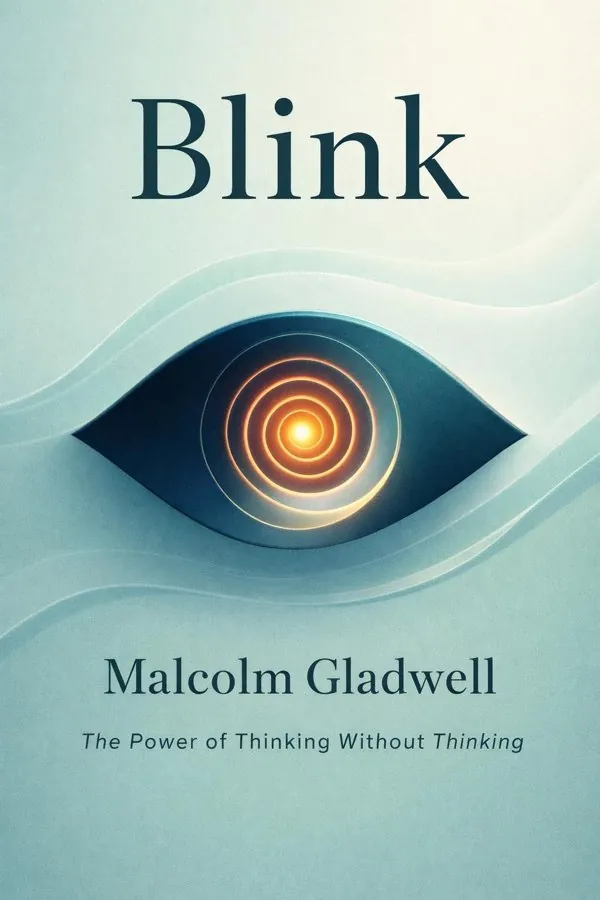
Blink
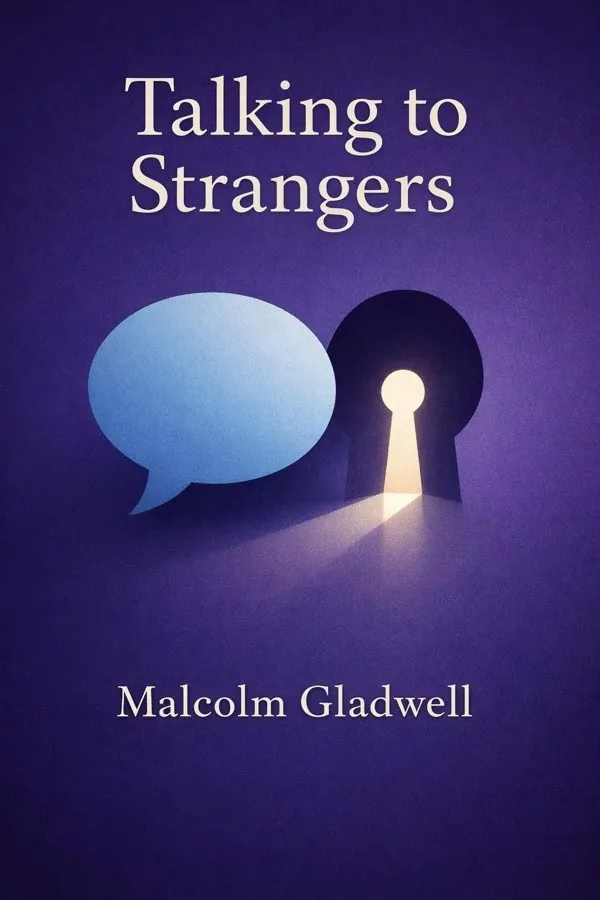
Talking to Strangers
In-Depth Analysis
Malcolm Gladwell’s Blink and Talking to Strangers are closely related books in that both ask how human beings make judgments under uncertainty. Yet they move in almost opposite emotional and philosophical directions. Blink is, at heart, a book about the hidden strengths of the mind. Talking to Strangers is a book about the hidden weaknesses of our social perception. Read together, they form a revealing tension in Gladwell’s work: one celebrates the speed of cognition under the right conditions, while the other warns that confidence in our judgments about other people can become a source of error, injustice, and tragedy.
In Blink, Gladwell’s signature example is the Getty kouros, a statue that passed scientific authentication but triggered immediate suspicion among experts who sensed that 'something was off.' This story introduces the book’s governing idea of thin-slicing: the mind’s ability to extract meaningful patterns from very small amounts of information. The promise of the book lies in showing that fast judgment is not necessarily crude judgment. In some contexts—art connoisseurship, firefighting, military command, emergency medicine—expertise becomes so deeply internalized that analysis happens almost instantly. The book’s argument is seductive because it offers a corrective to the common assumption that only slow, deliberate reasoning deserves respect.
But Blink never claims intuition is universally trustworthy. It also examines failures of first impressions, especially when implicit bias or stress distorts judgment. That internal tension is exactly where Talking to Strangers enters. If Blink asks, 'When should we trust rapid cognition?' Talking to Strangers asks, 'Why are we so bad at using judgment when the object of judgment is another human being we do not know?' The difference matters. Blink often highlights environments where expertise has been trained through repeated exposure and feedback. Talking to Strangers focuses on situations where feedback is ambiguous, appearances are misleading, and social norms push us toward error.
One of the central concepts in Talking to Strangers is Tim Levine’s 'default to truth' theory. Gladwell argues that humans are built to assume honesty unless evidence becomes overwhelming. This tendency is socially efficient: societies could not function if everyone suspected everyone else all the time. Yet the same feature makes us vulnerable to fraudsters like Bernie Madoff, whose success depended not on exceptional theatrical deception but on the simple fact that people are inclined to believe cooperative, familiar-seeming others. Here Gladwell extends and complicates the terrain of Blink. In Blink, quick judgments can reveal truths invisible to slower analysis. In Talking to Strangers, quick judgments are often contaminated by our default assumptions before analysis has even begun.
The books also differ in what they think faces and behavior can tell us. Blink contains an undercurrent of optimism about the mind’s ability to register subtle cues and reach correct conclusions. In contrast, Talking to Strangers attacks the 'transparency assumption'—the belief that a person’s outward demeanor reliably expresses inner truth. Cases like Amanda Knox illustrate Gladwell’s point that unusual affect, nervousness, flatness, or apparent incongruity are often treated as signs of guilt when they may mean nothing of the kind. This is one of the deepest contrasts between the books. Blink teaches readers to respect the intelligence of first impressions; Talking to Strangers teaches them to distrust the apparent legibility of strangers.
The tonal difference follows naturally from these ideas. Blink is curious, nimble, and often exhilarating. Even when it covers mistakes, it leaves the reader feeling that the unconscious mind is richer than we usually acknowledge. Talking to Strangers is more tragic. Its examples—criminal investigations, intelligence failures, police encounters—show the costs of misjudgment in human terms. The Sandra Bland case, in particular, gives the book a level of political and emotional gravity absent from Blink. Where Blink often asks readers to refine intuition, Talking to Strangers asks them to humble it.
In terms of structure, Blink is broader but looser. It ranges across many domains of rapid cognition, from art to war to medicine. That variety makes it highly engaging, but it can also make the thesis feel somewhat elastic: intuition is powerful, except when it is biased, except when stress corrupts it, except when expertise is absent. Talking to Strangers is narrower but more coherent. Its recurring concepts—default to truth, transparency, coupling and context—create a more cumulative argument. Even when readers disagree with Gladwell’s framing of specific cases, the book leaves behind a stronger single caution: social understanding is much harder than we think.
For practical readers, the books offer different kinds of advice. Blink is best for understanding when to create environments that support expert intuition—stripping away noise, respecting experienced pattern recognition, and recognizing that more information is not always better. Talking to Strangers is better for contexts where misplaced confidence is dangerous. It encourages skepticism toward demeanor-based judgments and greater respect for systems, records, and situational context. In that sense, Blink is a guide to using fast thinking well; Talking to Strangers is a guide to knowing when fast thinking is least trustworthy.
Ultimately, neither book cancels the other. Instead, they map two sides of the same psychological reality. Human beings can know astonishing things in an instant, but they can also be disastrously wrong—especially when reading strangers through the filters of trust, culture, and expectation. Blink is more empowering; Talking to Strangers is more cautionary. The stronger book depends on what question matters more to the reader: how intuition succeeds, or why social judgment fails.
Side-by-Side Comparison
| Aspect | Blink | Talking to Strangers |
|---|---|---|
| Core Philosophy | Blink argues that rapid cognition can produce astonishingly accurate judgments when it is grounded in expertise and good pattern recognition. Gladwell’s central claim is not that intuition is always right, but that 'thin-slicing' can be powerful when the mind has learned what to notice. | Talking to Strangers argues that human beings are structurally bad at interpreting unfamiliar people because we overtrust, overread facial cues, and ignore context. Its philosophy is more skeptical than Blink’s: where Blink often rehabilitates snap judgment, this book exposes why those judgments fail in social encounters. |
| Writing Style | Blink is brisk, idea-driven, and built around short, memorable case studies such as the Getty kouros and emergency room triage. Its style feels energetic and aphoristic, with Gladwell moving quickly from psychology lab findings to high-stakes real-world examples. | Talking to Strangers is darker, more forensic, and more structurally cumulative, often returning to the same cases—Amanda Knox, Bernie Madoff, Sandra Bland—to deepen its argument. The tone is less playful and more cautionary, reflecting the book’s focus on misunderstanding, deception, and institutional failure. |
| Practical Application | Blink is immediately useful for readers thinking about decision-making in business, medicine, hiring, design, and performance under pressure. It offers practical value by helping readers distinguish between trained intuition and biased impulse, especially in environments where speed matters. | Talking to Strangers is especially applicable to law, policing, negotiation, journalism, and international relations, where misreading strangers can have severe consequences. Its practical lesson is to rely less on confidence in personal judgment and more on systems, evidence, and contextual interpretation. |
| Target Audience | Blink suits readers interested in psychology, productivity, leadership, and cognitive performance, especially those who want a broad introduction to intuitive thinking. It is often the easier entry point for general nonfiction readers because the concept is simple and broadly relatable. | Talking to Strangers is better for readers interested in social psychology, criminal justice, deception, and public policy. It appeals strongly to readers who want to understand why interactions fail across cultural, legal, or institutional settings. |
| Scientific Rigor | Blink draws from psychology and neuroscience, but its argument sometimes depends on vivid anecdotes that can feel more illustrative than systematically proven. Some readers have criticized it for simplifying the conditions under which intuition is reliable. | Talking to Strangers also uses storytelling heavily, but its framework feels somewhat tighter because it revolves around recurring concepts like default-to-truth, transparency, and coupling. Even so, it remains a trade nonfiction book rather than a comprehensive academic treatment, and some examples are interpretive rather than definitive. |
| Emotional Impact | Blink is intellectually stimulating more than emotionally heavy; its fascination comes from realizing how much the mind can do instantly and invisibly. Even when discussing mistakes, the book often retains a sense of wonder about human cognition. | Talking to Strangers has stronger emotional weight because many of its examples involve betrayal, wrongful suspicion, violence, and public tragedy. Cases like Sandra Bland and Bernie Madoff give the book a moral urgency that Blink generally does not pursue. |
| Actionability | Blink gives readers several actionable insights: create conditions for expert intuition, reduce noise, and recognize when too much information can impair judgment. However, its guidance is sometimes indirect, requiring readers to infer how to apply the ideas in daily life. | Talking to Strangers is actionable in a more defensive way: suspend certainty, verify instead of assuming, and avoid trusting demeanor as evidence of truth. Its advice is especially useful for situations involving risk, deception, or asymmetrical information. |
| Depth of Analysis | Blink covers a wide conceptual field—thin-slicing, priming, implicit bias, stress, and expertise—but often prefers breadth and narrative momentum over exhaustive depth. The result is a stimulating mosaic rather than a tightly argued single thesis. | Talking to Strangers feels more unified because its chapters build toward one overarching explanation for why strangers are hard to understand. It probes a narrower domain than Blink but examines it with more sustained attention and moral complexity. |
| Readability | Blink is one of Gladwell’s most readable books, with short chapters, clean prose, and instantly graspable hooks. It is easy to pick up casually and still retain the central ideas. | Talking to Strangers is still accessible, but it asks more from the reader because the examples are more legally and socially complex. Its readability remains high, though the subject matter is heavier and occasionally more unsettling. |
| Long-term Value | Blink has long-term value as a conceptual toolkit for thinking about intuition, expertise, and first impressions. Readers often revisit its ideas because they apply broadly to personal and professional decision-making. | Talking to Strangers may have even greater long-term value for readers concerned with institutions, trust, policing, and misinformation in modern society. Its warnings about overconfidence in reading people feel increasingly relevant in an age shaped by media narratives and social fragmentation. |
Key Differences
Intuition Celebrated vs Intuition Questioned
Blink is fundamentally interested in rescuing fast thinking from the prejudice that only slow analysis is intelligent. Talking to Strangers, by contrast, shows how our intuitive confidence in reading other people often produces error, as in misjudging Amanda Knox’s behavior or trusting Bernie Madoff’s apparent normalcy.
Expertise Domains vs Social Encounters
Many of Blink’s strongest examples come from expert performance domains such as art authentication, emergency medicine, and command decisions under pressure. Talking to Strangers concentrates on interpersonal and institutional encounters, where strangers are interpreted through assumptions about honesty, emotion, and context.
Wonder vs Warning
Blink often inspires wonder at the unconscious mind’s ability to detect patterns instantly, such as an art expert sensing a forgery at a glance. Talking to Strangers is warning-driven, emphasizing how trust and misreading can lead to scandal, wrongful suspicion, or tragedy.
Loose Mosaic vs Tight Thesis
Blink is a broad collection of linked ideas about thin-slicing, bias, and cognition, which makes it energetic but somewhat diffuse. Talking to Strangers is more tightly organized around a few recurring concepts, giving it a more unified argumentative structure.
Everyday Decision-Making vs Institutional Consequences
Blink speaks readily to daily professional life: hiring, evaluating, choosing, and acting quickly. Talking to Strangers scales the issue upward, showing how errors in reading people affect law enforcement, courts, diplomacy, and large-scale fraud.
Implicit Confidence vs Deliberate Humility
The takeaway from Blink is often to learn when to respect your trained instincts. The takeaway from Talking to Strangers is to become more humble about your ability to know what a stranger’s face, tone, or behavior truly means.
Lighter Accessibility vs Heavier Moral Weight
Blink is easier to recommend casually because it is fast, clever, and conceptually inviting. Talking to Strangers carries more moral and emotional seriousness because its examples involve harm, coercion, and systemic misunderstanding.
Who Should Read Which?
The productivity-minded professional or manager
→ Blink
This reader will benefit from Blink’s focus on decision-making under pressure, expertise, and information overload. The book speaks directly to workplace situations where speed matters and where instinct, if properly trained, can outperform excessive deliberation.
The reader interested in justice, deception, and public systems
→ Talking to Strangers
This reader is likely to value the book’s analysis of fraud, interrogation, policing, and institutional misunderstanding. Gladwell’s discussions of default-to-truth and transparency connect especially well to legal, civic, and ethical concerns.
The curious general nonfiction reader new to Malcolm Gladwell
→ Blink
Blink is the easier introduction because it is more concise in feel, more immediately hook-driven, and less emotionally heavy. It showcases Gladwell’s strengths—storytelling, synthesis, and counterintuitive ideas—without demanding as much tolerance for darker subject matter.
Which Should You Read First?
Start with Blink, then read Talking to Strangers. Blink is the better first book because it introduces Gladwell’s method—psychology explained through vivid stories—in a highly accessible form. It also gives you the conceptual foundation for understanding rapid cognition, thin-slicing, and the difference between trained intuition and reflexive bias. Once you have that framework, Talking to Strangers becomes richer because you can see it as both a continuation and a corrective. Reading them in this order also mirrors a useful intellectual progression. Blink begins with the appealing possibility that fast judgments can be smart. Talking to Strangers then complicates that optimism by showing how judgments about unfamiliar people are uniquely vulnerable to error. In other words, the first book builds confidence in intuition under the right conditions; the second teaches caution about applying that confidence too broadly. If you reverse the order, you may still appreciate both books, but you will miss the full arc of Gladwell’s evolving argument about when human judgment deserves trust and when it requires skepticism.
Want the full summary?
Get instant access to this book summary and 100K+ more with Fizz Moment.
Get Free SummaryAvailable on App Store • Free to download
Frequently Asked Questions
Is Blink better than Talking to Strangers for beginners?
Yes, for most beginners, Blink is the easier starting point. Its central idea—rapid cognition or 'thinking without thinking'—is simple to grasp, and Gladwell illustrates it through highly memorable stories like the fake-or-real Greek statue and emergency room decision-making. The book is lighter in tone, faster in pace, and less dependent on legal or institutional case studies. By contrast, Talking to Strangers is more conceptually cumulative and emotionally heavier, since it deals with fraud, policing, interrogation, and public tragedy. If you are new to Malcolm Gladwell or to pop psychology nonfiction, Blink is usually the more accessible entry point.
Which book is more useful for understanding first impressions: Blink or Talking to Strangers?
Both are useful, but they teach different lessons about first impressions. Blink shows that first impressions can be impressively accurate when they emerge from real expertise and well-trained pattern recognition. It explains why some people can make excellent decisions very quickly in art, medicine, or high-pressure settings. Talking to Strangers, however, is more useful if your interest is specifically in judging unfamiliar people. It argues that first impressions of strangers are often distorted by false assumptions about honesty, facial expression, and behavior. So if you want the optimistic case for intuition, choose Blink; if you want the corrective warning about misreading people, choose Talking to Strangers.
Is Talking to Strangers more serious and emotionally intense than Blink?
Yes. Blink is intellectually stimulating and often playful in the way it moves between examples, even when discussing error or bias. It tends to leave readers with a sense of fascination about the hidden power of cognition. Talking to Strangers is much more somber. Its major case studies involve Bernie Madoff’s deception, Amanda Knox’s interrogation, and the Sandra Bland traffic stop, all of which raise questions about justice, institutional power, and human harm. The emotional register is therefore heavier and more morally charged. Readers looking for a thought-provoking but less distressing book will usually find Blink easier to absorb.
Which Malcolm Gladwell book is more practical for work: Blink or Talking to Strangers?
That depends on the kind of work you do. Blink is more practical for professionals in leadership, hiring, design, sales, medicine, or any field where rapid decisions matter and expertise can be cultivated. Its insights about thin-slicing, overload, and expert intuition can shape how teams make judgments under pressure. Talking to Strangers is more practical for people in law, policing, journalism, diplomacy, compliance, or fraud prevention. It warns against trusting demeanor, reminds readers that context matters, and shows how institutions fail when they mistake confidence for accuracy. In short, Blink helps with decision speed; Talking to Strangers helps with judgment restraint.
Does Blink contradict Talking to Strangers?
Not exactly, but the books are in productive tension. Blink argues that rapid cognition can be highly effective, especially when someone has genuine experience and the environment offers meaningful cues. Talking to Strangers argues that social judgment is a domain where those cues are often unreliable, and where people are misled by trust, cultural difference, and false ideas about transparency. So the second book does not cancel the first; it narrows its optimism. Together, they suggest a more nuanced rule: trust intuition more in domains of trained expertise and feedback, and trust it less when interpreting strangers whose inner states cannot be easily read.
Which book has stronger evidence and a more unified argument: Blink or Talking to Strangers?
Talking to Strangers generally feels more unified because it repeatedly builds around a few core concepts: default to truth, transparency, and coupling. The chapters connect more directly to one another, creating a stronger single thesis about why interactions with strangers go wrong. Blink is broader and more eclectic, which makes it exciting but sometimes less tight as an argument. It includes excellent stories and sharp insights, yet some readers feel it jumps between examples rather than fully proving a single claim. If you value conceptual coherence, Talking to Strangers may feel stronger; if you value breadth and idea generation, Blink may be more rewarding.
The Verdict
If you want the more immediately engaging and broadly useful book, choose Blink. It remains one of Malcolm Gladwell’s most accessible works because it turns a complex subject—rapid cognition—into a series of vivid, unforgettable examples. Its best insight is that quick judgments are not inherently shallow; under the right conditions, they are the compressed expression of experience. For readers interested in decision-making, leadership, performance, or applied psychology, Blink offers a flexible conceptual toolkit with wide relevance. If you want the more mature, cautionary, and socially urgent book, choose Talking to Strangers. It is less charming but arguably more consequential. By examining Bernie Madoff, Amanda Knox, and Sandra Bland, Gladwell shows how badly we misunderstand people when we rely on demeanor, confidence, or surface-level interpretation. The book is particularly strong for readers concerned with trust, policing, deception, and institutional error. Overall, Blink is the better general recommendation because it is more readable, more versatile, and easier to apply across everyday life. But Talking to Strangers may be the more important book for the present moment, especially if your interest lies in how judgment fails in public and moral life. Read Blink for insight into when intuition works; read Talking to Strangers for wisdom about when it absolutely should not be trusted.
Related Comparisons
Want to read both books?
Get AI-powered summaries of both Blink and Talking to Strangers in just 20 minutes total.