
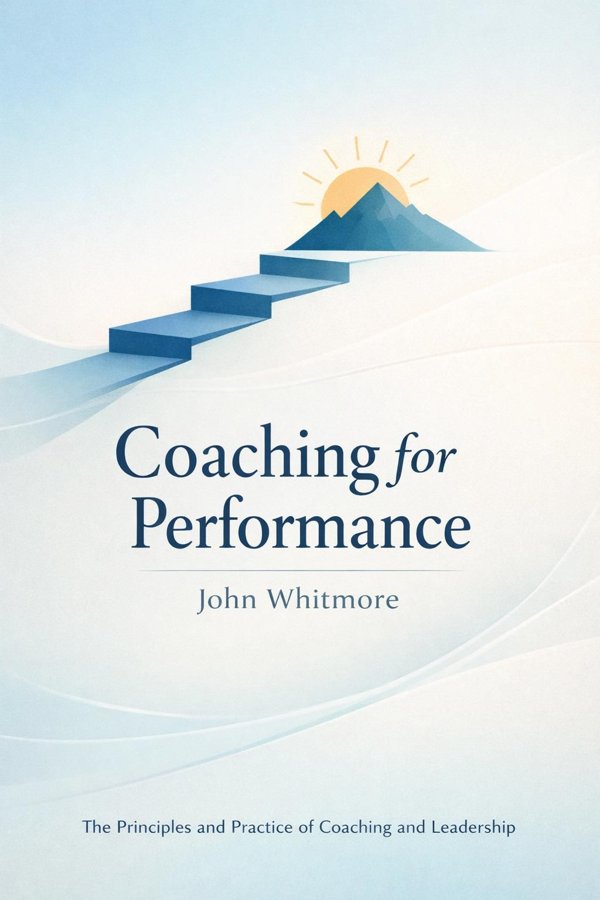
Coaching for Performance: The Principles and Practice of Coaching and Leadership: Summary & Key Insights
 10 min9 chaptersAudio available
Key Takeaways from Coaching for Performance: The Principles and Practice of Coaching and Leadership
The most powerful help is often not advice but attention.
Most performance problems are not caused by lack of talent alone; they are caused by lack of awareness.
A good coaching conversation feels natural, but Whitmore shows that it can also be structured.
The real test of leadership is not how much authority you hold but how much capability you create in others.
People are far more committed to actions they choose than to instructions they merely obey.
What Is Coaching for Performance: The Principles and Practice of Coaching and Leadership About?
Coaching for Performance: The Principles and Practice of Coaching and Leadership by John Whitmore is a leadership book spanning 4 pages. Coaching for Performance is one of the most influential books ever written on leadership, development, and human potential. In it, Sir John Whitmore argues that great leadership is not about giving better instructions, tighter supervision, or more efficient control. It is about helping people think more clearly, take greater ownership, and perform at a higher level because they are internally committed, not externally pressured. At the center of the book is the now-famous GROW model—Goal, Reality, Options, Will—a practical coaching framework that helps individuals and teams move from intention to action. What makes this book endure is that Whitmore goes far beyond technique. He shows that coaching is rooted in a philosophy: people perform best when they develop awareness, assume responsibility, and are treated as capable adults rather than dependent subordinates. Drawing on his pioneering work in executive coaching and organizational development, Whitmore demonstrates how coaching can transform management, teamwork, culture, and personal growth. For leaders, managers, coaches, and anyone interested in unlocking potential, this book remains a foundational guide to performance with humanity.
This FizzRead summary covers all 9 key chapters of Coaching for Performance: The Principles and Practice of Coaching and Leadership in approximately 10 minutes, distilling the most important ideas, arguments, and takeaways from John Whitmore's work. Also available as an audio summary and Key Quotes Podcast.
Coaching for Performance: The Principles and Practice of Coaching and Leadership
Coaching for Performance is one of the most influential books ever written on leadership, development, and human potential. In it, Sir John Whitmore argues that great leadership is not about giving better instructions, tighter supervision, or more efficient control. It is about helping people think more clearly, take greater ownership, and perform at a higher level because they are internally committed, not externally pressured. At the center of the book is the now-famous GROW model—Goal, Reality, Options, Will—a practical coaching framework that helps individuals and teams move from intention to action.
What makes this book endure is that Whitmore goes far beyond technique. He shows that coaching is rooted in a philosophy: people perform best when they develop awareness, assume responsibility, and are treated as capable adults rather than dependent subordinates. Drawing on his pioneering work in executive coaching and organizational development, Whitmore demonstrates how coaching can transform management, teamwork, culture, and personal growth. For leaders, managers, coaches, and anyone interested in unlocking potential, this book remains a foundational guide to performance with humanity.
Who Should Read Coaching for Performance: The Principles and Practice of Coaching and Leadership?
This book is perfect for anyone interested in leadership and looking to gain actionable insights in a short read. Whether you're a student, professional, or lifelong learner, the key ideas from Coaching for Performance: The Principles and Practice of Coaching and Leadership by John Whitmore will help you think differently.
- ✓Readers who enjoy leadership and want practical takeaways
- ✓Professionals looking to apply new ideas to their work and life
- ✓Anyone who wants the core insights of Coaching for Performance: The Principles and Practice of Coaching and Leadership in just 10 minutes
Want the full summary?
Get instant access to this book summary and 100K+ more with Fizz Moment.
Get Free SummaryAvailable on App Store • Free to download
Key Chapters
The most powerful help is often not advice but attention. That is the starting point of Whitmore’s view of coaching. He argues that coaching is not primarily about teaching people what to do. Instead, it is a process that helps them see more clearly, think more independently, and act with greater ownership. Traditional management often depends on control: the boss knows, the employee executes. Coaching reverses that assumption. It begins with the belief that people usually have more potential than their current performance reveals.
This matters because command-and-control management may create short-term compliance, but it rarely creates long-term engagement. When people are constantly directed, they become dependent. They wait for answers, avoid risk, and protect themselves from blame. Coaching creates a different environment. Through thoughtful questions, active listening, and nonjudgmental feedback, a leader helps others discover their own solutions. That discovery process increases confidence and accountability at the same time.
Imagine a manager whose employee is missing deadlines. A controlling response might be: “Here’s what you need to do, and I expect this fixed by Friday.” A coaching response might ask: “What is getting in the way? What patterns do you notice? What would improve your workflow?” The second approach takes more thought, but it builds capability rather than dependency.
Whitmore does not claim that leaders should never direct. In urgent situations, instruction is necessary. But overreliance on direction limits growth. Coaching is the discipline of resisting the urge to solve everything for others so that they can become stronger problem-solvers themselves.
Actionable takeaway: In your next one-on-one, replace at least three pieces of advice with three genuine questions that help the other person think for themselves.
Most performance problems are not caused by lack of talent alone; they are caused by lack of awareness. Whitmore insists that people often underperform not because they are incapable, but because they are distracted, limited by assumption, trapped in habit, or unaware of what is really happening in the moment. Coaching improves performance by expanding awareness first.
Awareness includes several dimensions. It means noticing facts instead of stories, recognizing internal obstacles such as fear or self-doubt, and seeing how behavior affects results. An athlete improves when they become more aware of body position and timing. A manager improves when they become more aware of how their tone, assumptions, or stress level influences the team. In both cases, awareness is the gateway to intentional change.
Whitmore also connects awareness to potential. Potential is not a fixed trait waiting to be measured once and for all. It is something that emerges when internal interference is reduced. This idea resembles the insight that performance often suffers when anxiety, overthinking, or external pressure interrupts natural ability. Coaching therefore helps remove inner barriers rather than simply pushing harder.
In practice, this means asking questions that bring reality into focus. For example: “What exactly happened in that meeting?” “What were you assuming?” “What did you notice in your own reaction?” Such questions move the conversation away from blame and toward learning. Teams can use the same principle in reviews by examining what actually occurred rather than immediately defending positions.
When awareness rises, better choices follow. People can only take responsibility for what they can see clearly. And because self-awareness cannot be imposed from outside, coaching becomes a more durable method of development than constant correction.
Actionable takeaway: When facing a performance issue, spend more time clarifying what is actually happening before jumping to solutions or judgments.
A good coaching conversation feels natural, but Whitmore shows that it can also be structured. His GROW model—Goal, Reality, Options, Will—became famous because it offers a simple, memorable sequence for turning discussion into progress. It gives leaders a practical way to coach without becoming vague or overly theoretical.
The first step, Goal, asks what the person wants to achieve. Effective goals are specific, meaningful, and connected to genuine motivation. A weak goal might be “do better at presentations.” A stronger one would be “deliver the quarterly update with more clarity and confidence so stakeholders approve the next phase.” The second step, Reality, examines the current situation honestly. What is happening now? What evidence exists? What obstacles, patterns, and resources are present? This stage prevents fantasy planning.
The third step, Options, opens up possibilities. Here the coach encourages exploration before evaluation. What could you do? What else? Who could help? What if constraints were removed? This stage is especially valuable because many people stop at the first obvious answer, even when better alternatives exist. The final step, Will, turns thought into commitment. What will you do, by when, and how committed are you? Without this step, insight remains interesting but inactive.
Consider a team lead struggling with delegation. Using GROW, the conversation might identify the goal of freeing five hours a week for strategic work, the reality that they do not trust others with client communication, the options of creating templates, shadowing, or phased handover, and the will to delegate one recurring task by next Monday.
The power of GROW lies in its balance: aspiration, realism, creativity, and accountability. It works in formal coaching, management check-ins, project reviews, and even self-reflection.
Actionable takeaway: In your next problem-solving conversation, guide it in order: clarify the goal, examine reality, generate options, and confirm what will happen next.
The real test of leadership is not how much authority you hold but how much capability you create in others. Whitmore argues that coaching is not a side skill for leaders; it is a fundamental leadership style for modern organizations. As work becomes more complex, fast-changing, and knowledge-based, leaders cannot succeed by acting as the sole source of answers. They must develop people who can think, adapt, and take initiative.
This requires a shift from directive leadership to developmental leadership. Directive leadership asks: “How do I get people to do what I want?” Developmental leadership asks: “How do I help people become more effective, committed, and self-managing?” The difference is profound. In the first model, the leader remains central. In the second, growth becomes central.
Whitmore does not deny the need for standards, goals, or accountability. Instead, he redefines how they are achieved. A leader can still set direction while using coaching to invite ownership. For example, instead of dictating every step of a strategic initiative, a leader might define the outcome, clarify constraints, and then ask the team to shape the plan. This creates stronger engagement because people support what they help build.
Organizations benefit as well. Coaching-based leadership improves learning, succession, innovation, and resilience. Employees are more likely to speak up, solve problems early, and take responsibility when they feel trusted rather than micromanaged. Over time, the culture becomes less dependent on heroic managers and more capable at every level.
The transition can feel uncomfortable, especially for leaders praised for being decisive problem-solvers. But Whitmore’s message is clear: solving every problem yourself is not strength if it weakens everyone around you.
Actionable takeaway: In your leadership role, identify one recurring situation where you usually direct the answer, and instead coach the person or team toward generating their own plan.
People are far more committed to actions they choose than to instructions they merely obey. Whitmore treats responsibility as one of the core conditions of high performance. When individuals feel ownership over a goal, a decision, or a next step, motivation becomes internal. They no longer act only because someone is watching; they act because they have personally committed.
This is why coaching questions are so effective. Questions invite people to formulate their own thinking. Once they say aloud what they intend to do, the plan becomes psychologically stronger. A statement like “I’ll draft the proposal by Thursday and ask for feedback that afternoon” carries more energy than passively agreeing to a manager’s order. Responsibility converts intention into self-accountability.
Whitmore also distinguishes responsibility from blame. In unhealthy cultures, responsibility means being the person who gets punished when things go wrong. In coaching, responsibility means having the agency to influence outcomes. That shift is essential. If people fear blame, they hide problems. If they are encouraged to own solutions, they become more proactive and honest.
A simple workplace example: after a project delay, a blame-oriented manager asks, “Who caused this?” A coaching-oriented leader asks, “What contributed to the delay, what have we learned, and what will we each do differently next time?” The second approach does not ignore accountability; it strengthens it by connecting it to learning and action.
For teams, shared responsibility is equally important. Coaching helps clarify who owns what, where support is needed, and how success will be measured. This reduces ambiguity and prevents the common problem of everyone assuming someone else will act.
Actionable takeaway: End important conversations by having the other person state, in their own words, exactly what they will do, by when, and how they will follow through.
Performance rises when people believe they can meet a challenge, and collapses when doubt dominates. Whitmore emphasizes that self-belief is not a soft or secondary issue; it is a decisive factor in achievement. A person with strong ability but weak belief often hesitates, overchecks, avoids difficult conversations, or crumbles under scrutiny. A person with growing confidence uses their abilities more fully.
Coaching supports self-belief in a distinctive way. It does not inflate people with empty praise. Instead, it builds confidence through awareness, choice, and evidence. When people identify their own strengths, solve their own problems, and act on commitments they have made, their trust in themselves grows naturally. Confidence built through experience is more durable than confidence borrowed from reassurance.
Managers often undermine self-belief unintentionally. They jump in too quickly, overcorrect, or communicate low expectations through tone and behavior. Even helpful intentions can send the message: “I don’t think you can handle this without me.” Coaching changes that message. It says: “I trust your capacity to think, learn, and improve.”
For example, a new team member may be nervous about leading a client meeting. A non-coaching manager might take over to ensure quality. A coaching leader might ask them to prepare the agenda, rehearse likely questions, identify concerns, and lead part of the meeting with support. The task remains challenging, but it becomes a confidence-building stretch rather than a failure trap.
Whitmore’s broader point is that organizations often focus on systems, incentives, and targets while neglecting the beliefs that determine whether people use those systems effectively. Sustainable performance depends on both competence and confidence.
Actionable takeaway: When someone lacks confidence, do not rush to rescue them; help them identify prior successes, current strengths, and one manageable stretch action they can own.
Advice is efficient, but questions are transformative. One of Whitmore’s most practical contributions is showing why the quality of our questions determines the quality of growth. Telling people what to do can solve an immediate issue, but asking effective questions builds thinking capacity that lasts beyond the moment.
Questions work because they direct attention. They slow down automatic responses and make hidden assumptions visible. A useful coaching question is open, specific, and non-leading. It does not smuggle in judgment. Compare “Don’t you think you should have escalated that sooner?” with “What led you to handle it that way, and when did escalation become necessary?” The first question pressures defensiveness; the second invites reflection.
Whitmore encourages leaders to listen deeply rather than waiting for their turn to speak. That means noticing not only what is said, but what is avoided, repeated, or emotionally charged. Often the most important issue in a conversation is not the presenting problem but the underlying belief beneath it: fear of conflict, reluctance to delegate, uncertainty about priorities. Good questions uncover these layers.
Practical coaching questions include: “What outcome do you want?” “What is happening now?” “What have you tried?” “What else could you do?” “Which option feels most realistic?” “What might stop you?” “What support do you need?” These questions can be used in performance reviews, project debriefs, career conversations, and daily management interactions.
Of course, questions should not become mechanical. If asked without genuine curiosity, they feel manipulative. Coaching requires intention, presence, and respect. The goal is not interrogation but better thinking.
Actionable takeaway: Build a short list of five open coaching questions and use them regularly until they become a natural part of how you lead and support others.
A single coaching conversation can help one person; a coaching culture can change how an entire organization performs. Whitmore extends his argument beyond individual relationships to the wider systems of management and culture. If an organization rewards compliance, punishes honesty, and treats managers as answer-machines, isolated coaching efforts will have limited effect. For coaching to matter deeply, it must become part of how the organization thinks about people.
A coaching culture is characterized by trust, dialogue, learning, and shared accountability. Managers ask more than they tell. Feedback is ongoing rather than saved for annual reviews. Mistakes are examined for insight, not hidden for self-protection. Development is not reserved for top executives; it becomes a daily practice. In such environments, people are more willing to contribute ideas, admit uncertainty, and stretch into new responsibilities.
Whitmore also links coaching culture to business results. When employees think for themselves and communicate openly, decision quality improves. Problems surface earlier. Innovation becomes easier because people feel safe proposing alternatives. Retention often rises because employees experience growth rather than mere utilization. In this sense, coaching is not only humane; it is strategic.
Building such a culture requires consistency. Senior leaders must model coaching behavior, systems must support autonomy, and performance management must value development as well as outcomes. For example, if a company says it values empowerment but rewards only short-term target delivery, managers will revert to control under pressure.
The challenge is real, but the payoff is significant: a more adaptive, engaged, and capable organization.
Actionable takeaway: If you lead a team or business, audit one people process—such as performance reviews, meetings, or feedback routines—and redesign it to create more reflection, ownership, and dialogue.
The biggest barriers to performance are often invisible. Whitmore repeatedly points to internal interference—fear, assumption, insecurity, habit, and mental noise—as a more limiting force than external constraints alone. Two people may face the same challenge, yet one advances while the other stalls because their inner responses differ.
This insight is especially valuable because most organizations are designed to address external issues: processes, targets, reporting lines, tools, and skills. Those matter, but they do not explain everything. A salesperson may know the product yet avoid prospecting because of fear of rejection. A senior leader may understand strategy but still micromanage because of anxiety about losing control. A talented employee may remain quiet in meetings because they assume their ideas are not valuable.
Coaching helps by making these internal obstacles discussable. Rather than labeling someone as unmotivated or difficult, a coach explores the beliefs and emotions shaping behavior. Questions like “What concern is making this hard?” “What are you telling yourself about this situation?” or “What would you do if you were not afraid of getting it wrong?” can reveal the real issue.
Once inner obstacles are named, they can be addressed more effectively. Sometimes the solution is a skill-building step. Sometimes it is reframing a belief, reducing the stakes, practicing in safer conditions, or gaining feedback that corrects distorted assumptions. The point is that lasting improvement requires more than pressure.
Whitmore’s broader message is optimistic: if interference can be reduced, natural capacity can emerge. People do not always need to be pushed harder; often they need to be freed.
Actionable takeaway: The next time someone seems stuck, look beyond the visible task and explore what internal fear, belief, or assumption may be restricting action.
All Chapters in Coaching for Performance: The Principles and Practice of Coaching and Leadership
About the Author
Sir John Whitmore (1937–2017) was one of the founding figures of modern executive coaching and a major influence on leadership development worldwide. Before entering business and coaching, he was a successful racing driver, an experience that shaped his interest in performance, focus, and human capability. He later co-founded Performance Consultants International, through which he helped introduce coaching principles into organizations across industries. Whitmore is best known for popularizing the GROW model and for framing coaching not merely as a management tool, but as a philosophy centered on awareness, responsibility, and trust. His work helped move coaching from the margins into mainstream business practice, and his writings remain foundational for managers, coaches, and leaders seeking more empowering ways to develop people.
Get This Summary in Your Preferred Format
Read or listen to the Coaching for Performance: The Principles and Practice of Coaching and Leadership summary by John Whitmore anytime, anywhere. FizzRead offers multiple formats so you can learn on your terms — all free.
Available formats: App · Audio · PDF · EPUB — All included free with FizzRead
Download Coaching for Performance: The Principles and Practice of Coaching and Leadership PDF and EPUB Summary
Key Quotes from Coaching for Performance: The Principles and Practice of Coaching and Leadership
“The most powerful help is often not advice but attention.”
“Most performance problems are not caused by lack of talent alone; they are caused by lack of awareness.”
“A good coaching conversation feels natural, but Whitmore shows that it can also be structured.”
“The real test of leadership is not how much authority you hold but how much capability you create in others.”
“People are far more committed to actions they choose than to instructions they merely obey.”
Frequently Asked Questions about Coaching for Performance: The Principles and Practice of Coaching and Leadership
Coaching for Performance: The Principles and Practice of Coaching and Leadership by John Whitmore is a leadership book that explores key ideas across 9 chapters. Coaching for Performance is one of the most influential books ever written on leadership, development, and human potential. In it, Sir John Whitmore argues that great leadership is not about giving better instructions, tighter supervision, or more efficient control. It is about helping people think more clearly, take greater ownership, and perform at a higher level because they are internally committed, not externally pressured. At the center of the book is the now-famous GROW model—Goal, Reality, Options, Will—a practical coaching framework that helps individuals and teams move from intention to action. What makes this book endure is that Whitmore goes far beyond technique. He shows that coaching is rooted in a philosophy: people perform best when they develop awareness, assume responsibility, and are treated as capable adults rather than dependent subordinates. Drawing on his pioneering work in executive coaching and organizational development, Whitmore demonstrates how coaching can transform management, teamwork, culture, and personal growth. For leaders, managers, coaches, and anyone interested in unlocking potential, this book remains a foundational guide to performance with humanity.
You Might Also Like

Extreme Ownership
Jocko Willink
10 min
Dare to Lead
Brene Brown
10 min
Leaders Eat Last
Simon Sinek
10 min
The 21 Irrefutable Laws of Leadership
John Maxwell
10 min
Start With Why
Simon Sinek
10 min
How to Lead When You're Not in Charge
Clay Scroggins
10 minBrowse by Category
Ready to read Coaching for Performance: The Principles and Practice of Coaching and Leadership?
Get the full summary and 100K+ more books with Fizz Moment.