
John Whitmore Books
Sir John Whitmore (1937–2017) was a pioneer of the executive coaching movement and co-founder of Performance Consultants International. A former racing driver turned business coach, he was instrumental in bringing coaching principles into mainstream leadership and organizational development.
Known for: Coaching for Performance: The Principles and Practice of Coaching and Leadership
Books by John Whitmore
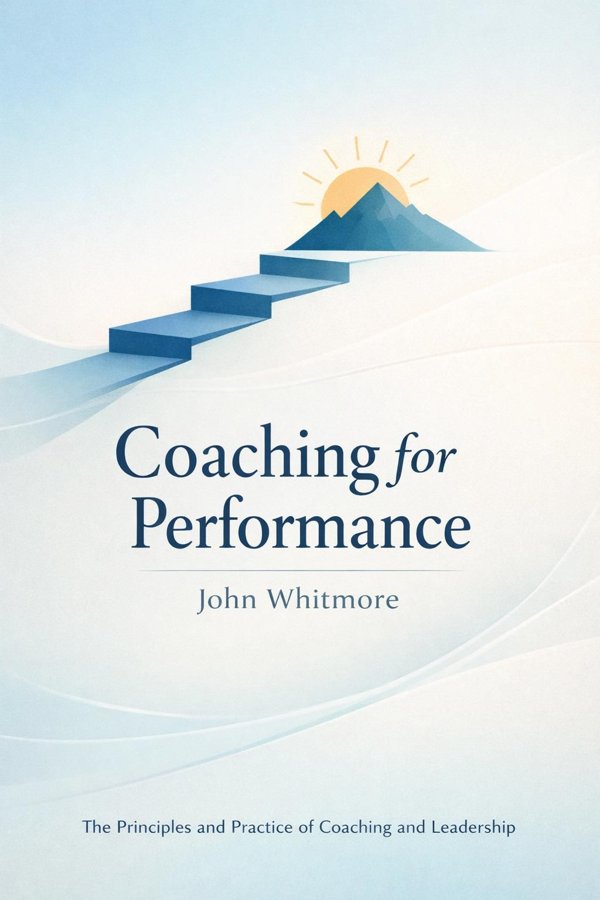
Coaching for Performance: The Principles and Practice of Coaching and Leadership
Coaching for Performance is one of the most influential books ever written on leadership, development, and human potential. In it, Sir John Whitmore argues that great leadership is not about giving better instructions, tighter supervision, or more efficient control. It is about helping people think more clearly, take greater ownership, and perform at a higher level because they are internally committed, not externally pressured. At the center of the book is the now-famous GROW model—Goal, Reality, Options, Will—a practical coaching framework that helps individuals and teams move from intention to action. What makes this book endure is that Whitmore goes far beyond technique. He shows that coaching is rooted in a philosophy: people perform best when they develop awareness, assume responsibility, and are treated as capable adults rather than dependent subordinates. Drawing on his pioneering work in executive coaching and organizational development, Whitmore demonstrates how coaching can transform management, teamwork, culture, and personal growth. For leaders, managers, coaches, and anyone interested in unlocking potential, this book remains a foundational guide to performance with humanity.
Read SummaryKey Insights from John Whitmore
Coaching Means Empowerment, Not Control
The most powerful help is often not advice but attention. That is the starting point of Whitmore’s view of coaching. He argues that coaching is not primarily about teaching people what to do. Instead, it is a process that helps them see more clearly, think more independently, and act with greater ow...
From Coaching for Performance: The Principles and Practice of Coaching and Leadership
Awareness Unlocks Performance and Potential
Most performance problems are not caused by lack of talent alone; they are caused by lack of awareness. Whitmore insists that people often underperform not because they are incapable, but because they are distracted, limited by assumption, trapped in habit, or unaware of what is really happening in ...
From Coaching for Performance: The Principles and Practice of Coaching and Leadership
The GROW Model Drives Better Conversations
A good coaching conversation feels natural, but Whitmore shows that it can also be structured. His GROW model—Goal, Reality, Options, Will—became famous because it offers a simple, memorable sequence for turning discussion into progress. It gives leaders a practical way to coach without becoming vag...
From Coaching for Performance: The Principles and Practice of Coaching and Leadership
Leadership Shifts From Directive To Developmental
The real test of leadership is not how much authority you hold but how much capability you create in others. Whitmore argues that coaching is not a side skill for leaders; it is a fundamental leadership style for modern organizations. As work becomes more complex, fast-changing, and knowledge-based,...
From Coaching for Performance: The Principles and Practice of Coaching and Leadership
Responsibility Creates Genuine Commitment
People are far more committed to actions they choose than to instructions they merely obey. Whitmore treats responsibility as one of the core conditions of high performance. When individuals feel ownership over a goal, a decision, or a next step, motivation becomes internal. They no longer act only ...
From Coaching for Performance: The Principles and Practice of Coaching and Leadership
Self-Belief Shapes Results More Than Pressure
Performance rises when people believe they can meet a challenge, and collapses when doubt dominates. Whitmore emphasizes that self-belief is not a soft or secondary issue; it is a decisive factor in achievement. A person with strong ability but weak belief often hesitates, overchecks, avoids difficu...
From Coaching for Performance: The Principles and Practice of Coaching and Leadership
About John Whitmore
Sir John Whitmore (1937–2017) was a pioneer of the executive coaching movement and co-founder of Performance Consultants International. A former racing driver turned business coach, he was instrumental in bringing coaching principles into mainstream leadership and organizational development.



Frequently Asked Questions
Sir John Whitmore (1937–2017) was a pioneer of the executive coaching movement and co-founder of Performance Consultants International. A former racing driver turned business coach, he was instrumental in bringing coaching principles into mainstream leadership and organizational development.
Read John Whitmore's books in 15 minutes
Get AI-powered summaries with key insights from 1 book by John Whitmore.