
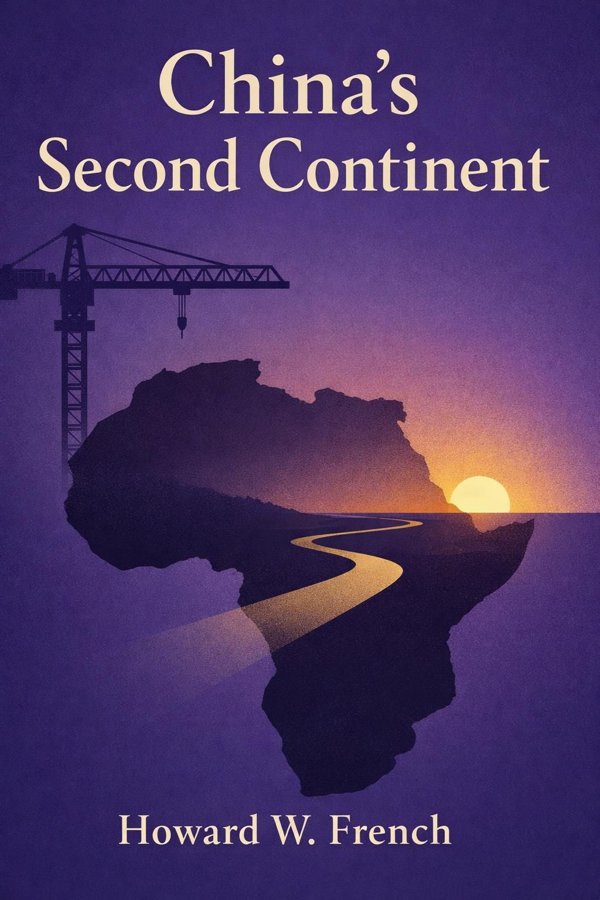
China's Second Continent: How a Million Migrants Are Building a New Empire in Africa: Summary & Key Insights
 10 min13 chaptersAudio available
What Is China's Second Continent: How a Million Migrants Are Building a New Empire in Africa About?
China's Second Continent: How a Million Migrants Are Building a New Empire in Africa by Howard W. French is a politics book spanning 13 pages. In this groundbreaking work of reportage, Howard W. French explores the massive wave of Chinese migration to Africa and its profound implications for both continents. Drawing on years of on-the-ground research and interviews across multiple African nations, French reveals how Chinese entrepreneurs, laborers, and officials are reshaping Africa’s economies, politics, and societies while pursuing their own dreams of prosperity and influence.
This FizzRead summary covers all 13 key chapters of China's Second Continent: How a Million Migrants Are Building a New Empire in Africa in approximately 10 minutes, distilling the most important ideas, arguments, and takeaways from Howard W. French's work. Also available as an audio summary and Key Quotes Podcast.
China's Second Continent: How a Million Migrants Are Building a New Empire in Africa
In this groundbreaking work of reportage, Howard W. French explores the massive wave of Chinese migration to Africa and its profound implications for both continents. Drawing on years of on-the-ground research and interviews across multiple African nations, French reveals how Chinese entrepreneurs, laborers, and officials are reshaping Africa’s economies, politics, and societies while pursuing their own dreams of prosperity and influence.
Who Should Read China's Second Continent: How a Million Migrants Are Building a New Empire in Africa?
This book is perfect for anyone interested in politics and looking to gain actionable insights in a short read. Whether you're a student, professional, or lifelong learner, the key ideas from China's Second Continent: How a Million Migrants Are Building a New Empire in Africa by Howard W. French will help you think differently.
- ✓Readers who enjoy politics and want practical takeaways
- ✓Professionals looking to apply new ideas to their work and life
- ✓Anyone who wants the core insights of China's Second Continent: How a Million Migrants Are Building a New Empire in Africa in just 10 minutes
Want the full summary?
Get instant access to this book summary and 100K+ more with Fizz Moment.
Get Free SummaryAvailable on App Store • Free to download
Key Chapters
To understand the Chinese presence in Africa today, we must begin with history. China’s engagement with Africa did not appear overnight; its roots trace back to the ideological days of Mao Zedong, when solidarity among developing nations was a cornerstone of foreign policy. In the 1960s and 70s, amid Cold War tensions and decolonization across Africa, Beijing positioned itself as the ally of liberation movements, offering medical teams, technical aid, and symbolic gestures that emphasized friendship among peoples. This era sowed the first seeds of familiarity, even if large-scale migration was yet to come.
In the decades that followed, after Deng Xiaoping launched the reforms that opened China to the global economy, Africa began to reemerge on Beijing’s radar—not for ideology but opportunity. By the early 2000s, as China’s hunger for raw materials surged and its industries sought new markets, Africa became central to the country’s strategic outlook. Beijing’s diplomacy evolved into what analysts called a “win-win partnership,” backed by generous loans, infrastructure funding, and pragmatic business deals. Yet beneath the official narrative of cooperation was something profoundly human: millions of Chinese citizens deciding to venture out on their own, pursuing possibilities far beyond their home provinces.
I found in my travels that many migrants were not agents of the state but self-made individuals—farmers, traders, or small contractors who had heard of Africa as a land of promise. They were following a pattern long familiar in Chinese history: migration born of necessity and resilience. The story of China’s modern rise cannot be separated from waves of labor and entrepreneurship moving outward from its crowded cities. What’s remarkable is that Africa, once peripheral to China’s consciousness, has now become one of its most important frontiers for both commerce and imagination.
This historical perspective helps explain why the phenomenon is so multidimensional. On one hand, it advances China’s long-term geopolitical goals of resource security and international influence; on the other, it reflects the bottom-up movement of people chasing their own dreams. It is this tension—between state ambition and human aspiration—that animates the book’s narrative. Through history, we see that China’s relationship with Africa has shifted from solidarity to strategy, and finally to a complex system of mutual dependence shaped by countless personal stories.
Angola is the cradle of China’s modern engagement with Africa, a country rebuilt with Chinese labor after years of civil war. When I arrived there, the skyline was dotted with cranes and scaffolding, symbols of a nation rising from ruins. At the center of this transformation stood Chinese workers—builders of roads, housing complexes, and hospitals financed through multi-billion dollar oil-backed loans from Beijing.
For Angola’s government, the arrangement was pragmatic: credit in exchange for oil, infrastructure for political stability. For Chinese companies and laborers, it was opportunity wrapped in hardship. Many of the workers I met lived in isolated compounds, laboring long hours under difficult conditions yet proud of contributing to a monumental project. Their testimony revealed deep contradictions—a sense of accomplishment shadowed by frustration with bureaucracy, corruption, and loneliness in a foreign land.
Chinese entrepreneurs found their own niche amid the state-led projects. Beyond construction giants, small merchants opened shops in Luanda, importing cheap goods for everyday consumption. They faced competition and sometimes resentment, but also enjoyed strong demand from lower-income Angolans hungry for affordable products. This dual reality—the official partnership and the grassroots economy—encapsulates the complexity of China’s impact on Angola.
From these experiences emerged an insight that runs through the book: Chinese presence in Africa is not monolithic. It ranges from massive state deals to individual struggles on dusty streets. Angola, with its oil wealth and turbulent politics, demonstrates both the possibilities and pitfalls of this new relationship. As I left Luanda, I couldn’t help but see the country as a testing ground for China’s developmental vision—a vision both impressive and fraught with the dynamics of power.
+ 11 more chapters — available in the FizzRead app
All Chapters in China's Second Continent: How a Million Migrants Are Building a New Empire in Africa
About the Author
Howard W. French is an American journalist, author, and professor. A former New York Times correspondent, he has reported extensively from Africa, Asia, and the Americas. His work focuses on global development, history, and the evolving role of China in world affairs.
Get This Summary in Your Preferred Format
Read or listen to the China's Second Continent: How a Million Migrants Are Building a New Empire in Africa summary by Howard W. French anytime, anywhere. FizzRead offers multiple formats so you can learn on your terms — all free.
Available formats: App · Audio · PDF · EPUB — All included free with FizzRead
Download China's Second Continent: How a Million Migrants Are Building a New Empire in Africa PDF and EPUB Summary
Key Quotes from China's Second Continent: How a Million Migrants Are Building a New Empire in Africa
“To understand the Chinese presence in Africa today, we must begin with history.”
“Angola is the cradle of China’s modern engagement with Africa, a country rebuilt with Chinese labor after years of civil war.”
Frequently Asked Questions about China's Second Continent: How a Million Migrants Are Building a New Empire in Africa
China's Second Continent: How a Million Migrants Are Building a New Empire in Africa by Howard W. French is a politics book that explores key ideas across 13 chapters. In this groundbreaking work of reportage, Howard W. French explores the massive wave of Chinese migration to Africa and its profound implications for both continents. Drawing on years of on-the-ground research and interviews across multiple African nations, French reveals how Chinese entrepreneurs, laborers, and officials are reshaping Africa’s economies, politics, and societies while pursuing their own dreams of prosperity and influence.
You Might Also Like

Antifa: The Anti-Fascist Handbook
Mark Bray
10 min
Attack from Within: How Disinformation Is Sabotaging America
Barbara McQuade
10 min
Coercion, Capital, and European States, AD 990–1992
Charles Tilly
10 min
Digital Democracy: Concepts, Methodologies, Tools, and Applications
Various Authors
10 min
Fascism
Stanley G. Payne
10 min
Fire And Fury: Inside The Trump White House
Michael Wolff
10 minBrowse by Category
Ready to read China's Second Continent: How a Million Migrants Are Building a New Empire in Africa?
Get the full summary and 100K+ more books with Fizz Moment.