
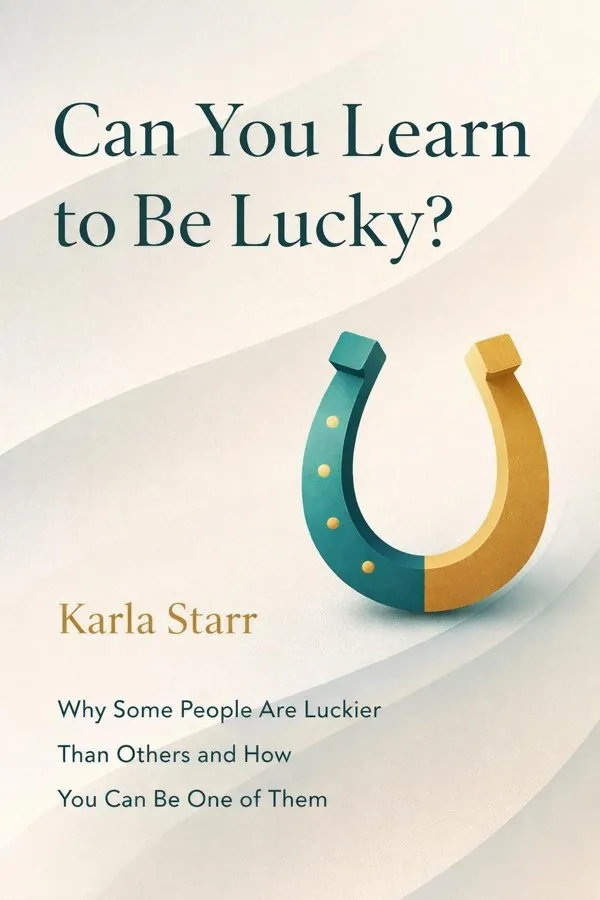
Can You Learn to Be Lucky?: Why Some People Are Luckier Than Others and How You Can Be One of Them: Summary & Key Insights
by Karla Starr
 10 min11 chaptersAudio available
What Is Can You Learn to Be Lucky?: Why Some People Are Luckier Than Others and How You Can Be One of Them About?
Can You Learn to Be Lucky?: Why Some People Are Luckier Than Others and How You Can Be One of Them by Karla Starr is a psychology book spanning 11 pages. This book explores the science behind luck, showing how patterns of behavior, perception, and decision-making can influence outcomes that people often attribute to chance. Drawing on psychology, neuroscience, and behavioral economics, Karla Starr explains how individuals can cultivate habits and mindsets that increase their likelihood of success and serendipity.
This FizzRead summary covers all 11 key chapters of Can You Learn to Be Lucky?: Why Some People Are Luckier Than Others and How You Can Be One of Them in approximately 10 minutes, distilling the most important ideas, arguments, and takeaways from Karla Starr's work. Also available as an audio summary and Key Quotes Podcast.
Can You Learn to Be Lucky?: Why Some People Are Luckier Than Others and How You Can Be One of Them
This book explores the science behind luck, showing how patterns of behavior, perception, and decision-making can influence outcomes that people often attribute to chance. Drawing on psychology, neuroscience, and behavioral economics, Karla Starr explains how individuals can cultivate habits and mindsets that increase their likelihood of success and serendipity.
Who Should Read Can You Learn to Be Lucky?: Why Some People Are Luckier Than Others and How You Can Be One of Them?
This book is perfect for anyone interested in psychology and looking to gain actionable insights in a short read. Whether you're a student, professional, or lifelong learner, the key ideas from Can You Learn to Be Lucky?: Why Some People Are Luckier Than Others and How You Can Be One of Them by Karla Starr will help you think differently.
- ✓Readers who enjoy psychology and want practical takeaways
- ✓Professionals looking to apply new ideas to their work and life
- ✓Anyone who wants the core insights of Can You Learn to Be Lucky?: Why Some People Are Luckier Than Others and How You Can Be One of Them in just 10 minutes
Want the full summary?
Get instant access to this book summary and 100K+ more with Fizz Moment.
Get Free SummaryAvailable on App Store • Free to download
Key Chapters
The first key to understanding luck is recognizing how our minds filter the world. Our brains are designed for efficiency, not accuracy. Every day, we process vast amounts of information through shortcuts—what psychologists call heuristics. These mental shortcuts let us make quick judgments but also warp our sense of cause and effect.
We tend to misinterpret randomness because our minds crave meaning. When two events align—say, we meet someone right before landing a great job—we call it luck. But in reality, our cognitive biases helped shape the sequence. Optimism bias can make us take more initiative; confirmation bias can steer our attention toward anything that supports our hopes. What we label as luck is often a reflection of these biases at work.
Similarly, the concept of the *availability heuristic* plays a crucial role. We remember vivid outcomes—winning a prize, finding money—and overlook all the unseen groundwork that led to them. Lucky people appear blessed because their visible results stand out, while the steady habits behind those results go unnoticed. My goal is to peel back this illusion and show that what we call luck is often an accumulation of intelligent choices amplified by perception.
Once you understand how your mind interprets randomness, you start to see luck not as an external gift but as a psychological pattern. Changing the way you think about probability, risk, and effort changes how you experience fortune.
Attention is the lens through which luck operates. You cannot take advantage of opportunities you fail to see. Psychological research shows that people who describe themselves as lucky are more likely to notice unexpected events and turn them into advantages.
Imagine walking down a busy street. Most people stay focused on their destination, filtering out everything else. Lucky people, however, keep an open cognitive stance—they notice the restaurant sign they’ve never seen, the flyer on a window advertising a contest, or a stranger whose expression invites conversation. This openness to noticing is not accidental; it stems from a mindset of curiosity and expectation.
Our attentional system works like a spotlight: what you expect determines what you perceive. When you believe good things can happen, your brain stays alert to cues that support that belief. When you assume the world is hostile, you unconsciously tune out potential chances. Cultivating luck begins here—with training yourself to notice patterns and allowing curiosity to guide perception. Over time, this shift transforms everyday randomness into a playground of possibility.
+ 9 more chapters — available in the FizzRead app
All Chapters in Can You Learn to Be Lucky?: Why Some People Are Luckier Than Others and How You Can Be One of Them
About the Author
Karla Starr is an American science and business journalist known for her work on behavioral science and human decision-making. Her writing has appeared in publications such as The Atlantic, Slate, and Popular Science.
Get This Summary in Your Preferred Format
Read or listen to the Can You Learn to Be Lucky?: Why Some People Are Luckier Than Others and How You Can Be One of Them summary by Karla Starr anytime, anywhere. FizzRead offers multiple formats so you can learn on your terms — all free.
Available formats: App · Audio · PDF · EPUB — All included free with FizzRead
Download Can You Learn to Be Lucky?: Why Some People Are Luckier Than Others and How You Can Be One of Them PDF and EPUB Summary
Key Quotes from Can You Learn to Be Lucky?: Why Some People Are Luckier Than Others and How You Can Be One of Them
“The first key to understanding luck is recognizing how our minds filter the world.”
“Attention is the lens through which luck operates.”
Frequently Asked Questions about Can You Learn to Be Lucky?: Why Some People Are Luckier Than Others and How You Can Be One of Them
Can You Learn to Be Lucky?: Why Some People Are Luckier Than Others and How You Can Be One of Them by Karla Starr is a psychology book that explores key ideas across 11 chapters. This book explores the science behind luck, showing how patterns of behavior, perception, and decision-making can influence outcomes that people often attribute to chance. Drawing on psychology, neuroscience, and behavioral economics, Karla Starr explains how individuals can cultivate habits and mindsets that increase their likelihood of success and serendipity.
You Might Also Like
The Body Keeps the Score
Bessel van der Kolk
10 min
Surrounded by Idiots
Thomas Erikson
10 min
Emotional Intelligence
Daniel Goleman
10 min
Attached
Amir Levine
10 min
Why Does He Do That
Lundy Bancroft
10 min
Women Who Run with the Wolves
Clarissa Pinkola Estés
10 minBrowse by Category
Ready to read Can You Learn to Be Lucky?: Why Some People Are Luckier Than Others and How You Can Be One of Them?
Get the full summary and 100K+ more books with Fizz Moment.