
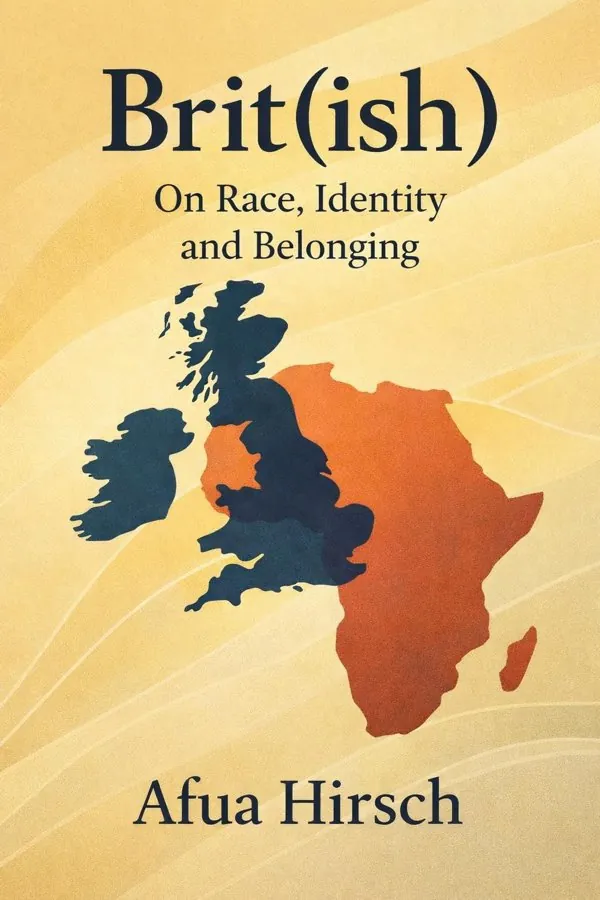
Brit(ish): On Race, Identity and Belonging: Summary & Key Insights
by Afua Hirsch
 10 min11 chaptersAudio available
What Is Brit(ish): On Race, Identity and Belonging About?
Brit(ish): On Race, Identity and Belonging by Afua Hirsch is a sociology book spanning 11 pages. Brit(ish) is a powerful exploration of race, identity, and belonging in modern Britain. Afua Hirsch, a journalist of mixed Ghanaian and British heritage, examines the complexities of being black and British, confronting the nation’s uneasy relationship with its colonial past and the persistent racial inequalities that shape everyday life. Through personal narrative and social critique, Hirsch challenges readers to rethink what it truly means to belong in a multicultural society.
This FizzRead summary covers all 11 key chapters of Brit(ish): On Race, Identity and Belonging in approximately 10 minutes, distilling the most important ideas, arguments, and takeaways from Afua Hirsch's work. Also available as an audio summary and Key Quotes Podcast.
Brit(ish): On Race, Identity and Belonging
Brit(ish) is a powerful exploration of race, identity, and belonging in modern Britain. Afua Hirsch, a journalist of mixed Ghanaian and British heritage, examines the complexities of being black and British, confronting the nation’s uneasy relationship with its colonial past and the persistent racial inequalities that shape everyday life. Through personal narrative and social critique, Hirsch challenges readers to rethink what it truly means to belong in a multicultural society.
Who Should Read Brit(ish): On Race, Identity and Belonging?
This book is perfect for anyone interested in sociology and looking to gain actionable insights in a short read. Whether you're a student, professional, or lifelong learner, the key ideas from Brit(ish): On Race, Identity and Belonging by Afua Hirsch will help you think differently.
- ✓Readers who enjoy sociology and want practical takeaways
- ✓Professionals looking to apply new ideas to their work and life
- ✓Anyone who wants the core insights of Brit(ish): On Race, Identity and Belonging in just 10 minutes
Want the full summary?
Get instant access to this book summary and 100K+ more with Fizz Moment.
Get Free SummaryAvailable on App Store • Free to download
Key Chapters
My childhood in Wimbledon was, on the surface, comfortably middle-class and quintessentially British. I went to good schools, lived among manicured hedges, and absorbed the codes of polite English life. Yet beneath this calm exterior was a quiet tension. I was aware, even if nobody spoke of it, that I did not quite match the picture. My Ghanaian father’s brown skin made strangers pause, while my mother’s whiteness allowed me to be read as ‘almost like us.’ These early encounters taught me that identity in Britain is multilayered, negotiated daily through glances, silences, and coded assumptions. I learned that belonging was conditional—granted generously in one moment and subtly withdrawn in another.
As a child, I tried to blend in, mastering the accents and idioms of my world. But there are limits to camouflage when your skin tells its own story. I became aware of how race shaped perception, not through overt hostility but through small, relentless signals: teachers complimenting my ‘good English,’ friends’ parents asking where I was really from. These micro-moments, when accumulated, create the architecture of exclusion. They whisper that to be British and Black is somehow a contradiction. The pain of that contradiction became the foundation on which I built my questions about identity, belonging, and truth.
+ 9 more chapters — available in the FizzRead app
All Chapters in Brit(ish): On Race, Identity and Belonging
About the Author
Afua Hirsch is a British writer, broadcaster, and former barrister. Born in Norway and raised in London, she has worked as a journalist for The Guardian and Sky News. Her work often focuses on issues of race, identity, and social justice. Brit(ish) is her debut book and was shortlisted for several major literary awards.
Get This Summary in Your Preferred Format
Read or listen to the Brit(ish): On Race, Identity and Belonging summary by Afua Hirsch anytime, anywhere. FizzRead offers multiple formats so you can learn on your terms — all free.
Available formats: App · Audio · PDF · EPUB — All included free with FizzRead
Download Brit(ish): On Race, Identity and Belonging PDF and EPUB Summary
Key Quotes from Brit(ish): On Race, Identity and Belonging
“My childhood in Wimbledon was, on the surface, comfortably middle-class and quintessentially British.”
“My years at Oxford crystallized what I had only sensed before: that Britain’s class structures and racial hierarchies are intertwined so seamlessly that they appear invisible.”
Frequently Asked Questions about Brit(ish): On Race, Identity and Belonging
Brit(ish): On Race, Identity and Belonging by Afua Hirsch is a sociology book that explores key ideas across 11 chapters. Brit(ish) is a powerful exploration of race, identity, and belonging in modern Britain. Afua Hirsch, a journalist of mixed Ghanaian and British heritage, examines the complexities of being black and British, confronting the nation’s uneasy relationship with its colonial past and the persistent racial inequalities that shape everyday life. Through personal narrative and social critique, Hirsch challenges readers to rethink what it truly means to belong in a multicultural society.
You Might Also Like

Between the World and Me
Ta-Nehisi Coates
10 min
Half the Sky
Nicholas D. Kristof, Sheryl WuDunn
10 min
Men Explain Things To Me
Rebecca Solnit
10 min
Rational Ritual
Michael Suk-Young Chwe
10 min
The New Jim Crow
Michelle Alexander
10 min
Beyond Culture
Edward T. Hall
10 minBrowse by Category
Ready to read Brit(ish): On Race, Identity and Belonging?
Get the full summary and 100K+ more books with Fizz Moment.