
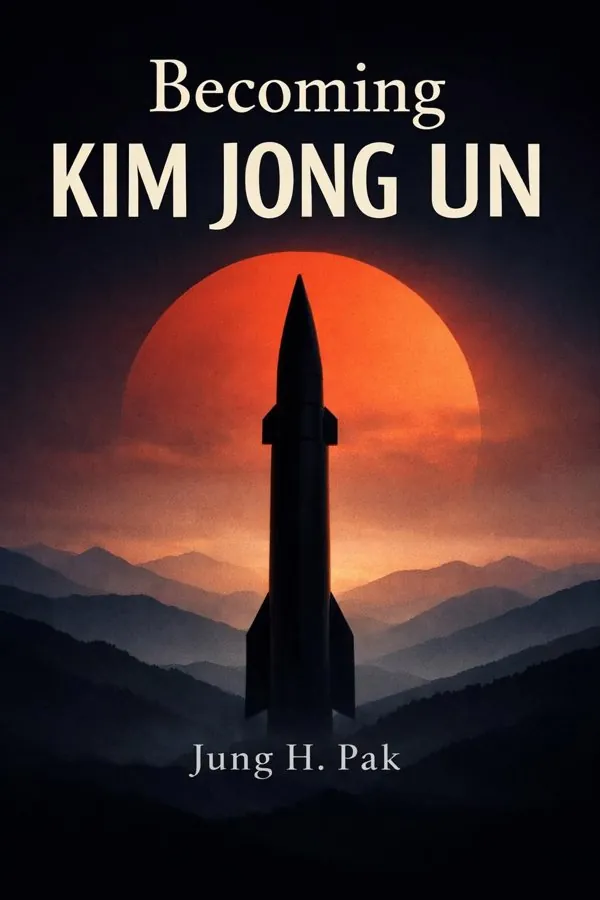
Becoming Kim Jong Un: A Former CIA Officer’s Insights into North Korea’s Enigmatic Young Dictator: Summary & Key Insights
by Jung H. Pak
 10 min9 chapters
What Is Becoming Kim Jong Un: A Former CIA Officer’s Insights into North Korea’s Enigmatic Young Dictator About?
Becoming Kim Jong Un: A Former CIA Officer’s Insights into North Korea’s Enigmatic Young Dictator by Jung H. Pak is a politics book spanning 9 pages. Written by former CIA analyst Jung H. Pak, this book offers an in-depth examination of Kim Jong Un’s rise to power, his leadership style, and the internal dynamics of North Korea’s regime. Drawing on intelligence analysis and historical context, Pak explores how Kim consolidated control, shaped his image, and navigated relations with the United States and other global powers.
This FizzRead summary covers all 9 key chapters of Becoming Kim Jong Un: A Former CIA Officer’s Insights into North Korea’s Enigmatic Young Dictator in approximately 10 minutes, distilling the most important ideas, arguments, and takeaways from Jung H. Pak's work.
Becoming Kim Jong Un: A Former CIA Officer’s Insights into North Korea’s Enigmatic Young Dictator
Written by former CIA analyst Jung H. Pak, this book offers an in-depth examination of Kim Jong Un’s rise to power, his leadership style, and the internal dynamics of North Korea’s regime. Drawing on intelligence analysis and historical context, Pak explores how Kim consolidated control, shaped his image, and navigated relations with the United States and other global powers.
Who Should Read Becoming Kim Jong Un: A Former CIA Officer’s Insights into North Korea’s Enigmatic Young Dictator?
This book is perfect for anyone interested in politics and looking to gain actionable insights in a short read. Whether you're a student, professional, or lifelong learner, the key ideas from Becoming Kim Jong Un: A Former CIA Officer’s Insights into North Korea’s Enigmatic Young Dictator by Jung H. Pak will help you think differently.
- ✓Readers who enjoy politics and want practical takeaways
- ✓Professionals looking to apply new ideas to their work and life
- ✓Anyone who wants the core insights of Becoming Kim Jong Un: A Former CIA Officer’s Insights into North Korea’s Enigmatic Young Dictator in just 10 minutes
Want the full summary?
Get instant access to this book summary and 100K+ more with Fizz Moment.
Get Free SummaryAvailable on App Store • Free to download
Key Chapters
Kim Jong Un was born into privilege, yet into a life confined by danger and expectation. From his earliest days, he lived in the shadow of his grandfather, Kim Il Sung, and his father, Kim Jong Il — two leaders who built and maintained one of the most isolated totalitarian systems in history. Inside North Korea’s royal family, affection was measured in loyalty and competence, not tenderness. Kim’s years in Switzerland showed him glimpses of freedom, technology, and wealth beyond imagination, yet they were also marked by loneliness and secrecy. He lived under an assumed name, watched American basketball, and absorbed the cultural confidence of the West — experiences that would later manifest in his performative leadership style.
When Kim Jong Il’s health began failing, the regime faced its most dangerous moment in decades. North Korea’s legitimacy rested on the myth of the Kim family as divinely ordained rulers, yet succession was never guaranteed. Kim Jong Un was young, inexperienced, and largely unknown to the older elites who wielded influence in the Workers’ Party and military. But he had one crucial asset: his resemblance to Kim Il Sung. His face, body language, and even haircut called back to the founder of the nation, a visual continuity that became central to his legitimacy. My analysis of intelligence at the time showed how the regime carefully orchestrated a narrative of predestined succession, portraying Kim as a “genius of the century” even when he had yet to take a formal position of power.
This stage of grooming wasn’t simply a family affair. It was a meticulous state project designed to ensure that by the time Kim Jong Il died in 2011, the machinery of loyalty was already set in motion. The young Kim’s first challenge would not be external threat, but internal consolidation — to transform inherited authority into personal control.
The death of Kim Jong Il in December 2011 marked a potential fracture in North Korea’s rigid structure. Power vacuums are perilous in authoritarian states; loyalties shift, rival factions surface, and the specter of instability looms. From the intelligence perspective, we watched closely to see whether Kim Jong Un could survive. What followed was astonishing in speed and brutality. Within a few years, Kim eliminated potential challengers, reasserted dominance over the Korean People’s Army, and reconfigured the ruling apparatus around himself. The execution of his uncle Jang Song Thaek in 2013 was the clearest signal: Kim would rule with absolute authority, and no family tie would protect those who posed a threat.
Jang had been one of the most experienced and powerful figures in the regime, well connected in China and the economic elite. By labeling his uncle a traitor and publicly executing him, Kim shattered the old guard’s sense of security and demonstrated that loyalty would be defined entirely by him. It was a message to the military, party, and public alike — that the young leader was neither a puppet nor a novice.
But consolidation wasn’t just about repression. Kim also moved to renew the symbolism of continuity. Through propaganda and staged visits, he presented himself as a familiar leader who brought emotional charisma akin to his grandfather’s. Images of him embracing workers, inspecting missile tests, or smiling with soldiers created a carefully balanced dual image: a warm “people’s leader” and an untouchable Supreme Commander. From the intelligence lens, these were not mere theatrics — they were strategic acts of political survival.
+ 7 more chapters — available in the FizzRead app
All Chapters in Becoming Kim Jong Un: A Former CIA Officer’s Insights into North Korea’s Enigmatic Young Dictator
About the Author
Jung H. Pak is a former senior analyst at the Central Intelligence Agency specializing in Korean affairs. She has served as a senior fellow at the Brookings Institution and as Deputy Assistant Secretary of State for East Asian and Pacific Affairs. Her work focuses on North Korea, East Asian security, and U.S. foreign policy.
Get This Summary in Your Preferred Format
Read or listen to the Becoming Kim Jong Un: A Former CIA Officer’s Insights into North Korea’s Enigmatic Young Dictator summary by Jung H. Pak anytime, anywhere. FizzRead offers multiple formats so you can learn on your terms — all free.
Available formats: App · Audio · PDF · EPUB — All included free with FizzRead
Download Becoming Kim Jong Un: A Former CIA Officer’s Insights into North Korea’s Enigmatic Young Dictator PDF and EPUB Summary
Key Quotes from Becoming Kim Jong Un: A Former CIA Officer’s Insights into North Korea’s Enigmatic Young Dictator
“Kim Jong Un was born into privilege, yet into a life confined by danger and expectation.”
“The death of Kim Jong Il in December 2011 marked a potential fracture in North Korea’s rigid structure.”
Frequently Asked Questions about Becoming Kim Jong Un: A Former CIA Officer’s Insights into North Korea’s Enigmatic Young Dictator
Becoming Kim Jong Un: A Former CIA Officer’s Insights into North Korea’s Enigmatic Young Dictator by Jung H. Pak is a politics book that explores key ideas across 9 chapters. Written by former CIA analyst Jung H. Pak, this book offers an in-depth examination of Kim Jong Un’s rise to power, his leadership style, and the internal dynamics of North Korea’s regime. Drawing on intelligence analysis and historical context, Pak explores how Kim consolidated control, shaped his image, and navigated relations with the United States and other global powers.
You Might Also Like
Antifa: The Anti-Fascist Handbook
Mark Bray
10 min
Attack from Within: How Disinformation Is Sabotaging America
Barbara McQuade
10 min
Coercion, Capital, and European States, AD 990–1992
Charles Tilly
10 min
Digital Democracy: Concepts, Methodologies, Tools, and Applications
Various Authors
10 min
Fascism
Stanley G. Payne
10 min
Fire And Fury: Inside The Trump White House
Michael Wolff
10 minBrowse by Category
Ready to read Becoming Kim Jong Un: A Former CIA Officer’s Insights into North Korea’s Enigmatic Young Dictator?
Get the full summary and 100K+ more books with Fizz Moment.