
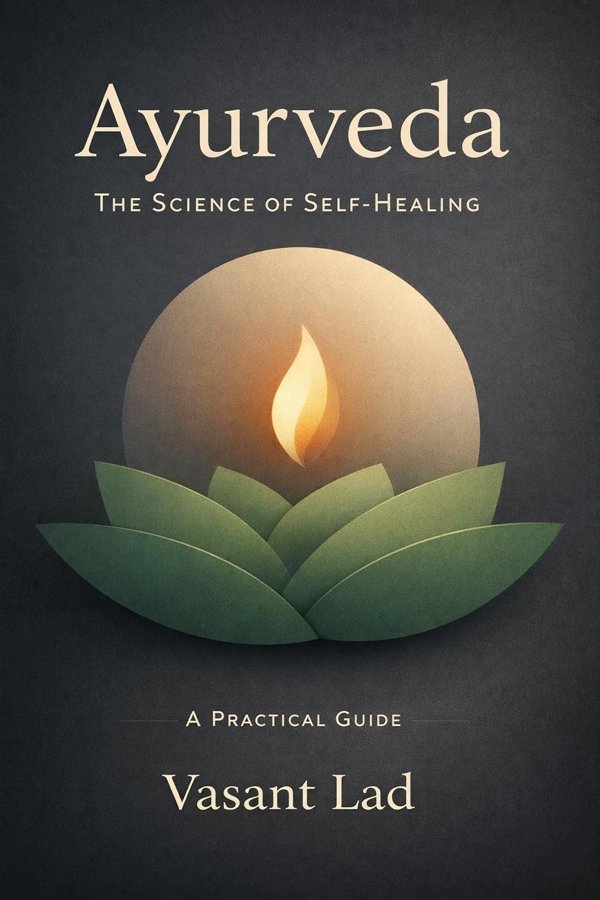
Ayurveda: The Science of Self-Healing: A Practical Guide: Summary & Key Insights
by Vasant Lad
 10 min9 chaptersAudio available
Key Takeaways from Ayurveda: The Science of Self-Healing: A Practical Guide
Health begins with a radical idea: the human body is not separate from nature, but a small expression of the same forces that govern the universe.
One of Ayurveda’s most empowering insights is that true health care begins with self-knowledge.
Illness rarely starts where we first notice it.
Self-healing begins the moment we stop outsourcing all authority over our bodies.
Ayurveda treats food as one of the most immediate and powerful forms of medicine.
What Is Ayurveda: The Science of Self-Healing: A Practical Guide About?
Ayurveda: The Science of Self-Healing: A Practical Guide by Vasant Lad is a health_med book spanning 9 pages. Ayurveda: The Science of Self-Healing is one of the most accessible modern introductions to Ayurveda, India’s ancient system of holistic medicine. In this practical guide, Vasant Lad explains that health is not merely the absence of disease but a dynamic state of balance among body, mind, senses, and environment. Rather than focusing only on symptoms, he shows readers how to understand their constitution, recognize early signs of imbalance, and use food, daily routines, herbs, cleansing practices, and self-awareness to support healing from the inside out. What makes this book enduringly valuable is its clarity: Lad translates classical Ayurvedic principles into everyday language without stripping them of depth. Readers learn why one person thrives on warming foods while another needs cooling ones, why digestion is central to vitality, and how habits, emotions, and seasons shape well-being. Lad’s authority comes from lived tradition and professional expertise. Trained in India as an Ayurvedic physician and later a pioneering teacher in the West, he became one of the most influential voices introducing Ayurveda to global readers. This book matters because it offers not just information, but a framework for living more consciously and naturally.
This FizzRead summary covers all 9 key chapters of Ayurveda: The Science of Self-Healing: A Practical Guide in approximately 10 minutes, distilling the most important ideas, arguments, and takeaways from Vasant Lad's work. Also available as an audio summary and Key Quotes Podcast.
Ayurveda: The Science of Self-Healing: A Practical Guide
Ayurveda: The Science of Self-Healing is one of the most accessible modern introductions to Ayurveda, India’s ancient system of holistic medicine. In this practical guide, Vasant Lad explains that health is not merely the absence of disease but a dynamic state of balance among body, mind, senses, and environment. Rather than focusing only on symptoms, he shows readers how to understand their constitution, recognize early signs of imbalance, and use food, daily routines, herbs, cleansing practices, and self-awareness to support healing from the inside out. What makes this book enduringly valuable is its clarity: Lad translates classical Ayurvedic principles into everyday language without stripping them of depth. Readers learn why one person thrives on warming foods while another needs cooling ones, why digestion is central to vitality, and how habits, emotions, and seasons shape well-being. Lad’s authority comes from lived tradition and professional expertise. Trained in India as an Ayurvedic physician and later a pioneering teacher in the West, he became one of the most influential voices introducing Ayurveda to global readers. This book matters because it offers not just information, but a framework for living more consciously and naturally.
Who Should Read Ayurveda: The Science of Self-Healing: A Practical Guide?
This book is perfect for anyone interested in health_med and looking to gain actionable insights in a short read. Whether you're a student, professional, or lifelong learner, the key ideas from Ayurveda: The Science of Self-Healing: A Practical Guide by Vasant Lad will help you think differently.
- ✓Readers who enjoy health_med and want practical takeaways
- ✓Professionals looking to apply new ideas to their work and life
- ✓Anyone who wants the core insights of Ayurveda: The Science of Self-Healing: A Practical Guide in just 10 minutes
Want the full summary?
Get instant access to this book summary and 100K+ more with Fizz Moment.
Get Free SummaryAvailable on App Store • Free to download
Key Chapters
Health begins with a radical idea: the human body is not separate from nature, but a small expression of the same forces that govern the universe. Ayurveda teaches that all matter and life are composed of five elements—ether, air, fire, water, and earth. These elements are not used in a purely chemical sense. Instead, they describe qualities and patterns. Ether represents space and openness, air movement and lightness, fire transformation and heat, water cohesion and fluidity, and earth structure and stability. Together, they form the basis of the three doshas: Vata, Pitta, and Kapha.
Vata is made of ether and air, so it governs motion, nerve impulses, breathing, circulation, and communication. Pitta arises from fire and water and governs digestion, metabolism, vision, and intelligence. Kapha, formed from water and earth, governs lubrication, endurance, immunity, and physical form. Every person contains all three, but in unique proportions. This framework helps explain why people react differently to the same food, weather, or stress.
For example, someone with excess Vata may feel anxious, dry, cold, and scattered. A Pitta imbalance may appear as irritability, inflammation, or acid indigestion. Too much Kapha may bring lethargy, congestion, or heaviness. The elemental model gives readers a language for seeing patterns before they become severe illness.
The practical value of this teaching lies in observation. If your life feels overheated, overstimulated, dry, stagnant, or heavy, Ayurveda invites you to restore balance by choosing opposite qualities in food, schedule, and environment. Actionable takeaway: begin noticing the dominant qualities in your body and mind each day—light or heavy, hot or cold, dry or oily, mobile or stagnant—and use that awareness as your first step toward self-healing.
One of Ayurveda’s most empowering insights is that true health care begins with self-knowledge. Vasant Lad explains the distinction between prakriti and vikriti. Prakriti is your innate constitution—the natural balance of doshas you were born with. It shapes your body type, temperament, appetite, sleep patterns, emotional tendencies, and vulnerabilities. Vikriti is your current state of imbalance, the way stress, diet, climate, aging, and lifestyle have shifted you away from your baseline.
This distinction matters because Ayurveda does not offer one universal ideal diet or routine. A naturally Vata-predominant person may be creative, quick-thinking, and energetic, but also prone to anxiety, constipation, dry skin, and irregular habits. A Pitta person may be focused, sharp, and ambitious, but susceptible to anger, overheating, ulcers, or skin irritation. A Kapha person may be calm, loving, and stable, but also prone to sluggishness, attachment, weight gain, and excess mucus.
Lad encourages readers to study their bodies honestly. Do you get hungry at regular times or forget to eat? Do you thrive on activity or need motivation to move? Are you more affected by cold, heat, or dampness? The point is not to label yourself rigidly but to understand your tendencies so you can respond wisely.
A person with a Vata constitution may do better with regular meals, warmth, grounding routines, and less overstimulation. A Pitta person may need moderation, cooling foods, and emotional softening. A Kapha person often benefits from lightness, variety, and stimulation. Actionable takeaway: identify your dominant dosha tendencies and compare them with your current symptoms; the gap between the two often reveals exactly where imbalance is developing.
Illness rarely starts where we first notice it. One of Ayurveda’s most valuable contributions is its view that disease develops in stages, often long before a diagnosis is made. Lad presents disease not as a sudden enemy but as the result of accumulated imbalance. Wrong diet, poor digestion, sensory overload, emotional suppression, seasonal mismatch, and unhealthy routines gradually disturb the doshas. If these disturbances are not corrected, they move deeper into the tissues and eventually manifest as recognizable disease.
This early-stage view changes how we think about prevention. Instead of waiting for severe pain, laboratory results, or chronic fatigue, Ayurveda asks us to pay attention to subtle signals: a coated tongue, irregular appetite, bloating, irritability, poor sleep, dryness, lethargy, brain fog, or changes in elimination. These are not trivial annoyances. They are messages that the body is losing its internal harmony.
Lad also emphasizes the role of agni, or digestive fire. When agni is weak or disturbed, food is not fully digested, and toxins or metabolic residue—often described in Ayurveda as ama—begin to accumulate. This buildup clogs channels, disturbs tissues, and creates fertile ground for disease. In practical terms, chronic overeating, eating while stressed, incompatible food combinations, or ignoring hunger may gradually undermine vitality.
The empowering lesson is that small corrections made early can prevent larger problems later. Warm, digestible meals, regular sleep, proper elimination, and an appropriate seasonal routine may seem simple, but in Ayurveda these are profound forms of medicine. Actionable takeaway: stop treating minor recurring discomforts as normal; choose one early warning sign in your body and respond to it now through diet, routine, and rest before it deepens into chronic imbalance.
Self-healing begins the moment we stop outsourcing all authority over our bodies. While Ayurveda includes sophisticated clinical methods, Lad makes clear that everyday diagnosis also depends on learning to observe yourself carefully. The body constantly communicates through appetite, thirst, bowel habits, energy levels, sleep quality, skin texture, mood, and the senses. Rather than viewing symptoms as random malfunctions, Ayurveda sees them as meaningful expressions of doshic imbalance.
Lad discusses classic Ayurvedic assessment methods such as pulse reading, tongue observation, and attention to the eyes, nails, skin, and voice. But he also gives readers simpler tools for self-study. A dry tongue, cracking joints, or variable appetite may suggest Vata disturbance. Burning sensations, yellow coating, or sharp hunger may point to Pitta excess. A thick white coating, heaviness, and sluggish digestion may indicate Kapha accumulation. These observations are not meant to replace professional medical care, especially in serious illness, but to cultivate everyday awareness.
What makes this approach practical is its emphasis on pattern rather than isolated symptoms. A person who feels tired after every meal, craves sweets, wakes congested, and avoids exercise may be seeing a coherent Kapha pattern. Another who works long hours, skips meals, becomes impatient, and develops acid reflux may be intensifying Pitta. This kind of observation encourages responsibility and curiosity instead of fear.
Lad’s larger point is that awareness itself is therapeutic. Once you begin noticing what aggravates or calms you, your lifestyle choices become more precise. Actionable takeaway: keep a seven-day health journal tracking appetite, digestion, sleep, mood, elimination, and energy; patterns will emerge, and those patterns often reveal your next best step toward balance.
Ayurveda treats food as one of the most immediate and powerful forms of medicine. Lad explains that what we eat matters, but so do how, when, and why we eat. Food interacts with the doshas through qualities such as hot or cold, heavy or light, dry or oily, sharp or dull. A meal is not judged only by calories or nutrients but by its effect on digestion, elimination, mental clarity, and constitutional balance.
This means the best diet is not the same for everyone. A Vata person generally benefits from warm, moist, grounding foods such as soups, stews, cooked grains, healthy oils, and sweet root vegetables. A Pitta person often does better with cooling, less spicy foods and plenty of fresh, bitter, or sweet tastes. A Kapha person typically thrives on lighter, drier, more stimulating foods, with fewer heavy dairy products, sweets, and fried dishes. Lad also emphasizes digestive strength. Even wholesome food can create imbalance if eaten in excess, at the wrong time, or when the digestive fire is weak.
He encourages simple eating habits that modern readers often overlook: eat with attention, avoid overeating, allow the previous meal to digest, and favor fresh food over stale or overly processed meals. Eating while angry, distracted, or rushed can be as harmful as eating the wrong foods because it disrupts digestion and assimilation.
Ayurveda invites readers to move from rigid nutrition rules to responsive nourishment. Notice how different meals affect your body the next morning, not just during the first few bites. Actionable takeaway: for one week, eat your main meal at a regular time each day, choose foods that suit your dosha tendencies, and observe whether your digestion, mood, and energy become more steady.
Many people seek healing through dramatic interventions while ignoring the quiet force of daily rhythm. Lad repeatedly shows that routine is one of Ayurveda’s central therapies. The body functions best when it can anticipate regular patterns of sleep, waking, eating, elimination, movement, work, and rest. Irregular living disturbs the doshas, especially Vata, and once rhythm is lost, digestion, hormones, mood, and immunity often begin to suffer.
Ayurveda’s daily regimen, or dinacharya, is grounded in simplicity. Waking early, cleansing the mouth and tongue, drinking water, evacuating the bowels, practicing gentle movement or breathing, eating meals at regular times, and sleeping at a suitable hour all support internal order. These habits may sound ordinary, but Lad presents them as foundational because they align personal life with biological and natural cycles.
Seasonal routine matters too. The body does not need the same foods and activities in winter as in summer. Dry, cold weather can aggravate Vata, hot months can increase Pitta, and damp spring often heightens Kapha. Adjusting meals, clothing, exercise, and rest according to the season prevents doshic accumulation. For example, richer warming foods may help in cold months, while cooling and less spicy choices may be needed in summer.
Routine is not about discipline for its own sake. It creates predictability that calms the nervous system and strengthens digestion. In modern life, where artificial light, erratic work schedules, and constant stimulation are common, this teaching is especially relevant. Actionable takeaway: choose two anchors for your day—such as waking at the same time and eating lunch consistently—and protect them for the next ten days as non-negotiable supports for balance.
Healing is not only about adding healthy things; sometimes it requires removing what has accumulated. Lad explains that when doshic disturbance and toxic buildup become deeply rooted, more systematic cleansing may be needed. Ayurveda includes a range of therapeutic measures, from gentle household practices to classical purification procedures collectively known as panchakarma. The goal is not punishment or extreme detox culture, but the careful elimination of excess doshas and impurities so the body can regain its natural intelligence.
Before purification, Ayurveda often emphasizes preparation. Oleation, sweating, rest, and simplified diet help loosen and mobilize accumulated waste. Depending on the imbalance, therapies may include induced emesis, purgation, medicated enemas, nasal cleansing, and bloodletting in traditional settings. Lad presents these methods within their proper context: they are powerful interventions that should be used appropriately, often under skilled guidance, not imitated casually without knowledge.
For everyday readers, the deeper lesson is that accumulation has consequences. Too much food, too much stimulation, too many unresolved emotions, and too little elimination create burden. Even gentle cleansing practices—such as eating more simply, drinking warm water, reducing incompatible foods, resting the senses, or taking a mono-diet for a short period under guidance—can reset digestion and lighten the body.
Purification in Ayurveda is always tied to rebuilding. After cleansing, nourishment, rest, and proper routine are essential so that the tissues become stronger rather than depleted. Actionable takeaway: if you feel chronically heavy, congested, inflamed, or sluggish, begin with the gentlest form of cleansing—simplify your diet, reduce overstimulation, and support digestion—before seeking more advanced purification methods with qualified support.
Ayurveda never separates the mind from the body because emotion, thought, and physiology constantly shape one another. Lad shows that fear can disturb Vata, anger can inflame Pitta, and attachment or inertia can increase Kapha. This does not mean emotions are bad or should be suppressed. It means that inner life has physical consequences, and genuine healing must include mental and emotional awareness.
The mind also influences digestion, sleep, immunity, and vitality. A person may eat a perfect meal, but if they consume it in a state of anxiety, resentment, or distraction, the body may not digest it well. Similarly, chronic ambition, competitiveness, and pressure can intensify Pitta-related conditions, while grief and withdrawal may increase Kapha stagnation. Ayurveda therefore recommends practices that settle and clarify the mind, including meditation, breathwork, prayer, mantra, time in nature, and conscious restraint of the senses.
Lad’s approach is gentle rather than moralistic. He invites readers to observe the qualities of their mental state just as they observe the qualities of food. Is the mind restless, sharp, heavy, cloudy, or peaceful? What increases those tendencies? What softens them? This inquiry turns awareness into medicine.
In practical life, a Vata-aggravated person may benefit from grounding stillness and reassurance, a Pitta person from cooling reflection and non-competitive spaces, and a Kapha person from stimulation, inspiration, and emotional release. When mental practices are matched to constitutional needs, they become much more effective. Actionable takeaway: pair one physical health habit with one mental one—such as a balanced lunch with ten minutes of quiet breathing—to remind yourself that real healing always includes both body and mind.
The deepest promise of Ayurveda is not that it will rescue us from nature, but that it will teach us how to live in cooperation with it. Lad presents self-healing as a process of remembering our inherent relationship with cycles, elements, and intelligence already present in the body. Symptoms become signals, digestion becomes a measure of vitality, and daily life becomes the place where medicine is practiced.
This view challenges modern habits of fragmentation. Many people separate health into compartments: food, exercise, stress, medicine, and spirituality. Ayurveda reunites them. The same forces that govern weather also govern the body. The same imbalance that appears as acid reflux may also appear as irritability and overwork. The same tendency toward heaviness may affect both metabolism and motivation. Healing therefore requires integration, not isolated fixes.
Lad does not ask readers to become perfect or to abandon modern medicine. Instead, he offers a practical philosophy of participation. You learn your constitution, recognize excess, choose balancing foods, create steadiness through routine, cleanse when necessary, and cultivate awareness. Over time, health becomes less about reacting to crises and more about living preventively and intelligently.
This perspective is especially powerful because it restores agency. You may not control every disease process, but you can influence the terrain in which health or illness develops. By respecting your rhythms and nature’s rhythms, you reduce unnecessary struggle. Actionable takeaway: choose one area where your life is clearly out of sync with your nature—sleep, diet, pace, or stress—and bring it into better alignment this week through one small, repeatable change.
All Chapters in Ayurveda: The Science of Self-Healing: A Practical Guide
About the Author
Vasant Lad is one of the most influential modern teachers of Ayurveda in the English-speaking world. Born and trained in India, he studied and practiced Ayurvedic medicine before bringing this traditional knowledge to Western audiences in the late twentieth century. He is best known as the founder of the Ayurvedic Institute in Albuquerque, New Mexico, where he trained thousands of students in Ayurvedic theory, diagnosis, diet, herbs, and lifestyle practices. Lad’s writing is valued for making complex classical teachings accessible without losing their philosophical depth. Through books such as Ayurveda: The Science of Self-Healing, he helped establish Ayurveda as an important part of integrative and holistic health conversations. His work bridges ancient Indian medical wisdom with practical guidance for contemporary readers seeking prevention, balance, and natural healing.
Get This Summary in Your Preferred Format
Read or listen to the Ayurveda: The Science of Self-Healing: A Practical Guide summary by Vasant Lad anytime, anywhere. FizzRead offers multiple formats so you can learn on your terms — all free.
Available formats: App · Audio · PDF · EPUB — All included free with FizzRead
Download Ayurveda: The Science of Self-Healing: A Practical Guide PDF and EPUB Summary
Key Quotes from Ayurveda: The Science of Self-Healing: A Practical Guide
“Health begins with a radical idea: the human body is not separate from nature, but a small expression of the same forces that govern the universe.”
“One of Ayurveda’s most empowering insights is that true health care begins with self-knowledge.”
“Illness rarely starts where we first notice it.”
“Self-healing begins the moment we stop outsourcing all authority over our bodies.”
“Ayurveda treats food as one of the most immediate and powerful forms of medicine.”
Frequently Asked Questions about Ayurveda: The Science of Self-Healing: A Practical Guide
Ayurveda: The Science of Self-Healing: A Practical Guide by Vasant Lad is a health_med book that explores key ideas across 9 chapters. Ayurveda: The Science of Self-Healing is one of the most accessible modern introductions to Ayurveda, India’s ancient system of holistic medicine. In this practical guide, Vasant Lad explains that health is not merely the absence of disease but a dynamic state of balance among body, mind, senses, and environment. Rather than focusing only on symptoms, he shows readers how to understand their constitution, recognize early signs of imbalance, and use food, daily routines, herbs, cleansing practices, and self-awareness to support healing from the inside out. What makes this book enduringly valuable is its clarity: Lad translates classical Ayurvedic principles into everyday language without stripping them of depth. Readers learn why one person thrives on warming foods while another needs cooling ones, why digestion is central to vitality, and how habits, emotions, and seasons shape well-being. Lad’s authority comes from lived tradition and professional expertise. Trained in India as an Ayurvedic physician and later a pioneering teacher in the West, he became one of the most influential voices introducing Ayurveda to global readers. This book matters because it offers not just information, but a framework for living more consciously and naturally.
You Might Also Like

On Immunity
Eula Biss
10 min
The Three-Body Problem
Liu Cixin
10 min
Community Health Volunteer Toolkit: Training and Practical Activities
World Health Organization
10 min
Healing Back Pain: The Mind-Body Connection
John E. Sarno
10 min
Health Literacy for All: Practical Guides to Communicate Health Information (Compilations)
World Health Organization
10 min
The Complete Guide to Sports Supplements: An Evidence-Based Review
Anita Bean
10 minBrowse by Category
Ready to read Ayurveda: The Science of Self-Healing: A Practical Guide?
Get the full summary and 100K+ more books with Fizz Moment.