
Jane Jacobs Books
Jane Jacobs (1916–2006) was an American-Canadian writer and urbanist best known for her influence on urban studies and community-based planning. Her work emphasized the importance of local knowledge, diversity, and human-scale design in city development.
Known for: The Death and Life of Great American Cities, The Economy of Cities
Books by Jane Jacobs
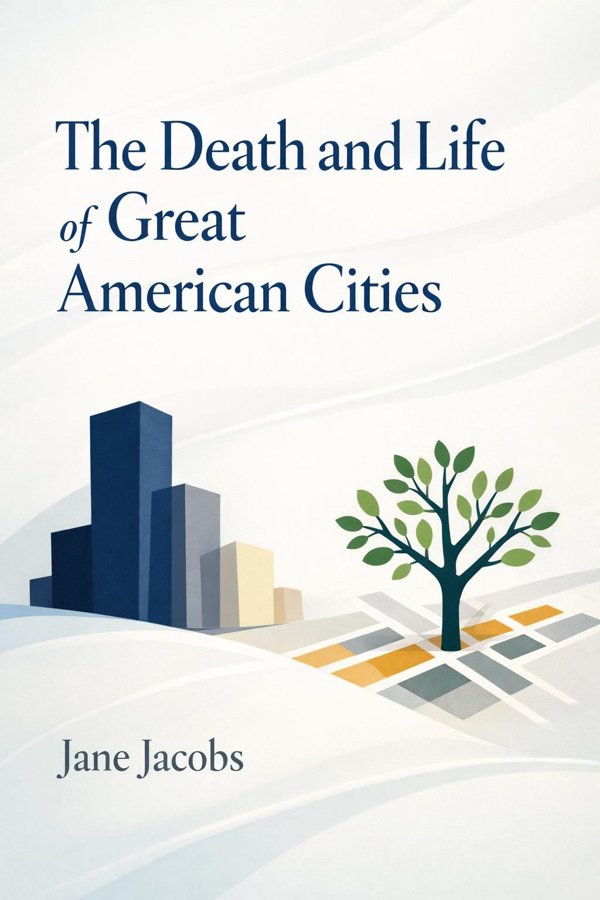
The Death and Life of Great American Cities
Jane Jacobs’ The Death and Life of Great American Cities is one of the most influential books ever written about how cities really work. First published in 1961, it challenged the dominant urban plann...
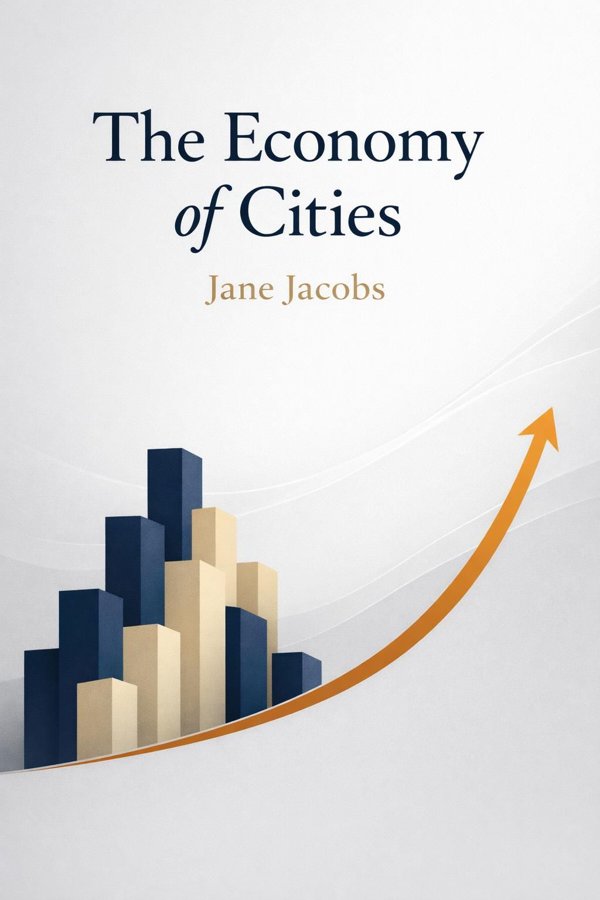
The Economy of Cities
What if economic growth does not begin in farms, natural resources, or national plans, but in the messy, crowded, inventive life of cities? In The Economy of Cities, Jane Jacobs makes exactly that cas...
Key Insights from Jane Jacobs
Sidewalk Safety Depends on Human Presence
A city street feels safest not when it is heavily controlled, but when it is continuously watched by ordinary people going about ordinary life. Jane Jacobs’ famous insight is that safety emerges from “eyes on the street”: shopkeepers, residents, passersby, delivery workers, and customers all creatin...
From The Death and Life of Great American Cities
Sidewalk Contact Builds Urban Trust
Strong communities are not built only through deep friendships; they are often built through countless small encounters. Jacobs emphasizes that sidewalks create a network of casual public contact that helps strangers live together with trust and familiarity. These brief interactions—nodding to a nei...
From The Death and Life of Great American Cities
Neighborhood Parks Need Activity Around Them
A park is not successful simply because it exists. Jacobs argues that neighborhood parks thrive only when they are embedded in a lively urban district that continually feeds them users. Many planners treated parks as automatic cures for city problems, assuming that green space would uplift any neigh...
From The Death and Life of Great American Cities
Diversity Requires Four Essential Conditions
Urban vitality is not random. Jacobs argues that lively city districts depend on a specific combination of conditions that generate diversity in people, activities, and economic life. Her four classic conditions are mixed primary uses, short blocks, buildings of varying ages and conditions, and suff...
From The Death and Life of Great American Cities
Cities Thrive on Organized Complexity
The deepest mistake in modern planning, Jacobs argues, is treating cities as if they were simple problems. A city is not a machine with a few controllable parts, nor is it a static blueprint waiting to be imposed. It is a form of organized complexity: a dense web of interdependent relationships amon...
From The Death and Life of Great American Cities
Short Blocks Multiply Choice and Movement
Urban vitality depends in part on how easily people can move through a place. Jacobs champions short blocks because they create more intersections, more route choices, and more opportunities for pedestrian circulation. This may sound like a small design detail, but it has major consequences for soci...
From The Death and Life of Great American Cities
About Jane Jacobs
Jane Jacobs (1916–2006) was an American-Canadian writer and urbanist best known for her influence on urban studies and community-based planning. Her work emphasized the importance of local knowledge, diversity, and human-scale design in city development. Jacobs’ activism and writings reshaped modern...
Read more
Jane Jacobs (1916–2006) was an American-Canadian writer and urbanist best known for her influence on urban studies and community-based planning. Her work emphasized the importance of local knowledge, diversity, and human-scale design in city development. Jacobs’ activism and writings reshaped modern...
Jane Jacobs (1916–2006) was an American-Canadian writer and urbanist best known for her influence on urban studies and community-based planning. Her work emphasized the importance of local knowledge, diversity, and human-scale design in city development. Jacobs’ activism and writings reshaped modern thinking about cities and urban renewal.



Frequently Asked Questions
Jane Jacobs (1916–2006) was an American-Canadian writer and urbanist best known for her influence on urban studies and community-based planning. Her work emphasized the importance of local knowledge, diversity, and human-scale design in city development.
Read Jane Jacobs's books in 15 minutes
Get AI-powered summaries with key insights from 2 books by Jane Jacobs.