
Bryan Caplan Books
Bryan Caplan is an American economist and professor of economics at George Mason University, known for his work in public choice theory, behavioral economics, and libertarian philosophy. He has written extensively on voter behavior, education, and immigration, and is a research fellow at the Mercatus Center.
Known for: The Case Against Education: Why the Education System Is a Waste of Time and Money, The Myth of the Rational Voter: Why Democracies Choose Bad Policies
Books by Bryan Caplan

The Case Against Education: Why the Education System Is a Waste of Time and Money
In this provocative work, economist Bryan Caplan argues that much of modern education is wasteful signaling rather than genuine skill acquisition. He contends that schools primarily certify intelligen...
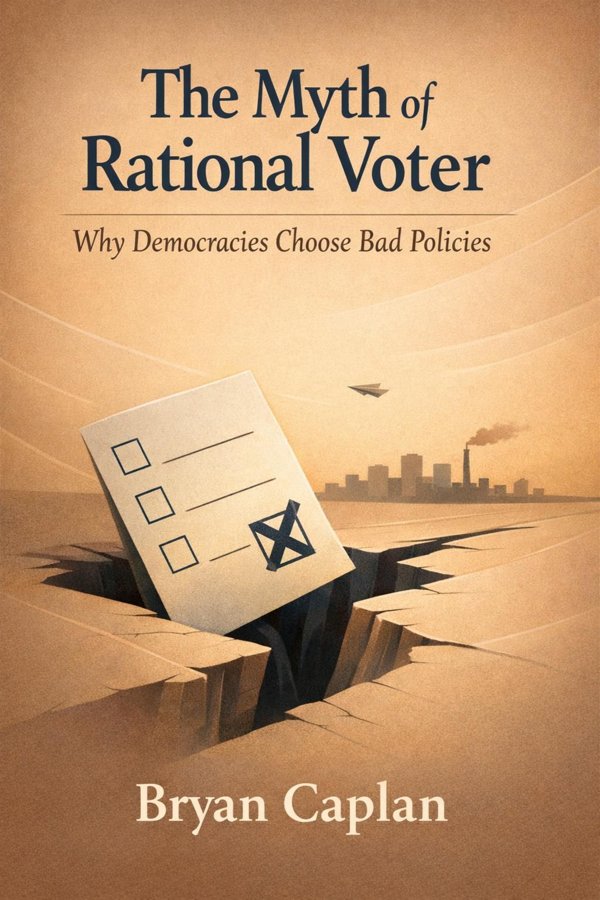
The Myth of the Rational Voter: Why Democracies Choose Bad Policies
In this influential work, economist Bryan Caplan challenges the conventional wisdom that voters are rational and well-informed participants in democratic decision-making. Drawing on insights from econ...
Key Insights from Bryan Caplan
The Signaling Model
The signaling model sits at the heart of my argument. Employers, faced with imperfect information, rely on educational credentials as reliable proxies for qualities they value: intelligence, conscientiousness, and conformity. A degree doesn’t necessarily make you smarter or more capable—it signals t...
From The Case Against Education: Why the Education System Is a Waste of Time and Money
The Human Capital Model
Traditional economists often defend the ‘human capital’ theory—that schooling boosts productivity by imparting valuable skills and knowledge. Under this view, education is like training: you learn mathematics to perform technical analysis, language to communicate effectively, history to gain perspec...
From The Case Against Education: Why the Education System Is a Waste of Time and Money
The Concept of Rational Irrationality
The starting point for my argument is simple yet profound: people often hold irrational beliefs, and in politics, they can afford to. In market transactions, being wrong has consequences. If you believe homeopathy cures cancer and act on that belief, you may pay dearly. But in politics, the personal...
From The Myth of the Rational Voter: Why Democracies Choose Bad Policies
Evidence Against Voter Rationality
If my thesis were purely theoretical, it would amount to armchair cynicism. But data tell the same story with striking clarity. The heart of my evidence comes from the *Survey of Americans and Economists on the Economy* (SAEE), conducted by the *Washington Post* and *Kaiser Family Foundation*, which...
From The Myth of the Rational Voter: Why Democracies Choose Bad Policies
About Bryan Caplan
Bryan Caplan is an American economist and professor of economics at George Mason University, known for his work in public choice theory, behavioral economics, and libertarian philosophy. He has written extensively on voter behavior, education, and immigration, and is a research fellow at the Mercatu...
Read more
Bryan Caplan is an American economist and professor of economics at George Mason University, known for his work in public choice theory, behavioral economics, and libertarian philosophy. He has written extensively on voter behavior, education, and immigration, and is a research fellow at the Mercatu...
Bryan Caplan is an American economist and professor of economics at George Mason University, known for his work in public choice theory, behavioral economics, and libertarian philosophy. He has written extensively on voter behavior, education, and immigration, and is a research fellow at the Mercatus Center.



Frequently Asked Questions
Bryan Caplan is an American economist and professor of economics at George Mason University, known for his work in public choice theory, behavioral economics, and libertarian philosophy. He has written extensively on voter behavior, education, and immigration, and is a research fellow at the Mercatus Center.
Read Bryan Caplan's books in 15 minutes
Get AI-powered summaries with key insights from 2 books by Bryan Caplan.