
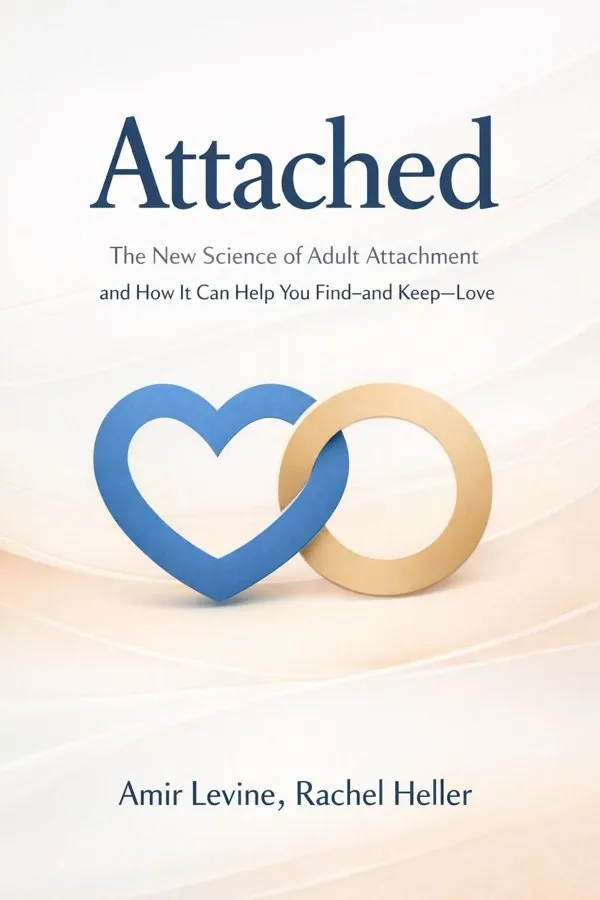
Attached: The New Science of Adult Attachment and How It Can Help You Find—and Keep—Love: Summary & Key Insights
 10 min5 chaptersAudio available
What Is Attached: The New Science of Adult Attachment and How It Can Help You Find—and Keep—Love About?
Attached: The New Science of Adult Attachment and How It Can Help You Find—and Keep—Love by Amir Levine, Rachel Heller is a psychology book spanning 5 pages. Attached introduces readers to the science of adult attachment theory, explaining how understanding one’s attachment style—secure, anxious, or avoidant—can transform romantic relationships. Drawing on decades of psychological research, the authors provide practical tools to identify patterns of behavior, improve communication, and build stronger emotional bonds.
This FizzRead summary covers all 5 key chapters of Attached: The New Science of Adult Attachment and How It Can Help You Find—and Keep—Love in approximately 10 minutes, distilling the most important ideas, arguments, and takeaways from Amir Levine, Rachel Heller's work. Also available as an audio summary and Key Quotes Podcast.
Attached: The New Science of Adult Attachment and How It Can Help You Find—and Keep—Love
Attached introduces readers to the science of adult attachment theory, explaining how understanding one’s attachment style—secure, anxious, or avoidant—can transform romantic relationships. Drawing on decades of psychological research, the authors provide practical tools to identify patterns of behavior, improve communication, and build stronger emotional bonds.
Who Should Read Attached: The New Science of Adult Attachment and How It Can Help You Find—and Keep—Love?
This book is perfect for anyone interested in psychology and looking to gain actionable insights in a short read. Whether you're a student, professional, or lifelong learner, the key ideas from Attached: The New Science of Adult Attachment and How It Can Help You Find—and Keep—Love by Amir Levine, Rachel Heller will help you think differently.
- ✓Readers who enjoy psychology and want practical takeaways
- ✓Professionals looking to apply new ideas to their work and life
- ✓Anyone who wants the core insights of Attached: The New Science of Adult Attachment and How It Can Help You Find—and Keep—Love in just 10 minutes
Want the full summary?
Get instant access to this book summary and 100K+ more with Fizz Moment.
Get Free SummaryAvailable on App Store • Free to download
Key Chapters
To understand adult attachment, we must begin with the work of John Bowlby, the British psychiatrist who first articulated attachment theory in the mid-20th century. Bowlby observed that infants are biologically programmed to seek closeness with caregivers as a means of survival. The consistency, warmth, or unpredictability of a caregiver’s response shapes how the child learns to view relationships: as safe and dependable, or uncertain and threatening.
Later, researcher Mary Ainsworth refined Bowlby’s theory through her famous “Strange Situation” experiments, identifying three distinctive attachment patterns in children: secure, avoidant, and anxious (later subdivided as anxious-ambivalent). What truly fascinated Rachel and me was how these patterns continued into adulthood. Through decades of research—from Hazan and Shaver’s pioneering work in the 1980s to more recent neuroscientific studies—it became clear that the way adults bond romantically mirrors these early attachment scripts.
When adults fall in love, their brains activate the same attachment mechanisms as in infancy. Romantic partners become what we call “primary attachment figures”—the people we turn to for comfort, reassurance, and a sense of safety in an unpredictable world. Thus, recognizing your attachment style is akin to holding a mirror to your relationship blueprints. The patterns you learned long ago are still influencing your text messages, arguments, and expectations today.
This realization, though humbling, is liberating. Because once we see that our behavior is driven by attachment needs, we can choose to respond differently. You are not doomed to repeat your past; you are simply called to understand it. That is where change begins.
Through our research, we came to define three primary adult attachment styles that govern how people behave in relationships. The secure style describes individuals who are comfortable with intimacy and autonomy. They communicate clearly, trust easily, and handle conflict without losing emotional balance. For them, love feels like a supportive partnership—a safe haven.
Anxious attachers, by contrast, experience love as a high-wire act laden with emotional risk. They crave closeness and constant reassurance, fearing that their partner may withdraw or lose interest. Their sensitivity to relational cues is heightened; a delayed text can trigger anxiety that spirals into self-doubt. Underneath this worry lies a profound longing for connection that was never consistently met.
Avoidant individuals occupy another corner of the attachment spectrum. They value independence above all else and feel uncomfortable with too much closeness or emotional dependency. When a partner seeks intimacy, avoidants often withdraw or minimize their feelings to preserve autonomy. They are not indifferent—they simply learned early on that relying on others can be overwhelming or disappointing.
It is crucial to understand that no style is inherently good or bad. Each evolved for adaptive reasons. The anxious style developed vigilance to ensure closeness; the avoidant style prioritized self-sufficiency in uncertain environments. Yet, in the modern world of romantic partnership, these defensive strategies often clash, leaving many relationships fraught with confusion, push-pull dynamics, and unmet needs.
Recognizing your style allows you to step out of automaticity. Whether you are the pursuer who worries or the distancer who retreats, awareness breaks the cycle. From there, we can move toward security—the goal of attachment growth.
+ 3 more chapters — available in the FizzRead app
All Chapters in Attached: The New Science of Adult Attachment and How It Can Help You Find—and Keep—Love
About the Authors
Amir Levine, M.D., is a psychiatrist and neuroscientist at Columbia University. Rachel S. F. Heller, M.A., is a social psychologist and relationship coach. Together, they combine scientific insight and practical experience to help readers understand the dynamics of love and attachment.
Get This Summary in Your Preferred Format
Read or listen to the Attached: The New Science of Adult Attachment and How It Can Help You Find—and Keep—Love summary by Amir Levine, Rachel Heller anytime, anywhere. FizzRead offers multiple formats so you can learn on your terms — all free.
Available formats: App · Audio · PDF · EPUB — All included free with FizzRead
Download Attached: The New Science of Adult Attachment and How It Can Help You Find—and Keep—Love PDF and EPUB Summary
Key Quotes from Attached: The New Science of Adult Attachment and How It Can Help You Find—and Keep—Love
“To understand adult attachment, we must begin with the work of John Bowlby, the British psychiatrist who first articulated attachment theory in the mid-20th century.”
“Through our research, we came to define three primary adult attachment styles that govern how people behave in relationships.”
Frequently Asked Questions about Attached: The New Science of Adult Attachment and How It Can Help You Find—and Keep—Love
Attached: The New Science of Adult Attachment and How It Can Help You Find—and Keep—Love by Amir Levine, Rachel Heller is a psychology book that explores key ideas across 5 chapters. Attached introduces readers to the science of adult attachment theory, explaining how understanding one’s attachment style—secure, anxious, or avoidant—can transform romantic relationships. Drawing on decades of psychological research, the authors provide practical tools to identify patterns of behavior, improve communication, and build stronger emotional bonds.
You Might Also Like
The Body Keeps the Score
Bessel van der Kolk
10 min
Surrounded by Idiots
Thomas Erikson
10 min
Emotional Intelligence
Daniel Goleman
10 min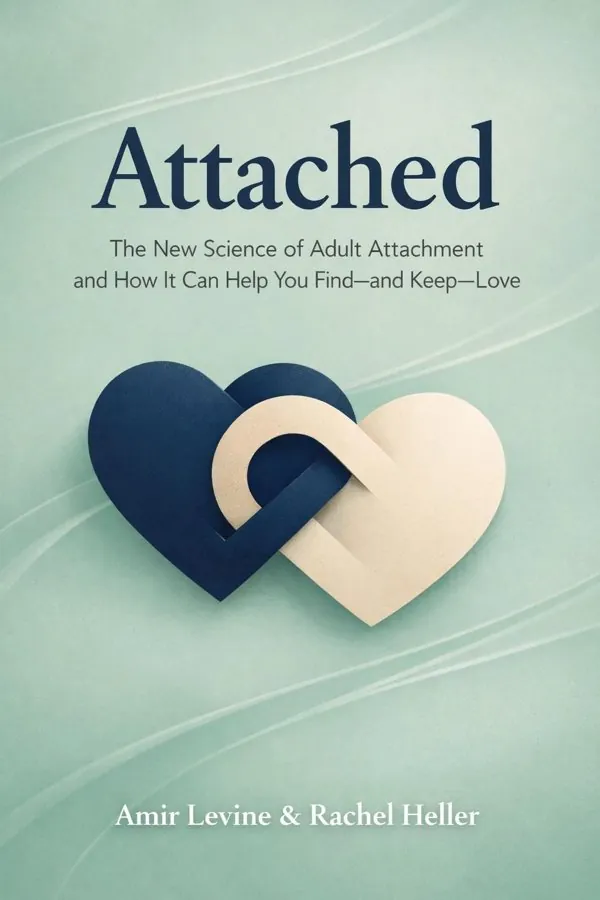
Attached
Amir Levine
10 min
Why Does He Do That
Lundy Bancroft
10 min
Women Who Run with the Wolves
Clarissa Pinkola Estés
10 minBrowse by Category
Ready to read Attached: The New Science of Adult Attachment and How It Can Help You Find—and Keep—Love?
Get the full summary and 100K+ more books with Fizz Moment.