
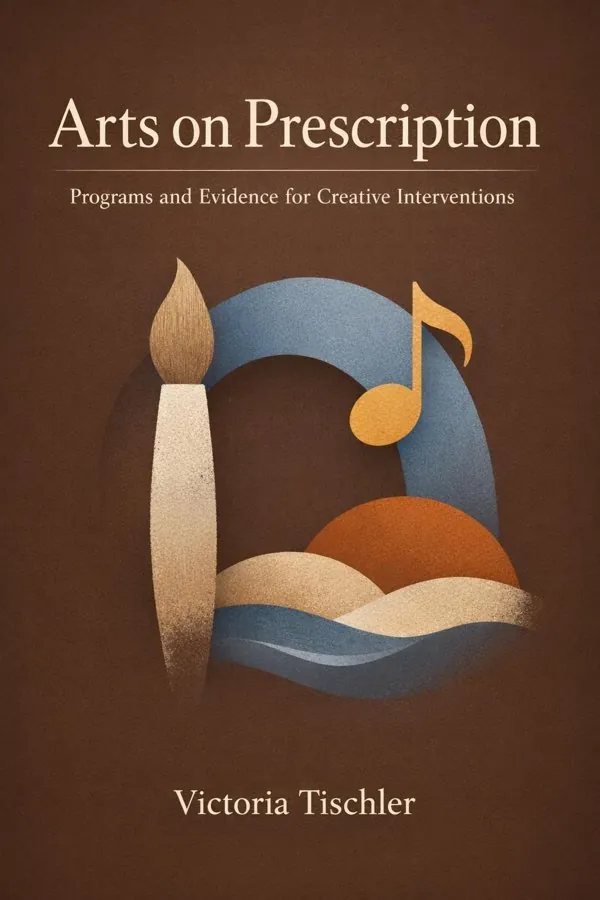
Arts on Prescription: Programs and Evidence for Creative Interventions: Summary & Key Insights
 10 min9 chaptersAudio available
Key Takeaways from Arts on Prescription: Programs and Evidence for Creative Interventions
Modern healthcare often acts as if healing is purely clinical, yet human societies have long understood that recovery also depends on ritual, expression, and connection.
Good intentions are not enough in healthcare, and one of the book’s strongest contributions is its insistence on evidence.
A creative intervention is only as effective as its fit with the people it serves.
Some of the most important outcomes in arts-based work are also the hardest to measure.
Healthcare systems often privilege expert knowledge, but arts on prescription works best when lived experience is treated as expertise too.
What Is Arts on Prescription: Programs and Evidence for Creative Interventions About?
Arts on Prescription: Programs and Evidence for Creative Interventions by Victoria Tischler is a health_med book spanning 5 pages. What if a prescription could include singing in a choir, joining a painting group, or taking part in community theatre? In Arts on Prescription: Programs and Evidence for Creative Interventions, Victoria Tischler examines a fast-growing movement in health and social care that treats creativity not as a luxury, but as a practical route to better wellbeing. The book explores how structured engagement with the arts can support people living with mental health challenges, loneliness, chronic illness, trauma, cognitive decline, and social disconnection. Rather than relying on enthusiasm alone, Tischler brings together research evidence, program design insights, policy discussion, and lived experience to show where arts-based interventions work, how they work, and what responsible implementation requires. Her perspective matters because she writes as a psychologist and researcher deeply involved in the intersection of creativity, mental health, and community-based care. The result is a book that is both intellectually grounded and socially urgent. It speaks to a healthcare world searching for more human, preventive, and inclusive models of support, and makes a compelling case that creative participation can be part of that future.
This FizzRead summary covers all 9 key chapters of Arts on Prescription: Programs and Evidence for Creative Interventions in approximately 10 minutes, distilling the most important ideas, arguments, and takeaways from Victoria Tischler's work. Also available as an audio summary and Key Quotes Podcast.
Arts on Prescription: Programs and Evidence for Creative Interventions
What if a prescription could include singing in a choir, joining a painting group, or taking part in community theatre? In Arts on Prescription: Programs and Evidence for Creative Interventions, Victoria Tischler examines a fast-growing movement in health and social care that treats creativity not as a luxury, but as a practical route to better wellbeing. The book explores how structured engagement with the arts can support people living with mental health challenges, loneliness, chronic illness, trauma, cognitive decline, and social disconnection. Rather than relying on enthusiasm alone, Tischler brings together research evidence, program design insights, policy discussion, and lived experience to show where arts-based interventions work, how they work, and what responsible implementation requires. Her perspective matters because she writes as a psychologist and researcher deeply involved in the intersection of creativity, mental health, and community-based care. The result is a book that is both intellectually grounded and socially urgent. It speaks to a healthcare world searching for more human, preventive, and inclusive models of support, and makes a compelling case that creative participation can be part of that future.
Who Should Read Arts on Prescription: Programs and Evidence for Creative Interventions?
This book is perfect for anyone interested in health_med and looking to gain actionable insights in a short read. Whether you're a student, professional, or lifelong learner, the key ideas from Arts on Prescription: Programs and Evidence for Creative Interventions by Victoria Tischler will help you think differently.
- ✓Readers who enjoy health_med and want practical takeaways
- ✓Professionals looking to apply new ideas to their work and life
- ✓Anyone who wants the core insights of Arts on Prescription: Programs and Evidence for Creative Interventions in just 10 minutes
Want the full summary?
Get instant access to this book summary and 100K+ more with Fizz Moment.
Get Free SummaryAvailable on App Store • Free to download
Key Chapters
Modern healthcare often acts as if healing is purely clinical, yet human societies have long understood that recovery also depends on ritual, expression, and connection. One of the book’s foundational ideas is that arts on prescription is not a trendy add-on but part of a much older tradition in which music, movement, storytelling, image-making, and communal performance helped people process suffering and restore balance. Tischler traces how the separation between medicine and the arts is historically recent. As health systems became more specialized and biomedical, many emotional, social, and symbolic dimensions of care were pushed to the margins.
Arts on prescription reopens that gap. It does not replace medical treatment, but it recognizes that people are more than symptoms. Creative practice can help individuals communicate feelings that are hard to verbalize, rebuild fractured identities after illness, and participate in shared experiences that reduce isolation. A person with depression may find it easier to begin drawing than to explain despair in words. Someone managing grief may connect more deeply through singing or dance than through formal clinical conversation alone.
The historical perspective matters because it reframes the arts as legitimate tools of care rather than optional entertainment. It also helps practitioners understand why participants often describe creative sessions as deeply meaningful. They are not merely passing time; they are engaging in forms of making and meaning that humans have always used to survive adversity.
Actionable takeaway: When evaluating any wellbeing program, ask not only whether it treats symptoms, but whether it also supports expression, dignity, belonging, and meaning.
Good intentions are not enough in healthcare, and one of the book’s strongest contributions is its insistence on evidence. Tischler reviews the growing research base showing that arts-based interventions can improve mood, reduce anxiety, strengthen social ties, support cognitive functioning, and enhance quality of life. Importantly, the evidence spans a range of populations: older adults, people with depression, those living with dementia, individuals recovering from trauma, and communities facing disadvantage or loneliness.
The book emphasizes that effectiveness should be understood broadly. In conventional medicine, outcomes are often measured in narrow clinical terms. Arts on prescription expands the frame to include confidence, motivation, sense of purpose, attendance, self-esteem, and community engagement. These are not secondary extras. For many participants, they are the first signs of recovery. A weekly creative writing group, for example, may not eliminate a chronic condition, but it can reduce social withdrawal, increase routine, and restore self-belief. Those changes often influence physical and mental health indirectly but powerfully.
Tischler also addresses the limits of the evidence. Not every program works equally well, and poor design can weaken outcomes. Methodological challenges such as small sample sizes, inconsistent measures, and difficulty standardizing creative experiences are real. Yet the answer is not dismissal; it is better research.
Actionable takeaway: Support arts interventions that can clearly describe their goals, target population, and outcomes, and judge success using both clinical indicators and lived-quality measures.
A creative intervention is only as effective as its fit with the people it serves. Tischler shows that arts on prescription is not one single model but a family of approaches shaped by context, population, setting, facilitator skill, and referral pathway. Some programs are delivered through primary care, where general practitioners or link workers refer patients to community arts opportunities. Others are embedded in mental health services, care homes, hospitals, rehabilitation settings, or local charities. The form can vary widely too: visual arts, dance, drumming, singing, photography, creative writing, crafts, theatre, and mixed-media workshops.
What distinguishes a strong program is thoughtful design. It must consider accessibility, transport, cost, cultural relevance, session length, group size, and the emotional demands of participation. A singing group for older adults living with loneliness requires different pacing and support than a trauma-informed movement workshop for survivors of violence. Likewise, a community mural project may work well for building neighborhood cohesion, while one-to-one art sessions may better suit participants with severe anxiety.
The book stresses practical infrastructure. Referrals need to be simple. Facilitators need training. Venues must feel welcoming rather than clinical. Participants need clarity about what to expect and reassurance that artistic skill is not required. Programs flourish when they lower barriers and honor autonomy.
Actionable takeaway: If you are designing or recommending an arts on prescription initiative, start with the participants’ needs, abilities, and environment, then build the artistic format around them rather than forcing a one-size-fits-all model.
Some of the most important outcomes in arts-based work are also the hardest to measure. Tischler argues that evaluation in arts on prescription must be rigorous without becoming reductive. Standard health metrics remain useful, especially when funders and policymakers want proof of impact, but they rarely tell the whole story. A participant may show only modest improvement on a depression scale while experiencing profound gains in confidence, social trust, daily structure, and renewed identity. Those changes matter and can be precursors to larger health improvements.
The book therefore supports mixed-method evaluation: quantitative tools for comparability and qualitative methods for depth. Attendance data, validated wellbeing measures, and service-use indicators can be combined with interviews, reflective journals, participant artwork, and facilitator observations. This broader approach helps reveal not just whether a program worked, but how and for whom. It can also show why some participants disengage, which is just as valuable for improving practice.
Ethics are central here. Evaluation must avoid instrumentalizing art or treating participants as data points. Consent, confidentiality, emotional safety, and respect for creative ownership are essential. Particularly in vulnerable populations, researchers and practitioners must balance evidence gathering with care and sensitivity.
Actionable takeaway: When assessing a creative health program, use both numbers and narratives, and make sure your evaluation process respects participants’ dignity, voice, and emotional wellbeing.
Healthcare systems often privilege expert knowledge, but arts on prescription works best when lived experience is treated as expertise too. Tischler highlights participant stories not as sentimental extras, but as core evidence of what creative interventions actually do in people’s lives. Across the book, individuals describe feeling seen again after long periods of invisibility, rediscovering pleasure after depression, regaining agency after illness, and finding companionship in spaces where they are not reduced to diagnoses.
This human dimension explains why arts on prescription can succeed where more formal interventions sometimes struggle. Creative activity allows people to participate without the pressure of direct disclosure. A person who feels intimidated by traditional therapy may feel comfortable joining a ceramics group. Someone living with chronic pain may discover that making music shifts attention away from limitation and toward capability. In group settings, shared creativity can produce mutual recognition: participants witness one another’s efforts, humor, vulnerability, and growth.
Tischler also notes that positive experiences are not automatic. Some participants feel anxious about trying something unfamiliar. Others may carry negative school memories about art, music, or performance. Sensitive facilitation matters. The goal is not artistic excellence but safe, supported engagement.
Actionable takeaway: Listen closely to participant experiences before, during, and after any creative health program, because the most meaningful indicators of success often emerge in how people describe themselves, others, and their place in the world.
A brilliant concept can fail in the wrong hands. Tischler makes clear that facilitators are central to the success of arts on prescription programs. Their role is not simply to deliver an art activity, but to create a relational environment in which participants feel safe enough to experiment, contribute, and return. This requires a blend of artistic skill, emotional intelligence, group management, inclusivity, and awareness of health-related needs.
The best facilitators know how to welcome hesitant beginners, adapt tasks for different abilities, and maintain a balance between structure and freedom. They understand that someone arriving late, sitting quietly, or refusing to share may not be disengaged but anxious, exhausted, or unsure. In a dementia-friendly music session, for example, pacing, repetition, and responsiveness are crucial. In a trauma-aware writing group, boundaries, choice, and emotional containment matter deeply.
Tischler also points to the need for support around facilitators themselves. They may face complex group dynamics, distress disclosures, safeguarding concerns, or unrealistic expectations from referral systems. Good training, supervision, and partnerships with health professionals help prevent burnout and improve quality.
This insight pushes against the idea that any creative practitioner can automatically work effectively in health contexts. Expertise in art is valuable, but facilitation in vulnerable settings requires additional competencies.
Actionable takeaway: When choosing or funding an arts on prescription program, look closely at facilitator training, supervision, and experience, because the quality of relationships often determines the quality of outcomes.
Many arts on prescription programs begin as inspiring local experiments, but Tischler argues that lasting change requires policy integration. Without stable funding, referral pathways, shared outcome frameworks, and institutional recognition, effective projects remain fragile. They depend on short-term grants, enthusiastic champions, or temporary partnerships, which makes them difficult to sustain even when participants clearly benefit.
The book situates arts on prescription within broader movements such as social prescribing, preventive healthcare, public mental health, and community-based care. This is where its policy relevance becomes strongest. Creative interventions can help address demand pressures on overstretched health systems by offering low-cost, relational, preventive forms of support. However, this promise should not be exaggerated or used to justify cutting clinical services. Arts on prescription works best as part of an ecosystem, complementing medical, psychological, and social care rather than replacing them.
Tischler calls for better cross-sector collaboration among health providers, local authorities, cultural organizations, voluntary groups, and researchers. Shared language and clearer commissioning mechanisms can help move arts and health from the margins to the mainstream. Policymakers also need evidence that reflects real-world complexity, not just idealized pilot conditions.
Actionable takeaway: To make creative health interventions sustainable, advocate for them as part of integrated health and community policy, with long-term funding, referral systems, and cross-sector partnerships built in from the start.
Illness often shrinks a person’s world. Diagnoses, symptoms, appointments, and limitations can slowly replace older roles and identities. Tischler shows that one of the deepest benefits of arts on prescription is its capacity to help people recover a sense of self beyond being a patient. Creative activity invites participants to make choices, take risks, solve problems, and produce something new. These are acts of agency, and they can be transformative.
This matters especially in long-term or stigmatized conditions, where individuals may feel defined by deficit. In a photography project, a participant is not just someone with anxiety; they become an observer, creator, and storyteller. In a drama group, someone living with chronic illness may experience spontaneity, play, and confidence that daily life rarely allows. The finished artwork is often less important than the process of becoming active again.
The book suggests that identity repair is one reason arts on prescription can have effects that endure beyond program completion. Participants may continue with creative hobbies, volunteer in community settings, or reconnect with parts of themselves that had gone quiet. This is not simply distraction. It is reconstruction.
By focusing on strengths rather than deficits, creative interventions challenge narrow assumptions about what people in distress can do. They open space for capability, authorship, and pride.
Actionable takeaway: When considering the value of a creative health program, ask whether it helps participants see themselves not only as people in need, but as people who can still imagine, choose, make, and contribute.
All Chapters in Arts on Prescription: Programs and Evidence for Creative Interventions
About the Author
Victoria Tischler is a British psychologist, researcher, and academic whose work focuses on the relationship between creativity, mental health, and wellbeing. She is known for exploring how arts-based practices can support people in healthcare and community settings, particularly those facing emotional distress, social isolation, or long-term life challenges. Her research often bridges theory and practice, combining psychological insight with real-world interest in social prescribing, community participation, and recovery-oriented care. Tischler has contributed to the growing field of arts and health by examining both the promise and the evidence behind creative interventions. In Arts on Prescription: Programs and Evidence for Creative Interventions, she draws on this expertise to present a balanced, research-informed case for taking the arts seriously as part of more humane and holistic approaches to health.
Get This Summary in Your Preferred Format
Read or listen to the Arts on Prescription: Programs and Evidence for Creative Interventions summary by Victoria Tischler anytime, anywhere. FizzRead offers multiple formats so you can learn on your terms — all free.
Available formats: App · Audio · PDF · EPUB — All included free with FizzRead
Download Arts on Prescription: Programs and Evidence for Creative Interventions PDF and EPUB Summary
Key Quotes from Arts on Prescription: Programs and Evidence for Creative Interventions
“Modern healthcare often acts as if healing is purely clinical, yet human societies have long understood that recovery also depends on ritual, expression, and connection.”
“Good intentions are not enough in healthcare, and one of the book’s strongest contributions is its insistence on evidence.”
“A creative intervention is only as effective as its fit with the people it serves.”
“Some of the most important outcomes in arts-based work are also the hardest to measure.”
“Healthcare systems often privilege expert knowledge, but arts on prescription works best when lived experience is treated as expertise too.”
Frequently Asked Questions about Arts on Prescription: Programs and Evidence for Creative Interventions
Arts on Prescription: Programs and Evidence for Creative Interventions by Victoria Tischler is a health_med book that explores key ideas across 9 chapters. What if a prescription could include singing in a choir, joining a painting group, or taking part in community theatre? In Arts on Prescription: Programs and Evidence for Creative Interventions, Victoria Tischler examines a fast-growing movement in health and social care that treats creativity not as a luxury, but as a practical route to better wellbeing. The book explores how structured engagement with the arts can support people living with mental health challenges, loneliness, chronic illness, trauma, cognitive decline, and social disconnection. Rather than relying on enthusiasm alone, Tischler brings together research evidence, program design insights, policy discussion, and lived experience to show where arts-based interventions work, how they work, and what responsible implementation requires. Her perspective matters because she writes as a psychologist and researcher deeply involved in the intersection of creativity, mental health, and community-based care. The result is a book that is both intellectually grounded and socially urgent. It speaks to a healthcare world searching for more human, preventive, and inclusive models of support, and makes a compelling case that creative participation can be part of that future.
You Might Also Like

On Immunity
Eula Biss
10 min
The Three-Body Problem
Liu Cixin
10 min
Community Health Volunteer Toolkit: Training and Practical Activities
World Health Organization
10 min
Healing Back Pain: The Mind-Body Connection
John E. Sarno
10 min
Health Literacy for All: Practical Guides to Communicate Health Information (Compilations)
World Health Organization
10 min
The Complete Guide to Sports Supplements: An Evidence-Based Review
Anita Bean
10 minBrowse by Category
Ready to read Arts on Prescription: Programs and Evidence for Creative Interventions?
Get the full summary and 100K+ more books with Fizz Moment.