
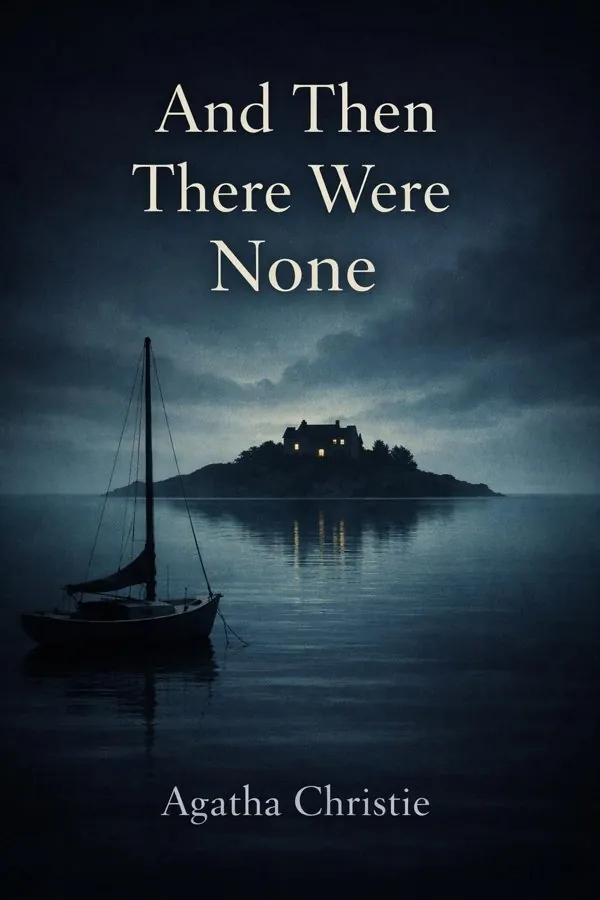
And Then There Were None: Summary & Key Insights
 10 min6 chaptersAudio available
What Is And Then There Were None About?
And Then There Were None by Agatha Christie is a mystery book spanning 6 pages. Ten strangers are invited to a secluded island by a mysterious host. Each guest hides a dark secret, and one by one, they begin to die in accordance with a sinister nursery rhyme. As fear and suspicion grow, the survivors must uncover the killer among them before none remain.
This FizzRead summary covers all 6 key chapters of And Then There Were None in approximately 10 minutes, distilling the most important ideas, arguments, and takeaways from Agatha Christie's work. Also available as an audio summary and Key Quotes Podcast.
And Then There Were None
Ten strangers are invited to a secluded island by a mysterious host. Each guest hides a dark secret, and one by one, they begin to die in accordance with a sinister nursery rhyme. As fear and suspicion grow, the survivors must uncover the killer among them before none remain.
Who Should Read And Then There Were None?
This book is perfect for anyone interested in mystery and looking to gain actionable insights in a short read. Whether you're a student, professional, or lifelong learner, the key ideas from And Then There Were None by Agatha Christie will help you think differently.
- ✓Readers who enjoy mystery and want practical takeaways
- ✓Professionals looking to apply new ideas to their work and life
- ✓Anyone who wants the core insights of And Then There Were None in just 10 minutes
Want the full summary?
Get instant access to this book summary and 100K+ more with Fizz Moment.
Get Free SummaryAvailable on App Store • Free to download
Key Chapters
The beginning of *And Then There Were None* is deceptively ordinary—ten individuals receive invitations under distinct pretenses. There’s Justice Wargrave, a retired judge with a taste for manipulation; Vera Claythorne, a governess seeking employment; Philip Lombard, soldier of fortune; Emily Brent, stern and religious; General Macarthur, haunted by the war; Dr. Armstrong, a successful physician; Tony Marston, a wealthy playboy; Mr. and Mrs. Rogers, the servants; and Blore, an ex-police inspector masquerading under a false name. Each believes they are summoned for legitimate business or leisure, yet none truly knows their host, U.N. Owen—a name whose phonetic echo, “unknown,” sets the tone for the deception.
When I wrote these arrivals, I wanted the reader to experience that quiet unease—the subtle wrongness of ordinary circumstances masking terror. The island, isolated by sea and weather, represents severance from all law and civilization. It is the liminal space where guilt cannot be escaped. Every arrival is both literal and moral; each guest carries the baggage of their unpunished crime, unaware that I’m leading them toward confrontation.
Their trip across the water symbolizes transition—a passage from denial to exposure. Yet in conversation, small cracks appear. Justice Wargrave’s arrogance flickers; Vera’s nerves betray guilt; Lombard’s confidence borders on amorality. The reader senses that beneath the surface politeness lies something corrosive. The stage is set for revelation, and the island awaits them, still, detached, perfect for what must be done.
No sooner have the guests settled into dinner than the first true act of judgment begins. A gramophone record plays an anonymous voice calling out each by name, detailing the death they caused. The effect is electric—an invisible accuser dismantling their self-deception. The psychological experiment begins here. I wanted that moment to be absolute—the room frozen, the sound mechanical, merciless. No one can dismiss a machine’s voice as mere moral opinion; it speaks with the authority of truth itself.
The accusations range from negligence to outright murder—differing in degree, but equal in moral weight. Unlike the law’s trial, this revelation offers no defense. Each reacts according to their temperament. Emily Brent invokes religion; Vera trembles with shock; Lombard admits his crime without remorse. Wargrave, the judge, assumes control, setting up inquiry as though the trial were his to command. Yet beneath his logic lies satisfaction—the pleasure of orchestrating human judgment once again.
This scene establishes the central theme: none are innocent. There is no sanctuary in respectability or social class. The dining room becomes courtroom; the walls themselves echo guilt. The island is now a moral vacuum, and the gramophone’s voice is the unseen hand of justice—methodical, detached, certain.
+ 4 more chapters — available in the FizzRead app
All Chapters in And Then There Were None
About the Author
Agatha Christie (1890–1976) was an English writer known as the 'Queen of Crime.' She created iconic detectives such as Hercule Poirot and Miss Marple and wrote over sixty detective novels, short story collections, and plays. Her works have sold billions of copies worldwide, making her one of the best-selling authors in history.
Get This Summary in Your Preferred Format
Read or listen to the And Then There Were None summary by Agatha Christie anytime, anywhere. FizzRead offers multiple formats so you can learn on your terms — all free.
Available formats: App · Audio · PDF · EPUB — All included free with FizzRead
Download And Then There Were None PDF and EPUB Summary
Key Quotes from And Then There Were None
“The beginning of *And Then There Were None* is deceptively ordinary—ten individuals receive invitations under distinct pretenses.”
“No sooner have the guests settled into dinner than the first true act of judgment begins.”
Frequently Asked Questions about And Then There Were None
And Then There Were None by Agatha Christie is a mystery book that explores key ideas across 6 chapters. Ten strangers are invited to a secluded island by a mysterious host. Each guest hides a dark secret, and one by one, they begin to die in accordance with a sinister nursery rhyme. As fear and suspicion grow, the survivors must uncover the killer among them before none remain.
You Might Also Like



Browse by Category
Ready to read And Then There Were None?
Get the full summary and 100K+ more books with Fizz Moment.