
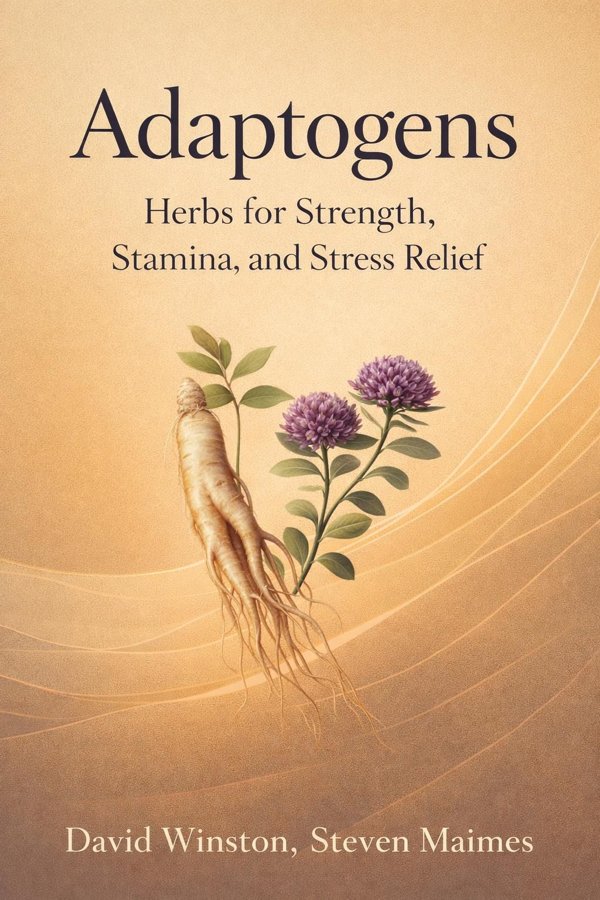
Adaptogens: Herbs for Strength, Stamina, and Stress Relief: Summary & Key Insights
by David Winston, Steven Maimes
 10 min6 chaptersAudio available
What Is Adaptogens: Herbs for Strength, Stamina, and Stress Relief About?
Adaptogens: Herbs for Strength, Stamina, and Stress Relief by David Winston, Steven Maimes is a health_med book spanning 6 pages. This book explores the science and traditional use of adaptogenic herbs—plants that help the body adapt to stress, increase stamina, and promote overall well-being. It provides detailed profiles of key adaptogens such as ashwagandha, rhodiola, and ginseng, explaining their physiological effects, clinical research, and practical applications for modern health challenges.
This FizzRead summary covers all 6 key chapters of Adaptogens: Herbs for Strength, Stamina, and Stress Relief in approximately 10 minutes, distilling the most important ideas, arguments, and takeaways from David Winston, Steven Maimes's work. Also available as an audio summary and Key Quotes Podcast.
Adaptogens: Herbs for Strength, Stamina, and Stress Relief
This book explores the science and traditional use of adaptogenic herbs—plants that help the body adapt to stress, increase stamina, and promote overall well-being. It provides detailed profiles of key adaptogens such as ashwagandha, rhodiola, and ginseng, explaining their physiological effects, clinical research, and practical applications for modern health challenges.
Who Should Read Adaptogens: Herbs for Strength, Stamina, and Stress Relief?
This book is perfect for anyone interested in health_med and looking to gain actionable insights in a short read. Whether you're a student, professional, or lifelong learner, the key ideas from Adaptogens: Herbs for Strength, Stamina, and Stress Relief by David Winston, Steven Maimes will help you think differently.
- ✓Readers who enjoy health_med and want practical takeaways
- ✓Professionals looking to apply new ideas to their work and life
- ✓Anyone who wants the core insights of Adaptogens: Herbs for Strength, Stamina, and Stress Relief in just 10 minutes
Want the full summary?
Get instant access to this book summary and 100K+ more with Fizz Moment.
Get Free SummaryAvailable on App Store • Free to download
Key Chapters
To begin with, let us ground ourselves in what we mean when we speak of an adaptogen. The term itself was coined in the Soviet Union during the 1940s and 1950s by scientists such as Dr. Nikolai Lazarev and Dr. Israel Brekhman. Seeking substances that could enhance soldiers’ and workers’ performance under stressful conditions, they noticed that certain herbs—most notably Eleutherococcus senticosus—seemed to increase endurance and resistance to fatigue without the side effects of stimulants. They defined an adaptogen as a substance that produces a nonspecific response, increases the body’s resistance to multiple forms of stress, and normalizes physiological functions.
This definition captures the essentials of what I, as a contemporary herbalist, understand: adaptogens are systemic regulators. Unlike caffeine or amphetamines, they do not stimulate one pathway at the expense of others. If a person’s energy is depleted, adaptogens gently elevate it; if they are overexcited, these herbs can calm the nervous system. In other words, they move the body toward homeostasis. To qualify as a true adaptogen, a plant must be safe, produce a beneficial effect in a wide range of situations, and exert a normalizing influence regardless of the direction of imbalance.
Ancient physicians may not have used the term, but they recognized the same principles. In Ayurveda, herbs like ashwagandha and shatavari were revered as *rasayanas*—rejuvenative tonics that strengthen *ojas*, the essence of vitality. In Traditional Chinese Medicine, ginseng, astragalus, and schizandra were part of a category known as *qi*-tonifying herbs, promoting balanced energy and longevity. Across cultures, these plants were prized not for curing a single disease but for promoting what we might call “resilient wellness.”
In exploring these traditions, I came to see that adaptogens are not a new discovery, but a rediscovery under a scientific lens. They represent the meeting of traditional wisdom and modern physiology. Each adaptogen affects multiple systems at once: hormonal, immune, neurological, and cardiovascular. Modern biochemical analysis has revealed compounds such as ginsenosides, eleutherosides, withanolides, and rosavins that act as mediators in these complex processes. The synergy among these molecules makes adaptogens unique among herbal medicines; they achieve balance not through one molecular target but through a network of subtle adjustments.
If we are to understand how adaptogens benefit us, we must first understand what stress does to the body. Stress is not merely an emotional reaction—it is a physiological process governed largely by the hypothalamic–pituitary–adrenal (HPA) axis and the sympathetic nervous system. When we encounter a challenge, whether physical or psychological, a cascade of hormones including cortisol and adrenaline mobilizes energy resources, quickens the heart, and sharpens attention. This is adaptive in the short term. But when stress is chronic, this same system becomes dysregulated. Cortisol levels may remain elevated, immune function drops, tissues experience wear, and fatigue sets in.
Adaptogens intervene in this pattern not by suppressing the stress response, but by normalizing it. Studies have shown that they can modulate cortisol production, enhance recovery of baseline function after stress, and protect cells from oxidative and inflammatory damage. For instance, rhodiola has been observed to reduce the intensity of stress-induced fatigue and improve mental performance under pressure, while ashwagandha supports adrenal recovery and mitigates anxiety-like symptoms. In this sense, adaptogens act as metabolic buffers. They temper the strain of living in a high-stress environment and restore the flexibility of physiological responses.
In my clinical practice, I’ve witnessed how these effects translate into personal transformation. A person worn down by burnout who begins rhodiola therapy often regains emotional steadiness and focus. Someone suffering from long-term fatigue following illness may find panax ginseng reigniting their sense of vigor. These are not miracles—they are manifestations of restored homeostatic control. The herbs simply assist the body in remembering its natural equilibrium.
Science corroborates this multi-system influence. Adaptogens appear to modulate transcription factors related to stress response (such as heat-shock proteins and nitric oxide synthase), bolster mitochondrial energy metabolism, and influence neuropeptides that affect mood and cognition. Their antioxidant properties also limit cellular damage from free radicals, which accumulate during prolonged stress. This networked pattern of action is precisely what makes them holistic tools for an age in which stress has become almost universal.
+ 4 more chapters — available in the FizzRead app
All Chapters in Adaptogens: Herbs for Strength, Stamina, and Stress Relief
About the Authors
David Winston is an herbalist and ethnobotanist with over 40 years of experience in the study and practice of herbal medicine. Steven Maimes is a writer and researcher specializing in integrative health and spirituality.
Get This Summary in Your Preferred Format
Read or listen to the Adaptogens: Herbs for Strength, Stamina, and Stress Relief summary by David Winston, Steven Maimes anytime, anywhere. FizzRead offers multiple formats so you can learn on your terms — all free.
Available formats: App · Audio · PDF · EPUB — All included free with FizzRead
Download Adaptogens: Herbs for Strength, Stamina, and Stress Relief PDF and EPUB Summary
Key Quotes from Adaptogens: Herbs for Strength, Stamina, and Stress Relief
“To begin with, let us ground ourselves in what we mean when we speak of an adaptogen.”
“If we are to understand how adaptogens benefit us, we must first understand what stress does to the body.”
Frequently Asked Questions about Adaptogens: Herbs for Strength, Stamina, and Stress Relief
Adaptogens: Herbs for Strength, Stamina, and Stress Relief by David Winston, Steven Maimes is a health_med book that explores key ideas across 6 chapters. This book explores the science and traditional use of adaptogenic herbs—plants that help the body adapt to stress, increase stamina, and promote overall well-being. It provides detailed profiles of key adaptogens such as ashwagandha, rhodiola, and ginseng, explaining their physiological effects, clinical research, and practical applications for modern health challenges.
You Might Also Like

On Immunity
Eula Biss
10 min
The Three-Body Problem
Liu Cixin
10 min
Community Health Volunteer Toolkit: Training and Practical Activities
World Health Organization
10 min
Healing Back Pain: The Mind-Body Connection
John E. Sarno
10 min
Health Literacy for All: Practical Guides to Communicate Health Information (Compilations)
World Health Organization
10 min
The Complete Guide to Sports Supplements: An Evidence-Based Review
Anita Bean
10 minBrowse by Category
Ready to read Adaptogens: Herbs for Strength, Stamina, and Stress Relief?
Get the full summary and 100K+ more books with Fizz Moment.