
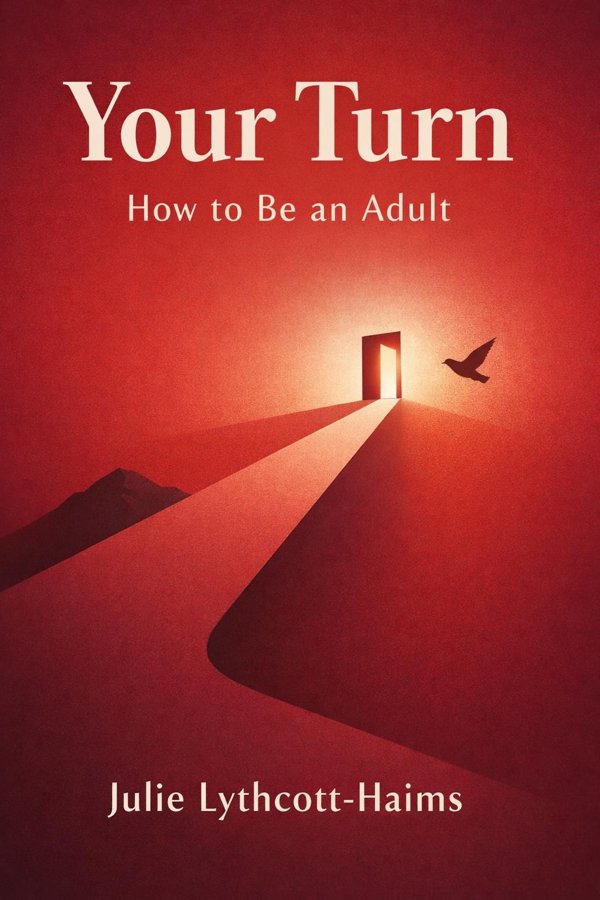
Your Turn: How to Be an Adult: Summary & Key Insights
 10 min10 chaptersAudio available
Key Takeaways from Your Turn: How to Be an Adult
One of the most liberating ideas in this book is that adulthood is not a single achievement but a set of skills we keep practicing.
Freedom without responsibility quickly becomes chaos.
A great deal of young adulthood is spent performing competence while privately wondering who you really are.
One of the hardest truths about adulthood is that pain is not a detour from life; it is part of life.
Adulthood is often judged by visible independence, but no one becomes an adult alone.
What Is Your Turn: How to Be an Adult About?
Your Turn: How to Be an Adult by Julie Lythcott-Haims is a self_awareness book spanning 11 pages. In Your Turn: How to Be an Adult, Julie Lythcott-Haims reframes adulthood not as a finish line, but as an ongoing practice of choice, responsibility, resilience, and self-definition. Instead of offering a rigid checklist for success, she explores the inner and outer skills people need to navigate real life: managing emotions, making decisions, earning a living, building healthy relationships, caring for mental health, and learning how to belong without losing oneself. The book speaks especially powerfully to young adults leaving the structured worlds of school and family, but its lessons resonate with anyone who has ever felt unsure about what “being an adult” is supposed to look like. Lythcott-Haims writes with unusual credibility. As a former Dean of Freshmen at Stanford and the author of How to Raise an Adult, she has spent years observing how people launch into independence—and where they often struggle. Blending research, personal reflection, and stories from many walks of life, she offers guidance that is compassionate rather than preachy. The result is a practical, humane book that helps readers grow up without giving up their complexity, curiosity, or hope.
This FizzRead summary covers all 10 key chapters of Your Turn: How to Be an Adult in approximately 10 minutes, distilling the most important ideas, arguments, and takeaways from Julie Lythcott-Haims's work. Also available as an audio summary and Key Quotes Podcast.
Your Turn: How to Be an Adult
In Your Turn: How to Be an Adult, Julie Lythcott-Haims reframes adulthood not as a finish line, but as an ongoing practice of choice, responsibility, resilience, and self-definition. Instead of offering a rigid checklist for success, she explores the inner and outer skills people need to navigate real life: managing emotions, making decisions, earning a living, building healthy relationships, caring for mental health, and learning how to belong without losing oneself. The book speaks especially powerfully to young adults leaving the structured worlds of school and family, but its lessons resonate with anyone who has ever felt unsure about what “being an adult” is supposed to look like.
Lythcott-Haims writes with unusual credibility. As a former Dean of Freshmen at Stanford and the author of How to Raise an Adult, she has spent years observing how people launch into independence—and where they often struggle. Blending research, personal reflection, and stories from many walks of life, she offers guidance that is compassionate rather than preachy. The result is a practical, humane book that helps readers grow up without giving up their complexity, curiosity, or hope.
Who Should Read Your Turn: How to Be an Adult?
This book is perfect for anyone interested in self_awareness and looking to gain actionable insights in a short read. Whether you're a student, professional, or lifelong learner, the key ideas from Your Turn: How to Be an Adult by Julie Lythcott-Haims will help you think differently.
- ✓Readers who enjoy self_awareness and want practical takeaways
- ✓Professionals looking to apply new ideas to their work and life
- ✓Anyone who wants the core insights of Your Turn: How to Be an Adult in just 10 minutes
Want the full summary?
Get instant access to this book summary and 100K+ more with Fizz Moment.
Get Free SummaryAvailable on App Store • Free to download
Key Chapters
One of the most liberating ideas in this book is that adulthood is not a single achievement but a set of skills we keep practicing. Many people inherit a narrow script: finish school, find a job, pay rent, maybe marry, and everything should feel stable. But real life rarely unfolds so neatly. People move back home, change careers, struggle emotionally, end relationships, or discover that outward success does not automatically create inner confidence. Lythcott-Haims argues that adulthood should be understood less as hitting milestones and more as learning how to respond to life with growing wisdom and accountability.
This matters because rigid expectations can create shame. If you believe adulthood is something you either “have” or “lack,” every setback feels like proof of failure. But if adulthood is a practice, then mistakes become part of the curriculum. You are allowed to be in progress. That shift helps readers replace comparison with curiosity: What skills do I need now? What kind of life am I actually trying to build?
A practical way to apply this is to stop measuring yourself only by external markers. Two people may both have jobs and apartments, yet one avoids conflict, ignores finances, and depends on others to solve emotional crises. The other may still be figuring things out materially but is learning to regulate emotions, ask for help wisely, and make principled decisions. The second person is deeply engaged in adult development.
Actionable takeaway: Replace the question “Have I become an adult yet?” with “What adult skills am I practicing this season?” and choose one area—money, boundaries, emotional regulation, or decision-making—to strengthen intentionally.
Freedom without responsibility quickly becomes chaos. A central lesson of Your Turn is that adulthood is not simply the right to do what you want; it is the willingness to own the consequences of what you choose. Responsibility means keeping promises, telling the truth, meeting obligations, repairing harm when you cause it, and recognizing that your feelings may be valid without excusing harmful behavior. This can sound heavy, but Lythcott-Haims presents it as empowering. When you take responsibility, you stop waiting for someone else to rescue, organize, or define your life.
Many people resist responsibility because they equate it with punishment or pressure. But in practice, responsibility builds trust—with employers, friends, partners, and with yourself. If you know you can follow through, apologize, adapt, and recover, life becomes less frightening. You become someone who can be counted on. That reliability is a foundation for independence.
This idea shows up in everyday situations. If you overspend, responsibility means facing the numbers instead of avoiding your bank app. If you hurt a friend, it means apologizing without defensiveness. If you are overwhelmed, it means acknowledging your limits before everything falls apart. Responsibility is not perfection; it is honest ownership.
The deeper message is that responsibility helps transform adulthood from a vague identity into a lived ethic. You may not control every circumstance, but you can control whether you meet reality directly. Each act of ownership strengthens your sense of agency.
Actionable takeaway: Identify one area where you have been blaming circumstances, family, or luck more than necessary, and take one concrete ownership step this week—make the call, create the budget, send the apology, or set the deadline.
A great deal of young adulthood is spent performing competence while privately wondering who you really are. Lythcott-Haims emphasizes that self-awareness is not a luxury; it is a core survival skill. Without it, people drift into jobs, relationships, and identities shaped more by approval, fear, or habit than by conviction. Self-awareness means understanding your values, patterns, strengths, vulnerabilities, and emotional triggers. It also means recognizing the difference between the self you present and the self you actually inhabit.
This is especially important in a culture that rewards image management. Social media, family expectations, and peer comparison can make it easy to build a life that looks impressive but feels alien. A person may pursue law school because it sounds prestigious, stay in a draining relationship because being chosen feels validating, or say yes to everything because conflict feels dangerous. Without self-knowledge, adulthood becomes imitation.
Developing self-awareness requires reflection and honesty. Journaling after difficult moments can reveal recurring patterns: When do you feel resentful? What kinds of environments energize or deplete you? What do you avoid, and why? Feedback from trusted people can also help, especially when it confirms something you have been reluctant to admit. Therapy, coaching, spiritual practice, or intentional solitude can deepen the process.
The goal is not endless introspection. It is better alignment. When you know yourself, decisions become clearer. You can choose work that fits, relationships that nourish, and routines that support your actual needs rather than your fantasy self.
Actionable takeaway: Write down three values you want your adult life to reflect and compare them to how you spent the last two weeks. Where there is a gap, make one small adjustment to bring your calendar closer to your values.
One of the hardest truths about adulthood is that pain is not a detour from life; it is part of life. Lythcott-Haims argues that resilience is built not by avoiding hardship but by learning how to meet it. Many people have been taught, directly or indirectly, that a good life should be smooth and that struggle means something has gone wrong. But setbacks, grief, rejection, failure, loneliness, and uncertainty are normal features of human experience. Resilience is what helps you remain functional, hopeful, and adaptive in the face of them.
Importantly, resilience is not emotional numbness. It is not pretending you are fine or pushing through until you collapse. It is the capacity to feel disappointment without becoming defined by it, to regroup after failure, and to keep moving with greater wisdom. Someone who loses a job and uses the experience to reassess skills, seek support, and try again is practicing resilience. Someone who experiences heartbreak and learns to set healthier boundaries is doing the same.
This perspective is deeply relevant for young adults who may have been protected from too many consequences or taught to fear failure. If every problem feels catastrophic, ordinary adult challenges become overwhelming. Resilience grows when you solve real problems, tolerate discomfort, and discover that you can recover.
Practical resilience habits include naming your emotions accurately, breaking large problems into smaller actions, keeping a supportive network, and remembering previous hardships you have survived. These do not erase pain, but they reduce helplessness.
Actionable takeaway: The next time something goes wrong, resist the urge to label it a disaster. Ask instead: “What is this situation asking me to learn, endure, or do next?” Then complete the smallest constructive step within 24 hours.
Adulthood is often judged by visible independence, but no one becomes an adult alone. Lythcott-Haims highlights that mature relationships depend on two abilities that many people never fully learn: setting boundaries and repairing harm. Healthy connection is not about pleasing everyone, avoiding conflict, or merging your identity with someone else’s needs. It is about being honest, respectful, accountable, and clear about what is and is not okay.
Boundaries are especially important in family relationships, friendships, dating, and work. A young adult might still be emotionally enmeshed with parents, unable to make choices without guilt or approval. Or they may stay available to friends who constantly drain them because they confuse generosity with self-erasure. Boundaries create the conditions for genuine care by preventing resentment and confusion. They help you say, “I love you, and I cannot do this,” or “I want to support you, but I need notice.”
Repair matters because all relationships involve mistakes. You will misunderstand people, disappoint them, get defensive, or fail to communicate clearly. Adulthood means not fleeing every rupture or insisting on being right. It means learning to apologize specifically, listen without self-justifying, and rebuild trust through changed behavior. Likewise, it means discerning when a relationship can be repaired and when distance is wiser.
In practical terms, mature connection may look like discussing shared expenses openly with a roommate, telling a partner what kind of communication helps you feel safe, or declining a family request that would compromise your well-being. These moments are not signs of selfishness; they are signs of relational maturity.
Actionable takeaway: Choose one relationship where resentment has been building and address it directly with one clear boundary or one sincere repair conversation this week.
Many people enter adulthood believing that career will answer the question of identity. Lythcott-Haims challenges this by separating work from worth. Employment matters: it provides income, structure, learning, and often a sense of contribution. But tying your entire value to your job can leave you fragile, overworked, or chronically dissatisfied. The better question is not only “What do I want to be?” but “How do I want to live, contribute, and grow?”
This distinction is crucial in a culture that glorifies hustle and prestige. A high-status job may impress others while draining your health. A less glamorous role may provide stability, growth, and room for community, creativity, or family life. Adulthood involves learning to evaluate work by multiple measures: income, ethics, learning opportunities, sustainability, alignment with values, and the kind of person the job is helping you become.
Purpose also tends to emerge gradually. Few people discover a perfect calling in their early twenties. More often, purpose is built through experimentation, reflection, and course correction. A first job may simply teach reliability, communication, and what you do not want. That is still valuable. Temporary work, internships, side projects, volunteering, and informational interviews can all clarify direction.
Lythcott-Haims invites readers to be both practical and reflective. Pay attention to what gives you energy, what skills you naturally use, and what problems you care enough to help solve. Then balance aspiration with realism: earn, learn, and keep refining.
Actionable takeaway: Instead of asking whether your current work is your dream job, ask three better questions: What am I learning here? What is this costing me? What next step would move me toward a more values-aligned life?
Money is never just about math; it is also about fear, identity, power, and freedom. In Your Turn, financial independence is presented as a major part of adulthood because money management affects nearly every other domain of life. If you cannot understand your income, spending, debt, and obligations, you may remain dependent on others or trapped in avoidable stress. Yet many young adults reach independence with little real financial education beyond vague advice to “budget better.”
Lythcott-Haims treats financial competence as learnable rather than intimidating. You do not need to be wealthy to act like an adult with money. You need awareness, honesty, and consistent habits. That begins with knowing what comes in, what goes out, what you owe, and what your immediate priorities are. Rent, food, transportation, debt payments, savings, and emergency planning all matter more than image-driven spending meant to prove success.
Practical adulthood might mean cooking more often, sharing housing temporarily, resisting lifestyle inflation after a raise, or learning how interest works before taking on new debt. It also means asking for help without shame when necessary—whether from a financial counselor, a trusted mentor, or credible educational resources. Avoidance is expensive. Clarity is empowering.
Money management also affects emotional health. A person with even a modest emergency fund and a basic plan often feels less panicked and more capable. Financial independence does not guarantee peace, but it increases options. It allows you to leave unhealthy situations, plan intentionally, and make decisions from greater steadiness.
Actionable takeaway: Schedule one hour to review your current financial reality—income, recurring expenses, debt, and savings—and create a simple plan for the next 30 days with one priority such as reducing spending, paying down debt, or starting an emergency fund.
A mature life is not one in which you never struggle mentally or emotionally; it is one in which you take your inner life seriously. Lythcott-Haims makes clear that mental health is not a side issue to be addressed only in crisis. It shapes your ability to work, love, rest, decide, and endure. Anxiety, depression, burnout, trauma, loneliness, and chronic stress can all distort adult functioning if ignored. Adulthood therefore includes learning when to self-manage, when to rest, and when to seek professional support.
This is an especially vital message because many people mistake suffering for weakness or believe they should be able to handle everything alone. But pretending to be okay often delays healing and damages relationships. Emotional maturity involves naming what is happening inside you and responding responsibly. If you are spiraling, isolating, or unable to function, that is not a moral failure. It is information.
Self-care in this book is not framed as indulgence. It is maintenance. Sleep, exercise, nutrition, limits on substances, time away from screens, and restorative routines all influence your capacity to show up as an adult. So do therapy, medication when appropriate, support groups, mindfulness practices, and honest conversation. The point is not to optimize yourself endlessly; it is to become someone who notices distress before it becomes collapse.
In practical terms, adult self-care may mean declining extra commitments when you are already overwhelmed, scheduling therapy instead of waiting for a breakdown, or recognizing that your irritability is a sign of exhaustion rather than a personality flaw.
Actionable takeaway: Identify one recurring sign that your mental health is slipping—poor sleep, withdrawal, anger, numbness, procrastination—and pair it with one predetermined response such as contacting a friend, booking therapy, or taking a recovery day.
Human beings need community, yet many adults get trapped trying to earn belonging by abandoning themselves. Lythcott-Haims explores the tension between fitting in and living truthfully. Whether in friend groups, workplaces, romantic relationships, families, or broader culture, people often feel pressure to edit themselves into acceptability. They hide uncertainty, mute opinions, overachieve for approval, or adopt identities that seem safer than their real complexity. But belonging purchased through self-betrayal is fragile.
Real adulthood includes learning to locate or build communities where mutual respect is possible. This does not mean everyone will affirm every part of you. It means you are not required to disappear in order to be included. A healthy community makes room for difference, responsibility, contribution, and growth. It asks something of you, but not your soul.
This idea becomes especially powerful during transitions. Moving to a new city, starting a job, leaving school, or changing beliefs can produce intense loneliness. In those moments, people are vulnerable to attaching themselves anywhere they are accepted. Lythcott-Haims encourages a more thoughtful approach: seek places where values align, where reciprocity exists, and where your presence is not contingent on performance.
Authenticity also requires tolerating the discomfort of being misunderstood. Not everyone will approve of your path, especially if it departs from family or cultural expectations. Yet adulthood means becoming able to hear others without handing them ownership of your life.
Actionable takeaway: Audit your closest circles by asking, “Where do I feel more honest, more energized, and more respected?” Invest more deeply there, and reduce time in environments that require chronic performance or self-erasure.
Perhaps the most reassuring message in Your Turn is that adulthood never becomes fully settled. Lives change. Plans collapse. Identities evolve. Certainty comes and goes. Lythcott-Haims invites readers to stop expecting a permanent state of arrival and instead learn how to navigate change with flexibility and self-compassion. This is not passive acceptance; it is realistic maturity.
Many adults secretly believe that by a certain age they should feel fully formed. When reality contradicts that fantasy, they assume they are behind. But change is not evidence that you have failed to become an adult. It is evidence that you are alive. New work, illness, loss, parenthood, breakups, relocation, political upheaval, financial shifts, and changing beliefs can all require reinvention. Adulthood is the art of adjusting without losing your center.
Imperfection is part of that art. You will misjudge situations, outgrow old selves, disappoint people, and need to begin again. The healthiest response is neither self-condemnation nor denial, but honest recalibration. What matters is not maintaining an image of flawless competence. What matters is your willingness to learn, repair, and continue.
This mindset reduces paralysis. If you do not need to get everything right forever, you can make decisions with more courage. You can treat life as iterative. Try, reflect, revise. That is far more sustainable than waiting for guaranteed certainty.
Actionable takeaway: When facing a major decision, stop asking “What if this is the perfect or disastrous choice?” and ask “If this path needs revising later, do I trust myself to learn and adapt?” Let that question guide a more flexible next step.
All Chapters in Your Turn: How to Be an Adult
About the Author
Julie Lythcott-Haims is an American author, speaker, and former Dean of Freshmen and undergraduate advising administrator at Stanford University. Her work focuses on human development, identity, parenting, and the transition from adolescence into adulthood. She became widely known through her bestselling book How to Raise an Adult, which challenged overparenting and argued for greater independence and resilience in young people. She is also the author of the memoir Real American, a deeply personal exploration of race, belonging, and selfhood. Drawing on years of experience working closely with students and families, Lythcott-Haims writes with both empathy and authority. Her books blend research, lived experience, and practical guidance, making her a trusted voice on what it takes to grow into a capable, authentic, and responsible adult.
Get This Summary in Your Preferred Format
Read or listen to the Your Turn: How to Be an Adult summary by Julie Lythcott-Haims anytime, anywhere. FizzRead offers multiple formats so you can learn on your terms — all free.
Available formats: App · Audio · PDF · EPUB — All included free with FizzRead
Download Your Turn: How to Be an Adult PDF and EPUB Summary
Key Quotes from Your Turn: How to Be an Adult
“One of the most liberating ideas in this book is that adulthood is not a single achievement but a set of skills we keep practicing.”
“Freedom without responsibility quickly becomes chaos.”
“A great deal of young adulthood is spent performing competence while privately wondering who you really are.”
“One of the hardest truths about adulthood is that pain is not a detour from life; it is part of life.”
“Adulthood is often judged by visible independence, but no one becomes an adult alone.”
Frequently Asked Questions about Your Turn: How to Be an Adult
Your Turn: How to Be an Adult by Julie Lythcott-Haims is a self_awareness book that explores key ideas across 10 chapters. In Your Turn: How to Be an Adult, Julie Lythcott-Haims reframes adulthood not as a finish line, but as an ongoing practice of choice, responsibility, resilience, and self-definition. Instead of offering a rigid checklist for success, she explores the inner and outer skills people need to navigate real life: managing emotions, making decisions, earning a living, building healthy relationships, caring for mental health, and learning how to belong without losing oneself. The book speaks especially powerfully to young adults leaving the structured worlds of school and family, but its lessons resonate with anyone who has ever felt unsure about what “being an adult” is supposed to look like. Lythcott-Haims writes with unusual credibility. As a former Dean of Freshmen at Stanford and the author of How to Raise an Adult, she has spent years observing how people launch into independence—and where they often struggle. Blending research, personal reflection, and stories from many walks of life, she offers guidance that is compassionate rather than preachy. The result is a practical, humane book that helps readers grow up without giving up their complexity, curiosity, or hope.
More by Julie Lythcott-Haims
You Might Also Like
Rising Strong
Brené Brown
10 min
You Do You
Sarah Knight
10 min
Master Your Emotions: A Practical Guide to Overcome Negativity and Better Manage Your Feelings
Thibaut Meurisse
10 min
The Mountain Is You: Transforming Self-Sabotage Into Self-Mastery
Brianna Wiest
10 min
101 Essays That Will Change The Way You Think
Brianna Wiest
10 min
A Radical Awakening: Turn Pain into Power, Embrace Your Truth, Live Free
Shefali Tsabary
10 minBrowse by Category
Ready to read Your Turn: How to Be an Adult?
Get the full summary and 100K+ more books with Fizz Moment.